1796
1 January 1796
FridaySouth Carolina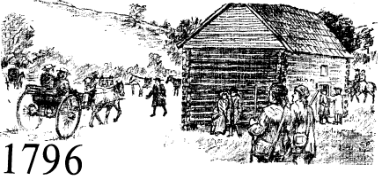
I gave them a sermon suited to the beginning of the year, and the sacred fire was felt.
ASB_VOL2.PDF, p. 69
2 January 1796
SaturdaySouth CarolinaSaturday, 2, we began our conference. Lord’s day, 3, was a day of extraordinary divine power, particularly at the sacrament; white and black cried and shouted the praises of God—yea, “Clap your hands, ye people all,
Praise the God on whom ye call.”
ASB_VOL2.PDF, p. 69
4 January 1796
MondaySouth CarolinaWe again entered on the business of conference; present, about twenty members and seven graduates.
ASB_VOL2.PDF, p. 69
5 January 1796
TuesdaySouth CarolinaContinued our business; we have great peace and love—see eye to eye, and heart to heart. We have now a second and confirmed account that Cokesbury college1 is consumed to ashes, a sacrifice of £10,000 in about ten years! The foundation was laid in 1785 and it was burnt December 7, 1795. Its enemies may rejoice, and its friends need not mourn. Would any man give me £10,000 per year to do and suffer again what I have done for that house, I would not do it. The Lord called not Mr. Whitefield nor the Methodists to build colleges. I wished only for schools—Doctor Coke wanted a college. I feel distressed at the loss of the library.
ASB_VOL2.PDF, p. 69
Notes (1)
- See letter to Thomas Haskins, January 11, 1796. ↩
7 January 1796
ThursdaySouth CarolinaThursday, 7, we observed as a day of fasting and humiliation, to seek the blessing of God on the conference. We began, continued, and parted in the greatest peace and union. We concluded to send Jonathan Jackson and Josias Randle, alternately, as missionaries to Savannah and the ancient parts of Georgia.
ASB_VOL2.PDF, p. 69
8 January 1796
FridaySouth CarolinaFriday, 8, most of our brethren took their leave of the city, and I had time for recollection. We have in some cases had to station one preacher where formerly there were two: I trust the cause to God, and he will support it for his own glory; I must look more to him and less to men, whether aged, middle-aged, young, married, or single, or great or small abilities. My mind is variously exercised about staying here. I lament the partiality of the people for and against particular preachers.
ASB_VOL2.PDF, p. 70
10 January 1796
SundaySouth CarolinaI gave them a discourse on Habakkuk 2:1, 2: “I will stand upon my watch and set me upon the tower, and will watch to see what he will say unto me, and what I shall answer when I am reproved. And the Lord answered me, Write the vision, and make it plain upon tables that he may run that readeth it.” At noon brother Henry Hill1 made an attempt to preach in the street opposite St. Michael’s church, but was prevented by the guard; however, it wrought right, for many were led to attend the church in the afternoon and evening meetings: there appears to be great moving one way or another.
ASB_VOL2.PDF, p. 70
Notes (1)
- The Rev. Henry Hill was from North Carolina. He joined the conference in 1791 and served circuits in both the Carolinas. He was assigned to Charleston the first half of 1796 and to Broad River Circuit the latter half. He located in 1797. ↩
11 January 1796
MondaySouth CarolinaMy soul is stayed upon God, momently looking upon him. In reading Mr. Winterbotham, I compared the great talk about President Washington formerly, with what some say and write of him now: according to some he then did nothing wrong; it is now said that he was always partial to aristocrats and continental officers: as to the latter, I ask, Who bought the liberty of the States? the continental officers:—and surely they should reap a little of the sweets of rest and peace: these were not chimney-corner whigs. But favours to many of the officers now would come too late—a great number of them are gone to eternity, their constitutions being broken with hard fare and labour during the war. As to myself, the longer I live, and the more I investigate, the more I applaud the uniform conduct of President Washington in all the important stations which he has filled.
ASB_VOL2.PDF, p. 70
17 January 1796
SundaySouth CarolinaMy spirit felt awful through the morning: I preached to a full congregation, and had a solemn season; and in the afternoon I preached on Luke 8:10.
ASB_VOL2.PDF, p. 70
18 January 1796
MondaySouth CarolinaI am still employed in reading: I admire the sterling truth contained in Mr. Wesley’s writings on divinity.
ASB_VOL2.PDF, p. 70
21 January 1796
ThursdaySouth CarolinaPrecious time—how it flies! I was greatly entertained and comforted in spirit in receiving from brother Southerland an account of the great, confirming blessing he hath experienced to his soul. O, that we could receive such accounts from every family! I have written to several of my ancient friends in Philadelphia. I may say of letters, as it was said of silver in the days of Solomon, “I make no account of that:” I suppose I must write nearly a thousand in a year.
ASB_VOL2.PDF, p. 71
24 January 1796
SundaySouth CarolinaI was so poorly as to be hardly able to rise from my bed; however, I made out to deliver two discourses in public to large congregations. Monday, I wrote, visited, and rode; I read but little. O time, precious time, how swiftly doth it fly!
ASB_VOL2.PDF, p. 71
27 January 1796
WednesdaySouth CarolinaI have great reason to praise God that I am in a house, and not exposed to the dreadful rains and freshets that have taken place. We learn by late accounts that corn, rice, cattle, bridges, and we know not what, are swept away and destroyed by the late uncommon rains. I feel myself humbled before God, under a sense of my not having been as faithful to him as I might have been. I am rather too much delighted with reading on paper what I have read with my eyes in my travels through the continent.
ASB_VOL2.PDF, p. 71
31 January 1796
SundaySouth CarolinaWas much taken up with the work of the Lord: I preached in the morning and afternoon.
ASB_VOL2.PDF, p. 71
1 February 1796
MondaySouth CarolinaI have written in the most pointed manner to my dear brethren at Baltimore,1 to establish prayer meetings in every part of the town. My mind is unhappy; I wish to be gone into the country to be about my Master’s work.
We had a prayer meeting; but the spirit of prayer and supplication did not appear to be among the people. I have peace with God; but my soul is in continual heaviness for Zion.
ASB_VOL2.PDF, p. 71
Notes (1)
- See letter to John Hagerty, January 30, 1796. ↩
3 February 1796
WednesdaySouth CarolinaI had near two hundred and fifty of the African society at the love feast held for them in the evening. O, my God, display thy power! I received good news from Jesse Lee concerning the prospect of religion in Boston, Providence, and the District of Maine—that the preachers, societies, and quarterly meetings are lively. My soul at times is in heaviness through manifold temptations. I felt an impression on my mind when at prayer that I felt too much, and might fret myself because of evil doers; I resolve, through grace, to be more resigned to the Lord, and less distressed, lest I should lightly sin against God or myself in unnecessarily injuring my health.
ASB_VOL2.PDF, p. 71
5 February 1796
FridaySouth CarolinaI spent in reading and writing, and observed it as a day of fasting and prayer. I felt myself under dejection of spirit. Ah! what a dreary world is this! my mind is under solemn impressions—the result of my reflections on God and souls. I will endeavour not to distress myself above measure. If sinners are lost, I cannot save them, neither shall I be damned for them. I was happy last evening with the poor slaves in brother Wells’s kitchen, whilst our white brother held a sacramental love feast in the front parlour upstairs. I must be poor: this is the will of God concerning me. The Methodists have now about ninety thousand members of society in Europe, about seventy thousand in America and the Islands, and about four hundred in Africa.
ASB_VOL2.PDF, p. 72
7 February 1796
SundaySouth CarolinaWe had an awful, solemn season, while I discoursed on the two thieves that suffered with the Lord; and still more so in the afternoon on our Lord’s comment on the sixth commandment: it was dreadfully loud and alarming. I was pleased to hear that some were stricken with the power of God. I feel very weak in body, and find that age makes an alteration. But my soul is truly happy in the Lord, and his work is reviving amongst us.
ASB_VOL2.PDF, p. 72
14 February 1796
SundaySouth CarolinaI began the solemnity of the day by opening and applying our Lord’s comment on the seventh commandment, which is designed to condemn the adultery of the heart. It appears to have been the will of our Lord not to give liberty for a second marriage while a former husband or wife is living. St. Paul undoubtedly understood it so, even when heathen husbands left their wives, or wives left their husbands.
ASB_VOL2.PDF, p. 72
17 February 1796
WednesdaySouth CarolinaThe city now appears to be running mad for races, plays, and balls. I am afraid of being out of my duty in staying here too long: my soul is among the lions; yet Christ is mine, and I trust my supreme desire is, “Holiness to the Lord.” My soul longeth to be gone, like a bird from a cage.1 I have been employed in visiting from house to house, and lament the superficial state of religion among the white people who are called Methodists. I have thought if we had entered here to preach only to the Africans, we should probably have done better.
ASB_VOL2.PDF, p. 72
Notes (1)
- See letter to Mrs. Martha Haskins, February 17, 1796. ↩
21 February 1796
SundaySouth CarolinaI delivered two discourses on our Lord’s Sermon on the Mount, and was loud, long, alarming, and not very pleasing.
ASB_VOL2.PDF, p. 73
22 February 1796
MondaySouth CarolinaI felt myself indisposed, owing to the exertions of the days past.
Wednesday and Thursday, 24, 25. I was employed in putting my thoughts together on the unlawfulness of divorce—of having more than one wife, or taking a second on any consideration while the first is living. I begin to feel comfortable at the thoughts of leaving this city shortly. This makes me fear I ought not to stay here so long.1 It is true, I have a thousand or twelve hundred hearers, and two or three hundred of these change with the day. My soul possesseth peace, but great unworthiness cleaveth to me. I am apprehensive I injure myself by giving too intense application to reading. In my early days I contracted a habit for this, and I cannot easily give it up.
ASB_VOL2.PDF, p. 73
Notes (1)
- Asbury frequently spent around two months in Charleston during the winter. ↩
28 February 1796
SundaySouth CarolinaMy morning subject was Phillippians 1:8, 9. In the evening I treated on wolves in sheep’s clothing: some laughed, some wept, and some were vexed. Ah! how I wish to make my escape and be gone! I must pay for this indulgence with pain of mind: I feel for these souls: many of them who have been sitting under my ministry, appear to be more hardened now than when I began first to preach to them; and no wonder, seeing they have so insulted the Spirit of God.
ASB_VOL2.PDF, p. 73
2 March 1796
WednesdaySouth CarolinaFor my unholiness and unfaithfulness, my soul is humbled: were I to stand in my own merit, where should I be or go, but to hell? The time drawing nigh when I expected to leave the city, I was visited by my poor Africans, and had their prayers and best wishes. And now, what have I been doing? I have preached eighteen sermons, met all the classes, fifteen in number, written about eighty letters, read some hundred pages, visited thirty families again and again. But who are made the subjects of grace? Such are my impressions, that I am apprehensive God will work more in judgment than in mercy, and that this will be an eventful year to the inhabitants of this place. In the course of my stay I have written more than three hundred pages on subjects interesting to the society and connexion.
ASB_VOL2.PDF, p. 73
3 March 1796
ThursdaySouth CarolinaI left the city; the rain of yesterday and today has made the road extremely wet and muddy; it was in our favour that we came over the Causeway at Ashley River, without swimming. We came in the evening, dripping, to father Eccles’s,1 having ridden thirty-four miles.
ASB_VOL2.PDF, p. 73
Notes (1)
- Eccles lived at Beech Hill on the Edisto a little below Givhan’s Ferry. ↩
4 March 1796
FridayGeorgiaWe crossed Edisto River, and came to Island Creek.1 At a pole-house I talked a while on 1 Chronicles 7:14, and administered the sacrament. My feet were as if they had been steeped in water. We had to ride three miles for lodgings, hungry, wet, and weary. Since half-past eight yesterday we have ridden upwards of sixty miles. I am now turned fifty years of age, and feel it hard to flesh and blood to go upon the old line, as in former days. God is at work in this place, so that we do not labour and suffer altogether in vain. I was under some difficulties about getting along, owing to the great rains, which have so raised the water-courses that they are impassable. We at length directed our course towards Augusta; with deep wading, by the assistance of brother Moses Black,2 and by the blessing of Providence, we came to father E——’s, a Lot in Sodom. It is all right that I should come to see these aged people, and preach to the young ones. I am weary, but I will travel on: I only want more of the spirit of faith and prayer. I feel very sensibly for my dear Charleston people; I doubt not but they think of and pity me. My feet have been wet every day, for four days successively; but the kindness of the people helpeth me greatly over these troubles.
ASB_VOL2.PDF, p. 74
Notes (2)
- Island Creek is now Ireland Creek. Asbury stopped at or near the present Walterboro. ↩
- The Rev. Moses Black was born near Charleston and admitted to the conference on trial this year. He was appointed to Edisto Circuit and traveled with Asbury until he reached his appointment. In 1802 he went to Holston and died on the Carter’s Valley Circuit in Tennessee on February 3, 1810, at the age of forty. ↩
9 March 1796
WednesdayGeorgiaRode twenty-five miles to Chester’s.1 Here I learned Edisto was impassable. If we had not hasted along as we did, we should not have passed it in proper time, and I should have been prevented from visiting Georgia this year also. There are so many water-courses, and so few ferries, that going through this country in any certain time is like a lottery.
ASB_VOL2.PDF, p. 74
Notes (1)
- This Chester must have lived in the upper western edge of Barnwell County and was not the same family that lived between Edgefield and Augusta. (See note under March 1, 1789.) ↩
10 March 1796
ThursdayGeorgiaWe sent notice through the neighbourhood, to collect a congregation; so I had the privilege of preaching to a people I had not addressed for six years. O! my soul, how dost thou travail for souls night and day!
GEORGIA
I crossed W——’s ferry; the point on the south side is washed like a beach, and the house swept away by the late freshets; I saw how the flood had ploughed up the street of Augusta: I walked over the ruins for nearly two miles, viewing the deep gulfs in the main street. I suppose they would crucify me if I were to tell them it is the African flood; but if they could hear me think, they would discover this to be my sentiment. I was honoured with the church to preach in; where I had about four hundred respectable hearers. I have delivered my own soul—it may be once for all. I have ridden about one hundred and ninety miles from Charleston into Georgia; I have attended four meetings; and have not had, in all, above six hundred hearers.
ASB_VOL2.PDF, p. 74
16 March 1796
WednesdaySouth CarolinaI rode fifteen miles to Whiteoak; I was sick; the house was very open, and the wind blew powerfully. Dying! dead!—unpleasing appearances! We swam our horses across Little River, and had to ride fifteen miles after preaching to get our dinners.
ASB_VOL2.PDF, p. 75
18 March 1796
FridaySouth CarolinaI was very much outdone before I reached Comb’s meeting house, which was very open. I was very warm in preaching. I rode to G— —’s in the evening, making it nearly twenty miles; when I came there I was so indisposed, that I was glad to go to bed. Next morning I felt better, and rode to the school at Coke’s chapel; where, after preaching, I partially examined the scholars.
ASB_VOL2.PDF, p. 75
24 March 1796
ThursdaySouth CarolinaI had a few wealthy, and I fear, wicked people at Pope’s chapel; I preached on our Lord’s weeping over Jerusalem. We had deep wading across Long Creek, and made it nearly twenty miles to——: very kind, but no religion here. Since I have been in Georgia, I have had a blessed time of consolation in my own soul. I must needs go through Petersburg.
SOUTH CAROLINA
I had to ride to Curltail River, and thence to the head of Reedy River,1 twenty-eight or thirty miles. We got no food for man nor horse until we came to D——’s; I preached to his father twenty-two years ago.
ASB_VOL2.PDF, p. 75
Notes (1)
- Curltail River was probably Little River in Abbeville County, and Reedy River was in lower Greenville County at Fork Shoals. ↩
29 March 1796
TuesdaySouth CarolinaI held forth about an hour and a half on Acts 3:26. We set out again about two o’clock, and had to ride for our dinner only twenty miles. We crossed Muddy and Lick Creeks, Little and Great Bush Rivers.1 These afforded bodies of excellent land.
ASB_VOL2.PDF, p. 75
Notes (1)
- Asbury went through Laurens County and into Newberry County, crossing Mudlick Creek and the Brush rivers. ↩
30 March 1796
WednesdaySouth CarolinaWe had a meeting of the trustees of Bethel school, and it was agreed it should be a free school; and that only the English tongue and the sciences should be taught. I drew up an address on behalf of the school in order to raise three hundred dollars per annum to support a president teacher. I dined with my unshaken friend, William Patridge,1 an Israelite indeed. He hath all things richly to enjoy, and a good conscience also. He was formerly a travelling preacher amongst us, and laboured for and with us nearly as long as he was able. The weather is warm here as in the month of June to the north. I was so weary with the riding I could not sleep.
ASB_VOL2.PDF, p. 75
Notes (1)
- William Patridge (1754-1817) became a traveling preacher in Virginia in 1780 and went to South Carolina in 1788, serving Broad River and Edisto circuits. He retired in 1791 and lived in Newberry County, where Mount Bethel Academy was located. In 1815 he was readmitted and went to Georgia where he died at Sparta. (Betts, op. cit., 172.) ↩
3 April 1796
SundayNorth CarolinaA multitude of sinners came together at W. Suber’s.1 I feel myself still faint and feeble, and would not live always.
ASB_VOL2.PDF, p. 76
Notes (1)
- This was probably Mr. Suber, who lived near Whitmire. ↩
4 April 1796
MondayNorth CarolinaI crossed Fair Forest, and came to J. Gist’s, where I had to stop and rest. Since I came into South Carolina I have ridden through Newbury, Spartanburg, Union, and Lawrence counties. There is a general complaint of the want of corn in these parts; and no wonder, when we consider the great storm which they have had, and the number of stills in the country: the people here drink their bread as well as eat it. I am so very poorly in body that close study injures me. I crossed Lawson Fork at the high shoals a little below the Beauty Spot. I could not but admire the curiosity of the people—my wig was as great a subject of speculation as some wonderful animal from Africa and India would have been. I had about one hundred people at the meeting house: some came to look at, and others to hear me. We must needs go off without any dinner, intending to ride nearly forty miles to father Moore’s, in Rutherford county, (N.C.) After brother M. and myself had preached, we passed the Cow Pens, where Morgan and Tarlton had their fray. We made it nearly twenty-five miles to the Upper Island ford, on the main Broad River; and after travelling until seven o’clock at night were glad to stop at brother S——’s, ten miles short of the place we intended to reach when we set out.
NORTH CAROLINA
ASB_VOL2.PDF, p. 76
6 April 1796
WednesdayNorth CarolinaWe came to Moore’s: I was at a loss how to address myself to these people—it may be for the last time: it was laid on my heart to speak from our Lord’s lamentation over Jerusalem. I felt awful among them.
ASB_VOL2.PDF, p. 76
9 April 1796
SaturdayNorth CarolinaWe came to Cane Creek, in Burke county. We dined on some peach-pie in the woods. In the afternoon there arose a most dreadful storm of rain, with thunder and lightning: it was very awful; we cried to God for man and beast, and were preserved. We came in about seven o’clock, and were received by T.B. with great kindness.
ASB_VOL2.PDF, p. 76
11 April 1796
MondayNorth CarolinaWe crossed Lovelady’s ferry and came to Connell’s, where I met with several preachers. After preaching, I was going to administer the sacrament and discovered that what they had provided for wine was in reality brandy; so I desisted. Here I met Doctor B——ll, who is still praying and waiting for the consolation of Israel. I rode a mountainous path six miles to father W——’s, where we dined. Ah! what a round of continual running is my life! Of late, feeble as I am, I cannot help thinking of Cumberland, in Tennessee, and trying to go there: if I must go to Kentucky, I think it is time to go to Cumberland also.
ASB_VOL2.PDF, p. 76
14 April 1796
ThursdayTennesseeWe took our departure from Johns River, up the branches of Catawba: on our way we met with a half dozen living creatures, like men and women, who seemed quite pleased with their mountain wedding; they were under the whip, riding two and two as if they would break their necks; one had a white cloth like a flag, and the other a silk handkerchief; when they had spent their fire, they called at a still-house to prime again. I ascended about one mile up a mountain, and came to M. Davenport’s: here I feel deep dejection of mind as well as great weakness of body, and as if I could lie down and die; owing, in some measure, I presume, to the great fatigue I underwent in ascending the mountain, which was very steep. TENNESSEE
ASB_VOL2.PDF, p. 77
16 April 1796
SaturdayTennesseeWe set off at six o’clock, and directed our course up Toe River;1 thence up the Rocky Creek through the gap of the Yellow Mountain,2 to the head waters of Doe River;3 we had to ride till eight o’clock at night. My mind is still under deep depression.
ASB_VOL2.PDF, p. 77
Notes (3)
- The North Toe and South Toe rivers constitute the headwaters of the Nollichucky. Toe is an abbreviation of the Indian word Estatoa. (Price, op. cit., I, 29.) ↩
- The gap of the Yellow Mountain was Carver’s Gap. (Williams: Early Travels, 303.) ↩
- The Doe River rises in the mountains of North Carolina and runs into the Watauga at Elizabethton, Tennessee. ↩
17 April 1796
SundayTennesseeI preached at Dawe’s1 to about two hundred people; and then met the society, and had a melting season. The milk and water of this country are both as physic to me. I am afraid that such shocks as these will, sometime or other, overset me.
ASB_VOL2.PDF, p. 77
Notes (1)
- Dawes was an early settler on the Watauga. (See Williams: Early Travels in Tennessee, 303.) ↩
18 April 1796
MondayTennesseeI rested at Dunsworth’s;1 my body very feeble, and mind under exceeding dejection, with imaginary and real evils. Tuesday evening, the preachers came in from Kentucky2 and Cumberland.
ASB_VOL2.PDF, p. 77
20 April 1796
WednesdayTennesseeOur conference began in great peace, and thus it ended.1 We had only one preacher for each circuit in Kentucky; and one for Greene circuit in Tennessee.2 Myself being weak, and my horse still weaker, I judged it impracticable to attempt going through the wilderness to Kentucky; and have concluded to visit Nolachucky. I wrote an apology to the brethren in Kentucky for my not coming, and informed them of the cause.
ASB_VOL2.PDF, p. 77
25 April 1796
MondayVirginiaOn the banks of Nolachucky I parted with our dear suffering brethren, going through the howling wilderness. I feel happy in God. Sinners appear to be hardened, and professors cold; the preachers, although young men, appear to be solemn and devoted to God, and doubtless are men who may be depended upon.
I came to C——’s, where I saw a Baptist minister, who had moved from Georgia to Kentucky. He appeared desirous of returning again. I was told he expressed his fears, that the ministers in Kentucky will be a curse to each other, and the people too. Good religion and such good land are not so easily matched together. We came to D——’s, and had a full meeting. Brother Hill and his aids had a great time on the Sabbath; and I trust the time to favour this people is come.
ASB_VOL2.PDF, p. 78
1 May 1796
SundayVirginiaWe came to Acuff’s chapel.1 I found the family sorrowful and weeping, on account of the death of Francis Acuff, who from a fiddler became a Christian; from a Christian, a preacher; and from a preacher, I trust, a glorified saint. He died in the work of the Lord in Kentucky. I found myself assisted in preaching on Epheshians 2:1, 2. The house was crowded, and I trust they did not come together in vain. I was somewhat alarmed at the sudden death of Reuben Ellis,2 who hath been in the ministry upwards of twenty years; a faithful man of God, of slow, but very solid parts; he was an excellent counsellor, and steady yoke-fellow in Jesus. My mind is variously exercised as to future events—whether it is my duty to continue to bear the burden I now bear, or whether I had not better retire to some other land. I am not without fears, that a door will be opened to honour, ease, or interest; and then farewell to religion in the American Methodist Connexion; but death may soon end all these thoughts and quiet all these fears.
VIRGINIA
ASB_VOL2.PDF, p. 78
5 May 1796
ThursdayVirginiaI came to ——’s; thence to the unmeaning meeting house, and found a wild, wicked people, to whom I preached on Genesis 19:18. An appointment had been made for me to preach in Abingdon. As I expected there would be no opportunity, as the court was then sitting, I concluded to go off to Clinch,1 but was informed there would be (by the will of the judges) an adjournment of the court for my preaching. I therefore went and preached at three o’clock, and had the judges, some of the lawyers, and very few of the citizens to hear me. As sentence was passed on a poor criminal this day, and two more were burnt in the hand, I judged I ought to meet the solemnities of the day, and spoke on, “Knowing therefore the terrors of the Lord, we persuade men”; but was shut up in my own mind.
ASB_VOL2.PDF, p. 78
Notes (1)
- By Clinch, Asbury meant Russell County. (Price, op. cit., I, 239.) ↩
7 May 1796
SaturdayVirginiaI escaped from Abingdon as out of a prison, and rode to Clinch. I passed by Mr. Cummings’s.1 He hath not laboured for naught. Few men have a better house or plantation: but his plea is, “He put his life in his hand”; and so have I, every time I have crossed the wilderness and mountains. I expect a crown for my services. Were I to charge the people on the western waters for my services, I should take their roads, rocks, and mountains into the account, and rate my labours at a very high price. We crossed North Holston and came to Dickenson’s, sixteen miles; where we had a congregation of about two hundred people.
ASB_VOL2.PDF, p. 79
Notes (1)
- The Rev. Charles Cummings was a well-known Presbyterian preacher in Abingdon and Washington County, Virginia. (Summers: History of Southwest Virginia, 747.) ↩
8 May 1796
SundayVirginiaIn the morning I awoke very unwell. I took a few drops of camphorated spirits, Bateman’s Drops, and paregoric, and found some ease, although my headache and fever still continued. I made out to preach to about two hundred people.
ASB_VOL2.PDF, p. 79
9 May 1796
MondayVirginiaI hobbled over the ridge, through the capital part of Russell county, sixteen miles to Bickley’s.1 These people have lived in peace ever since the death of Benge,2 the half-blooded Indian warrior, who was shot through the head while carrying off two women. He was a dreadful wicked wretch, who, by report, may have been the agent of death to nearly a hundred people in the wilderness, and on Russell. Here I preached to a few insensible people; and had time to read, write, and sleep in quiet. Yesterday our prayers were requested on behalf of F. Dickenson.3 This day in the evening brother John Kobler4 was called upon to perform her funeral solemnities. Perhaps she has been as great a female sufferer as I have heard of. The following account, in substance, was taken from her own mouth, some time ago, by J. Kobler, who performed her funeral rites. Her maiden name was Dickenson. She was married to a Mr. Scott, and lived in Powell’s Valley; at which time the Indians were very troublesome, often killing and plundering the inhabitants. On a certain evening, her husband and children being in bed, eight or nine Indians rushed into the house; her husband being alarmed, started up, when all that had guns fired at him. Although he was badly wounded, he broke through them all, and got out of the house. Several of them closely pursued him, and put an end to his life. They then murdered and scalped all her children before her eyes, plundering her house, and took her prisoner. The remainder of the night they spent around a fire in the woods, drinking, shouting and dancing. The next day they divided the plunder, with great equality; amongst the rest of the goods was one of Mr. Wesley’s hymn books; she asked them for it, and they gave it to her; but when they saw her often reading therein, they were displeased, called her a conjurer, and took it from her. After this they travelled several days’ journey towards the Indian towns; but, said she, my grief was so great I could hardly believe my situation was a reality, but thought I dreamed. To aggravate my grief, one of the Indians hung my husband’s and my children’s scalps to his back, and would walk the next before me. In walking up and down the hills and mountains, I was worn out with fatigue and sorrow: they would often laugh when they saw me almost spent, and mimic my panting for breath. There was one Indian who was more humane than the rest. He would get me water, and make the others stop when I wanted to rest. Thus they carried me on eleven days’ journey, until they were all greatly distressed with hunger. They then committed me to the care of an old Indian at the camp, while they went off hunting.
Whilst the old man was busily employed in dressing a deer-skin, I walked backward and forward through the woods, until I observed he took no notice of me. I then slipped off, and ran a considerable distance and came to a cane-brake, where I hid myself very securely. Through most of the night I heard the Indians searching for me, and answering each other with a voice like that of an owl. Thus was I left alone in the savage wilderness, far from any inhabitants, without a morsel of food, or any friend to help, but the common Saviour and friend of all: to him I poured out my complaint in fervent prayer that he would not forsake me in this distressing circumstance. I then set out the course that I thought Kentucky lay, though with very little expectation of seeing a human face again, except that of the savages, whom I looked upon as so many fiends from the bottomless pit; and my greatest dread was that of meeting some of them whilst wandering in the wilderness.
One day as I was travelling, I heard a loud human voice, and a prodigious noise, like horses running. I ran into a safe place and hid myself, and saw a company of Indians pass by, furiously driving a gang of horses which they had stolen from the white people. I had nothing to subsist upon but roots, young grape vines, and sweet cane, and such like produce of the woods. I accidentally came where a bear was eating a deer, and drew near in hopes of getting some; but he growled and looked angry, so I left him, and quickly passed on. At night when I lay down to rest, I never slept, but I dreamed of eating. In my lonesome travels, I came to a very large shelving rock, under which was a fine bed of leaves. I crept in among them, and determined there to end my days of sorrow. I lay there several hours, until my bones ached in so distressing a manner that I was obliged to stir out again. I then thought of, and wished for home; and travelled on several days, till I came where Cumberland River breaks through the mountain. I went down the cliff a considerable distance, until I was affrighted, and made an attempt to go back, but found the place, down which I had gone, was so steep that I could not return. I then saw but one way that I could go, which was a considerable perpendicular distance down to the bank of the river. I took hold of the top of a little bush, and for half an hour prayed fervently to God for assistance. I then let myself down by the little bush until it broke, and I went with great violence down to the bottom. This was early in the morning, and I lay there a considerable time, with a determination to go no farther. About ten o’clock I grew so thirsty, that I concluded to crawl to the water and drink, after which I found I could walk. The place I came through, as I have been since informed, is only two miles, and I was four days in getting through it. I travelled on until I came to a little path, one end of which led to the inhabitants, and the other to the wilderness. I knew not which end of the path to take. After standing and praying to the Lord for direction, I turned to take the end that led to the wilderness. Immediately there came a little bird of a dove colour near to my feet, and fluttered along the path that led to the inhabitants. I did not observe this much at first, until it did it a second or third time. I then understood this as a direction of Providence, and took the path which led me to the inhabitants. Immediately after her safe arrival she embraced religion, and lived and died an humble follower of Christ.
ASB_VOL2.PDF, p. 79
Notes (4)
- Charles Bickley lived in the Castlewoods valley of Russell County, Virginia. (See Journal entries for April 28, 1790; May 14, 1796; September 24, 1801; Whatcoat’s Journal, op. cit., April 28, 1790.) ↩
- Benge was a notorious half-breed Shawnee Indian who had led many raids against the settlers in the region. In 1796 while returning from a raid with captives he was killed near Big Stone Gap by Lieutenant Vincent Hobbs, who later became a Methodist preacher. (Summers, op. cit., 441-43.) ↩
- The woman was Mrs. Scott, née Dickenson. (Price, op. cit., I, 241.) She was probably the daughter of the Mr. Dickenson with whom Asbury stayed on May 7. The Dickensons were numerous in that section of Russell County known as Castlewood. ↩
- John Kobler was the elder over the Holston circuits. (See Minutes.) ↩
14 May 1796
SaturdayVirginiaWe passed Russell court house, and intended to go to Bickley’s, but were met by a most violent storm of rain, thunder, and lightning. We had a most dreadful crack; the fire and scent were like the discharge of a great gun. I was much alarmed for nearly a mile with expectation or fear of what would overtake us. We found shelter from part of the storm in a poor cabin, where some people had stopped on their way to Cumberland. Cold, labour, and being in the rain cause me to feel very unwell.
ASB_VOL2.PDF, p. 81
15 May 1796
SundayWest VirginiaHow gladly would I have attended my bed, rather than my meeting; but it was fixed otherwise, and I had to stand in the door, pressed with people, and preach to about three hundred hearers. There was some stir among them. I felt better in soul and body after meeting than I did before. We passed through Wythe county, and rode seventy miles in two days.
ASB_VOL2.PDF, p. 82
19 May 1796
ThursdayWest VirginiaI was crowded with stupid sinners of various descriptions, to whom I preached on Joshua 24:19: “Ye cannot serve God,” &c. It was a matter of surprise, that I not only refused to stay a night, but that I did not eat bread nor drink water in that place.
WEST VIRGINIA
ASB_VOL2.PDF, p. 82
20 May 1796
FridayWest VirginiaWe rode forty miles to Indian Creek, about fifteen miles above the mouth. We had no place to dine until we arrived at father Cook’s,1 about six o’clock. If I could have regular food and sleep, I could stand the fatigue I have to go through much better; but this is impossible under some circumstances. To sleep four hours, and ride forty miles without food or fire, is hard: but we had water enough in the rivers and creeks. I shall have ridden nearly one thousand miles on the western waters before I leave them; I have been on the waters of Nolachucky to the mouth of Clinch; on the north, middle, and south branches of Holston; on New River, Green Brier, and by the head springs of Monongahela. If I were able I should go from Charleston (S.C.), a direct course, five hundred miles to Nolachucky; thence two hundred and fifty miles to Cumberland; thence one hundred to Kentucky; thence one hundred miles through that State, and two hundred to Saltville; thence two hundred to Green Brier; thence two hundred to Red Stone, and three hundred to Baltimore. Ah! if I were young again! I was happy to have a comfortable night’s sleep, after a hard day’s ride, and but little rest the night before. I have now a little time to refit, recollect, and write. Here forts and savages once had a being, but now peace and improvement.
ASB_VOL2.PDF, p. 82
Notes (1)
- This was the father of Valentine Cook, Jr. The Cooks built the large fort on Indian Creek in 1770 near the present Greenville. In 1797 the Cooks built a meetinghouse on their land. Valentine Cook was captured by the Indians when he was a boy. (Bennett, op. cit., 252 ff.) ↩
23 May 1796
MondayWest VirginiaI rode to Rehobeth chapel, in the sinks of Green Brier, where we held conference with a few preachers. Here I delivered two discourses. Thursday, crossed Green Brier River, and had to pass along a crooked and dangerous path to Levin Benton’s. My mind is in peace.
ASB_VOL2.PDF, p. 82
27 May 1796
FridayWest VirginiaI felt myself very heavy, my mind unprepared for the congregation at Gilboa meeting house, and could not preach with any satisfaction. After meeting the society, I came away much clouded. We came off from brother Crawford’s about four o’clock, aiming at the Little Levels; but darkness came on, and we had to climb and blunder over the point of a mountain, in descending which my feet were so squeezed that the blood was ready to gush out of the pores: I could hardly help weeping out my sorrow: at length we came to brother Hamilton’s,1 where the kindness of the family was a cordial, and we went to rest about ten o’clock, and all was well.
ASB_VOL2.PDF, p. 83
Notes (1)
- John Smith lodged at Hamilton’s and Hamilton is spoken of as pursuing the Indians with seventy men. (Withers: Chronicles of Border Warfare, 245.) ↩
29 May 1796
SundayWest VirginiaI was very warm in body and mind at M’Neal’s. In the afternoon (contrary to my sentiment and practice on the Lord’s day) we took our departure, purposing to reach Morgantown on Wednesday evening, in order to attend an appointment made for me on Thursday, the second of June. We reached my old friend Drinnon’s, who received us gladly, and entertained us kindly. Next day (Monday) we opened our campaign through the mountains, following a path I had thought never to travel again. Frequently we were in danger of being plucked off our horses by the boughs of the trees under which we had to ride. About seven o’clock, after crossing six mountains and many rocky creeks and fords of Elk and Monongahela Rivers, we made the Valley of Distress, called by the natives Tyger’s Valley. We had a comfortable lodging at Mr. White’s; and here I must acknowledge the kindness and decency of the family, and their readiness to duty, sacred and civil. Thence we hastened on at the rate of forty-two miles a day. We had to ride four miles in the night, and went supperless to the Punchins, where we slept a little on hard lines. After encountering many difficulties, known only to God and ourselves, we came to Morgantown. I doubt whether I shall ever request any person to come and meet me at the levels of Green Brier, or to accompany me across these mountains again,1 as brother Daniel Hitt2 has now done. O! how chequered is life! How thankful ought I to be that I am here safe with life and limbs, in peace and plenty, at kind brother John Stealey’s. PENNSYLVANIA
ASB_VOL2.PDF, p. 83
Notes (2)
- This was Asbury’s eighth trip across the mountains to the region of southwestern Pennsylvania. His last previous trip here had been in 1792, and ill health prevented him visiting the region again until 1803. ↩
- Daniel Hitt was presiding elder this year over the four circuits in the region: Clarksburg, Ohio, Redstone, and Pittsburgh. (See Minutes.) ↩
2 June 1796
ThursdayWest VirginiaI gave them a discourse on, “Work out your own salvation with fear and trembling.” I had half a dozen preachers and a congregation of serious hearers, and some wept. I was informed of an awful circumstance:—A man, aged seventy years, strangled his own son, to prevent his appearing as evidence against him for theft.
ASB_VOL2.PDF, p. 83
9 June 1796
ThursdayMarylandWe crossed Great Youghiogheny, and came to Connel’s Town,1 where we had a good time. I preached on Acts 3:26. Sister C——, who professed to find peace six or seven years ago, when I prayed with her, was now sick; I gave her counsel and medicine, and trust I left her better in soul and body.
ASB_VOL2.PDF, p. 84
Notes (1)
- Connellsville, Pennsylvania, laid out as a town by Zachariah Connell on March 21, 1793. (Mulkearn and Pugh: A Traveller’s Guide to Historic Western Pennsylvania, 215.) ↩
11 June 1796
SaturdayMarylandI rode to Uniontown, and after a solemn meeting, I sat in conference with the preachers.1
ASB_VOL2.PDF, p. 84
Notes (1)
- This was the fourth and last of Asbury’s district conferences held at Uniontown, Pennsylvania. ↩
13 June 1796
MondayMarylandWe left Uniontown, and rode about thirty-five miles, and the next day forty-five to J. Foster’s.1
MARYLAND
ASB_VOL2.PDF, p. 84
Notes (1)
- Mr. Foster lived near Cumberland, Maryland. ↩
15 June 1796
WednesdayMarylandI came to Oldtown, and preached to a few people, at brother J.J. Jacob’s,1 and the next day rode nearly forty miles to father Funk’s.2
ASB_VOL2.PDF, p. 84
Notes (2)
- (See note under July 21, 1785.) Jacob was a native of Anne Arundel County, Maryland. With two other local preachers, William Shaw and Thomas Lakin, he did much to establish Methodism in the mountainous regions of West Virginia, Maryland, and Pennsylvania. Jacob seems to have lived in present West Virginia, but after his marriage he lived in Allegany County, Maryland, near Oldtown. His son, who bore the same name, was the third governor of West Virginia. (Lednum, op. cit., 392, 393; Scharf: History of Western Maryland, II, 1458-60; National Cyclopaedia of American Biography, XII, 430, 431, West Virginia Historical Magazine, January, 1956, article by Lawrence Sherwood.) ↩
- Father Henry Funk lived in Virginia, five miles from Stovertown. ↩
17 June 1796
FridayMarylandWe rode forty-two miles, and were weary enough.
ASB_VOL2.PDF, p. 84
18 June 1796
SaturdayMarylandI came to brother Samuel Philip’s, and was glad to lay me down and rest, having ridden about two hundred miles on uneven roads in five days and a half.
ASB_VOL2.PDF, p. 84
19 June 1796
SundayMarylandI was musing in my own mind how I could best spend the morning of that day. I concluded to call the family into the room, and address them pointedly, one by one, concerning their souls: I did so, and hope it was not in vain. In the afternoon I preached on the twenty-third Psalm.
ASB_VOL2.PDF, p. 84
21 June 1796
TuesdayMarylandI preached in Frederictown1 at ten o’clock, and at Liberty town at five o’clock.
ASB_VOL2.PDF, p. 84
Notes (1)
- See letter to John Kobler, June 21, 1796. ↩
22 June 1796
WednesdayMarylandI had some life at the new meeting house on the Ridge. I borrowed a horse to ride nine miles, and then made out to get to Baltimore. O what times are here! The academy is crowded,1 they have five teachers, and nearly two hundred scholars. I will now take a view of my journey for some months past. From the best judgment I can form, the distance is as follows: from Baltimore to Charleston (S.C.) one thousand miles; thence up the State of South Carolina two hundred miles; from the centre to the west of Georgia two hundred miles; through North Carolina one hundred miles; through the state of Tennessee one hundred miles; through the west of Virginia three hundred miles; through Pennsylvania and the west of Maryland and down to Baltimore four hundred miles. I was employed in town as usual in preaching and meeting the classes, &c. I continued in town until Thursday, 30, and then set off, and came in the evening to Esquire Gough’s, our ancient lodging, and was received with their usual kindness.
ASB_VOL2.PDF, p. 84
Notes (1)
- The Baltimore Academy, called by some the second Cokesbury College, opened in a former dance hall in Light Street, May 2, 1796. Fire destroyed the academy and the adjoining Light Street Church on December 4, 1796, one year to a day after a similar fate had befallen Cokesbury College. (Coke, op. cit., 232; Roberts: Centenary Pictorial Album, 76, 77; Federal Gazette and Baltimore Daily Advertiser, April 30, 1796; Archer: An Authentic History of Cokesbury College.) ↩
1 July 1796
FridayMarylandCame to Abingdon, and saw the walls of Cokesbury with some pain of mind. We came in the evening to Mr. Josias Dallam’s, whose house was the first home I had in these parts. Sister Dallam is worn out with affliction; but her confidence in God continues, and appears to grow stronger.
Saturday and Sunday, 2, 3. I attended Cecil quarterly meeting; and spent
ASB_VOL2.PDF, p. 85
4 July 1796
MondayMarylandMonday, 4th, at Mr. Richard Bassett’s; I was so unwell, that if my company had not been entertaining I should have been in bed.
ASB_VOL2.PDF, p. 85
6 July 1796
WednesdayMarylandWe had a solemn season at Dudley’s chapel: it was like a Sabbath.
ASB_VOL2.PDF, p. 85
7 July 1796
ThursdayMarylandI rode to Choptank (now Greensborough) through excessive heat; Sarah Cook was watching for me, and when I came she could hardly bear my presence; she seemed as deeply affected as if I had been her father, knowing the great affection that subsisted between her deceased father and myself.1 I am now happy that it is not in me to weep as do others, or I might never wipe my eyes. I preached on Isaiah 57:18-21.
ASB_VOL2.PDF, p. 85
Notes (1)
- Sarah Cook was a daughter of Judge Thomas White. ↩
10 July 1796
SundayMarylandI went to meeting under great heaviness; and there was some among the people. I dined with Wm. Moore, where I prophesied seventeen years ago. How few are left now that heard me then!
ASB_VOL2.PDF, p. 85
11 July 1796
MondayMarylandThe heat has been for some time, and still is, excessive; I doubt if it be not equal to that in Georgia and the islands. We rode fifteen miles to Quantico chapel; where we had a number of gay people; but it appeared as if they did not understand or even hear what I said. We have reason to praise God for an abatement of the heat of the weather, which, had it continued, would have been insupportable. We had excessive rain, attended with thunder and lightning.
We came to Snow Hill, on Pocomoke River. I called on the weeping widow Bowen, whose late husband, Jepthah, after being the principal in building a house for divine worship, died in peace. Here I met about one thousand people: being unable to command the congregation from the pulpit, I stood in one of the doors, and preached to those who were out of the house.
DELAWARE
I rode eight miles to the seashore; when we came near we felt the cool sea breeze very powerfully. I lodged with Solomon Evans, whose house I visited sixteen years ago: here are two people above seventy years of age, who have lived together forty-eight years.
ASB_VOL2.PDF, p. 85
19 July 1796
TuesdayDelawareWe rode forty miles to Lewistown; we stopped to dine near H—’s grand mill seat. My spirits of late keep up greatly, not being subject to depression as heretofore. It cleared away about noon, and gave us the opportunity of riding two miles out of Lewistown, after preaching to the brethren and the Africans. I dined with Mr. Shankland, whose house was the first that was opened to me in this place. We then urged our way up the country, and escaped the rain until we came within two miles of Milford; it then poured down very heavily, and we came in dripping about eight o’clock.
ASB_VOL2.PDF, p. 86
22 July 1796
FridayDelawareWe had a living love feast: many opened their mouths, but spoke too much of what was past. We had an exceeding great company, to whom I preached on Isaiah 62:12. The two following days, Saturday and Sunday, I attended Dover quarterly meeting; where I suppose we had nearly two thousand people. It was a living, open season: there was great sweetness and love among the brethren.
ASB_VOL2.PDF, p. 86
25 July 1796
MondayDelawareAbout thirty-five minutes before I began meeting, I received the last loving request of our dear brother William Jessop, which was to preach his funeral sermon: I had my difficulties in speaking, and the people in hearing, of a man so well known and so much beloved: he was always solemn; and few such holy, steady men, have been found amongst us. I stopped at Middletown, Wilmington, and Chester, on my way to Philadephia.1
PENNSYLVANIA
ASB_VOL2.PDF, p. 86
Notes (1)
- See letters to parents, July 29, 1796, and August, 1796. ↩
28 July 1796
ThursdayPennsylvaniaEditorial note: The supplied edition cites “Psalm 23:24” (ASB_VOL2.PDF, PDF page 87), but this is not a valid reference in the library’s KJV numbering. The source’s own footnote discusses the difficulty: This psalm has only six verses. There is no indication of the correct passage. The 1821 printed journal also reads “Psalm xxiii. 24”; that older witness does not remove the citation difficulty. Francis Asbury, Journal (1821), PDF page 260.
I preached on Psalm 23:24.1 I have thought that we should preach as if we expected no help from the people; yea, as if we believed that enemies of God and us were in the congregation. I began meeting classes in the city. I had some pleasure in receiving news of a revival of religion in the South; likewise from the Eastern States. But there are great failures among the preachers on account of health, &c., preventing their travelling and standing to the work. Brother Blanton has given me an account of the late fire in Charleston, and says that about five hundred houses are destroyed.
ASB_VOL2.PDF, p. 87
Notes (1)
- This psalm has only six verses. There is no indication of the correct passage. ↩
30 July 1796
SaturdayPennsylvaniaI began reading Mr. Fletcher’s Portrait of St. Paul: the notes are significant, and show what a minister of the Gospel ought to be, and what he may be through grace.
ASB_VOL2.PDF, p. 87
31 July 1796
SundayPennsylvaniaI had some life and more liberty at Ebenezer in the morning at five o’clock: I must needs attend the Second African church; and at half-past seven o’clock, in the great unwieldy house and congregation in Fourth Street, I preached on John 1:17.
ASB_VOL2.PDF, p. 87
1 August 1796
MondayPennsylvaniaI drew the outlines of a subscription, that may form a part of a constitution of a general fund, for the sole purpose of supporting the travelling ministry; to have respect,
First, To the single men that suffer and are in want. Secondly, To the married travelling preachers.
Thirdly, To the worn-out preachers.
Fourthly, The widows and orphans of those who have lived and died in the work. And
Fifthly, To enable the yearly conference to employ more married men; and, finally, to supply the wants of all the travelling preachers, under certain regulations and restrictions, as the state of the fund will admit.
ASB_VOL2.PDF, p. 87
4 August 1796
ThursdayPennsylvaniaI was called upon by the African society in Campington to open their new house, which I did, on Romans 1:16-18, and had an unwieldy congregation of white and black. Brother Dickins gave a lively exhortation on the new birth.
ASB_VOL2.PDF, p. 87
5 August 1796
FridayNew JerseyHaving concluded on the presentation of the subscription, I hasted with it from house to house. After dinner we came to Germantown, where I preached in the academy at six o’clock to a large congregation of women. I lodged once more at the house of mother Steele and her daughter Lusby; having had an acquaintance of twenty-two years. NEW JERSEY
ASB_VOL2.PDF, p. 88
7 August 1796
SundayNew JerseyIt being rainy in the morning, my congregation was not very large at Trenton. I preached on Isaiah 62:10. 1. The charge to the ministry to go through the gates as ministers and Christians. 2. Prepare the way—removing all the difficulties. 3. Cast up the highway—repentance, regeneration, and sanctification. 4. Gather out the stones—wicked ministers and people. 5. Set up the standard—that is, form the Christian church; give the standard of Christian doctrine and experience. In the afternoon I preached on Hebrews 10:38. It is a dry time, and we cannot get along: I was sorry I did not preach in the street.
ASB_VOL2.PDF, p. 88
8 August 1796
MondayNew JerseyWe directed our course through the Jerseys towards New York; passing through Pennytown,1 and along an agreeable, well-improved part of the country.
ASB_VOL2.PDF, p. 88
Notes (1)
- Pennytown was the present Pennington in Mercer County, New Jersey. It was then a post town. ↩
9 August 1796
TuesdayNew JerseyWe made our way twenty-five miles to brother McCullough’s,1 near Schooley’s Mountain2—properly a remnant of the Blue Ridge. After a good meeting at brother McCullough’s, we went to lay the foundation of a new meeting house: we sung part of Dr. Watts’s hymn on The Corner Stone, and prayed. I then had to lend a hand to lay the mighty corner stone of the house: we then sung and prayed, and retired to brother Budd’s,3 an Israelite indeed; my never-failing friend in time, and I hope will be to all eternity.
ASB_VOL2.PDF, p. 88
Notes (3)
- Colonel William McCullough lived at Hall Mills. On this visit Asbury laid the cornerstone of the meetinghouse, and McCullough renamed the place Asbury in his honor. This was the first town to be so named. (Honeyman: Northwestern New Jersey, II, 676; Snell: History of Warren and Sussex Counties, 705-8.) ↩
- Schooley’s Mountain was a section of the mountain chain that ran through northwestern Morris County, New Jersey. From its summit four roads ran north, west, east, and south. (See Carey and Lea’s map, 1822; Gordon’s Gazetteer, 233-34.) ↩
- This was probably John Budd, one of a prominent family in southern New Jersey. Asbury stopped with some of them frequently. Budd’s Lake, a resort near Hackettstown, called Budd’s Pond in Gordon’s Gazetteer, was a part of the original Budd property in this area. (See New Jersey Archives, Abstracts of Wills, V, 75, 449.) ↩
10 August 1796
WednesdayNew JerseyI thought it good not to be idle, so I went to Hackettstown,1 and preached on, “The promise is to you, and to your children,” &c.; we had few people, but a feeling, serious time. Thence we rode to Dover;2 where we had many people at a short warning: I admired the solemnity of the women; the men appeared to be outdone with the heat and labours of the day.
ASB_VOL2.PDF, p. 88
Notes (2)
- Asbury may have preached in Hackettstown in the home of Samuel Pew, where Ezekiel Cooper preached in 1786. Methodist preaching seems to have started here in the home of Obadiah Ayer, perhaps in 1784; an erroneous statement in Historical Statement on Trinity Methodist Church gives the date as 1754. A society was formed on December 1, 1832, and a meetinghouse was erected immediately thereafter. (Phoebus, op. cit., 47; Snell, op. cit., 582-86; Shampanore: History and Directory of Warren County, I, 1, 15; New Jersey Archives, Abstract of Wills, V, 393.) ↩
- It seems likely that Asbury preached at Dover, New Jersey, in a house owned by Sylvanus Lawrence “on the road from Center Grove to Succasunna Plains.” It had been a hotel, and town meetings had been held there. (See Alonzo B. Searing’s account in Platt’s Dover Dates, 25, 55.) It is possible that this Lawrence was the person referred to by Asbury on May 16, 1811, as “father Laursnats.” This seems to be one of the earliest references to the community under the name of Dover. It is not shown on the Carey and Lea map of 1822, and Platt finds no reference to it earlier than 1798. (Platt, op. cit., 25, 55; History of Grace Church, Dover, 1901, 25th Anniversary Bulletin; Historical Statement on First Methodist Church, Dover, F.F. Reed; Gordon’s Gazetteer of New Jersey, 133; 100th Anniversary of Methodism in Dover, First Church Anniversary Program, 1938.) ↩
12 August 1796
FridayNew JerseyWe rode twenty miles to brother Dickinson’s:1 he is now an official character among us, and can remember, when he was a child, how godly men came to the house of his father, preaching, praying, and talking about religion, as was the case at my father’s house when I was a child.
ASB_VOL2.PDF, p. 88
Notes (1)
- This was doubtless Brainard Dickinson, one of the founders of Methodism in Chatham, New Jersey. He lived at Cheapside or Washington Place and with Matthias Swaim and Isaac Searles was largely responsible for building a church before 1800. Ezekiel Cooper preached there in 1786. (Hampton: History of Chatham Methodism, 8- 11; Pitney: History of Morris County, I, 303.) ↩
13 August 1796
SaturdayNew YorkI rode to Elizabethtown, where I preached: the next day I met the classes. Having heard many things of Mr. Austin,1 many of which were very wild, I went and heard for myself: he explained the 22d chapter of the Revelation of Jesus Christ to St. John, and applied it to the Millennium and reign of Christ upon earth: his foretelling the time and place of the coming and kingdom of Christ; General Washington being Zerubbabel, and himself Joshua the high priest, and the ploughing up of a certain field—all this appeared to me like wildness of the brain. NEW YORK
ASB_VOL2.PDF, p. 89
Notes (1)
- The Rev. David Austin, pastor of the First Presbyterian Church, Elizabeth, New Jersey, from 1788 to May, 1797, was also the author of an excellent series of discourses published in four volumes under the title The American Preacher. He became interested in prophetic studies and devoted much time to the discussion of the millennial reign of Christ, predicting the second coming and the end of the world on May 15, 1796. He persisted in such a fanatical course until the presbytery severed his relation with the church in May, 1797. He returned to Connecticut, where he was born, and eventually regained a more balanced attitude on the question because he was later readmitted to the Presbyterian ministry, although for some years his erratic course kept him from the pulpits of his church. (Hatfield: History of Elizabeth, New Jersey, 596-603.) ↩
15 August 1796
MondayNew YorkWe rode to New York: whilst crossing the ferry some foolish, wicked people, uttered so many damns, that I was a little afraid the Lord would sink the boat: I asked a man if he had any chalk to lend me that I might mark down the curses the company gave us on our passage of thirty or forty minutes. I was taken up in meeting classes and visiting from house to house a good deal of my time in the day, and I frequently preached at night. I read Watson’s Apology for the Bible.
ASB_VOL2.PDF, p. 89
21 August 1796
SundayNew YorkI went over to Brooklyn, where we have a small society: I had very few hearers except those who came from the city. I administered the sacrament, and we had some life. We then returned to the city, where I preached in the afternoon to about one thousand six hundred people, some of whom were wicked and wild enough. The preachers had pity upon me, and desired me to preach only twice this Sabbath. In my own soul I feel happy, but on account of the Church of God, and poor sinners, awful. It appears as necessary to preach conviction and conversion among our own, as among other congregations. O! when will the Lord appear as in ancient times?
ASB_VOL2.PDF, p. 89
22 August 1796
MondayNew YorkI met three living classes; several among whom professed perfect love. The weather is excessively warm and dry: people are sickly and dying, especially children; I find my body very weak: preaching at night added to the mosquitoes, causes me to sleep very little.
ASB_VOL2.PDF, p. 89
24 August 1796
WednesdayNew YorkWe have still very great heat: it appears to me to be unhealthy, judgment weather: I feel almost spent. I generally walk three or four miles a day, pray ten or twelve times, in the congregation, families, and classes; my sleep is interrupted with pain and heat.
ASB_VOL2.PDF, p. 89
25 August 1796
ThursdayNew YorkI was much fatigued in meeting classes and visiting from house to house; but the Lord was present to bless, which gave me consolation. In the evening we had a full house; I was uncommonly assisted in preaching; and there was much weeping in the congregation. It is impossible to preach to these people till you are well acquainted with them; but here I have no continuing city: next week I go hence.
ASB_VOL2.PDF, p. 90
28 August 1796
SundayNew YorkI preached in the morning at the old church; in the afternoon at the new church, on Hebrews 2:3; and in the evening at the old church again, on Revelation 3:2, 3, besides meeting six classes in the course of the day: in general I have had no extraordinary assistance in preaching of late. Brother Lee1 preached twice in the north end of Broadway; the congregation appeared serious and attentive. Notwithstanding the labours of the day were considerable, I was not much wearied. In meeting the society, I observed to them, that they knew but little of my life and labours, unless in the pulpit, family, or class meetings; that they were unacquainted with my labours even in that city, much less could they tell where I had been, and what I had been doing for one year.
ASB_VOL2.PDF, p. 90
Notes (1)
- Wilson Lee (1764-1804) was born in Sussex County, Delaware. He was received on trial in 1784 when only twenty years of age and was appointed to Alleghany. He served circuits from Kentucky to Massachusetts until 1804, when he was declared superannuate, though only forty years of age. He died suddenly on October 11, 1804, while at prayer with a sick friend. (Minutes; Sprague’s Annals, 91; Bangs, op. cit., I, 300; Seaman, op. cit., 134-35.) ↩
30 August 1796
TuesdayNew YorkI delivered my concluding discourse on Isaiah 57:18:—1. The penitent backslider. 2. The Lord hath seen his ways; 3. Healing him; 4. Leading him; 5. Restoring comforts to him. We had some serious, feeling souls at our meeting.
ASB_VOL2.PDF, p. 90
31 August 1796
WednesdayNew YorkI had a meeting with the leaders in close conference and found it necessary to explain some parts of our discipline to them particularly that of the right of preachers to expell members, when tried before the society or a “select number,” and found guilty of a breach of the law of God and our rules; and that if an appeal were made, it should be brought before the quarterly meeting conference, composed of travelling and local preachers, leaders, and stewards, and finally be determined by a majority of votes. I found it also needful to observe there was such a thing as heresy in the Church; and I know not what it is if it be not to deny the Lord that brought them, and the eternity of the punishment of the damned, as is virtually done by the Universalists. Schism is not dividing hypocrites from hypocrites, formal professors from people of their own caste; it is not dividing nominal Episcopalians from each other, nominal Methodists from nominal Methodists, or nominal Quakers from nominal Quakers, &c. But schism is the dividing real Christians from each other, and breaking the unity of the Spirit. I met the trustees; and after going hither and thither, and being much spent with labour through the day, I gave them a discourse at the new house (in the evening), on Acts 20:32. My attempt was feeble but faithful.
ASB_VOL2.PDF, p. 90
2 September 1796
FridayConnecticutI left the city, stopped at father Oakley’s,1 twenty miles from New York, where a few people came together, to whom I preached on Acts 4:12; and at night I was enabled to take a little rest.
ASB_VOL2.PDF, p. 91
Notes (1)
- Oakley was an elderly leader of the New Rochelle church. ↩
3 September 1796
SaturdayConnecticutNotwithstanding the rain I rode twelve miles to the White Plains quarterly meeting, where I enlarged on Ephesians 6:13-18; being Paul’s exhortation to the use of the whole armour of God. I was in great heaviness through temptation and infirmity of body. I lodged with Elijah Crawford:1 this house is for God.
ASB_VOL2.PDF, p. 91
Notes (1)
- Asbury frequently stopped at the Crawford home. John Crawford, son of Elijah, established the work at Coeyman’s in 1789. ↩
4 September 1796
SundayConnecticutI was very low, but attended the love feast; I stood in one of the windows, and preached very loud to a large congregation, on Hebrews 12:25. There were some feeling, gracious souls present. I was desired to preach in Bedford, but declined it for several reasons. I cannot stand such constant exertions. I have felt very severe pain in one of my shoulders, much like that I experienced after Cecil quarterly meeting. I lodged with brother Davis, where we had the company of one who may be a disciple of mine: I hope to see him yet in the kingdom of grace and glory: should he live to read these lines he will know whom I mean.
ASB_VOL2.PDF, p. 91
5 September 1796
MondayConnecticutI rode fifteen miles to the widow Banks’s, to tarry for a night. My soul is in peace, and Christ is mine; but trouble will come: I am not yet all immortal and at rest; my rheumatic affections are very severe; I was imprudent in making, and my indisposition prevented my attending my appointments.
CONNECTICUT
We came off in the morning for Redding; fed at Ridgefield, and reached my journey’s end about one o’clock, about twenty-three miles. On my way I dined with lawyer Smith, and preached at Sanford’s, on 1 Peterer 1:13-15: in doing which I pointed out,—l. The most leading features that formed the character of the people addressed—elect, begotten again; scattered abroad by persecution and by the ministry of the word; suffering ministers and saints of God: 2. The subject on which they were addressed—to gird up the loins of their mind, and hope for great grace when Christ shall appear to overthrow Jewish superstition and heathen idolatry; obedient children, to fear, trust in, and love the Lord, and to keep all his commandments—to be holy, according to the nature and will of God, and his great and gracious promises.
ASB_VOL2.PDF, p. 91
7 September 1796
WednesdayConnecticutWe had very bad roads over hills and mighty rocks to Oxford, twenty-eight miles; and after dinner, eight miles more to Derby; where I preached in brother H——’s house to about sixty people, on, “If the righteous scarcely be saved,” &c. I felt my pain, but could thank the Lord for all things.
ASB_VOL2.PDF, p. 92
8 September 1796
ThursdayConnecticutWas a day of pain to my body, but peace to my soul. I have been of late attending quarterly meetings, and have felt great heat and colds, and changes of weather. We came to New Haven, where I preached in brother William Thatcher’s house, near the foundation of the college; we were crowded, and I was elaborate on Romans 1:16-18.
ASB_VOL2.PDF, p. 92
9 September 1796
FridayConnecticutWe rode solitary on the sand to Middletown. We dined with Captain Hall, who received us kindly, and entertained us comfortably. Saturday and Sunday, 10, 11. We had many brethren and sisters from distant towns, at the quarterly meeting: here I preached on 1 Peter 4. 12- 15, and on Isaiah 62:12; and was much at liberty, and a little comforted at the love feast and sacrament. Walking backward and forward tended to fatigue my body as well as speaking. As I thought, the preachers have been very acceptable to the people this year.
ASB_VOL2.PDF, p. 92
12 September 1796
MondayConnecticutI came to Old Haddam. Here they have built a new meeting house; and there are some gracious souls here. I sensibly felt the effects of heat and the labours of the day. We made it fifteen miles to father John Wilcox’s.1 I conclude, that since I have left New York I have ridden about one hundred and forty miles, and a great part of the way is rough and rocky; my body is full of infirmities, and my soul of the love of God. I think God is returning to this place; and that great days will yet come in New England.
ASB_VOL2.PDF, p. 92
Notes (1)
- See Journal entry for June 13, 1802. ↩
14 September 1796
WednesdayConnecticutWas an exceedingly warm day. The Episcopal house here is grand indeed. We passed Hadlyme; thence to Millington, where we had many to hear at kind brother P——’s.
ASB_VOL2.PDF, p. 92
15 September 1796
ThursdayConnecticutI had twenty miles to New London. My brethren have given me work enough. I feel like a man of a feeble body, but my soul enjoys a sweet calm and pure love; I cannot seek or desire anything but God. I refused to go into the court house to preach, but we had a gracious season at a dwelling house.
ASB_VOL2.PDF, p. 92
16 September 1796
FridayConnecticutWe came to Poquetanuck, a little town of attentive people: I preached on, “The Son of man is come to seek and to save that which was lost”: an aged man cried out, and rising up at the close of the meeting, delivered his testimony: what he is I cannot infallibly say; he spoke in too high terms of me to my face.
ASB_VOL2.PDF, p. 93
17 September 1796
SaturdayConnecticutI came with a heavy burden to Norwich Landing; I held forth in the academy made out of a Separate meeting house: there were few present besides the brethren from other towns; I enlarged on, “If ye be reproached for the cause of Christ, happy are ye, for the spirit of glory and of God resteth upon you; on their part he is evil spoken of, but on your part he is glorified.” The persons under sufferings—those who were the friends to, and followers of, Jesus—partakers of the Spirit of God, as a spirit of glory teaching them to believe, to love, and suffer, and give glory to God and Christ.
ASB_VOL2.PDF, p. 93
18 September 1796
SundayConnecticutWe held our feast of charity at eight o’clock: it was a sweet, refreshing season; several talked very feelingly, among whom were some aged people; many praised God for the instrumentality of the Methodists in their salvation. My spirit felt awful this morning, and my body unwell; however, at the time appointed I began preaching on Romans 8:6-8. A Universalist had his book and pen, or pencil, I suppose, ready to take down my discourse; I said, “Stop, let that gentleman write”; but it appeared as though his fingers or heart failed him: brother Pickering1 had preached a sermon in that house, which had been printed and traduced. Serious impressions appeared to be made on the minds of some of the audience. After spending about four hours in the congregation (including sacrament and love feast), I passed the afternoon in retirement at my lodgings, being unwell. This day I was led out greatly for New England; I believe God will work among this people; perhaps they have not had such a time here for many years: the power of God was present; some felt as at heaven’s gate— two or three aged women spoke as on the borders of eternity, and within sight of glory. Cold as the evening was, I was under the disagreeable necessity of riding ten miles; I crossed the Williamantic2 at Lloyd’s bridge, and came in late to brother Fuller’s. I was pleased to hear an aged mother (formerly a Separatist) tell the dealings of God with her before her daughter (now brother Fuller’s wife) was born.
ASB_VOL2.PDF, p. 93
Notes (2)
- George Pickering was on the Boston and Needham Circuit and had been at Lynn the previous year. ↩
- Asbury could not have crossed the Williamantic River on his way up the Shetucket towards Windham. A Connecticut map of 1818 indicates that his probable route was along the road which crosses the Shetucket two miles south of Windham. Lloyd’s bridge must have been located at that point. ↩
19 September 1796
MondayNew YorkWe rode through Windham, Scotland, and Abington. After dining at Captain P——’s, we rode on to Thompson; a few of the preachers were present, and we were able to form a conference. We talked together, and rejoiced in the Lord. That evening and the next morning,
ASB_VOL2.PDF, p. 94
20 September 1796
TuesdayNew YorkTuesday, 20, and Wednesday, 21, we were closely employed; we had about thirty preachers, some of whom were from the Province of Maine, three hundred miles distant, who gave us a pleasing relation of the work of God in those parts. I delivered a discourse on Acts 26:18, 19, and we ordained seven deacons and five elders. About four o’clock I took my leave of town, and stopped at Eastford, and saw father ——, a solemn saint—lamenting the decline of religion among the Baptists.
ASB_VOL2.PDF, p. 94
22 September 1796
ThursdayNew YorkWe rode thirty-five miles to East Hartford, where I gave a discourse to a few, on Zephaniah 3:12, 13.
ASB_VOL2.PDF, p. 94
23 September 1796
FridayNew YorkFriday, 23, we rode to Waterbury, where I preached in the Separate meeting house1 at four o’clock. Had we not fallen in with Mr. B., we might have missed our way, and not have reached the place till sunset.
ASB_VOL2.PDF, p. 94
Notes (1)
- The Separate meetinghouse was in that part of old Waterbury known as Columbia. Asbury was entertained at the farm home of Amos Hotchkiss nearby. In an address at the Waterbury Methodist Church on June 30, 1889, Anson F. Abbott, a descendant, declared that about a hundred Methodists were entertained on this occasion in 1796 in the Hotchkiss home, barn, cider mill, and other accommodations, and that Asbury made his own tea and ate only the crust of some rye bread. ↩
24 September 1796
SaturdayNew YorkWe passed along an exceedingly uneven and rocky road through Salem1 and Oxford; the appointment was not made in the latter place, so we dined on what came to hand. Came on to New Stratford, and thence to the widow B——’s in North Stratford. I have been under great heaviness, and was unwell in body. We have ridden upwards of one hundred miles in the last three days; but still I must go on; there is no rest. I attended at Chestnut Hill,2 and preached on 1 Thessalonians 1:5: a flatness among these people was very visible. This was the first house that was built for the Methodists in Connecticut, and it is not finished yet.
ASB_VOL2.PDF, p. 94
26 September 1796
MondayNew YorkWe rode along to Fairfield, Norwalk, and arrived at Stamford, about twenty-eight or thirty miles. On our way we stopped to feed our horses, and found a woman that was sick, with whom I talked and prayed. I felt as if I should not preach again in haste, if at all, in Stamford. NEW YORK
We crossed the State line and came to New Rochelle, in the State of New York, twenty-three miles—heavy and hungry. We stopped at Clark’s,1 where I preached on Isaiah 62:1, and we were crowded with people. I enjoy peace of mind, but am deeply tempted; yet few minutes pass in which my soul is not engaged in prayer.
ASB_VOL2.PDF, p. 94
Notes (1)
- Peter Clark, active in the New Rochelle church, lived on the west border of that town near the Post Road on its way to Kingsbridge and New York City. ↩
29 September 1796
ThursdayNew YorkI preached on Luke xii: “Who then is a faithful and wise servant,” &c. I began to confer with the brethren as they came in, and do the business by scraps, as we would come at it. We were in doubt whether some of the preachers would come at all, on account of the rumours of the yellow fever, which still appeared in parts of the city. On Friday, we entered fully into our work; and on Saturday we concluded our short conference, the preachers being desirous to depart. We had a solemn, peaceable sitting; and so also were our congregations. I preached at our house in John Street on Mark 9:1: “There be some standing here which shall not taste of death until they have seen the kingdom of God come with power”; but I had little opening.
ASB_VOL2.PDF, p. 95
2 October 1796
SundayNew YorkI preached at the house in John Street, on Ephesians 4:11-13, and had great enlargement: the feelings of the people were touched, and my own also, as if it had been the last time, as it probably may be with some of my hearers, if not myself: I could not have been much more moved; it was with difficulty I could continue speaking. In the afternoon, at the new house, there was also a move in the congregation whilst I enlarged on 1 Corinthians 4:10, 11. I ordained in both houses in all eight deacons and seven elders, and was on my feet six hours in the course of this day.
ASB_VOL2.PDF, p. 95
3 October 1796
MondayNew YorkIn the morning the weather had a stormy appearance, so that no passage was to be had at Powles Hook.1 We were as yet safe on shore, but brothers George Roberts and Jacob Egbert went to Whitehall where they found a boat that would sail, sink or swim, for Van Duzer’s2 Landing, upon Staten Island: I did not like the appearance of things, but submitted to go, with a high tide and the wind at N.E. We passed the bay, ten miles over, in the space of an hour: when we were within one mile of the dock the wind shifted to N.W. and blew powerfully: the people on shore were alarmed, and had the skiff ready to take us up, expecting we should fill and sink, or be beaten off and strike the rocks: after some time we secured the boat, landed the men, but left the landing of the horses for better weather. We dined, and rode up to the Blazing Star,3 greatly against my inclination. At the ferry, the men were unwilling to move, and kept us on the bleak marsh sometime: when they came, they told us in anger, it was at our own risk of men and horses if we ventured. We suddenly turned and went to a friend’s house,4 fed, and dried a little, and then rode twelve miles more, and stopped within a mile of Amboy ferry.5 NEW JERSEY
ASB_VOL2.PDF, p. 95
Notes (5)
- Powles Hook or Paulus Hook is now Jersey City. ↩
- Van Duzer’s Landing was at the Narrows on the east shore of Staten Island. ↩
- The Blazing Star was a noted ferry at Chelsea, the present Travis on the west shore of Staten Island. It is not to be confused with the New Blazing Star Ferry at Long Neck. ↩
- This friend was perhaps Nicholas Crocheron, with whom Asbury frequently stopped in this part of Staten Island. ↩
- Asbury may have stayed with Mr. Cole or John Marshall, both of whom lived about a mile from the Blazing Star Ferry at Rossville. Both were later contributors to the building fund of Woodrow Church. (Hubbell: History of Methodism on Staten Island, 30 31; see Map of Staten Island of Revolutionary War, 1775-83.) ↩
4 October 1796
TuesdayPennsylvaniaWe came to the Ferry; and after being detained about an hour, we made out to get a passage. Here we met with the preachers who had been retarded in their journey by the late storm. I pushed along, weary and unwell, to brother Hutchinson’s,1 and next day, faint though cheerful, we reached Burlington.
PENNSYLVANIA
ASB_VOL2.PDF, p. 96
Notes (1)
- Joseph Hutchinson lived at Milford, or Milfordtown. (See Journal entries for September 5, 1792, and October 5, 1788.) Four members of this family became Methodist preachers. ↩
6 October 1796
ThursdayPennsylvaniaWe reached Philadelphia about noon; my mind is in peace, but my body and spirits fail. Here I met my old friend Andrews, from Hartford, in England, after twenty-six years’ absence. Friday I rested a little, and arranged the minutes for the present year.
ASB_VOL2.PDF, p. 96
8 October 1796
SaturdayPennsylvaniaWas spent in preparing for the ensuing conference.
ASB_VOL2.PDF, p. 96
9 October 1796
SundayPennsylvaniaAt Zoar chapel, the church of the second African society, in Campingtown, I enlarged on “Ye were as sheep going astray, but are now returned to the shepherd and bishop of your souls.” In the afternoon, at Ebenezer’s, my subject was Psalm 81:11-16. In the evening in St. George’s my discourse was like a storm, from Mark 16:19, 20. I observed that Jesus sent out his disciples; when he went to rest, they went to labour. The signs of their mission were miracles, and the signs that followed their ministry, convictions and conversions; the hindrances they had to expect, and the qualifications granted them everywhere; and his not leaving them without witnesses.
ASB_VOL2.PDF, p. 96
10 October 1796
MondayPennsylvaniaWe opened a conference of between forty and fifty preachers; we had great love and great riches also: never before have we been able to pay the preachers their salaries; at this conference we have done it, and had two hundred dollars left for debts and difficulties the preachers had been involved in. I was pleased to hear such wholesome talk by our plain countrymen. I sat with great pleasure and heard George Roberts, on, “We beseech you that ye receive not the grace of God in vain”; as also Joseph Whitby, on, “Feeding the flock of God”; and Joseph Pilmoor, on, “The fountain opened for sin and for uncleanness.”
ASB_VOL2.PDF, p. 96
14 October 1796
FridayPennsylvaniaWe set apart as a day of fasting and humiliation, and for ordination. I was pleased to dismiss the conference from their confinement in business, and gave a discourse on, “Humble yourselves under the mighty hand of God.” I now felt willing to rest both mind and body. We heard by the newspapers of the arrival of Doctor Coke in the United States.
ASB_VOL2.PDF, p. 96
15 October 1796
SaturdayMarylandWe dined at Chester with my dear old friend Mary Withy, and came in the evening to Wilmington.
DELAWARE
ASB_VOL2.PDF, p. 97
16 October 1796
SundayMarylandThe morning was rainy, but we had a few serious people to whom I preached on Rev. 2:1-7. My soul enjoys sweet peace. MARYLAND
Being in haste to get to Baltimore, we rode on the Sabbath afternoon to my old friend Solomon Hersey’s; of this I am not fond, and where necessity does not compel me, rarely do it. I turned out of the way on Monday to preach at Bethel, in the place of Doctor Coke; my subject was, “Let us labour to enter into that rest, lest any man fall after the same example of unbelief.” It was a happy season. In the course of the day I rode thirty-five miles and lodged at Northeast.
ASB_VOL2.PDF, p. 97
18 October 1796
TuesdayMarylandWe rode to Perry Hall, and were entertained with the greatest kindness.
ASB_VOL2.PDF, p. 97
19 October 1796
WednesdayMarylandWe came to Baltimore, where about a hundred preachers were met for general conference.1 They agreed to a committee, and then complained; upon which we dissolved ourselves. I preached on, “The men of Issachar that knew what Israel ought to do”; and again on, “Neither as being lords over God’s heritage, but being ensamples to the flock”: there were souls awakened and converted. No angry passions were felt amongst the preachers; we had a great deal of good and judicious talk. The conference rose on Thursday, the 3d of November: what we have done is printed. Bishop Coke was cordially received, as my friend and colleague, to be wholly for America, unless a way should be opened to France. At this conference there was a stroke aimed at the presiding eldership. I am thankful that our session is over. My soul and body have health, and have hard labour. Brother Whatcoat is going to the south of Virginia, brother John M’Claskey is going to New Jersey, brother Thomas Ware to Pennsylvania, and brother Sylvester Hutchinson to New York and Connecticut: very great and good changes have taken place.
ASB_VOL2.PDF, p. 97
Notes (1)
- During this General Conference, Asbury apparently stayed in the home of Nelson Reed, then a pastor in Baltimore. (See Asbury’s letter to Reed, November 11, 1796.) Bishop Asbury was to suffer disappointment over Bishop Coke’s accepted written proposal to his brethren at the conference, “…to labour among them and to assist Bishop Asbury,” inasmuch as Coke left America within three months. This conference, which met in the Light Street Church, established the boundaries of six annual conferences. (Ware, op. cit., 222-26; Lee: A Short History of the Methodists, 233-48; Colbert, op. cit., II, 117-20. See letter to the British Conference, November 1, 1796.) ↩
4 November 1796
FridayVirginiaWe reached the widow Dorsey’s1 by riding an hour in the night. I took a cold; and a boil on my face makes me uncomfortable. VIRGINIA
ASB_VOL2.PDF, p. 98
Notes (1)
- This was the widow of Colonel Thomas Dorsey. ↩
5 November 1796
SaturdayVirginiaWe rode twenty miles; and on Sabbath morning we came directly to Alexandria. Doctor Coke preached on, “The wise men that came to Jesus”: brother Whatcoat and myself exhorted.
ASB_VOL2.PDF, p. 98
7 November 1796
MondayVirginiaWe came to Captain Ward’s: he is gone to sea, but his wife made us welcome.
ASB_VOL2.PDF, p. 98
8 November 1796
TuesdayVirginiaTuesday, 8, we rode through awful Fredericksburgh to Todd’s tavern: men and horses being weak and weary we contentedly stopped.
ASB_VOL2.PDF, p. 98
9 November 1796
WednesdayVirginiaWe came about thirty miles to Ellis’s tavern, and there, as well as at Todd’s, we were kindly and genteelly entertained at a reasonable expense. The next day we stretched on to Richmond: and who could be kinder and more pleased to see us, and make poor sickly travellers welcome, than Mr. Parrott and wife?1 Here I persuaded Dr. Coke, to rest a day.
ASB_VOL2.PDF, p. 98
Notes (1)
- The Parrotts and Allens were probably the first Methodists in Richmond. They had been Wesleyans in England. Parrott was not a member but a warm friend of the Methodists. They lived on Main Street, and Mrs Parrott was very active in the society. The Methodists had been preaching in the courthouse and fields until Mrs. Parrott had a barn or storehouse fitted up in the rear of her house. Soon this was filled and they went back to the courthouse. About 1796 Coke started a movement to build a church in Richmond, but this did not materialize until 1799. (Bennett, op, cit., 272-74.) ↩
12 November 1796
SaturdayVirginiaBrother Whatcoat and myself came to brother Walthall’s, near Chesterfield court house. We preached to a few people, refitted a little better, and the next day came to brother Featherston’s, where I gave them a short discourse. We dined and came on to Petersburg, and spent the evening at J. Harding’s. I was much pained with the boil on my face, and another on my eye. Here I heard Dr. Coke preach, and I gave an exhortation.
ASB_VOL2.PDF, p. 98
14 November 1796
MondayVirginiaI must needs call and see my old friends, Wood Tucker and wife, and talked a little, prayed, and parted. We then went forward, calling on Richard Graves, an old disciple. Thence to mother Mabry’s, in Greensville, where I have often had a comfortable night’s lodging.
ASB_VOL2.PDF, p. 98
17 November 1796
ThursdayVirginiaOur conference began at brother Batte’s,1 a most convenient house, and very kind people. We sat in great peace and good order. A few preachers declined travelling. We elected and ordained six elders and nine deacons. The deficiencies of the preachers amounted to upwards of £194 Virginia currency.
ASB_VOL2.PDF, p. 98
Notes (1)
- See Heads of Families, 54. ↩
20 November 1796
SundayVirginiaDoctor Coke gave a comment on the twentieth chapter of the Revelation of Jesus Christ by St. John, and then a sermon on Luke 14:26: “He that loveth father and mother more than me,” &c. I then gave a short exhortation, and ended the service of that pleasant day.
ASB_VOL2.PDF, p. 99
21 November 1796
MondayVirginiaI visited, perhaps for the last time, mother Mabry, who is aged and swiftly declining. I also visited brothers Batte and Drumgoole, and then rode once more to Robert Jones’s, in Sussex county. Here I had a few moments’ leisure to write and recollect myself, after being so closely employed in conferences and company.
ASB_VOL2.PDF, p. 99
22 November 1796
TuesdayVirginiaI preached at Jay’s chapel to about one hundred people, with whom I had a comfortable season on 2 Peter 3:17, 18. I noticed, I. The appellation, beloved. II. That of the wicked, which I distinguished into three classes:—l. Those that make no profession of religion, and are openly wicked. 2. Those who have been awakened and may have enjoyed religion, but have fallen from it. 3. Those who profess the highest attainments in religion and yet live in known sin:—the error of the wicked, infidelity in theory, or practice, or both; which embraces the above-mentioned classes of the wicked—grow in grace—to grow in the graces of the Spirit, the knowledge of our Lord and Saviour, now and forever; the glory due to Christ in his kingdom of grace and glory.
ASB_VOL2.PDF, p. 99
23 November 1796
WednesdayVirginiaI rode to brother Davis’s, about twenty-seven miles. On my way I visited brother Graves and mother. Brothers Pennington, Briggs, and Evans are gone to rest. My soul enjoys much peace, and is big with hope that we shall have a greater work in this district than we have ever yet had. I feel happy among the few ancient disciples who are left. I preached once more at Lane’s chapel, and the Lord was with us. My subject was Jeremiah 32:38, 39. We have lost about twenty members of this society by O’Kelly. We have about forty left.
ASB_VOL2.PDF, p. 99
25 November 1796
FridayVirginiaFriday, 25, was a cold day, but we rode twenty-five miles to brother Joseph Wood’s, in Isle of Wight county. Some of our brethren riding on before, called a night meeting, and we were comforted together. My mind of late hath been in great peace. I am glad I have not contended with those violent men who were once with us. We ought to mind our work, and try to get souls to Christ; and the Lord can give us children, “that we shall have after we have lost our former,” that shall say in our hearing, “Give place that there may be room for us to dwell.” We had a very winterly morning, but we rode to brother Blunt’s, where I preached to many people on Zephaniah 3:12, 13. Notwithstanding my name has been so cast out as evil, and my character traduced, I ordained brother Bonnet and another brother,1 after taking from the former a written declaration of his opposition to slavery. My dear aged friends told me their troubles and sorrow, which the divisions in the societies had caused.
ASB_VOL2.PDF, p. 99
Notes (1)
- John Bonner, who was assistant to William McKendree on the Williamsburg Circuit in 1796, and Archer Moody, who was one of four preachers on the Gloucester Circuit. They were both ordained at the conference of 1796. At this conference Bonner was appointed to Sussex and Moody to Tar River, North Carolina. (Minutes.) ↩
27 November 1796
SundayVirginiaThrough hard necessity I rode sixteen miles to brother Cowling’s, in Isle of Wight county, and had three rooms in the house filled, and there were some of the coloured people out of doors, notwithstanding the coldness of the weather. My subject was Hebrews 10:37-39. I spoke with great rapidity for nearly two hours, administered the sacrament, and ordained brother Powell to the office of a deacon. It was time for me to visit this quarter again lest some should think I was afraid to come. But who hath been at the planting of the gospel in the sixteen United States? Had I none but Virginia to visit I could show myself oftener.
ASB_VOL2.PDF, p. 100
28 November 1796
MondayVirginiaWe crossed a small ferry, and came through Suffolk to brother Jolliff’s, twenty-two miles. I had solemn thoughts while I passed the house where Robert Williams1 lived and died, whose funeral rites I performed. The weather is remarkably cold for the season, the ice being more than an inch thick on the streams. I was amazed to hear that my dear, aged friend, Benjamin Evans (now gone to glory), was converted to the new side, by being told by James O’Kelly that I had offended Mr. Wesley, and that he being about calling me to account, I cast him off altogether. But, query, did not James O’Kelly set aside the appointment of Richard Whatcoat? and did not the conference in Baltimore strike that minute out of our discipline which was called a rejecting of Mr. Wesley? and now does James O’Kelly lay all the blame on me? It is true, I never approved of that binding minute. I did not think it practical expediency to obey Mr. Wesley, at three thousand miles’ distance, in all matters relative to Church government; neither did brother Whatcoat, nor several others. At the first general conference I was mute and modest when it passed, and I was mute when it was expunged. For this Mr. Wesley blamed me, and was displeased that I did not rather reject the whole connexion, or leave them, if they did not comply. But I could not give up the connexion so easily, after labouring and suffering so many years with and for them. After preaching at Jolliff’s we rode to Portsmouth, and preached in the evening, where we had many people at a short warning. My subjects this day were 1 John 1:3, 4, and Isaiah 1:9. We visited Norfolk and preached at noon,
ASB_VOL2.PDF, p. 100
Notes (1)
- Robert Williams was called the first Methodist preacher in Virginia. (See Journal entries and notes for June 29, 1775; July 14, 26, 1775; September 26, 1775.) ↩
30 November 1796
WednesdayNorth CarolinaWednesday, 30, on 1 Peter 2:11, 12; at night, on 1 Corinthians 15:58.
ASB_VOL2.PDF, p. 101
1 December 1796
ThursdayNorth CarolinaI returned to Portsmouth, and preached on 1 Peter 5:10. Thence through damp weather, we rode back to Jolliff’s, where we had preaching, exhortation, and sacrament, and the Lord was with us. NORTH CAROLINA
ASB_VOL2.PDF, p. 101
2 December 1796
FridayNorth CarolinaWe had a long, cold, hungry ride to Gates county, in North Carolina.
ASB_VOL2.PDF, p. 101
3 December 1796
SaturdayNorth CarolinaWe had a blessed season in Colonel Baker’s new house, on 1 John 3:1, 2, 3. I have felt unwell by these changes: sometimes preaching makes me sick, and at other times makes me well. Yesterday we rode nearly forty miles; to-day we laboured, and our horses rested. I feel solemnly given up to God in toil and suffering.
ASB_VOL2.PDF, p. 101
4 December 1796
SundayNorth CarolinaWe rode fourteen miles to Winton, where I preached to an attentive congregation, from town and country, on St. John’s Gospel 1:4. I remembered my old friend Boon; I was invited to and most kindly entertained at the house of one of his daughters. So it is, when the dear, aged parents go off, they leave me their children. Thence to Northampton county, twenty-eight or thirty miles, and came in about six o’clock. We had to-day as on Friday last, to breakfast about six or seven in the morning, and to dine about the same hour in the evening. My soul hath been in great peace. I rode to see Richard Whitaker and his wife, after several years’ absence: I felt truly solemn when I found myself at the old house where the father and mother died. I remember well what passed when I was here last—the distress of the doctor, and his kindness to me in the year 1785.
ASB_VOL2.PDF, p. 101
6 December 1796
TuesdayNorth CarolinaWe had a rainy morning. Crossed Roanoke at Edwards’s ferry, and came to Champion’s: I resolved to preach, although only a part of two families were present. We dined, and hasted to mother Whitaker’s, about twenty-four or twenty-five miles.
ASB_VOL2.PDF, p. 101
7 December 1796
WednesdayNorth CarolinaWe had a very sharp morning. I preached at brother Bradford’s, on 1 John 4:16-18. Yesterday on, “The promise is to you and to your children,” &c. I parted with my dear brother Whatcoat, after travelling together about seven hundred miles. It was painful to part, yet I was well pleased he had not to drive the rough way, and that through the rain. In this I loved my brother better than myself. We had a comfortable season at sermon and sacrament this day. I felt myself at home in brother Bradford’s family.
ASB_VOL2.PDF, p. 101
8 December 1796
ThursdayNorth CarolinaI came again to the widow Philips’s, on Swift Creek; the house was filled—my subject was awful, Amos 8:11: “Behold, the days come, saith the Lord God, that I will send a famine in the land; not a famine of bread, nor a thirst for water, but of hearing the words of the Lord.” I observed—
I. The great and interesting things contained in the word of the Lord. II. The benefits and blessings communicated by the faithful preaching and hearing, believing and obeying, the word of the Lord.
III. The causes and effects of this famine; deaths, removals, backslidings of ministers and people, and had reference to ancient times. Dreadful effects! the want of means to civilize, moralize, and spiritualize mankind. I felt differently to-day from what I did yesterday; it was like beating upon a rock; but the Lord can give a blessing. We are greatly blessed with healthy weather.
ASB_VOL2.PDF, p. 102
9 December 1796
FridayNorth CarolinaWe came to Tarborough. They had made a fire in the small apartment of the court house, and I thought it was for preaching, but it was for dancing, and the violin lay on the table. Mr. Clement was kind enough to stop the scene, and we had a serious congregation to hear, to whom I preached on Hebrews 8:9-11. There were two or three houses open to me in town, but I lodged three miles out at brother Toole’s.1 We rode on
ASB_VOL2.PDF, p. 102
Notes (1)
- Geraldus Toole, a prosperous farmer from Edgecomb County, North Carolina, married the only daughter and oldest child of Dr. John King. Toole became associated with his brother-in-law, Joel King, as a merchant. His Franklin County, North Carolina, home was in Hayesville Township, north of Tar River on Toole’s Creek. He died in 1846. (Davis: Historical Sketches of Franklin County, 282, 283.) ↩
10 December 1796
SaturdayNorth CarolinaSaturday, 10th, twenty-eight miles, without food or rest for man or horse, until we came to brother Forbes’s, Pitt county, where I spent the Sabbath, and preached on Romans 9:27. I had many hearers, but it was cold times, both literally and spiritually; my soul was solemn—my body unwell.
ASB_VOL2.PDF, p. 102
12 December 1796
MondayNorth CarolinaI rode to father Barrows’s: I was much led out on Hebrews 3:12-14. In those words: 1. Christians are cautioned against a most dreadful end. 2. The means to prevent it; and, 3. The example of backsliders. The end interesting and great—to hold fast the beginning of their confidence. The means—by exhorting one another daily. We rode twenty miles to father Ormond’s; the people came before the rain, but had to return home through it; my subject was, “The little flock”; and I had considerable opening. I feel nothing painful, but the want of a revival of religion; my soul feels as if the Lord will yet do wonders among this people.
ASB_VOL2.PDF, p. 102
14 December 1796
WednesdayNorth CarolinaWe rose early, and rode in haste to Cox’s ferry, on Neuse River: the weather was damp and chilly. We had very few to hear at the meeting house; it was a day of great trial, and I was beset on every side.
ASB_VOL2.PDF, p. 103
15 December 1796
ThursdayNorth CarolinaWe made a forced march of twenty-five miles to Newbern; we had no refreshment for man nor horse. Having an inflammation in one of my ears, and having fasted so long, I was very unwell; but a sermon was expected, and delivered on these words: “Because thou knewest not the day of thy visitation”: my hearers were numerous and serious. I had never viewed the situation of this town before: it is the image of Charleston (S.C.), Neuse and Trent have a likeness to Cooper and Ashley rivers. This is a growing place. Our society here, of white and coloured members, consists of one hundred. I every day see and feel the emptiness of all created good, and am taking my leave of all: what is worth living for but the work of God? I wrote to our brethren in the city stations, not to neglect the sick an hour, nor an absentee from class one week: indeed we ought to be always abounding in the work of the Lord; to attend to old and new subjects, to our work, and to every means, like men labouring to find out new means for new difficulties. Should piety, health, and trade attend this Newbern, it will be a very capital place in half a century from this.
ASB_VOL2.PDF, p. 103
16 December 1796
FridayNorth CarolinaI had great openings on Romans 1:15-17. I know not when I have visited a place with such pleasing hopes and feelings: I trust there hath been something more than man in this. O! how greatly was my heart knit to these people!
ASB_VOL2.PDF, p. 103
17 December 1796
SaturdayNorth CarolinaI preached at ten o’clock the second part of the same theme, Philippians 1:27. I was exceedingly close on the duties, spirit, and practice of the Gospel. We had to ride fifteen miles to Lee’s, upon Trent. I felt solemn and sorrowful at leaving my dear people at Newbern;1 they wished to give me money, but love is better than gold.
ASB_VOL2.PDF, p. 103
Notes (1)
- See letter to Mrs. Parker, December 17, 1796. ↩
18 December 1796
SundayNorth CarolinaWe had much rain: but few came to meeting. Finding we had twenty miles to Bryans’s, we wished to move to Lemuel Hatches’s, who was very kind.
ASB_VOL2.PDF, p. 103
19 December 1796
MondayNorth CarolinaWe had to ride early: my horse trots stiff; and no wonder, when I have ridden him upon an average, five thousand miles a year for five years successively. I preached on Hebrews 3. 7, 8. I felt as if the Lord and his messengers had left this place. My spirit was grieved at the conduct of some Methodists, that hire out slaves at public places to the highest bidder, to cut, skin, and starve them; I think such members ought to be dealt with: on the side of oppressors there are law and power, but where are justice and mercy to the poor slaves? what eye will pity, what hand will help, or ear listen to their distresses? I will try if words can be like drawn swords, to pierce the hearts of the owners.
I have heard by a person from Baltimore, that by means of the weekly society meeting, our people are all on flame: thank God that it came into my heart to recommend it to them! this also shall comfort us in our toil. I have ridden upwards of thirty miles this day.
ASB_VOL2.PDF, p. 103
20 December 1796
TuesdayNorth CarolinaAt the rich lands, but amongst spiritually poor people. I had about thirty hearers, and here are a few precious souls. Father Ballard and family still stand by us. I had some freedom on Hebrews 3:14:—1. Wherein believers are partakers of Christ, past, present, and to come; in wisdom, righteousness, sanctification, and redemption. 2. The beginning of their confidence steadfast to the end, without which they cannot be saved or safe. I described the nature, effects, and fruits of this confidence in God, in Christ, in the Holy Spirit; in Scripture promises, precepts, threatenings, in and of heaven, earth, and hell.
ASB_VOL2.PDF, p. 104
21 December 1796
WednesdayNorth CarolinaWe had a cold ride of about twenty miles to Stone’s Bay; where there are a few people (who have been forsaken by the preachers), to whom I preached on Hebrews 10:38, 39.
ASB_VOL2.PDF, p. 104
22 December 1796
ThursdayNorth CarolinaI came to Nixons’s, on the road to Wilmington; here I found a kind people, but the preachers had left them because they did not immediately join in fellowship. Perhaps I was called this way to feel for souls in and round about Wilmington: if we had men and money, it would be well to station a preacher in such places as Wilmington.
ASB_VOL2.PDF, p. 104
23 December 1796
FridayNorth CarolinaWe had an excessively cold ride through heavy sands to Wilmington: when we came to the town wharf there was neither flat nor ferry; the causeway was under improvement; the only expedient therefore that remained was to cross at Negro Head. We came up the sand hills to Wright’s ferry. It was truly cold and very bleak on the water, while in a trifling flat; and I feared one or both the horses would be thrown out of it. We were driving through the woods till seven o’clock, and the weather exceedingly cold; at last we came to Rolks’s, on Town Creek. We could not spare ourselves the next day, but came off blowing and hiding our fingers. We passed Lockwood’s Folly and Shallot River, and came up to father Gause’s, where we met with friendship, fellowship and love, and held meeting on Christmas day, it being the Sabbath.
SOUTH CAROLINA
ASB_VOL2.PDF, p. 104
26 December 1796
MondaySouth CarolinaWe came to Little River, and thence to Kingston,1 where we lodged with our Mr. W. Rogers, after riding about forty-five miles.
ASB_VOL2.PDF, p. 105
Notes (1)
- Kingston was the present Conway, South Carolina. ↩
27 December 1796
TuesdaySouth CarolinaI gave a sermon in the chapel, and on Wednesday, 28, rode thirty-seven or forty miles to Georgetown.1 Here we have nearly one hundred Africans in society, while we have only seven or eight whites, our doctrine being too close, and our discipline too strict. After riding the above distance in the cold, without any regular meal, I was hardly fit for the pulpit at night; however I gave them a talk on “Glory to God in the highest, and on the earth peace, good will towards men.” I observed on this, as I had on some former occasions, that the redemption and salvation of mankind by Jesus Christ was the brightest display of the justice, mercy, truth, love, and holiness of God; yet in such a manner as that justice should not destroy, but give glory to mercy; and that mercy should not destroy, but glorify justice and mercy in Christ to sinners—justice in the sufferings of Christ, and in the punishment of incorrigible sinners. The truth of God shineth also—it only belongs to a God to preserve and display all his attributes and perfections: in this plan we may say mercy and truth are met together, righteousness (or justice) and peace have kissed each other; and all the truths of God held sacred: with reverence let it be said, God would no longer be God, to act unlike himself, or to be unjust, unmerciful, or unholy, or untrue, or to swallow up or violate one attribute by exerting another. What should we think of a governor or judge that would pardon all criminals indiscriminately and unconditionally? where would be the exercise of justice?
ASB_VOL2.PDF, p. 105
Notes (1)
- As previously Asbury went to Georgetown via the Yauhannah Ferry. ↩
29 December 1796
ThursdaySouth CarolinaHearing of a sacramental occasion at Boone’s chapel,1 I rode thirteen miles to attend it; it was up Santee, on the upper branches of Sampit: my subject was “Christ hath once suffered for sins, the just for the unjust, that he might bring us to God.” We were entertained elegantly, and with great hospitality, at Mr. Boone’s.
ASB_VOL2.PDF, p. 105
Notes (1)
- Boone’s Chapel was in the Sampit community on Sampit River near the present Andrews in Georgetown County. Its successor is the present Sampit Church, twelve miles west of Georgetown on Highway 17A. ↩
30 December 1796
FridaySouth CarolinaWe set out in the rain, crossed Santee (we had a quick passage for once), and rode about fifty miles, and came to brother Jackson’s1 about nine o’clock. Here our rapid march was ended: I rested two days. Serious news from Baltimore—the academy and our church in Light Street, with brother Hawkins’s elegant house, all destroyed by fire!2 The loss we sustain in the college, academy, and church, I estimate from fifteen to twenty thousand pounds: it affected my mind; but I concluded God loveth the people of Baltimore, and he will keep them poor, to make them pure; and it will be for the humiliation of the society.
ASB_VOL2.PDF, p. 105
Notes (2)
- Jackson lived just below Cainhoy. Asbury was following a favorite route via Lenud’s Ferry across the Santee at Jamestown. ↩
- This was the second Cokesbury College fire. The building at Abingdon was destroyed on the night of December 7, 1795, and arson was suspected but never proven. An unsuccessful attempt to burn the college had been frustrated on December 9, 1788. A “second Cokesbury” was then opened in Baltimore on a lot adjoining Light Street Church. Both school and church burned on December 4, 1796, and the college was never rebuilt. A stone from the original structure was placed in the foundation of the American University at Washington. (Tees: Methodist Origins, 180-84; Hurst: History of Methodism, IV, 391-94; Simpson: Cyclopedia of Methodism, 235, 236.) ↩