1783
1 January 1783
Virginia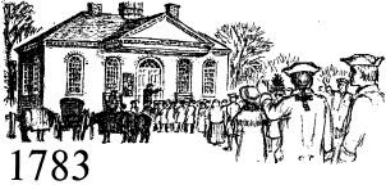
I have passed through Gates, Hertford, Bertie, and Northampton counties, in North Carolina: I am now in Southampton county, in Virginia, and have this day preached in St. Paul’s.
ASB_VOL1.PDF, p. 432
6 January 1783
MondayVirginiaAfter preaching at H. Cutherall’s1 we rode twenty miles to Graves’s, where I met with Mr. Jarratt: on Tuesday he preached for me at R. Jones’s; I exhorted; the meeting was lively.
ASB_VOL1.PDF, p. 432
Notes (1)
- Lednum, op. cit., 185. ↩
14 January 1783
TuesdayVirginiaWoolsey’s barn; cold day; cold house; cold people: there has been preaching here for seven years past, yet the society declines.
ASB_VOL1.PDF, p. 432
24 January 1783
FridayVirginiaAt brother Holmes’s, in Mecklenburg county. My soul mourns for the deadness of the people in our old circuits. We have great calls to South Carolina and Georgia.
ASB_VOL1.PDF, p. 432
27 January 1783
MondayVirginiaI preached, and the people seemed attentive; at present there is a good prospect of success.
ASB_VOL1.PDF, p. 432
1 February 1783
SaturdayVirginiaOur quarterly meeting began in Mecklenburg circuit. I hope God will favour us, and revive his work here.
ASB_VOL1.PDF, p. 432
2 February 1783
SundayVirginiaI was very unwell. Brother —— held a love feast: at noon I was much led out on Mark 8:4. I am quite dissipated with company, and greatly desire retirement.
ASB_VOL1.PDF, p. 432
4 February 1783
TuesdayVirginiaI offended some at Col. Bedford’s—they could not bear the thoughts of a possibility of falling from grace.
ASB_VOL1.PDF, p. 432
7 February 1783
FridayNorth CarolinaBeing unable to reach the quarterly meeting at Henley’s, I consented to preach at brother Crowder’s; God is my hope and my help at all times. My soul is kept in peace; and O that I could yet sink deeper into God from day to day!
ASB_VOL1.PDF, p. 433
9 February 1783
SundayNorth CarolinaRose with a sense of the Divine presence. I am greatly blessed in reading the latter part of Jeremiah’s Lamentations, and Ezekiel’s prophecy. I discover how the prophets, who spoke in different ages and places of the kingdom of God, accord in sentiment and language: so it is now with the preachers of the Gospel. I had great comfort in preaching at noon; and so I always have after severe trials.
ASB_VOL1.PDF, p. 433
10 February 1783
MondayNorth CarolinaBeing disappointed in crossing Roanoak on Saturday, we tried again this morning, and getting into Pittsylvania circuit, after riding about forty miles, reached brother Martin’s; I felt weary, more than I have done for months past.
ASB_VOL1.PDF, p. 433
13 February 1783
ThursdayNorth CarolinaRode twenty-five miles, but my horse failing, (bad fare, and no fodder for him,) we did not get in until two o’clock; the people, however, had waited: I was much led out in speaking, although very unwell from fasting, walking, and the exercise of my mind. NORTH CAROLINA
ASB_VOL1.PDF, p. 433
17 February 1783
MondayNorth CarolinaWe proceeded to the Yadkin circuit.1 It is well we are on this side the Dan River, the late rains might else have prevented our going on for a season. On our route we passed through Salem, a Moravian town,2 well built after the German manner: every one appeared to be in business. We lodged at Mr. Thomson’s, a settler on the Moravian lands, which is a tract of sixteen miles square: neither was the cabin comfortable, or our host pleasing.
ASB_VOL1.PDF, p. 433
Notes (2)
- The Yadkin Circuit was formed in 1780 and embraced all the counties in North Carolina west of Guilford. ↩
- The Moravians came to North Carolina in 1753, and most of them settled in what is now Forsythe County. Salem was selected as their central settlement. The first house in Salem was completed in 1769, and as early as 1794 a school for boys. In 1802 a girl’s school was opened, which soon became known as Salem Female Academy. (Grissom, op. cit., 23.) Woodmason says that the twelve-thousand-acre tract of land on which the Moravians settled was originally a grant to George Whitefield and sold by him to Count Zinzendorf, a German Moravian. (Hooker: The Carolina Backcountry on the Eve of the Revolution, 64, 77.) No evidence has been found, however, to substantiate this claim. ↩
2 March 1783
SundayNorth CarolinaCame to Short’s; and preached to a number of people, who appeared solemn, while I enforced “My Spirit shall not always strive with man.” We rode on to L——’s, lodged in a cabin; but the bed was clean.
ASB_VOL1.PDF, p. 433
3 March 1783
MondayNorth CarolinaCold as it was, we rode from Guilford to Caswell county, a distance of twenty miles, and met with a considerable congregation, among whom were a few warm-hearted people: I hope the Lord will work here. Here was a cabin with one room, a barn, and stables. I have little time to write or place to read: the barn is my closet for prayer.
ASB_VOL1.PDF, p. 433
7 March 1783
FridayNorth CarolinaI had a large congregation at Hillsboro,1 and there was more attention and solemnity observable than formerly. I visited three young men who are to die shortly; they wept while I talked and prayed with them. I walked to the church: it was once an elegant building, and still makes a good appearance at a distance, but within it is in ruins.2 The calamities and destructive waste of war have been severely felt in these parts.
ASB_VOL1.PDF, p. 434
11 March 1783
TuesdayNorth CarolinaPreached at Wims’s to about thirty people—one or two faithful souls among them. The son of Mr. Wims has been cured of a confirmed dropsy, by the recipe of Mr. P., of Brunswick, Virginia, who has thought proper to keep his remedy secret. Would it be a wonder if God should render it unsuccessful, or that some judicial dispensation should light on those who will not make generally known a discovery so useful? O what a distressed people have they been in these parts during the late contest! to the fightings without were added all the horrors of a civil war within. Poor brother B——t was twice robbed, and escaped with his life.
ASB_VOL1.PDF, p. 434
15 March 1783
SaturdayNorth CarolinaPreached to some Calvinistic professors, and sinners. The people are very careless, and professors are unfaithful: what have I suffered on account of these things!
Rode twenty-eight miles to H——’s;1 O how this family is changed for the worse! Black and white now wicked. We got our horses and took our leave about an hour by sun, and came to sister Kimbrough’s, where we found the family at prayer. We were wonderfully directed along a road I had never but once before trod: here my soul is blessed, my burden is gone.
ASB_VOL1.PDF, p. 434
Notes (1)
- This may have been Abraham Hill’s. (See Journal entry for July 19, 1780.) ↩
22 March 1783
SaturdayNorth CarolinaI preached to a poor, unfeeling people, at a place the circuit preachers had left. We were fortunate enough to eat about eleven o’clock; we got nothing more until about that hour next day; we pushed on to get to M——’s, arrived there at eight o’clock at night, there was no fodder, no supper, no prayer. Next morning we started at sunrise, and with difficulty getting over the river, came to Winstead’s about ten o’clock: here we breakfasted.
ASB_VOL1.PDF, p. 434
23 March 1783
SundayNorth CarolinaI have peace. I was close and fervent in speaking at the widow T——’s. Hard times—we can scarcely get food for man or beast.
ASB_VOL1.PDF, p. 434
26 March 1783
WednesdayNorth CarolinaI spoke at Green Hill’s, to a proud and prayerless people, many of whom were backsliders.
ASB_VOL1.PDF, p. 434
28 March 1783
FridayVirginiaBy getting my feet damp, I have taken cold, and have had a return of my old complaint; an inflammation in my mouth and throat: I could not eat flesh, and have little else to eat.
ASB_VOL1.PDF, p. 435
29 March 1783
SaturdayVirginiaMy throat growing worse, I was bled in the arm and tongue, which gave me some relief.
ASB_VOL1.PDF, p. 435
31 March 1783
MondayVirginiaPreached at T.’s and P.’s, with some fervency: the work revives. While I am enabled to praise God for health and peace, I lament that I am too apt to catch the spirit of the people I am among: I want to be more habitually serious.
ASB_VOL1.PDF, p. 435
5 April 1783
SaturdayVirginiaI heard the news that peace was confirmed between England and America.1 I had various exercises of mind on the occasion: it may cause great changes to take place amongst us; some for the better, and some for the worse. It may make against the work of God: our preachers will be far more likely to settle in the world; and our people, by getting into trade, and acquiring wealth, may drink into its spirit. Believing the report to be true, I took some notice of it while I treated on Acts 10:36, at brother Clayton’s, near Halifax, where they were firing their cannons, and rejoicing in their way, on the occasion. This day I prevailed with brother Dickins to go to New York,2 where I expect him to be far more useful than in his present station.
VIRGINIA
ASB_VOL1.PDF, p. 435
Notes (2)
- This was doubtless a report of the provisional treaty of November 30, 1782. The final treaty was signed at Paris on September 3, 1783. ↩
- See note under June 18, 1780. During the Revolutionary War, New York was occupied by the British and dropped from the list of appointments after 1777. This led some historians to declare that the work ceased and Wesley Chapel was occupied by the British army. (See Bangs, op. cit., I, 119.) This was not the case. The work continued throughout the war under the leadership of James Dempster, Daniel Ruff, Samuel Spragg, and John Mann, a local preacher. (John Street Records, I; Wakeley, op. cit., 260-98; Seaman, op. cit., 72 ff.) On Asbury’s appointment John Dickins proceeded at once to New York and took charge of the society. ↩
17 April 1783
ThursdayVirginiaQuarterly meeting at White Oak chapel; next day (Good Friday) Mr. Jarratt preached and administered the sacrament. After I had preached on Peter 3:18, J. Cromwell spake very pointedly at C.’s, an apostate: he came with great assurance to the door, as if he had a mind to say or do something; but J. Cromwell called him “factor for the devil, full of all subtility”—and maintained his ground.
ASB_VOL1.PDF, p. 435
21 April 1783
MondayVirginiaSet out for Buckingham, to visit some who have been separated from us on account of ordinances, and my spirit was refreshed among them. Preached at brother Baker’s, to a kind and tender people. Brother Agee of this neighbourhood had a child of ten years of age, that found the Lord in a gust of thunder and lightning, and straightway preached to all the family: at the same time, a poor backslider was cut to the heart; he thought himself to be dying, and cried out against the doctrine of not falling from grace as the means of his fall, and warned those about him of those destructive principles.
After long rides through Fluvanna and Orange circuits, I came to Petersburg on Monday, the fifth of May; and the next day to Ellis’s chapel.
ASB_VOL1.PDF, p. 435
7 May 1783
WednesdayMarylandOur conference began at this place. Some young labourers were taken in to assist in spreading the Gospel, which greatly prospers in the north. We all agreed in the spirit of African liberty, and strong testimonies were borne in its favour in our love feast; our affairs were conducted in love. From Petersburg I proceeded northward.
ASB_VOL1.PDF, p. 436
22 May 1783
ThursdayMarylandI enlarged on the fourteenth chapter of Hosea, at Adams’s church; and fear the subject was nearly descriptive of the state of the people.
MARYLAND
On my way to Baltimore, I dined at Colonel Thomas Dorsey’s. Here I gave an exhortation: after reading the burial service over a child, I proceeded on to Baltimore.
ASB_VOL1.PDF, p. 436
25 May 1783
SundayMarylandPreached at town, and Point; and was assisted to be searching.
ASB_VOL1.PDF, p. 436
27 May 1783
TuesdayMarylandWe began our conference1 with what preachers were present. On Wednesday, we had a full assembly, which lasted until Friday. We had a love feast, and parted in peace.
ASB_VOL1.PDF, p. 436
Notes (1)
- This was the first meeting of a conference following the official announcement of the cessation of hostilities by Washington on April 19. (Lee: Short History of the Methodists, 84, 85.) ↩
2 June 1783
MondayMarylandPreached at Joshua Cromwell’s, on my way to Calvert; thence rode on through dust and heat to Worthington’s;1 I found my old friends tender; here was a young woman in deep distress of mind, occasioned by the flight of a whip-poor-will close to her, which strangely led her to fear her end was nigh.
Rode to Mrs. Heneliss’s—a few poor people and Negroes, and the minister, Mr. Gates,2 from Annapolis, attended: I was as close as I could well be. Mr. Gates and myself had some talk on religion; he is a polite man. I went alone to the silent woods, and my soul was much melted in prayer; entreating the Lord to go with me and preserve me through all my weary journeys.
I had the pleasure of receiving a letter (with a sermon) from Mr. Ogden,3 a man of piety, who, I trust, will be of great service to the Methodist societies, and the cause of God in general.
ASB_VOL1.PDF, p. 436
Notes (3)
- John Worthington and his wife Ann, a daughter of Nicholas Dorsey, resided in the Jessup-Fort Meade Junction of Howard County. For nearly a decade the Worthington home was open for preaching and quarterly meetings, but there is no evidence of Asbury’s being a guest there after June 8, 1783. (See Journal entry for that date.) ↩
- Thomas Gates, D.D., was rector of St. Ann’s Church in Annapolis. ↩
- Uzal Ogden (1744-1822) was elected the first bishop of New Jersey, his native state. However, consent for his consecration was withheld by the General Assembly. This has been attributed by some to his tendency to associate too much with evangelical religious bodies. He encouraged the early Methodist leaders, as his letters to Asbury and Rankin indicate. (The Methodist Magazine, V, 424; VI, 28; Dictionary of American Biography, XIII, 643, 644.) ↩
6 June 1783
FridayVirginiaI rode to Gabriel Childs’s; was close and pointed. Poor Childs was very kind. I admire the piety, prudence, and good sense of the Misses Childs: since they have experienced religion, none of the great will employ them; their patrons, alarmed at the deep and gracious impressions apparent on the young minds of some of the scholars, withdraw their children at once.
ASB_VOL1.PDF, p. 437
8 June 1783
SundayVirginiaI have been well exercised, although I am not so weary as I expected: I have preached three times, and the weather is very warm. I believe the more we do, the more we shall be enabled to do for God and for our souls.
I visited sister R——y, sick of the putrid fever: I prayed with her, and trusted God with my safety from infection. I went to John Worthington’s; but I beheld such cruelty to a Negro that I could not feel free to stay; I called for my horse, delivered my own soul, and departed.
ASB_VOL1.PDF, p. 437
15 June 1783
SundayVirginiaRode to Bennett’s chapel;1 a pretty octagon house, built of logs: there was an insensible, but attentive people: I hope the time to favour them will come.
I had a comfortable time at John Willson’s; they were kind beyond measure. I visited the old gentleman, hoping he had done with disputation: the subject of slavery being introduced, he acknowledged the wrong done the blacks by taking them from their own country, but defended the right of holding them: our talk had well-nigh occasioned too much warmth. WEST VIRGINIA
ASB_VOL1.PDF, p. 437
Notes (1)
- Lednum (op. cit., 377) may be in error in placing Bennett’s and Willson’s in the Calvert Circuit. Asbury might have arrived in Montgomery County and preached in Sugar Loaf Chapel, which he called Bennett’s Chapel because it was near Bennett’s Creek or one of its trustees was John Bennett. In that case he was the guest of John Willson, son of Jonathan Willson, “the old gentleman.” (Scharf: History of Western Maryland, I, 729; Martz, op. cit., 7.) Or Asbury may have meant by Bennett’s Chapel the meeting house which later became the Tabernacle; it was “close to the big patuxent” in Anne Arundel County. (See Hartman: History of Methodism in Maryland, 1770-1912, microfilm in Library of Congress; Records of Anne Arundel County, April 5, 1783, liber NH No. 1, folio 323.) ↩
18 June 1783
WednesdayVirginiaAfter preaching at Shepherdstown, I rode to Boydstone and rested one day.
VIRGINIA
ASB_VOL1.PDF, p. 437
21 June 1783
SaturdayVirginiaPreached to a few people in Winchester. For several days past I have had to ride the whole day, and to preach without eating, until five or six o’clock in the evening, except a little biscuit; this is hard work for man and horse: this, however, is not the worst—religion is greatly wanting in these parts. The inhabitants are much divided; made up, as they are, of different nations, and speaking different languages, they agree in scarcely anything, except it be to sin against God.
WEST VIRGINIA
ASB_VOL1.PDF, p. 437
13 July 1783
PennsylvaniaPreached at John Hite’s at ten, at W. Hendrick’s1 at twelve, and at Willis’2 at four o’clock: all these were funeral discourses. Rachel Selby3 was a professor of religion: she dreamed that within three weeks she should die of the smallpox; she thought she heard something strike on the top of the house like the nailing up of a coffin; she took it as a warning, went to prayer, was exceedingly happy, sickened, and died triumphantly.
ASB_VOL1.PDF, p. 438
Notes (3)
- The Hendricks family lived about four miles from Shepherdstown and six miles from John Hite’s in present Jefferson County, West Virginia. The home was a Methodist preaching place. (See note under May 22, 1781; Scott and Ayres manuscripts.) ↩
- In 1788, entry for August 15, Robert Ayres mentions the Widow Willis. Asbury perhaps preached the funeral of her husband. The home was five miles from Boydstones and five miles from Mrs. Margaret Strode on Opeguan Creek. (See entries and notes under June 4, 1781, and July 18, 1782.) ↩
- A family named Selbey lived in this area, but the identification is doubtful. ↩
25 July 1783
FridayPennsylvaniaThe weather has been uncommonly warm; I felt weak, yet spoke closely to a few people; thence I rode to Paup’s, where I fell sick, and became unfit for service. I went alone into the fields and poured out my soul to God.
PENNSYLVANIA
Saturday and Sunday, 26, 27. Our quarterly meeting was held at Worley’s,1 near Little York: many spoke in our love feast with great simplicity, and my spirit was refreshed among them.
ASB_VOL1.PDF, p. 438
Notes (1)
- James Worley, an Episcopalian, lived one mile west of York. On January 24, 1781, his hired man returning from Baltimore was caught in a snowstorm and compelled to stay at a tavern twelve miles from York. Worley learned of it and took a fresh team of horses to help him. While at the tavern that evening he heard Freeborn Garrettson preach. As a result he became a Methodist, and a close friendship with Garrettson developed. The next day Mrs. Worley heard Garrettson preach in Daniel Wagner’s German Reformed Church in York and was also converted to Methodism. Their home became the stopping place and often the preaching place of both Garrettson and Asbury. (The Experience and Travels of Mr. Freeborn Garrettson, 175-76; Prowell, op. cit., 710-11.) ↩
31 July 1783
ThursdayPennsylvaniaPreached at Martin Boehm’s1 to many people.
ASB_VOL1.PDF, p. 438
Notes (1)
- Martin Boehm lived in Conestoga Township, Lancaster County, Pennsylvania. (See numerous references to Boehm and his son, Henry, throughout the Journal.) ↩
2 August 1783
SaturdayPennsylvaniaIndisposed and dejected. This is a barren land of religion, yet fruitful for everything else.
ASB_VOL1.PDF, p. 438
4 August 1783
MondayPennsylvaniaRose early to pour out my soul to God. I want to live to him, and for him; to be holy in heart, in life, and in conversation: this is my mark, my prize, my all—to be, in my measure, like God.
ASB_VOL1.PDF, p. 438
5 August 1783
TuesdayPennsylvaniaI preached on “It is a fearful thing to fall into the hands of the living God.”
Having lately heard of the death of Isaac Rollins, and having had an intimate acquaintance with him for some years, I will here notice some of the circumstances of his life. He was born and brought up in Patapsco Neck; and when grown up was uncommonly wicked. The Methodists, about this time, coming into those parts, he professed conviction and conversion through their instrumentality: some time after this he began to speak in public; roughly, but I believed in sincerity. I took notice of him, and appointed him to travel on the eastern shore; there he did some good and some harm: I then sent him to Pennsylvania; it was the same thing there. Eight years ago he was sent to Virginia: the first year he did much good; refusing, however, to take his appointment from conference, he stayed about Brunswick, causing disaffection among the people, whence sprung disorder: thence we removed him to Pittsylvania, where he was also useful; here he would not long remain, but went off to James City. After a considerable time we received him again, although contrary to the advice of some who knew him better. About two years past he was appointed to Pennsylvania: this appears to have placed him where he wished to be, and he presently set about making a party, enjoining secrecy upon his followers; after one quarter he left us, and set up for himself; and he and his few adherents took from us the Forest chapel. He began now to be forsaken; and being too lazy to ride a circuit, took to baptizing and begging, by way of subscription. There were many reports about him, which decency forbids to mention; which, nevertheless, were probably true. From these scandalous imputations on his character, he felt, it seems, the necessity of defending himself; and being at the Yellow Springs, he was for some hours employed in having his defence written: he did at times drink freely, but whether he was in liquor while there, I know not; so it was, that setting off on a mettlesome horse, he had not ridden many yards before he was thrown to the ground, and died on the spot. I had said, “I think he cannot stay long,” because he did pervert the right ways of the Lord. To the Lord I leave him, desiring that his sad example may be a warning to me and all preachers of the Gospel.
ASB_VOL1.PDF, p. 438
9 August 1783
SaturdayPennsylvaniaOur quarterly meeting begun in Philadelphia circuit, and was well attended; our love feast was spiritual, and many spoke feelingly of the goodness of God. From the quarterly meeting I went to Hoffman’s,1 in the Valley, where they are building us a new stone chapel: I spoke to them on 2 Chronicles 15:17.
ASB_VOL1.PDF, p. 439
Notes (1)
- George Hoffman lived a mile south of the Valley preaching house and was the first member of a regularly organized circuit in Chester County. (See Journal entries for February 5, 1781; August 2, 1784.) ↩
13 August 1783
WednesdayPennsylvaniaPreached at Fisher’s1 on my way, and in the evening reached the city of Philadelphia in lowness of spirits.
ASB_VOL1.PDF, p. 439
Notes (1)
- Asbury stopped at the Fisher home near Radnor. William C. Fisher, then a boy, brought Asbury’s horse to him. ↩
16 August 1783
SaturdayPennsylvaniaVisited the sick, and was a little refreshed. I have constant peace with God, and my heart is dead to every unlawful pursuit. The city is all in motion—stores full of goods, great trade going on; all things prosper but religion.
ASB_VOL1.PDF, p. 439
17 August 1783
SundayPennsylvaniaWas a melting time to me and many others at our love-feast. Brother Jacob Baker1 (?) felt the power of God as soon as he came: he had been engaged some days before; and so had I. O that all in the house had been so predisposed, surely it would have been a great time of the Lord’s power! I preached on 2 Thessalonians 1:6-8, striking a side-blow at the Universalist system; I made one of our sisters sick for a day.
ASB_VOL1.PDF, p. 439
Notes (1)
- Jacob Baker was a wholesale dry-goods merchant who joined the Methodists in 1773. He lived at 62 Front Street in Philadelphia and was a trustee of St. George’s Church and president of the board of the Chartered Fund. (Lednum, op. cit., 44. There is a possibility that the man was James Barton, mentioned on April 11, 1776, and elsewhere.) ↩
22 August 1783
FridayNew JerseyI have ridden about one hundred miles since I left Philadelphia, and preached nine times: the weather is very warm, and the poor flesh complains; yet I bless God for health to drag along while so many are seriously afflicted. My dear old friend, Mrs. Maddox, aged one hundred and two last May, went into eternity about a month ago. NEW YORK
ASB_VOL1.PDF, p. 440
25 August 1783
MondayNew JerseySet out for New York: arrived there, I found brother Dickins preaching.1
ASB_VOL1.PDF, p. 440
Notes (1)
- See notes under July 5, 1780, and April 5, 1783. Asbury had not been in New York since November 28, 1774. John Dickins and his family occupied the small house on the John Street property, which for the first time became the parsonage of a married preacher. The house was carefully refurnished for him. The British still occupied the city, although evacuation had been ordered. By mutual consent there was a delay of nearly four months during which numerous loyalists removed. Among these were John Mann, Charles White, Philip Marchinton, and others from the John Street Society, who went to Nova Scotia and established a society there. The trustees had a meeting on September 16, 1783, for that purpose, (John Street Records, I; Seaman, op. cit., 76 ff.) ↩
27 August 1783
WednesdayNew JerseyI was close and searching; a few felt it—a little of the good old spirit yet prevails among these people. We had preaching generally morning and evening, and I trust the seed sown will not all be lost.
ASB_VOL1.PDF, p. 440
31 August 1783
SundayNew JerseyEditorial note: The supplied edition cites “2 Corinthians 13:15” (ASB_VOL1.PDF, PDF page 440), but this is not a valid reference in the library’s KJV numbering. The source’s own footnote discusses the difficulty: There is no such verse. The text may have been 2 Corinthians 13, 5. These suggestions remain conjectural. The 1821 printed journal also reads “2 Cor. xiii. 15”; that older witness does not remove the citation difficulty. Francis Asbury, Journal (1821), PDF page 369.
In the evening I thought it necessary to put them on an examination whether they were Christians or not. I spoke on 2 Corinthians 13:15.1 I was very much led out; a power went forth, and I hope some real good was done.
ASB_VOL1.PDF, p. 440
Notes (1)
- There is no such verse. The text may have been 2 Corinthians 13, 5. ↩
1 September 1783
MondayNew JerseyLeft the city, and spent some time at Mr. Woglom’s1 (?) in reading the additional works of Mr. Fletcher.
ASB_VOL1.PDF, p. 440
Notes (1)
- Asbury probably stayed with Abraham Woglom on the south shore of Staten Island or with Mr. Ward on the east shore. ↩
3 September 1783
WednesdayNew JerseyMy soul is serene. I find it expedient to spend an hour in prayer for myself alone; and an hour each morning and evening for all the preachers and people.
NEW JERSEY
ASB_VOL1.PDF, p. 440
11 September 1783
ThursdayNew JerseyAt Mount Holly1 I had more people than I expected. On Friday, I rode a long, barren way to the Forks of Egg Harbour.2
ASB_VOL1.PDF, p. 440
Notes (2)
- Mount Holly is in Burlington County, New Jersey. ↩
- Asbury was now in Atlantic County, where Egg Harbor City is located. Asbury doubtless preached in the old Presbyterian church, known as Clark’s Mill Meeting House, in Port Republic. The Methodist church now there probably stems from Asbury’s visit. The mileage indicates that the bishop also preached at Blackman’s Meeting House, built by Presbyterians at Cedar Bridge where Zion’s Methodist Church in Bargains-town now stands. Methodism in both Bargainstown and Tuckahoe stems from Asbury’s visit. (Heston’s Annals, I, 180-85.) ↩
14 September 1783
SundayNew JerseyI injured myself by speaking too long and too loud. I rode seven miles, got wet, had poor lodgings, with plenty of mosquitoes; next day, poorly as I was, I had to ride seventeen miles, and spoke while I had a high fever on me. I laid me down on a plank—hard lodging this for a sick man.
ASB_VOL1.PDF, p. 440
16 September 1783
TuesdayDelawareRode fifteen miles; could hardly preach: my subjects yesterday and to-day were, Paul to Titus 2:2-12, and 1 Peter 4:18.
ASB_VOL1.PDF, p. 441
21 September 1783
SundayDelawareI had a wild chase—first, to New Englandtown; but their minister had warned the people against hearing us:1 thence to Cohansey;2 here Mr. Vantull had appointed to preach at the same hour, although my appointment had been given out some time before; arriving, however, before him, I preached in the court house—and cleared out; those who remained met with hard blows.
ASB_VOL1.PDF, p. 441
Notes (2)
- See Asbury’s letter to Wesley dated September 20, 1783. ↩
- New Englandtown was a village of Fairfield township, Cumberland, south of Bridgetown. Cohansey was the present Bridgetown. There was a “free church” at May’s Landing in which Asbury may have preached in this ten-day preaching mission in South Jersey. (Gordon: Gazeteer of New Jersey, 108, 197; Story of the First Methodist Church, Bridgeton, 4; Wilson: The Jersey Shore, I, 188.) ↩
22 September 1783
MondayDelawareIn the evening at Salem;1 a number of Friends attended, and were serious. Here a few of our scattered people have attempted to build a house of worship, but found themselves too weak to accomplish it: they applied to some of the people, called Quakers, for assistance, who subscribed liberally; the matter was talked over, as I am informed, at their quarterly meeting; when it was objected, “that we spoke for hire;” it was answered, “No—it was only for a passing support,”—so there was consent given that Friends who were free to do it, might give.
DELAWARE
Passed through Philadelphia, and came on Saturday, the twenty-seventh, to Dover, where I preached at nine o’clock on the Sabbath day, and at Barratt’s chapel at three o’clock.
ASB_VOL1.PDF, p. 441
Notes (1)
- Salem, New Jersey, was settled by the first English emigrants to West Jersey. Daniel Ruff introduced Methodism in 1774; and the first society was formed in the house of John Murphy, a Presbyterian. Benjamin Abbott was converted and baptized here. Henry Ffirth and John McClaskey, who later became a preacher, were early converts; and Ffirth was one of the builders of the church here mentioned by Asbury. Abbott formed a society at Quinton’s Bridge, three miles from Salem, in the home of Benjamin Weatherby in 1781 or 1782. (Atkinson, op. cit., ch. 11.) ↩
2 October 1783
ThursdayDelawareI preached at Queen Anne’s chapel,1 where a considerable number attended, and where many profess religion.
ASB_VOL1.PDF, p. 441
Notes (1)
- This was Dudley’s Meeting House near Sudlersville. Because it so far surpassed other local Methodist places of worship, some gave it the more dignified title, Queen Anne’s Chapel. (Lednum, op. cit., 379; Emory, op. cit., 568-71.) ↩
3 October 1783
FridayDelawarePreached at Anderson’s,1 in Kent county, to a large company, and was much assisted. Of late I have been greatly subject to dejection and gloominess of mind, which I have been ready to attribute to excessive exercise, and the drinking of tea and coffee: I mean to quit the use of these for a season, and see what effect this will produce.
ASB_VOL1.PDF, p. 441
Notes (1)
- James Moat Anderson, M.D. (1752-1820), was educated at the University of Edinburgh. He achieved a reputation enjoyed by few other people in the neighborhood of Chestertown, Maryland. He was conscientious and eminently pious, and in early youth he united with the Methodist Episcopal Church and wore the white lawned stock and broad-brimmed hat so characteristic of the leaders of that sect. (Cordell: Medical Annals of Maryland, 1799-1899, 302: The Methodist Magazine. XI, 135.) ↩
11 October 1783
SaturdayDelawareI found some faithful people at brother Joseph Hartley’s, in Talbot. Here I met with brother Garrettson, and heard him speak with pleasure: we spent the evening together at Mr. Benson’s1 in reading, conversation, and prayer.
ASB_VOL1.PDF, p. 441
Notes (1)
- Brigadier-General Perry Benson, of the Maryland Line of the Continental Army, lived at St. Michaels, Maryland. ↩
12 October 1783
SundayDelawareWe had about five hundred people at the Bay side.1 I find the prejudices of the people in Talbot County grow weaker: and there is some revival of religion among them. I preached on Hebrews 3:12-14. One that was formerly full of pride and contempt for religion, ran to the bed while I was speaking, and lay there till after sermon. She went home sick; I trust of a wounded conscience. I crossed the ferry to Cambridge.
ASB_VOL1.PDF, p. 441
Notes (1)
- This was Bayside Chapel, near the present Wittman in Talbot County, Maryland. ↩
15 October 1783
WednesdayDelawareMet brothers Joseph Wyatt and Leroy Cole, at John McKeel’s, and our spirits were refreshed together. I am happy, though often something unwell. I have great liberty in preaching and in prayer. I feel nothing contrary to love to God and all mankind. Bless the Lord, O my soul!
ASB_VOL1.PDF, p. 442
23 October 1783
ThursdayDelawareI enjoy much peace with God, although I am left to serve alone. But God is with me. O healthful sickness, blessed pain, if the Lord supports! I am now beside the Chesapeake Bay, here Calvert and Dorset lie opposite to each other; eight years ago, when going down the bay, little thought I of the great things God was about to do for both shores.
ASB_VOL1.PDF, p. 442
25 October 1783
SaturdayDelawareOur quarterly meeting began at Kane’s barn. Our love feast was large, powerful, and lively; we had very sensible tokens of the goodness of God. Here is a blessed work of God among a people who were once brutish and wicked.
ASB_VOL1.PDF, p. 442
28 October 1783
TuesdayDelawareI had to hasten away to John Phoebus’s, sixteen miles, to perform the funeral rites of William Wright,1 a native of Ireland. He began to preach about three years ago: last conference he was received as a travelling preacher, and appointed to Annamessex circuit, where he laboured very faithfully. From the best accounts we are warranted in believing that he died happy in God. We had a solemn time at our meeting, and I hope the impressions made will be lasting. I want to feel and live the holiness I preach to others; and this I might do, were I more diligent in watchfulness and prayer:—God will always help those who do all they can to help themselves.
ASB_VOL1.PDF, p. 442
Notes (1)
- This was William Wright, the first American Methodist itinerant to die. The fact that at the time no obituaries were printed in the conference Minutes accounts for the meager information concerning him. (Hedges: Crowned Victors, 1.) ↩
2 November 1783
SundayDelawareThere were few at Captain Downing’s when I began to speak, but before I had done preaching we had a considerable company; thence we returned to Melvin’s,1 where I enforced Luke 11:13, to a few people. The word was made a blessing to the woman of the house, who went with us weeping to quarterly meeting. Our love feast was in life and power, although there were not so many and clear testimonies as in Dorset.
Riding leisurely to brother Farley’s, I missed my road, and stopped at a poor man’s house; so poor that the furniture within was not, perhaps, worth twenty shillings; the woman listened to me with great attention while I spoke to her about her soul: after praying with her and her children, I pursued my journey. I bless God I have seen so much of rough and smooth, that neither makes any impression on me; I know how to be abased and how to abound.
I spoke at Mr. Bassett’s, in Dover, to many people; thence rode on to the Crossroads.2 Here a design had been formed to prevent my preaching; and Mr. Bishop came, as I was told, to advise me to forbid resistance; had he and another honestly discouraged those who had got together to interrupt preaching on a former occasion, resistance and forbearance would have been equally unnecessary. I rode on through the rain and darkness to Mr. Thompson’s [Cecil County, Maryland].
ASB_VOL1.PDF, p. 442
25 November 1783
TuesdayVirginiaI visited some families, and my soul was grieved at the backslidings of some of my old friends. O may the Lord reach their hearts! Made a short stay in Baltimore, and preached at Elk Ridge on my way to Virginia. When we reached the Potomac, brother Phoebus1 was unwilling to cross; so we stayed at the public house without fire, candle, or supper; and the host drunk. Next morning we crossed the river, and were kindly received at brother Bushby’s.
VIRGINIA
ASB_VOL1.PDF, p. 443
Notes (1)
- William Phoebus (1754-1831), a native of Somerset County, was admitted on trial and appointed to the Frederick Circuit. This eccentric but respected Methodist was antiquarian, author, physician, and scholarly preacher. (Wakeley, op. cit., 326-34; Stevens, op. cit., II, 114, 115; Minutes, 1832.) ↩
28 November 1783
FridayVirginiaPreached to a large congregation in the court house at Alexandria. On my way to Fredericksburg I fell in with some gentlemen, and conversed with them on the subject of religion; they sought refuge in God’s foreknowledge, and thence drew their proofs that their Creator would not eternally damn them.
ASB_VOL1.PDF, p. 443
30 November 1783
SundayVirginiaCame to Collins’s, in Caroline county, in time to escape the rain; but the people had no notice of my coming. I enjoy peace of soul. I seek nothing but God; and I feel uncommon tenderness for the people.
ASB_VOL1.PDF, p. 443
4 December 1783
ThursdayVirginiaI preached to about thirty people at old father Stedman’s, in King and Queen county, Gloucester circuit: myself and the people were blessed in waiting on God.
ASB_VOL1.PDF, p. 443
7 December 1783
SundayNorth CarolinaI went to Williamsburg, and found the people waiting: the key of the court house being lost, or mislaid, I stood without, and was assisted on Acts 17:30, 31. I feel some faith that God will call out a people in this place.
ASB_VOL1.PDF, p. 444
11 December 1783
ThursdayNorth CarolinaWent down to James River in hopes of getting an early passage across, but was detained till twelve o’clock. I spoke and prayed at Mrs. Ellis’s: since I last prayed in her house, one of her children, a son, has died of a consumption; he would not allow himself to speak of worldly affairs on the Sabbath day; we have good cause to believe he died in the Lord; and doubtless there are hundreds whom we know not of, that thus go to God and rest from their labours.
After being detained by a storm on Craney Island, on
ASB_VOL1.PDF, p. 444
18 December 1783
ThursdayNorth CarolinaThursday, December 18, set out, through a dripping rain, for Portsmouth; and reached there about one o’clock.
NORTH CAROLINA
ASB_VOL1.PDF, p. 444
20 December 1783
SaturdayNorth CarolinaI spent the evening at Colonel Williams’s,1 in Currituck county, North Carolina, in company with brothers Ivy, Baldwin, and Morris.2 The work revives; many are brought to God; and I am comforted.
ASB_VOL1.PDF, p. 444
Notes (2)
- Colonel Halowell Williams was a prominent Methodist and a member of Congress held at Halifax in 1776. He was the first man who entertained a Methodist preacher in North Carolina. Pilmoor visited him in 1772, and Coke was in his home in 1785. (Grissom, op. cit., 34-36, 148.) ↩
- Richard Ivy was on the Nansemond Circuit, John Baldwin was at Norfolk, and Edward Morris was on the Bertie Circuit. (Minutes, 1783.) ↩
21 December 1783
SundayNorth CarolinaI suppose we had five hundred people at Coinjock chapel.1 Monday at White’s, and Tuesday at Winfield court house,2 I presume we had six or seven hundred people, inattentive and wild enough: I had little faith, and less liberty. From this neighbourhood I went to Nixonton,3 where numbers also attended; but I spoke with little comfort to myself. Spirituous liquor is, and will be, a curse to this people.
ASB_VOL1.PDF, p. 444
Notes (3)
- Coinjock Chapel was an Anglican church in Currituck County which was regularly used by the Methodists. Pilmoor preached there in 1772, and Coke preached there in 1785. Coke referred to it as a “pretty chapel” and remarked that “we do regular duty in it.” The Methodists have never established permanent work at Coinjock, however. (Grissom, op. cit., 35.) ↩
- Winfield Courthouse was two miles south of Elizabeth City in Pasquotank County, North Carolina. It was located there from about 1758 until the 1780’s. The building said to have been the courthouse is now a residence. ↩
- Nixonton was on Little River in Pasquotank County. ↩
24 December 1783
WednesdayNorth CarolinaSet out in the rain to Hertford1 town; I spoke in a tavern; the people seemed wild and wicked altogether. I journeyed on through the damp weather, and reached Pettigrew’s about six o’clock. Here I received a letter from Mr. Wesley, in which he directs me to act as general assistant; and to receive no preachers from Europe that are not recommended by him, nor any in America, who will not submit to me, and to the minutes of the conference.
I preached in Edenton, to a gay, inattentive people: I was much pleased with Mr. Pettigrew;2 I heard him preach, and received the Lord’s supper at his hands. Thence I crossed the Chowan river, and preached, journeying through Bertie, Hertford, and Northampton counties, to considerable congregations.
ASB_VOL1.PDF, p. 444
Notes (2)
- Hertford was in Perquimans County. ↩
- Charles Pettigrew was the Anglican pastor at Edenton in Chowan County. He entertained the circuit riders, and his chapel on his plantation was a regular Methodist preaching place and a point on the Columbia Circuit until 1839. Asbury doubtless preached in his church, though the courthouse was sometimes used. The Methodist society was formed in 1808 by Enoch Jones. (Records of Edenton Methodist Church; Miss Alma Browning.) ↩