1784
2 January 1784
FridayVirginia
Rode to Doctor P——’s. After preaching here, I saw Henry Metcalf,1 who travels through this circuit, a man of a sorrowful spirit, and under constant heaviness.
ASB_VOL1.PDF, p. 446
Notes (1)
- Henry Metcalf was admitted to the conference in 1783, appointed to the Pasquotank Circuit, and died in 1784. (Minutes.) ↩
5 January 1784
MondayVirginiaA few met me at Northampton court house; after preaching we rode on through the rain, to brother Anthony Moore’s, where I was warm, dry, and comfortable.
I have read two volumes of Sermons written by Mr. Knox, of the West Indies. I am much pleased with his defence of revealed religion; and, indeed, through the whole work there is something sublime and spiritual; so catholic too, and free from peculiar doctrines: I esteem him as one of the best writers amongst the Presbyterians I have yet met with. VIRGINIA
ASB_VOL1.PDF, p. 446
11 January 1784
SundayVirginiaI had five hearers, beside the family; we then rode through rain and snow to brother John Seward’s.
ASB_VOL1.PDF, p. 446
12 January 1784
MondayVirginiaOn my way to Isham Malone’s my horse fell on the ice, and caught my leg under him: I had some bread in my great-coat side-pocket that was under me in my fall, which made it worse, and I hurt my knee too: I had presence of mind, and prayed as I fell. The snow being deep saved me much from damage. I lament the love of the world, covetousness, and other evils that lie heavy on the Church of God.
ASB_VOL1.PDF, p. 446
13 January 1784
TuesdayNorth CarolinaI preached.
ASB_VOL1.PDF, p. 447
15 January 1784
ThursdayNorth CarolinaAfter preaching at Easter’s, I rode to Tignall Jones’s: his wife has waded through deep waters. I have spent some time in Mecklenburg circuit; but such has been the weather that I have had but few hearers. We tried to cross Staunton River at Owen’s ferry, but could not for the ice; we then had a long cold ride to Coles’s ferry, and here we got over. We lodged where we had nothing to eat or drink but a little toast and water: I went shaking to bed as if I had an ague on me.
NORTH CAROLINA
After riding some miles to Halifax court house, about ten o’clock in the morning I had some coffee for my breakfast.
ASB_VOL1.PDF, p. 447
31 January 1784
SaturdayNorth CarolinaPreached at a church, and held a love feast. My toe, which has been inflamed for some time past, is now very troublesome. Sister Martin’s kindness has been a plaster for all my sores.
ASB_VOL1.PDF, p. 447
5 February 1784
ThursdayNorth CarolinaRode to Guilford quarterly meeting;1 thence, twenty-five miles, to Short’s; and thence to Madeira’s; here my toe became so bad, I was obliged to halt. I applied different poultices to take out the inflammation.
ASB_VOL1.PDF, p. 447
Notes (1)
- Guilford Circuit was carved out of the New Hope Circuit in 1783. Its boundaries are uncertain; but it covered most of the area between Raleigh and Greensboro, including Guilford County. The place of the quarterly meeting attended by Asbury is not known but was probably not as far west as Guilford Courthouse. (See Grissom, op. cit., 97.) ↩
11 February 1784
WednesdayNorth CarolinaI feel much better, and hope shortly to be able to go on the Lord’s work again; this is my life, my all. During my confinement I have been reading the sacred text.
ASB_VOL1.PDF, p. 447
15 February 1784
SundayNorth CarolinaLord, my soul thirsteth for holiness in myself and others. I found my heart led out in prayer for those I cannot preach to. The Lord is my witness, that if my whole body, yea, every hair of my head, could labour and suffer, they should freely be given up for God and souls. During my heavy affliction I could scarcely have met with a greater disappointment than my being unable to go to the Yadkin,1 but it might not be to any great purpose; and Providence has hindered. By the help of a stick, I can now visit the barn and stable. The more I pray, Satan tempts the more— but this is according to custom. I hope to live the life of love and holiness below, triumphing over all my foes.
ASB_VOL1.PDF, p. 447
Notes (1)
- The Yadkin Circuit, which Asbury did not visit on this journey, covered the whole of North Carolina west of Guilford County. It was formed in 1780 and first served by Andrew Yeargin. (See Minutes; Grissom, op. cit., map.) ↩
18 February 1784
WednesdayNorth CarolinaBeing sent for, I went to Mr. Bostwick’s (?), on Dan River.1 I have been engaged in reading Baxter’s Saints’ Rest,2 and my soul was often drawn to God in secret prayer.
ASB_VOL1.PDF, p. 447
22 February 1784
SundayNorth CarolinaPreached at the funeral of Absalom Bostwick’s daughter.
ASB_VOL1.PDF, p. 448
23 February 1784
MondayNorth CarolinaPreached twice: began to fear I should stop again—my foot swelled, and my toe inflamed.
ASB_VOL1.PDF, p. 448
24 February 1784
TuesdayNorth CarolinaRode forty miles—next day preached to fifteen people.
ASB_VOL1.PDF, p. 448
26 February 1784
ThursdayNorth CarolinaRode to Hillsboro. The snow was deep—the street dirty— my horse sick—the people drinking and swearing. I endeavoured to preach on “A man’s gaining the whole world,” &c.
ASB_VOL1.PDF, p. 448
27 February 1784
FridayNorth CarolinaBrothers Allen and J. Cromwell1 were with me: we took sweet counsel together, and refreshed each other’s bowels in the Lord.
ASB_VOL1.PDF, p. 448
Notes (1)
- Beverly Allen was on the Salisbury Circuit and James O. Cromwell on the Pittsylvania Circuit. ↩
4 March 1784
ThursdayNorth CarolinaPreached at Browder’s, and then hasted to the widow Kimbrough’s. Here I was wonderfully entertained with a late publication by Silas Mercer, a Baptist preacher, in which he has anathematized the whole race of kings from Saul to George III. His is republicanism run mad. Why afraid of religious establishments in these days of enlightened liberty? Silas has beaten the Pope, who only on certain occasions, and for certain reasons, absolves subjects from allegiance to their sovereigns; and if the nations of Europe believed the sweeping doctrines of Silas, they would be right to decapitate every crowned head, and destroy every existing form of Church government. If plunging-baptism is the only true ordinance, and there can be no true Church without it, it is not quite clear that ever Christ had a Church until the Baptists plunged for it.
ASB_VOL1.PDF, p. 448
7 March 1784
SundayVirginiaAlthough the day was unfavourable, many attended at Pope’s chapel, where I was wonderfully assisted, and enabled to be close on 2 Corinthians 13:5—a favourite subject. We had a short, simple, living love feast.
ASB_VOL1.PDF, p. 449
8 March 1784
MondayVirginiaI enlarged on Isaiah 55:6, 7, at Pope’s chapel. This neighbourhood has been poisoned by preaching Antinomianism; but I hope it will yet come to something.
ASB_VOL1.PDF, p. 449
11 March 1784
ThursdayVirginiaAfter preaching at S——’s, we rode to Long’s.1 I have had great times in Tar River circuit;2 the congregations have been large and living, more so than in any circuit I have passed through since I crossed the Potomac.
ASB_VOL1.PDF, p. 449
17 March 1784
WednesdayVirginiaI preached at Jones’s chapel1—a better house than I expected to have seen built by the Methodists in North Carolina. We then rode fifteen miles to W——’s, where we were kindly received, and comfortably entertained.
VIRGINIA
ASB_VOL1.PDF, p. 449
Notes (1)
- Jones lived in the western part of Halifax County. Jesse Lee preached his first sermon in Jones’s barn. ↩
31 March 1784
WednesdayVirginiaAfter passing through Brunswick circuit, I preached at Mr. Jarratt’s barn. Mr. Jarratt was very kind, and the people very attentive.
ASB_VOL1.PDF, p. 449
4 April 1784
SundayVirginiaPreached at Finney’s old place, where I suppose there might be some that had hardly heard preaching since I was here last year: thence I rode through Powhatan, Cumberland, and Buckingham counties, where there is poor encouragement for religion. O my Lord, arise for thine own glory, visit the people in mercy, and make known thy power in the salvation of poor sinners!
We crossed James river in a canoe; our horses by wading and swimming got over. I found some people of feeling at T. Key’s, to whom I preached on John 3:19; thence we rode the river seventeen miles along a very rude, uneasy path, to preach to fifteen people. After getting a little cold bacon, we rode on to Crenshaw’s, where we fared better.
ASB_VOL1.PDF, p. 449
11 April 1784
SundayVirginiaPreached at Granger’s1 church to perhaps five hundred people. From the church we rode on to Dr. Hopkins’s. I could not see; feeling the hills and dales, we pushed on about thirty miles. We got in, cold and fatigued, about eleven o’clock. A drunken man we fell in with conducted us four or five miles. The labour of the day has been performed with little refreshment for either man or horse. Since yesterday week at noon, I have ridden one hundred and fifty-four miles in this rough country. Arriving, through the woods, at Martin Key’s,2 I found a happy change since I was here last year—bless the Lord! I will take it as an answer to prayer. Now, the whole family are called together for worship—the man is seeking, the woman has found the Lord, and the children are serious.
ASB_VOL1.PDF, p. 449
17 April 1784
SaturdayMarylandQuarterly meeting at brother Fry’s: a living power went through the people in our love feast. It was supposed the congregation consisted of nearly, or quite, seven hundred people. I hope the word was sealed to some hearts. I do not love, live, or labour as I desire. O, my soul! stir up thyself to take hold of the Lord by diligence and faith every moment.
ASB_VOL1.PDF, p. 450
25 April 1784
SundayMarylandI preached at the Manakintown on the Epistle to the Church at Smyrna.
ASB_VOL1.PDF, p. 450
26 April 1784
MondayMarylandRode on to Walthall’s, and thence to Petersburg, where we found a house full at six o’clock. On Tuesday we reached Mabry’s chapel at quarterly meeting, just as preaching was over.
ASB_VOL1.PDF, p. 450
29 April 1784
ThursdayMarylandRode to Ellis’ chapel, in Sussex county, where we held our conference the two ensuing days. Brother O’Kelley gave us a good sermon: “I keep under my body, and bring it into subjection,” &c. Mr. Jarratt gave us a good discourse on 1 Timothy 1:4. Our business was conducted with uncommon love and unity.
From this conference I proceeded on and crossed James River on my way to the north, and was led to cry to God to go with us and meet us there. MARYLAND
ASB_VOL1.PDF, p. 450
20 May 1784
ThursdayMarylandReached Baltimore about seven o’clock. I have ridden about fifty miles to-day. In crossing the Potomac, when about midway, we turned back to meet the stage, and I found Dr. Lusby. I learned by letter that my father and mother are yet alive.
ASB_VOL1.PDF, p. 450
25 May 1784
TuesdayMarylandOur conference began, all in peace. William Glendenning had been devising a plan to lay me aside, or at least to abridge my powers.1 Mr. Wesley’s letter settled the point, and all was happy. The conference rose on Friday morning.
I find the spirit and conversation of those I am among steal upon me. My soul is in travail to be holy in all manner of conversation and godliness. It is amazing to behold how the ice, coming down the Potomac, has swept the banks, cutting through large trees, removing rocks of incredible size, and smoothing the river banks, as though many hundreds of men had been employed for that purpose.
I was solemn and blessed at Sharpsburg. A poor Irish woman, who had treated the Methodists ill, was convicted, and sent for me to pray with her. God grant that the impressions made may be lasting!
VIRGINIA—WEST VIRGINIA
From Sharpsburg I hastened on to Shepherdstown, where the Lord set home his word. Came to sister Boydstone’s, one of the kindest women in Virginia. Here all things were comfortable. I was sleepy, weary, and feeble, but my body and soul were refreshed; thanks be to God for every friend! I covenanted with God to be more in prayer; my soul is humbled before the Lord.
ASB_VOL1.PDF, p. 450
Notes (1)
- Wesley’s letter of October 3, 1783, settled the devices of Mr. Glendenning. Wesley said: “I do not wish our American brethren to receive any (English preachers) who make any difficulty on receiving Francis Asbury as the general assistant.” The sessions at Ellis’s preaching house and at Baltimore in 1784 reiterated those sentiments with the latent implication that it applied to such troublemakers as Mr. Glendenning. (Bangs, op. cit., I, 148, 149; Minutes; Ware, op. cit., 83, 84.) ↩
17 June 1784
ThursdayVirginia—West VirginiaLord, strengthen my resolution to be thine in heart, more and more. Make, and keep me always watching unto prayer! I preached at Martinsburg to a hundred people or more, and was led out while I enlarged on, “What is the Almighty that we should serve him,” &c. Thence to Stroud’s at seven o’clock, and spoke with great plainness; the people stared upon us. Next morning we had all the workmen to prayer. The mother and two daughters appeared tender, and wept when we took our leave of them. Who knows what God may do for them?
ASB_VOL1.PDF, p. 451
20 June 1784
SundayVirginia—West VirginiaI attempted to preach at Newtown.1 I raged and threatened the people, and was afraid it was spleen. I found, however, that Mr. Otterbein,2 a worthy German minister, had done the same a little time before.
ASB_VOL1.PDF, p. 451
25 June 1784
FridayVirginia—West VirginiaWe had hard work in crossing a mountain six miles over, and it was still worse the next day in crossing the greater mountain.1 I found it very warm work, though stripped. We struggled along nevertheless, and met with about four hundred people at Strader’s,2 to whom I spoke on 2 Corinthians 13:5,—I hope not in vain. While I was at prayer, a large limb fell from a sycamore tree in the midst of the people, yet not one received the least injury; some thought it was a trick of the devil; and so indeed it might have been. Perhaps he wanted to kill another, who spoke after me with great power.3
ASB_VOL1.PDF, p. 451
Notes (3)
- These mountains were apparently the Great North and South Branch Mountains in Hardy County, West Virginia, on the Virginia border. ↩
- Christopher, John, and Michael Strader lived in Hampshire County, Virginia, now either Grant or Hardy County, West Virginia. (Maxwell: History of Randolph County, W. Va., 474.) ↩
- This was perhaps Hezekiah Bonham, who accompanied Asbury on this tour. He was a local preacher and a member of the first class established by Strawbridge in Maryland. (See Minutes, 1785; Payton, op. cit., 22-23, 99; Armstrong: History of the Old Baltimore Conference, 7, 17.) ↩
27 June 1784
SundayMaryland—PennsylvaniaAt Hyder1 I was much tried in spirit, yet I was enabled to speak pure, living truth, on Titus 3:2-5, at three o’clock. I was assisted to speak feeling words to some souls at Isaac Van Meter’s2 though in pain and weariness. Thence I hasted to preach at six o’clock at Conrad Hoffman’s,3 a third time this day, where I enlarged on Job 21:15. About ten o’clock at night I came to brother Samuel Dew’s,4 very weary, and lodged there. I hope this day’s labour will be useful to my own soul and the souls of others.
ASB_VOL1.PDF, p. 452
Notes (4)
- This preaching place seems to have been the home of Adam Hyder (or Heider) near Morefield, West Virginia. (See Journal entry for August 10, 1790.) Robert Ayres manuscript journal for February 23-March 23, 1788, lists the preaching place on the Alleghany Circuit, and Hyder’s seems to be the only point at which Asbury could have preached and reached Dew’s that night. ↩
- Isaac Van Meter (1757-1837) lived at Old Fields, Hardy County, West Virginia. He and his wife, Elizabeth, gave the land for an early Methodist meetinghouse in the area. (Deed Book, XII, 340, Moorefield, West Virginia; Halterman: History of Methodism in the South Branch Valley; Kercheval: History of the Valley of Virginia, 50, 55; Lednum, op. cit., 314; Journal entry for August 10, 1790.) ↩
- Conrad Hoffman lived near Old Fields, West Virginia. ↩
- Samuel Dew at this time lived a few miles south of present Romney, West Virginia. He later moved to Potts Creek in present Monroe County where he built Dew’s Chapel. (See Journal entry for July 10, 1790, and May 28, 1793. Also Whatcoat’s Journal for July 10-11, 1790.) ↩
28 June 1784
MondayMaryland—PennsylvaniaPreached twice1—speaker and hearers too dull. Alas!
ASB_VOL1.PDF, p. 452
Notes (1)
- Asbury probably preached at Samuel Dew’s and Richard Williams’. (See note under June 10, 1781, and entry for July 30, 1784.) ↩
29 June 1784
TuesdayMaryland—PennsylvaniaAlthough my body is weak, my soul is filled with love to God. He is my portion.
MARYLAND—PENNSYLVANIA
ASB_VOL1.PDF, p. 452
30 June 1784
WednesdayMaryland—PennsylvaniaI had freedom of spirit and utterance, at Joseph Cresap’s, to a large congregation; and although still weak in body, I preached again at Barratt’s in the evening.
ASB_VOL1.PDF, p. 452
1 July 1784
ThursdayMaryland—PennsylvaniaWe began to ascend the Alleghany, directing our course towards Redstone.1 We passed the Little Meadows, keeping the route of Braddock’s road2 for about twenty-two miles, along a rough pathway: arriving at a small house, and halting for the night, we had, literally, to lie as thick as three in a bed. My soul has peace. For three days I had a fever; the excessive labour I have undergone may have nourished it. When I rose yesterday morning I was very unwell. After riding about seven miles, I was taken with a trembling and profuse perspiration. I ate something, and felt better, and my fever is now abated. My soul has been blessed in an uncommon degree; and thou, my soul, bless the Lord; and O that he may be pleased to make me a blessing to the people in this part of the world!
ASB_VOL1.PDF, p. 452
Notes (2)
- Richard Owings, first American-born Methodist preacher and raised up by Strawbridge, crossed the mountains in the fall of 1783 and laid out the plan of the first western circuit. Many of the first settlers west of the mountains were Marylanders from the region evangelized by Strawbridge. There is evidence that there were Methodists west of the mountains as early as 1772, and apparently their appeal to Owings led to the laying out of the original Redstone Circuit. John Cooper and Samuel Breeze were assigned to the Redstone Circuit in the spring of 1784. This is Asbury’s first crossing of the mountains to the great central valley of America, made within two months of the assignment of circuit riders to the new field. (Journal of Thomas Scott; Smeltzer: Methodism on the Headwaters of the Ohio, 46 ff.) ↩
- The road cut by the three hundred axmen who moved in advance of the army of General Edward Braddock in the disastrous campaign of 1755 to attack Fort Duquesne at “the forks of the Ohio.” It became one of the two main roads across the mountains and approximates Route 40 today. (See note under June 6, 1781.) Asbury along here was crossing the borders of these states. ↩
2 July 1784
FridayMaryland—PennsylvaniaI was amongst a dull, kind people: I spoke closely, and perhaps laboured much in vain; here are some of Wooster’s disciples:1 this man set up prayer meetings, and preached for twenty-five pounds per annum; he left his people because they would not increase his salary. WEST VIRGINIA—PENNSYLVANIA
ASB_VOL1.PDF, p. 452
Notes (1)
- There is evidence that Robert Wooster, a Methodist local preacher, lived along the Braddock Road from about 1778 to 1790. He did some preaching and possibly organized some societies before the Redstone Circuit was formed, but was not under appointment. (Smeltzer, op. cit., 40-41.) ↩
4 July 1784
SundayMarylandAt Cheat River we had a mixed congregation of sinners, Presbyterians, Baptists, and it may be, of saints: I had liberty, and gave it to them as the Lord gave it to me—plain enough. After me brother Bonham spoke with life and power. I think God will bring a people to himself in this place. Blessed be the name of the Lord for a plentiful rain after a long drought!
Three thick—on the floor—such is our lodging—but no matter: God is with us:—
“Labour is rest, and pain is sweet,
Whilst thou, my God! art here.”
ASB_VOL1.PDF, p. 453
7 July 1784
WednesdayMarylandWe had nearly seven hundred people at Beeson Town:1 they were, in general, serious and attentive.
ASB_VOL1.PDF, p. 453
Notes (1)
- This is Uniontown, Pennsylvania, laid out as a town in 1776 by Henry Beeson. ↩
8 July 1784
ThursdayMarylandI preached at Dennis’,1 to a wild people, on Acts 13:26. Since last Friday we have ridden one hundred and sixty or more miles, on rough roads, through a rough country, and with rough fare: I trust our labour will not all be lost.
WEST VIRGINIA
ASB_VOL1.PDF, p. 453
Notes (1)
- Dennis’, a little southwest of Washington, Pennsylvania, indicating that Asbury got that far west on his first crossing of the mountains. ↩
13 July 1784
TuesdayMarylandI preached to many people at Old Town, where they abound in intemperance.
ASB_VOL1.PDF, p. 453
14 July 1784
WednesdayMarylandI preached at Bath—I was shut up.
MARYLAND
ASB_VOL1.PDF, p. 453
18 July 1784
SundayMarylandI preached in the new market-house at Fredericktown; many attended both from town and country.
ASB_VOL1.PDF, p. 453
21 July 1784
WednesdayMarylandWe had many to hear at Winchester (Westminster); they appeared to be orderly and solemn, and I hope it will appear that some were convicted.
ASB_VOL1.PDF, p. 453
25 July 1784
SundayMarylandI preached at Reisterstown on, “Take heed that the light which is in you be not darkness.”
PENNSYLVANIA
ASB_VOL1.PDF, p. 453
27 July 1784
TuesdayPennsylvaniaWe had about thirty people, and a poor time at Rock chapel.1 We came to Squire William McClellan’s(?); a kind, inquiring man, who received and entertained us hospitably.
ASB_VOL1.PDF, p. 454
Notes (1)
- Rock Chapel was the first Methodist Church built in Adams County. The cornerstone was laid in 1773 and the building completed in 1776. Prior to that services were held in the home and orchard of Peter Group. (Cathcart: Historical Address at Anniversary of Old Rock Chapel, 1887, 7; Warner and Beer: History of Cumberland and Adams Counties, 293-94.) ↩
31 July 1784
SaturdayPennsylvaniaI praise God for health of body, peace of mind, and a desire to be holiness to the Lord: I am led into a deep and sweet union with God. My mind was solemn at the love feast, and the people appeared to be stirred up: I was very searching on Luke 18:11, and there was some move. Thence I hasted to Daniel Worley’s,1 where I found about one hundred and fifty people waiting for me. I want to be very spiritual; seeing that it is by continual prayer alone this state is to be attained, I will endeavour to watch thereunto with all perseverance.
Richard Williams, on the north branch2 of the Potomac, was taken prisoner by the Indians. It may be satisfactory to many to record in this journal his own account of the wonderful deliverances he experienced, and the extraordinary combinations of providences by which he was restored to his family.
A few days before Braddock’s defeat, nineteen Indians beset the house, killed his father, his mother, and one of his brother’s sons: Williams and his child they secured as prisoners, and took them away to Fort Pitt, (now Pittsburg,) tying his hands to a tree every night to prevent his escape; the child he fed with wild cherries or sawice berries; but it was taken from him at the fort. On the day of Braddock’s defeat, he was taken across the Ohio River, and guarded to Detroit, where he found the garrison reduced to the extremity of eating horseflesh. After staying some time at Detroit, he made his escape, taking with him a Frenchman’s gun and ammunition; and pushed homeward, first by curve lines, and then in a more straight direction.
The Indians pursued and headed him, which obliged him to alter his course: wading through a deep stream, the water went over his head, and wet his powder. For three days he travelled on, until, being pressed by hunger, he stopped to dry his wet powder, but on examination he found it all dissolved away: his next shift was to dig sarsaparilla for sustenance. He went on, and by good fortune found a fish which a bird had dropped, and eat that. Continuing on, he came to a large river, where he saw two canoe loads of Indians pass; from these he hid himself: the Indians being out of sight, he made a raft of two logs, and by this contrivance gained the opposite shore. After this, he was three days without eating or drinking, and reduced to extreme suffering: he saw an Indian, and escaped him, and came to a stream of water of which he drank, and soon after a plum tree, some of the fruit of which he took along with him. The day following he fared something better, having found part of a fawn, which he roasted, picking the bones and the marrow, and carefully preserving the meat for future need. After the venison was all eaten, on each succeeding day, for three days, he found a squirrel. He afterward caught and eat a pole-cat: at another time he saw a hawk fly up, and going to the spot he found a wild turkey. Travelling on, he came to the Ohio and waded it: near this place an Indian threw a tomahawk at him; he tried to escape, by climbing up a wild-cherry tree, but found himself too weak, and he fell into the hands of two Frenchmen and five Indians, and thus found himself once more in the power of his enemies. With these he feigned derangement; they, however, took him along with them to Fort Pitt. On the way he tired, and they threatened to kill him; he told them he was willing to die. Arriving at the fort, an Indian charged him with being a prisoner from Detroit: he was forthwith put under a guard, and a council held in the French language to determine what was to be done with him. The sentence of the general was, that he should be shot: to this some objected, saying that his spirit would haunt them if he was killed there, and advised his being taken to the island and buried in the sand. He was told that he should eat no more meat there, that the crickets should eat him. He behaved himself as though he understood nothing they said, yet he knew the general purport of their conversation, although they spoke in French. He relates, that one morning before day, while in the fort, he fell into a trance: he beheld spirits for his conductors, and lightning also: the guards being both asleep, he climbed up the high wall, and clambering over the spike palisades, got out safe. Having still to pass the sentinels, and not knowing where they were placed, he was discovered just as the cock crew for day; the sentinels mistook him for a comrade, and let him pass. At this time he felt a conviction that his wife prayed for him, and this was communicated in an unusual manner: and she, during his absence, had great comfort, and an assurance that she should see her husband again. Escaping thus he made the best of his way without interruption until the evening, when he heard a gun fire some distance behind him; presently another—these were his pursuers, who had found his track in the woods: he strove to run, but he was too weak. Another gun yet nigher to him went off: he made what way his strength would allow, and when he came to places where he left no track, he made zigzag courses to deceive them, and give him time to get ahead; but there were so many of them, they would still discover his track again. Thus he struggled on until seven guns were fired, the last of which he supposes to have been within two or three hundred yards from him; now his heart began to fail, and he thought he was gone, yet he resolved to labour onward as long as he had life. At the firing of the last gun, his pursuers crossed his track and got ahead of him; taking advantage of this circumstance, he turned out of the path, letting the Indians who were behind tread in the footsteps of those before. Following the direction now taken, he had not gone far until he came to a path which led to a settlement of the whites; this he did not long keep, but going round the head of the ravine, laid himself down, concluding that, if his track was again discovered, he would be favoured by the darkness. The Indians did get his track twice, but never overtook him. He went on in the dark as well as he could, sometimes feeling the bushes with his hands: among the rocks he often fell down from weakness; having gained smoother ground, he stopped and lay down until day. His enemies, it seems, had not given up the pursuit. He had not long left his hard lodgings when he heard the report of two guns; but coming to a hill where no mark of a footstep could be traced, he steered his course for Bedford, and came on a trading path in which he kept. Five days he lived on acorns; afterward he found some wild cherries; but lo! while he was eating, up comes an Indian. The Indian asked him where he was going; he said, “To the Delaware:” the Indian then took him by the hand and gave a whoop, when presently others joined him. By these he was kept a prisoner for some time: he appeared bold; was active in cooking, and by his cleverness got the favour of the captain, who praised him, and said, he could do everything like an Indian. He had more than he needed to eat: the captain, however, was very careful to secure him every night, by making him lie down in one corner; here he drew a cord over some hoop-poles and tied deer’s hoofs to the end, so that if Williams pulled open the poles they would rattle and the deer’s hoofs would strike the captain’s face. With these Indians Williams stayed a long time: they went to war and left him to provide deer for the squaws. At last he found an opportunity of escaping, which he improved, and arrived safe at his own home. He is now a faithful man—his wife a pious woman; and they have preaching at the house. Our quarterly meeting in Philadelphia circuit began the 21st of July. I addressed the congregation on the Epistle to the Church of Sardis. We had a gracious time on Sunday the 1st of August. At four o’clock I preached again, in the Valley church, on Isaiah 66:1: “Heaven is my throne, and the earth my footstool.”
ASB_VOL1.PDF, p. 454
2 August 1784
MondayNew YorkAfter preaching at brother Hoffman’s, on Luke 11:13, I went to the city and preached to many people, on 1 Peter 3:15.
ASB_VOL1.PDF, p. 457
6 August 1784
FridayNew YorkI was blessed in preaching on “Blessed are they that mourn, for they shall be comforted.” I was weak and faint from the extreme warmth of the weather.
ASB_VOL1.PDF, p. 457
15 August 1784
SundayNew YorkI was very weak, and had to lie down on the floor; however, although faint, I was enabled to speak to nearly a thousand people in Philadelphia.
NEW JERSEY
ASB_VOL1.PDF, p. 457
16 August 1784
MondayNew YorkWent to Burlington.
ASB_VOL1.PDF, p. 457
17 August 1784
TuesdayNew YorkWent to Trenton: although unwell and greatly oppressed by heat, I preached at both these places.
ASB_VOL1.PDF, p. 457
24 August 1784
TuesdayNew YorkI rode to Mr. Ogden’s.1 Next day I spoke, but with little freedom, to an attentive yet unfeeling audience, in Sussex court house. My host, who appears to be a man of liberal sentiments, entertained me kindly. I preached at New Market Plains2 to about one hundred hearers. I spoke freely in vindication of Methodism: it was strange; for I knew not, until afterward, that there were present those who come at no other time. NEW YORK
ASB_VOL1.PDF, p. 457
Notes (2)
- The Rev. Uzal Ogden was Anglican rector at Newton in Sussex County, and had about forty appointments in that and neighboring counties. He was author of several works, including one on Revealed Religion, and a friend of the Methodist preachers. He carried on a friendly correspondence with Asbury. Later he moved to Newark, where Asbury again saw him. (See his letters in Atkinson, op. cit., 288- 92.) ↩
- New Market was a village in Hunterdon County, New Jersey. Asbury’s preaching place was probably the locality called Woodsville, one mile south, where a class was formed which became the New Market Methodist Church. (Snell, op. cit., 356, 364.) ↩
27 August 1784
FridayNew YorkWe had a trying journey to New York; the weather being excessively warm. I found my old friends John Chave and William Lupton at Newark, who appeared pleased to see me.1 We took the stage, and reached New York about eight o’clock. At New York we found the people alive to God: there are about one hundred in society,2 and, with those in Philadelphia, to my mind, appear more like Methodists than I have ever yet seen them. My first discourse was for the benefit of poor stragglers, who have not yet returned to the fold: the subject chosen was Revelation 3:1-4.
ASB_VOL1.PDF, p. 457
Notes (2)
- The misunderstanding between Asbury and the two New York laymen had been healed during the 1774 residence of Asbury. ↩
- The preceding conference had reported only sixty members, the total having been reduced by the migration of the loyalists. (See note under August 25, 1783.) An increase had been made under the ministry of John Dickins. ↩
29 August 1784
SundayNew JerseyIn the evening I preached for the benefit of poor sinners, on Job 21:15.
ASB_VOL1.PDF, p. 458
30 August 1784
MondayNew JerseyMy soul is alive to God: I visited, prayed, read, wrote, met the classes, and in the evening preached. I have found great consolation and fellowship in the classes.
ASB_VOL1.PDF, p. 458
6 September 1784
MondayNew JerseyI took leave of my dear friends in New York: they showed their love in deed and in truth, liberally supplying me with what was necessary. On Tuesday brother Hagerty met me, and we rejoiced together.
NEW JERSEY
ASB_VOL1.PDF, p. 458
12 September 1784
SundayNew JerseyPreached at Penny Hill, and afterward at New Mills. I have been kept in peace, but find my adversary is not dead; neither am I out of the body, or what I may be, or must be, before I see the kingdom of God. O my soul, keep near to God, and always watch and pray!
ASB_VOL1.PDF, p. 458
13 September 1784
MondayNew JerseyI was weak and feverish—sorely tempted, and much comforted. I walked over to John Budds’s, a son of affliction: we spoke of the dealings of God with our own souls—not in vain: we prayed, and parted in love. Two things seem to dim my prospects of heaven, in point of qualification,—First, I do not speak enough for God; and, Secondly, I am not totally devoted to him. Lord, help me to come up to my duty!
ASB_VOL1.PDF, p. 458
19 September 1784
SundayNew JerseyI spoke at Peter Cressy’s;1 and at Godfrey’s in the evening. I cannot sufficiently praise God for health, while others are sick in almost every house. I have felt great nearness to God for a few days past.
ASB_VOL1.PDF, p. 458
Notes (1)
- See Lednum, op. cit., 294, 395. ↩
21 September 1784
TuesdayNew JerseyI was tried when I missed my way, but I was blessed in speaking to the people. It is a great time of sickness with the ague and fever.
ASB_VOL1.PDF, p. 458
23 September 1784
ThursdayNew JerseyI found a dearth at Haddonfield.1 A poor sot came in and muttered awhile: after meeting he acknowledged he was a sinner, and seemed sorry for his conduct, drunk as he was.
ASB_VOL1.PDF, p. 458
Notes (1)
- Asbury preached at Joseph Thorne’s in Haddonfield on June 3, 1772. ↩
25 September 1784
SaturdayNew JerseyI was weary and faint as I journeyed towards Philadelphia. After preaching twice in the day, I was refreshed by a glass of wine and a piece of bread.
DELAWARE
ASB_VOL1.PDF, p. 458
2 October 1784
SaturdayMarylandI preached in our new chapel at Dover,1 in the state of Delaware, on faith, hope, charity. At Barratt’s I believe I was alarming, on Isaiah 3:10, 11. I was moved in the evening towards the boys to school at Coleman’s.2 I spoke till they wept aloud. O my God! their parents fear thee—bring them home, with them, to thyself. MARYLAND
ASB_VOL1.PDF, p. 459
Notes (2)
- This was Wesley Chapel on South State Street, organized in 1779, the year in which Asbury first preached in Dover. ↩
- Francis Asbury and Samuel Magaw had planned a school for boys and had placed John Coleman, a Virginian and friend of Devereaux Jarratt, in charge. (Rightmyer, op. cit., 162; Powell: History of Education in Delaware, 55.) ↩
7 October 1784
ThursdayMarylandI rode in the afternoon to Queen Annes County, visited and prayed with Brother Reuben Ellis in affliction, and was persuaded God would spare him. Poor F. is overtaken by the adversary; and R. is gone astray. Alas, how are the mighty fallen!
ASB_VOL1.PDF, p. 459
8 October 1784
FridayMarylandCame to Angiers. Here they had the flux; but I did not feel free to leave the house, until I had delivered my message: my testimony was low, but serious and weighty.
ASB_VOL1.PDF, p. 459
13 October 1784
WednesdayMarylandAt Hooper’s,1 the congregation was large indeed. I was greatly at liberty; and I hope the seed was not all lost. Here I met with brother Garrettson—all love and peace.
ASB_VOL1.PDF, p. 459
Notes (1)
- Asbury probably visited the society organized in 1780, now known as Hooper’s Memorial. Hooper’s Island is in Dorchester County about opposite the mouth of the Patuxent River. ↩
14 October 1784
ThursdayMarylandI rode twenty miles to visit Kent Island1 for the first time. Here we had an unusual collection of people, and surely all was not in vain. We had a good time at Robert Newcomb’s:2 the word of God has greatly triumphed over the prejudices of rich and poor. We went on to Cambridge. Here George, a poor Negro in our society, we found under sentence of death for theft committed before he became a Methodist; he appeared to be much given up to God: he was reprieved under the gallows: a merchant, who cursed the Negro for praying, died in horror. I pity the poor slaves. O that God would look down in mercy, and take their cause in hand!
ASB_VOL1.PDF, p. 459
20 October 1784
WednesdayMarylandI was distressed by the levity of some spirits. We had a long ride to Taylor’s Island;1 we had a profitable season there: and next day going twenty-four miles to Levin Todd’s, I found a warm people indeed. I injured myself by speaking too loud.
ASB_VOL1.PDF, p. 459
Notes (1)
- Methodism was introduced on Taylor’s Island in Dorchester County at an early date. ↩
23 October 1784
SaturdayMarylandRode thirty miles to Mr. Thomas Airey’s, preaching by the way. We had a great time—multitudes attended: Dorset is now in peace, and the furies are still.
ASB_VOL1.PDF, p. 459
24 October 1784
SundayVirginiaThis day has been so much taken up, that I had no time to spare. My mind is with the Lord, and every day is a Sabbath with me. Here B.T., who was a great Churchman, after hearing Freeborn Garrettson a second time, was seized with conviction on his way home, and fell down in the road, and spent great part of the night crying to God for mercy. It was suggested to him that his house was on fire; his answer was, “It is better for me to lose my house than my soul.”
VIRGINIA
ASB_VOL1.PDF, p. 460
31 October 1784
SundayVirginiaWe rose early, and rode twenty miles to Downing’s. I lectured at Burton’s1 in the evening.
ASB_VOL1.PDF, p. 460
Notes (1)
- Several historians have placed this in the northern neck of Virginia; however, it is on the Eastern Shore, and the Burton Oak Grove Church grew out of this preaching place. ↩
1 November 1784
MondayVirginiaAfter riding twenty miles to Col. Paramore’s, I preached with liberty. The family is kind; the father, mother, son, and niece have tender impressions. The people hereabout are gay, blind in spiritual matters, well-featured, and hospitable, and good livers.
ASB_VOL1.PDF, p. 460
2 November 1784
TuesdayVirginiaAfter preaching at Garrettson chapel,1 I rode to Col. Burton’s, and was kindly received.
ASB_VOL1.PDF, p. 460
Notes (1)
- This was one of the earliest preaching places on the eastern shore of Virginia and is now called Garrison’s Church. ↩
5 November 1784
FridayVirginiaI came back to Col. Burton’s. Since I went from this house, I have ridden about one hundred miles, spent five hours in delivering five public discourses, and ten hours in family and public prayer, and read two hundred pages in Young’s Works. I have enjoyed great peace, and hope to see a great and glorious work.
The Presbyterians came down here about thirty years ago; many were moved, and some advances were made towards a reformation. A house was built for public worship. About six years past the Baptists visited these parts, and there was some stir among the people. I think the Methodists are most likely to have permanent success, because the inhabitants are generally Episcopalians. We preached some time before any regular circuit was formed, or any people had joined us; now brother Willis is stationed here, and there are one hundred in society.
The land here is low and level, and is refreshed with fine breezes from the sea; there is an abundance in the productions of the earth and of the waters; the people are generous, social, and polished in their manners.
ASB_VOL1.PDF, p. 460
6 November 1784
SaturdayMarylandCame to Downing’s, and had a large congregation for the time and place. I see a difficulty in saying anything of any denomination of people—it is so much like evil speaking to mention their faults behind their backs: I will avoid it, and endeavour to prevent others doing it in my presence.
MARYLAND
ASB_VOL1.PDF, p. 461
7 November 1784
SundayMarylandI rode twelve miles to Snow Hill.1 Here the judge himself opened the court house, and a large congregation of people of different denominations attended: the subject was the certainty, universality, and justice of God’s proceeding at the day of judgment.
THOMAS COKE
ASB_VOL1.PDF, p. 461
Notes (1)
- Asbury came up the Peninsula from Accomack County, Virginia, to Snow Hill, in Worcester County, Maryland. His activities during the ensuing week are partly covered by Thomas Haskins, then on the Somerset Circuit. He heard Asbury at the Line Chapel located on the Maryland-Delaware border, southeast of Laurel, on Monday, November 8, and traveled with him through Thursday. (Ms. Journal of Thomas Haskins, Library of Congress.) ↩
14 November 1784
SundayMarylandI came to Barratt’s chapel: here, to my great joy, I met these dear men of God, Dr. Coke, and Richard Whatcoat,1 we were greatly comforted together. The Doctor preached on “Christ our wisdom, righteousness, sanctification, and redemption.” Having had no opportunity of conversing with them before public worship, I was greatly surprised to see brother Whatcoat assist by taking the cup in the administration of the sacrament.2 I was shocked when first informed of the intention of these my brethren in coming to this country: it may be of God. My answer then was, if the preachers unanimously choose me, I shall not act in the capacity I have hitherto done by Mr. Wesley’s appointment. The design of organizing the Methodists into an Independent Episcopal Church was opened to the preachers present,3 and it was agreed to call a general conference, to meet at Baltimore the ensuing Christmas; as also that brother Garrettson go off to Virginia to give notice thereof to our brethren in the south.4
DELAWARE
I was very desirous the Doctor should go upon the track I had just been over, which he accordingly did. I came to Dover, and preached on Ephesians 5:6; was close, and, I hope, profitable. MARYLAND
ASB_VOL1.PDF, p. 461
Notes (4)
- Thomas Coke and Richard Whatcoat had arrived in Delaware and preached at the present Smyrna on Friday, November 12. They then traveled southward to Barratt’s Chapel while Asbury was approaching from below. The occasion was the midyear quarterly meeting at which pastoral exchanges were to be made. This was the first meeting of Coke and Asbury. A bronze star on the floor of Barratt’s Chapel indicates the historic spot. (Coke, op. cit., 35, 44, 45; Cooper: The Substance of a Funeral Discourse—on the Death of Francis Asbury, 104, 105.) ↩
- Apparently Asbury was unaware that on September 2 Richard Whatcoat had received ordination from John Wesley, assisted by Coke and Thomas Creighton, both presbyters in the Church of England. ↩
- The plan was first presented at the home of Mrs. Philip Barratt, whose husband had recently died. There Asbury, Coke, and eleven other preachers had Sunday dinner. The house, still used as a dwelling, is about one-half mile behind Barratt’s Chapel. (Barratt, op. cit., 49; Hallman, op. cit., 15.) ↩
- Garrettson said, “I set out for Virginia and Carolina… My dear Master enabled me to ride about twelve hundred miles in about six weeks.” Coke’s description of Garrettson’s mission was “… like an arrow from North to South.” (Bangs: Life of the Rev. Freeborn Garrettson, 146; Coke: Journal, 46.) ↩
16 November 1784
TuesdayMarylandRode to Bohemia Manor where I met with Thomas Vasey,1 who came over with the Doctor and Richard Whatcoat. My soul is deeply engaged with God to know his will in this new business.
ASB_VOL1.PDF, p. 462
Notes (1)
- Thomas Vasey (1742?-1826) was one of Wesley’s three commissioners who landed in New York on November 3, 1784, with Coke and Whatcoat. After two years as an American itinerant he was re-ordained by Bishop William White and returned to England, where he accepted a curacy. After a brief period he re-entered the Wesleyan fellowship and was stationed until shortly before his death in London. (Stevens, op. cit., II, 156, 157.) ↩
17 November 1784
WednesdayMarylandRode to quarterly meeting at Deer Creek; thence, by Mr. Gough’s, to Baltimore. I preached in the evening to a solemn people, on, “O wicked man, thou shalt surely die:” about the ending of the sermon the floor of the house gave way, but no injury followed.
ASB_VOL1.PDF, p. 462
23 November 1784
TuesdayMarylandWe rode twenty miles to Frederick quarterly meeting, where brother Vasey preached on, “The Lord is my Shepherd; I shall not want.” Our love feast was attended with the power and presence of God. Leaving Frederick, I went to Calvert quarterly meeting. Brother Poythress and myself had much talk about the new plan. At our quarterly meeting we had a good time; the love feast was in great life and power. I admire the work of God among the coloured people in these parts.
ASB_VOL1.PDF, p. 462
26 November 1784
FridayMarylandI observed this day as a day of fasting and prayer, that I might know the will of God in the matter that is shortly to come before our conference; the preachers and people seem to be much pleased with the projected plan;1 I myself am led to think it is of the Lord. I am not tickled with the honour to be gained—I see danger in the way. My soul waits upon God. O that he may lead us in the way we should go! Part of my time is, and must necessarily be, taken up with preparing for the conference.
ASB_VOL1.PDF, p. 462
Notes (1)
- This plan was that set forth in John Wesley’s letter of September 10, 1784, to Coke, Asbury, and “Our Brethren in America,” and also the subsequent action taken by the preachers on November 14 to call a conference at Baltimore to consider the organization of an “Independent Methodist Church.” (Townsend, Workman, and Eayrs: A New History of Methodism, II, 85.) ↩
30 November 1784
TuesdayMarylandI preached with enlargement to rich and poor, on, “That we may have boldness in the day of judgment.” The Lord has done great things for these people. The Rev. Mason Locke Weems and myself had an interesting conversation on the subject of the Episcopal mode of Church government. I spent the evening with David Weems,1 and spoke to the black people.
ASB_VOL1.PDF, p. 462
Notes (1)
- David Weems, a brother, lived in St. James Parish, Herring Bay, the southern part of Anne Arundel County. The Weems family led in the erection of a chapel near the site of the present Methodist church in Friendship, Maryland. (Calendar of the Ezekiel Cooper Collection of Early American Methodist Manuscripts in Garrett Biblical Institute, 6, 7; Journal entry and note for December 16, 1789.) ↩
4 December 1784
SaturdayMarylandRode to Baltimore, and preached on Mark 14:29, 30, with freedom. I spent some time in town, and was greatly grieved at the barrenness of the people; they appear to be swallowed up with the cares of the world.
ASB_VOL1.PDF, p. 463
12 December 1784
SundayMarylandAt the Point my heart was made to feel for the people, while I enlarged on, “Blessed are the pure in heart,” &c. I was close and fervent in town at four o’clock. A young man pushed the door open while we were meeting the society; he was carried before a justice of the peace, and committed to jail, but he was bailed out.
ASB_VOL1.PDF, p. 463
14 December 1784
TuesdayMarylandI met Dr. Coke at Abingdon, Mr. Richard Dallam kindly taking him there in his coach;1 he preached on, “He that hath the Son hath life.” We talked of our concerns in great love.
ASB_VOL1.PDF, p. 463
Notes (1)
- It is probable that Asbury and Coke met to inspect Abingdon as a site for Cokesbury College. Richard Dallam was a heavy contributor and an original trustee of the institution. Coke says, “Mr. Asbury met me on this side of the Bay (Chesapeake); between us we have got about one thousand pounds sterling subscribed for the College.” (Coke, op. cit., 51.) ↩
15 December 1784
WednesdayMarylandMy soul was much blest at the communion, where I believe all were more or less engaged with God. I feel it necessary daily to give up my own will. The Dr. preached a great sermon on, “He that loveth father or mother more than me,” &c.
ASB_VOL1.PDF, p. 463
18 December 1784
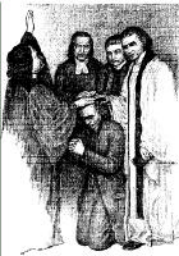
SaturdayMarylandSpent the day at Perry Hall, partly in preparing for conference.1 My intervals of time I passed in reading the third volume of the British Arminian Magazine. Continued at Perry Hall until Friday, the twenty-fourth. We then rode to Baltimore, where we met a few preachers:2 it was agreed to form ourselves into an Episcopal Church, and to have superintendents, elders, and deacons. When the conference was seated, Dr. Coke and myself were unanimously elected to the superintendency of the Church, and my ordination followed, after being previously ordained deacon and elder, as by the following certificate may be seen.
Know all men by these presents, That I, Thomas Coke, Doctor of Civil Law; late of Jesus College, in the University of Oxford, Presbyter of the Church of England, and Superintendent of the Methodist Episcopal Church in America; under the protection of Almighty God, and with a single eye to his glory; by the imposition of my hands, and prayer, (being assisted by two ordained elders,) did on the twenty-fifth day of this month, December, set apart Francis Asbury for the office of a deacon in the aforesaid Methodist Episcopal Church. And also on the twenty-sixth day of the said month, did by the imposition of my hands, and prayer, (being assisted by the said elders,) set apart the said Francis Asbury for the office of elder in the said Methodist Episcopal Church. And on this twenty-seventh day of the said month, being the day of the date hereof, have, by the imposition of my hands, and prayer, (being assisted by the said elders,) set apart the said Francis Asbury for the office of a superintendent in the said Methodist Episcopal Church, a man whom I judge to be well qualified for that great work. And I do hereby recommend him to all whom it may concern, as a fit person to preside over the flock of Christ. In testimony whereof I have hereunto set my hand and seal this twenty-seventh day of December, in the year of our Lord 1784. THOMAS COKE.
Twelve elders were elected,3 and solemnly set apart to serve our societies in the United States, one for Antigua, and two for Nova Scotia. We spent the whole week in conference, debating freely, and determining all things by a majority of votes. The Doctor preached every day at noon, and some one of the other preachers morning and evening. We were in great haste, and did much business in a little time.
CONSECRATION OF FRANCIS ASBURY, 1784
Those officiating are Thomas Coke, Philip William Otterbein, Richard Whatcoat, and Thomas Vasey
ASB_VOL1.PDF, p. 463
Notes (3)
- By prearrangement Asbury and Coke met at the home of Harry Dorsey Gough, about twelve miles from Baltimore, to draw up the agenda for the approaching conference. Among others who arrived were Whatcoat, Vasey, and William Black. ↩
- On Friday morning, December 24, the party assembled at Perry Hall traveled to Baltimore, and the first session of the Christmas Conference began at ten o’clock at Lovely Lane Meeting House. Coke presided as Wesley’s representative and presented the plan. John Dickins offered a resolution, the unanimous adoption of which created the Methodist Episcopal Church in the United States. Asbury was unanimously elected superintendent, as was Coke. On Christmas Day, the second day of the conference, Asbury was ordained deacon by Coke, assisted by Whatcoat and Vasey; the following day he was ordained elder; and on Monday, December 27, he was consecrated superintendent. William Philip Otterbein, a German minister and Asbury’s friend, assisted in the consecration service. Nearly sixty preachers were present at this conference, out of a total of eighty or more. Time and distance prevented the others from attending. (Tipple, op. cit., 140-55.) ↩
- Bishop Asbury wrote of “determining all things by a majority of votes,” but he does not elucidate the procedure by which the “twelve elders” were presented. Because no minutes of this conference are extant, some doubt exists concerning those who received ordination and of those who comprised the sixty preachers in attendance. (Ridgaway: “Personnel of the Christmas Conference,” in Proceedings of the Centennial Methodist Conference, 119-36.) Those ordained for Nova Scotia were Freeborn Garrettson and James O. Cromwell. Jeremiah Lambert was ordained for Antigua, in the West Indies, but died before reaching the field. ↩