Chapter introductions
My God, my God, why hast thou forsaken me? why art thou so far from helping me, and from the words of my roaring?
John Wesley on Psalm 22:1
V. 1. My God-Who art my friend and father, though now thou frownest upon me. The repetition denotes, the depth of his distress, which made him cry so earnestly. Forsaken-Withdrawn the light of thy countenance, the supports and comforts of thy spirit, and filled me with the terrors of thy wrath: this was in part verified in David, but much more fully in Christ. Roaring-My out-cries forced from me, by my miseries.
Adam Clarke on Psalm 22:1
Verse 1. My God, my God, why hast thou forsaken me?] Show me the cause why thou hast abandoned me to my enemies; and why thou seemest to disregard my prayers and cries? For a full illustration of this passage, I beg the reader to refer to Clarke’s note on “Matthew 27:46”. The words of my roaring?] שאגתי shaagathi, The Vulgate, Septuagint, Syriac, Æthiopic, and Arabic, with the Anglo-Saxon, make use of terms which may be thus translated: “My sins (or foolishness) are the cause why deliverance is so far from me.” It appears that these versions have read שגגתי shegagathi, “my sin of ignorance,” instead of שאגתי shaagathi, “my roaring:” but no MS. extant supports this reading.
Joseph Benson on Psalm 22:1
Verse 1. My God, my God, why hast thou forsaken me? — In these words Christ, when hanging on the cross, complained, that he was deprived, for a time, of the loving presence and comforting influence of his heavenly Father: and St. Matthew and St. Mark give us the very expressions which he used, Eli, Eli; or, as St. Mark has it, Eloi, Eloi, lama sabachthani. It is perhaps worthy of notice here, that sabachthani is not a Hebrew word; the Hebrew word being עזבתני, gnazabtani; and from hence it appears most likely that our Saviour used that dialect which was most commonly understood by the Jews in his time; and which, it is probable, was a mixed dialect, composed of Hebrew, Chaldee, and Syriac. Agreeably to this supposition, it may be further observed, that Eloi, Eloi, as St. Mark expresses our Saviour’s words, were more nearly Chaldee. Christ, it must be well observed, “was not ignorant of the reason why he was afflicted. He knew that all the rigours and pains which he endured on the cross were only because the chastisement of our peace was upon him: and God laid on him the iniquity of us all, Isaiah 53:5, 6. The words then imply, that he had done nothing to merit the evils which he suffered. This is the meaning of the question here, Why hast thou forsaken me? as also of that in Psalm 2:1, Why do the heathen rage?” &c. The repetition of the words, my God, my God, denotes the depth of his distress, which made him cry so earnestly. From the words of my roaring — From regarding, pitying, or answering my fervent prayers and strong cries, forced from me by my miseries. This latter clause seems to refer to Christ’s prayer in the garden.
Joseph Sutcliffe on Psalm 22:1
Verse 1. My God, my God. The LXX, Ο Θεος ο Θεος μου. The Chaldaic is like the English. The Hebrew forms the superlative degree by repetition. Example: “The heaven, and the heaven of heavens cannot contain thee.” The Lord called Abraham, Abraham; and again at the bush, Moses, Moses. When the Saviour became our covert, and received the storm of anger against a guilty world, his suffering humanity offered up strong cries and tears to God in these sublime words, Why hast thou forsaken me? Why hast thou left me to suffer alone? To taste the bitterness of death, to bear the grief, to carry the sorrows, and take away the sins of the world! The weight was so great, the sorrows so heavy that he sunk into the arms of death. Yet literally, he was not forsaken; the sun shines behind the darkest cloud. The Father always heard him, and received his spirit; yea, exalted him above every name as the just reward of his obedience.
Daniel Whedon on Psalm 22:1
1. My God, my God, why hast thou forsaken me—The quotation of these words by Matthew (Matthew 27:46) and Mark (Mark 15:34) decides their application to Christ. The words mark the deepest soul suffering of Christ upon the cross, as “I thirst” expressed the point of his bodily agony. The “why” is not the cry of despair, impatience, or a rebellious heart, but of mystery. Into that mystery, as it applies to Christ, we may not curiously inquire. It was not, however, that the “Only Begotten of the Father” was enduring the wrath of God. He was still the “beloved Son, in whom the Father was well pleased,” and still he confidingly calls him “my God.” Yet he trod “the wine press alone,” (Isaiah 63:3,) and suffered “the just for the unjust.” Forsaken—The word simply has the negative signification of to leave, to withdraw from, as Psalm 71:11; Isaiah 54:7, but describes the point of the Saviour’s mysterious complaint, and the depth of his vicarious sufferings. In Matthew 27:46 the Saviour uses the Aramaic form, σαβαχθανι, (sabachthani,) given in the Chaldee, שבקתני, (shebahktanee,) conformably to the dialect of the Palestine Jews, instead of the Hebrew עזבתני, (‘azabhtanee.) Far from helping me—Hebrew, Far from my salvation. By the law of parallelism this is exegetical of forsaken, in the previous line. Roaring—Better, outcry, or loud complaint.
Cited across the library (2 references)
O my God, I cry in the day time, but thou hearest not; and in the night season, and am not silent.
Adam Clarke on Psalm 22:2
Verse 2. I cry in the day-time, and in the night-season] This seems to be David’s own experience; and the words seem to refer to his own case alone. Though I am not heard, and thou appearest to forget or abandon me; yet I continue to cry both day and night after thy salvation.
Joseph Benson on Psalm 22:2
Verse 2. I cry in the day-time, &c. — I continue praying night and day without intermission; but thou hearest not — St. Paul says, Hebrews 5:7, that Christ was heard in that he feared. Christ therefore here says that his Father heard him not, only to intimate that he did not exempt him from suffering the death of the cross, for which the Father, who heard him always, had wise reasons, taken from the end for which his Son became incarnate, John 12:27. And am not silent — Hebrew, I have no silence, no rest, or quietness, as the word דומיה, dumijah, here used, is sometimes rendered.
Daniel Whedon on Psalm 22:2
2. O my God—Still he holds to the endearing title “my God.” I cry in the daytime… and in the night—The long delay of hearing and of help intensifies the mystery expressed in the “why,” of verse 1.
But thou art holy, O thou that inhabitest the praises of Israel.
John Wesley on Psalm 22:3
V. 3. But thou art-Just and true in all thy ways, this he adds to strengthen his faith, and to enforce his prayers, and prevail with God for the honour of his holy name, to hear and help him. Inhabitest-Whom thy people are perpetually praising.
Adam Clarke on Psalm 22:3
Verse 3. But thou art holy] Though I be not heard, even while I cry earnestly, yet I cannot impute any fault or unkindness to my Maker; for thou art holy, and canst do nothing but what is right. This is the language of profound resignation, in trials the most difficult to be borne. Inhabitest the praises of Israel.] Thou dwellest in the sanctuary where the praises, thanksgivings, and sacrifices of thy people are continually offered.
Joseph Benson on Psalm 22:3
Verse 3. But thou art holy — “But notwithstanding thou dost not answer me at present, I am persuaded that thou wilt do so, for thou art holy, good, and gracious;” O thou that inhabitest the praises of Israel — That dwellest in the place where the praises of Israel have always been offered for mercies granted unto them: or, who receivest and rightly possessest the praises of Israel; whom thy people are perpetually praising for one mercy or another; and therefore, I trust I also shall have occasion to praise thee.
Daniel Whedon on Psalm 22:3
3. Thou art holy—Faith strengthens itself (verses 3-5) in the reflection, God is holy,—and in the retrospect, Our fathers (the fathers of the nation) trusted; they cried, and were delivered. His must be a righteous cause which derives support from the holiness and covenant faithfulness of God. Inhabitest the praises of Israel—Sittest enthroned over the praises of Israel.
Our fathers trusted in thee: they trusted, and thou didst deliver them.
Adam Clarke on Psalm 22:4
Verse 4. Our fathers trusted in thee] David is supposed to have been, at the time of composing this Psalm, at Mahanaim, where Jacob was once in such great distress; where he wrestled with the angel, and was so signally blessed. David might well allude to this circumstance in order to strengthen his faith in God. I am now in the place where God so signally blessed the head and father of our tribes. I wrestle with God, as he did; may I not expect similar success?
Joseph Benson on Psalm 22:4–5
Verses 4, 5. Our fathers, &c. — That is, my fathers, according to the flesh, the Israelites; trusted in thee, and were delivered — Were not disappointed of that for which they prayed and hoped: but whenever they cried unto thee in their distress, thou didst send them deliverance, as by Gideon, Samson, Samuel, &c. To trust in God is the way to obtain deliverance, and “the former instances of the divine favour are so many arguments why we should hope for the same; but it may not always be vouchsafed when we expect it. The patriarchs, and Israelites of old, were often saved from their enemies: but the holy Jesus was left to languish and expire under the malice of his. God knows what is proper for him to do and for us to suffer; we know neither. This consideration is an anchor for the afflicted soul, sure and steadfast.” — Horne.
Cited across the library (1 reference)
They cried unto thee, and were delivered: they trusted in thee, and were not confounded.
Adam Clarke on Psalm 22:5
Verse 5. They cried unto thee] So do I. THEY were delivered; so may I. THEY trusted in thee; I also trust in thee. And were not confounded; and is it likely that I shall be put to confusion?
But I am a worm, and no man; a reproach of men, and despised of the people.
John Wesley on Psalm 22:6
V. 6. A worm-Neglected and despised. People-Not only of the great men, but also of the common people. Which doth not so truly agree to David as to Christ.
Adam Clarke on Psalm 22:6
Verse 6. But I am a worm, and no man] I can see no sense in which our Lord could use these terms. David might well use them to express his vileness and worthlessness. The old Psalter gives this a remarkable turn: I am a worme, that es, I am borne of the mayden with outen manseede; and nout man anely, bot god als so: and nevir the latter, I am reprove of men. In spitting, buffetyng, and punging with the thornes and outkasting of folk; for thai chesed Barraban the thefe, and nought me.
Joseph Benson on Psalm 22:6
Verse 6. But I am a worm, and no man — Neglected and despised, as a mean reptile; a reproach of men, and despised of the people — Not only of the great men, but also of the common people. This does not so truly agree to David (who, though he was hated and persecuted by Saul and his courtiers, was honoured and beloved by the body of the people) as to Christ: see Isaiah 53:2, 3. “Christ may be said to have been a worm. with respect to the mean and poor condition in which he lived; but especially to that kind of death which he suffered; for he was stripped of his clothes, and fixed upon the cross, naked as a worm of the earth.” — Dodd. See Philippians 2:7; Matthew 27:39-43.
Daniel Whedon on Psalm 22:6
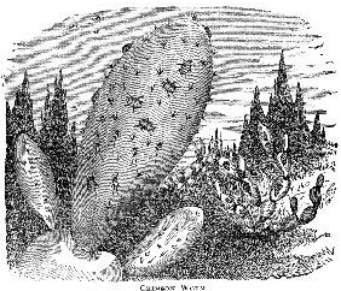
6. But I am a worm, and no man—The contrast is with the “fathers.” They trusted and were helped, “but I, ah! a worm and not a man.” Nothing can exceed these verses in plaintive tenderness, in humility, and in childlike clinging to God. The word תולעת, (tholaath,) rendered “worm,” is here used proverbially for lowness, vileness, insignificance; and it is literally the name of the scarlet worm, (coccus ilicis,) an insignificant insect which fed on plants, chiefly the holm oak. It was extensively used for scarlet dye. A reproach of men… despised—Comp. Isaiah 53:3; Matthew 27:21-31.
Cited across the library (1 reference)
- DictionaryWatson’s Dictionary: Worm
All they that see me laugh me to scorn: they shoot out the lip, they shake the head, saying,
John Wesley on Psalm 22:7
V. 7. Shoot out-They gape with their mouths, in mockery. This and the next verse are applied to Christ, Matthew 27:39,43.
Adam Clarke on Psalm 22:7
Verse 7. Laugh me to scorn] They utterly despised me; set me at naught; treated me with the utmost contempt. Laugh to scorn is so completely antiquated that it should be no longer used; derided, despised, treated with contempt, are much more expressive and are still in common use. They shoot out the lip, they shake the head] This is applied by St. Matthew, Matthew 27:39, to the conduct of the Jews towards our Lord, when he hung upon the cross; as is also the following verse. But both are primarily true of the insults which David suffered from Shimei and others during the rebellion of Absalom; and, as the cases were so similar, the evangelist thought proper to express a similar conduct to Jesus Christ by the same expressions. These insults our Lord literally received, no doubt David received the same.
Joseph Benson on Psalm 22:7
Verse 7. All they that see me laugh me to scorn — Instead of pitying, or helping, they deride and insult over me: such is their inhumanity; they shoot out the lip — They gape with their mouths, and put forth their tongues in mockery; they shake the head — Another custom of scoffers. This and the next verse are applied to Christ, (Matthew 27:39, 43,) in whom they were literally fulfilled when he hung upon the cross; and the priests and elders used the very words that had been put into their mouths by the spirit of prophecy so long before. “O the wisdom and knowledge of God,” exclaims Dr. Horne, “and the infatuation and blindness of man! The same are too often the sentiments of those who live in times when the church and her righteous cause, with their advocates, are under the clouds of persecution, and seem to sink beneath the displeasure of the powers of the world. But such do not believe, or do not consider, that in the Christian economy death is followed by a resurrection, when it will appear that God forsaketh not them that are his, but they are preserved for ever.”
Daniel Whedon on Psalm 22:7
7. Laugh me to scorn—Literally, mock at me; deride me by mimic imitations of my acts, words, or professions. See Matthew 27:29-31. They shoot out the lip—The idea is, a protrusion of the lips as an expression of scorn. Mendelssohn says: “It does not signify an opening of the mouth, as if for laughter, but a slight motion of the lips according to the way of mockers. Our old English word pout pretty well gives the force of the word.”—Phillips. They shake the head—Swaying the head to and fro in scorn. Psalm 109:25. The idea is literally given in Matthew 27:39.
He trusted on the LORD that he would deliver him: let him deliver him, seeing he delighted in him.
Daniel Whedon on Psalm 22:8
8. He trusted on the Lord… let him deliver him—Rather, He rolled himself upon Jehovah. This passage was derisively applied to Christ while on the cross, as a test of his divine Sonship. Matthew 27:43. The whole verse is, in the Hebrew, intensely and cruelly sarcastic, and the refinement of blasphemy: “He rolled himself upon Jehovah; he will cause him to escape; he will rescue him, for he took pleasure in him!” Matthew follows almost verbatim the Septuagint.
But thou art he that took me out of the womb: thou didst make me hope when I was upon my mother’s breasts.
Adam Clarke on Psalm 22:9
Verse 9. But thou art he that took me out of the womb] Thou hast made me; and hast guided and defended me from my earliest infancy.
Joseph Benson on Psalm 22:9–10
Verses 9, 10. Thou art he, &c. — This seems to refer to the miraculous conception of Christ, who was the Son of God, in a sense in which no other man ever was, being formed, as to his human nature, by the power of God, in the womb of a pure virgin. Therefore he said, at his entrance into the world, Sacrifice and offering thou wouldest not, but a body hast thou prepared me. Thou didst make me hope — Or, trust, that is, Thou didst give me sufficient ground for hope and trust, if I had been capable of it, because of thy wonderful and watchful care over me in that weak and helpless state; when I was upon my mother’s breasts — When I was a sucking child. This was eminently true of Christ, whom God so miraculously preserved and provided for in his infancy, giving, in a supernatural way, an order to Joseph and Mary to carry him into Egypt, as we read Matthew 2:20, 21. I was cast upon thee from the womb — Thou didst take me at my birth, and in a particular manner didst charge thyself with the care of me.
Joseph Sutcliffe on Psalm 22:9–10
Ver. 9, 10. Thou art he that took me out of the womb. The Messiah applies these words to himself, in Isaiah 49:1. “The Lord hath called me from the womb, from the bowels of my mother hath he made mention of my name.” He only was born of a virgin, and born the Holy One of Israel. But let all parents especially dedicate their infants to the Lord: else the gentiles would shame us by dedicating their offspring to their idols.
Daniel Whedon on Psalm 22:9
9. But thou art he, etc.—The strong adversative force of the Hebrew conjunction indicates the firm, withstanding faith of the Sufferer. God is still his Father; and he who gave being at first, and nourished the flickering life of infancy, will not now abandon the life he gave. He will not cast off his own child. The argument is given Matthew 6:25. The gift of life is the greater blessing, and will God withhold the lesser?
I was cast upon thee from the womb: thou art my God from my mother’s belly.
Be not far from me; for trouble is near; for there is none to help.
Adam Clarke on Psalm 22:11
Verse 11. Be not far from me; for trouble is near] A present God is a present blessing. We always need the Divine help; but more especially when troubles and trials are at hand.
Joseph Benson on Psalm 22:11–13
Verses 11-13. Be not far from me — As to affection and succour; for trouble is near — At hand, and ready to swallow me up; for there is none to help — Thy help therefore will be the more seasonable, because it is most necessary, and thou wilt have the more glory by it, because it will appear that it is thy work alone. Many bulls have compassed me — Wicked, violent, and potent enemies, for such are so called, Ezekiel 39:18; Amos 4:1. Strong bulls of Bashan — Fat and lusty, as the cattle there bred were, and therefore fierce and furious. “By these,” says Dr. Dodd, “are represented the haughty senators, the chief priests, the scribes, the Pharisees, and the other great men of Judea; who, after having resolved upon his death, Psalm 2:2, were so insolent as to make their appearance about his cross, and to insult him with their mockeries.” They gaped upon me with their mouths — To tear and devour me, as the following metaphor explains it.
Daniel Whedon on Psalm 22:11
11. Contains two urgent reasons for immediate help. None to help— Hebrew, Because there is not a helper. See Isaiah 63:3, 5. Luther strikingly observes, “that the more despised and forsaken a man is, the nearer and more gracious God is to him.”
Cited across the library (1 reference)
- DictionaryWatson’s Dictionary: Child Birth
Many bulls have compassed me: strong bulls of Bashan have beset me round.
John Wesley on Psalm 22:12
V. 12. Bulls-Wicked and violent, and potent enemies; for such are so called, Ezekiel 39:18 Amos 4:1. Of Bashan-As the cattle there bred were, and therefore fierce and furious.
Adam Clarke on Psalm 22:12
Verse 12. Many bulls have compassed me] The bull is the emblem of brutal strength, that gores and tramples down all before it. Such was Absalom, Ahithophel, and others, who rose up in rebellion against David; and such were the Jewish rulers who conspired against Christ. Strong bulls of Bashan] Bashan was a district beyond Jordan, very fertile, where they were accustomed to fatten cattle, which became, in consequence of the excellent pasture, the largest, as well as the fattest, in the country. See Calmet. All in whose hands were the chief power and influence became David’s enemies; for Absalom had stolen away the hearts of all Israel. Against Christ, the chiefs both of Jews and Gentiles were united.
Daniel Whedon on Psalm 22:12
12. Many bulls have compassed me— “Under the names of ferocious beasts, mentioned here and in verses 13, 16, 20, 21, are signified powerful and deadly enemies.”—French and Skinner. The word denotes young bulls, in their full strength and vigour. Rosenmuller says, of the third year. Of Bashan—A rich district in northern Gilead noted for its fat cattle. The bulls of Hermon and Bashan were often too wild for the yoke and exceedingly fierce. See Job 39:9-12, where another word is used to signify the same animal. See note on verse 21.
Cited across the library (2 references)
They gaped upon me with their mouths, as a ravening and a roaring lion.
Adam Clarke on Psalm 22:13
Verse 13. They gaped upon me] They were fiercely and madly beat on my destruction.
Daniel Whedon on Psalm 22:13
13. They gaped upon—This was not in scorn, like the shooting “out the lip” of verse 7; but an act simply of brutal ferocity, the parallel to which is the rending and roaring lion of the next line.
I am poured out like water, and all my bones are out of joint: my heart is like wax; it is melted in the midst of my bowels.
John Wesley on Psalm 22:14
V. 14. Water-My spirits are spent and gone like water which once spilt can never be recovered; my very flesh is melted within me, and I am become as weak as water. Bones-I am as unable to help myself, and as full of torment, as if all my bones were disjointed. Wax-Melted, through fear and overwhelming grief.
Adam Clarke on Psalm 22:14
Verse 14. I am poured out like water] That is, as the old Psalter: Thai rought na mare to sla me than to spil water.
The images in this verse are strongly descriptive of a person in the deepest distress; whose strength, courage, hope, and expectation of succour and relief, had entirely failed.
Our Lord’s sufferings were extreme; but I cannot think there is any sound theologic sense in which these things can be spoken of Christ, either in his agony in the garden, or his death upon the cross.
Joseph Benson on Psalm 22:14–15
Verses 14, 15. I am poured out like water — My spirits are spent and gone like water, which, once spilt, can never be recovered; my very flesh is melted within me, and I am become as weak as water. My bones are out of joint — I am as unable to help myself, and as full of pain, as if all my bones were disjointed. My heart is like wax — Melted through fear and overwhelming grief. My strength is dried — I have, in a manner, no more moisture left in me, than is in a dry potsherd. My tongue cleaveth, &c. — Through excessive thirst and drought. Thou hast brought me to death — By thy providence delivering me into the power of mine enemies, and by thy terrors in my soul.
Joseph Sutcliffe on Psalm 22:14
Ver. 14. All my bones are out of joint. Hebrews separated. The method of crucifixion was to lay the cross on the ground, and nail the hands and feet of the victim to the wood. Then, on elevation, the jirk into the hole would very much distend the joints, and expose the bones of the thorax or breast. David himself was never in this situation. No group of executioners ever parted his raiment, or cast lots for his vesture; nor did they ever offer him the stupifying potion of vinegar and gall.
Daniel Whedon on Psalm 22:14
14. I am poured out like water—A figure denoting a profuse waste of the vital forces. But in 2 Samuel 14:14, the figure implies that the loss is irrecoverable, “as water spill which cannot be gathered up again,” which gave to the ceremony of pouring out water “before the Lord” the significance of a confirmation of a covenant whose engagements could not be recalled. 1 Samuel 7:6. The life of Christ was freely given. “He poured out his soul unto death,” (Isaiah 53:12,) in his soul agony and bloody sweat. Matthew 26:38; Luke 22:44. Bones… out of joint—As if the ligaments were dissolved and the muscles weakened, so that the limbs were uncontrollable. This would be the natural effect of crucifixion. But of Christ, not a bone was broken. John 19:36. My heart is like wax—The loss of courage and resolution through fear is often signified by the melting of wax. Psalm 68:2; Micah 1:4; Joshua 2:11. Jesus was “sore amazed” and “very heavy,” (Mark 14:33,) and fear was a leading feature of his sufferings. Hebrews 5:7. See verses 19-21 of this psalm.
Cited across the library (1 reference)
- DictionaryWatson’s Dictionary: Wax
My strength is dried up like a potsherd; and my tongue cleaveth to my jaws; and thou hast brought me into the dust of death.
John Wesley on Psalm 22:15
V. 15. Dried-I have in a manner no more moisture left in me, than is in a dry potsherd. Cleaveth-Through excessive thirst and drought. Death-Thy providence, delivering me into the power of mine enemies, and by thy terrors in my soul.
Adam Clarke on Psalm 22:15
Verse 15. My strength is dried up] All these expressions mark a most distressed and hopeless case.
Into the dust of death.] This means only that he was apparently brought nigh to the grave, and consequent corruption; this latter David saw; but Jesus Christ never saw corruption.
Daniel Whedon on Psalm 22:15
15. Dried up like a potsherd—The humidity of my body is burned out like a piece of pottery in a furnace. The metaphor is twofold—the shrinking or drying by heat, and worthlessness, as a sherd or fragment of pottery. Isaiah 45:9; Lamentations 4:2. My tongue cleaveth to my jaws—yhwqlm, (malkohah,) my jaws, from לקח, (lakahh,) he received, applies to the jaws because they receive the food. The word is always elsewhere, except once, rendered prey. The Septuagint, “My tongue is glued to my throat,” and Vulgate, “faucibus,” are incorrect, as also the version of the liturgy, “gums.” This condition of the tongue, naturally so humid, involves great exhaustion and thirst, and prophetically points to the closing part of the sufferings on the cross when the Saviour cried, “I thirst.” John 19:28; Psalm 69:21. His soul agony reached its highest expression in the complaint, “My God, my God, why hast thou forsaken me,” and when this had passed, and he returned to a consciousness of his physical suffering, the sensation which arose above all others was signified in the words, “I thirst.” Thou hast brought me into the dust of death— The word rendered “thou hast brought me,” means to arrange, dispose, place, as 2 Kings 4:38; Isaiah 26:2; Ezekiel 24:3; and the idea is, Thou hast laid me out for the grave. On “dust of death,” a poetical phrase for the decomposition of death, see Psalm 30:9.
Cited across the library (1 reference)
- DictionaryWatson’s Dictionary: Dust
For dogs have compassed me: the assembly of the wicked have inclosed me: they pierced my hands and my feet.
John Wesley on Psalm 22:16
V. 16. Dogs-So he calls his enemies for their insatiable greediness, and implacable fierceness against him. Pierced-These words cannot with any probability be applied to David, but were properly and literally verified in Christ.
Adam Clarke on Psalm 22:16
Verse 16. For dogs have compassed me] This may refer to the Gentiles, the Roman soldiers, and others by whom our Lord was surrounded in his trial, and at his cross.
They pierced my hands and my feet] The other sufferings David, as a type of our Lord, might pass through; but the piercing of the hands and feet was peculiar to our Lord; therefore, this verse may pass for a direct revelation. Our Lord’s hands and feet were pierced when he was nailed to the cross, David’s never were pierced.
But there is a various reading here which is of great importance. Instead of כארו caaru, they pierced, which is what is called the kethib, or marginal reading, and which our translators have followed; the keri or textual reading is כארי caari, as a lion. In support of each reading there are both MSS. and eminent critics. The Chaldee has, “Biting as a lion my hands and my feet;” but the Syriac, Vulgate, Septuagint, Æthiopic, and Arabic read, “they pierced or digged;” and in the Anglo-Saxon the words are, [Anglo-Saxon]: “They dalve (digged) hands mine, and feet mine.” The Complutensian Polyglot has כארו caaru, they digged or pierced, in the text; for which it gives כרה carah, to cut, dig, or penetrate, in the margin, as the root whence כארו is derived. But the Polyglots of Potken, Antwerp, Paris, and London, have כארי caari in the text; and כארו caaru is referred to in the margin; and this is the case with the most correct Hebrew Bibles. The whole difference here lies between y yod and w vau, which might easily be mistaken for each other; the former making like a lion; the latter, they pierced. The latter is to me most evidently the true reading.
Joseph Benson on Psalm 22:16
Verse 16. Dogs have compassed me — So he calls his enemies, or rather the enemies of Christ, for their insatiable greediness, and implacable fierceness against him. The idea seems to be taken from a number of dogs encompassing a distressed deer, which they have hunted down, as is intimated in the remarks on the title. Hereby, Dr. Dodd thinks, are represented the Roman soldiers and the other Gentiles who were with the Jews around the cross. But without such a particular application, it may be interpreted generally of Christ’s enemies, either consulting and conspiring against him, or assaulting him with violence. They pierced my hands and my feet — These words cannot, with any probability, be applied to David, nor to the attempts of his enemies upon him; for their design was, not to torment his hands or feet, but to take away his life. And if it be pretended that it is to be understood of him in a metaphorical sense, it must be considered that it is so uncouth and unusual a metaphor that those who are of this opinion cannot produce any example of such a one, either in the Scriptures or in other authors; nor are they able to make any tolerable sense of the words thus understood. But what need is there of such forced interpretations, when this clause was most properly and literally verified in Christ, whose hands and feet were really pierced, and nailed to the cross, according to the manner of the Roman crucifixions? to whom therefore it is applied in the New Testament.
Joseph Sutcliffe on Psalm 22:16
Ver. 16. They pierced my hands and my feet. The LXX, ωρυξαν χειρας μου και ποδας: they digged my hands and my feet. The masoretic rabbins, to weaken the force of this text, have thrown the word כארו kaaru, “they pierced,” into the margin, and introduced into the text the word כארי keari, “as a lion.” The variation is but of a single letter, the y yod being substituted for the w vau. But if this were correct, how does it weaken the text? How does this little artifice agree with dogs in the words before? Must the lion wait for his meal, and come to finish what the dogs had begun? Does a lion aim at a man’s hands and feet; say rather, at the head, the arm, or the shoulder. Above all, how came the seventy learned Jews to be ignorant of such a reading. In fact it is the weakness of enmity, similar to their assertions that Isaiah’s prophecy, “he was wounded for our transgressions,” refers to king Josiah who was killed in battle. The elder rabbins, like the LXX, and several of the Hebrew MSS. all support the true reading of the text.
Daniel Whedon on Psalm 22:16
Editorial note: Source collation note — paragraph 1: “be further considered that ידי ורגלי, (my hands and my”. source PDF page 117: “be further considered that ורגלי ידי my hands and my”. Compared with WHD_CO05.PDF PDF p. 116, WHD_CO05.PDF PDF p. 117. The source-font or layout comparison does not securely establish every letter, mark or local sequence in these passages. The flagged language readings or layout are retained; the original source pages should be consulted for these specific readings. Additional-source investigation: an automated comparison of surrounding English text located possible corresponding passages in OCR from separately digitized printed volumes. The linked scan pages are research locators; their images have not been collated for this note's flagged readings. OCR agreement does not verify Greek or Hebrew letters, diacritics, word order, or table layout. The flagged readings or layout remain uncertain. WHD_CO05.PDF, PDF page 116; WHD_CO05.PDF, PDF page 117; Additional printed-scan page locator (OCR context only; flagged reading unverified).
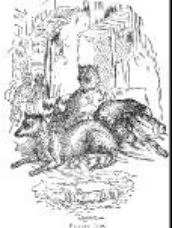
16. Dogs—Called “assembly of the wicked” in next line, the only bitter comparison in the psalm. The wild dogs of the East are meant, a figure at once of impurity, baseness, and cruelty. In Egypt, and the East generally, dogs usually go at large. Having no master to care for them, hunger makes them ferocious. Their physiognomy is ignoble, and their appearance haggard and disgusting. They were always the synonyme of vileness, contention, and uncleanness. 1 Samuel 24:14; 2 Samuel 9:8; Philippians 3:2; Revelation 22:15. They pierced my hands and my feet—Few passages of Scripture have been more sharply contested. Standing as it does in our English version, it is a wonderful prediction of the manner of Christ’s death. The difficulty lies in the word rendered pierced. On the one hand, כארי, (kaaree,) which is the form of the word in the common Hebrew text, has been taken as two words, k, the particle of comparison, (as, like, or taking Quamets as indicating the article, as the,) and ארי, (a lion,) which would read: “The congregation of the wicked have enclosed me; as a lion, (or, as the lion,) my hands and my feet;” or, as Hengstenberg: “They beset me, lionlike, on my hands and my feet.” But, though this would seem a natural and easy way to dispose of the grammatical difficulty, and has four examples where the same form occurs, (namely: Numbers 23:24; 24:9; Isaiah 38:13; Ezekiel 22:25,) yet it involves grave difficulty as to the sense. In the four other cases mentioned the allusion to the lion is perfectly clear, and the sense easy and natural, but in this it completely destroys the sense, leaving the metaphor unexplained, or, rather, contradicted. Dr. Alexander, who adheres to the Messianic application of the passage, suggests an ellipsis, and the reading: “Like a lion [they have wounded] my hands and my feet.” Professor Stuart, also, by bringing forward from the preceding line the verb הקיפוני, (translated “enclosed me,”) and giving its radical sense to strike, stab, pierce, cut, proposes the rendering: “As a lion [they pierce] my hands and my feet.” But this is not satisfactory. If the reference be to the habit of the lion in attacking his prey, it is not according to fact; if to cutting and tearing his prey, why specify hands and feet, and not rather, as Psalm 7:2: “Lest he tear my soul (that is, tear me) like a lion, rending it in pieces;” or, Isaiah 38:13: “As a lion, so will he break all my bones.” This is lionlike; but, on the hypothesis now under consideration, the allusion to the lion is simply unnatural and absurd. The lion does not seize the hands and feet, but springs upon the victim. It must be further considered that ידי ורגלי, (my hands and my feet,) are in the accusative, and hence the limbs are not mentioned incidentally, but as the objective point of attack, which still more forcibly shows the unnaturalness of the metaphor as an allusion to the habits of the lion. The language is clearly unique, and the difficulty of explaining it according to the well known habits of the lion is so formidable that the Jews themselves, according to the little Masora, held that כארי (kaaree) in the two passages (Psalm 22:16, and Isaiah 38:13) is in two different meanings. Evidently, here the prophet outsteps the limit of type and history, and, as in the case of the “Priest-King,” (Psalm 110:4,) ascends to the height of absolute revelation concerning Messiah. Two other interpretations of the passage in question have obtained. First, כארי has been taken as an irregular form of the plural participle of the root כור, in the sense of כרה, to dig, pierce through, bore, by dropping µ, the regular plural termination, and inserting a. The anomaly, though of extreme rarity, is admissible by the best authority. They then read, “Piercing my hands and my feet:” or, considering the participle as a noun in regimen, “Piercers of my hands and my feet.”
But, secondly, instead of a participle the ancient versions read it as a verb, כארו, (kaaroo,) which simply changes the yod (y) into vauv, (w,) with corresponding vowel points. Thus the Septuagint, they pierced; Vulgate, they pierced, stabbed; Jerome, they fastened; Syriac, they penetrated, perforated. Manuscripts, also, of unquestioned authority have the same. Kennicott mentions four Hebrew manuscripts having כארו in the text and כארי in the margin. It is evident that the Septuagint followed manuscripts which read “they pierced,” the same as our English version. The lexical and grammatical difficulties which beset the present reading of the text would seem to dictate the necessity of correcting, and taking the word as a verb. But, whether as an irregular participle, or by correcting the text as a verb, the sense will be the same though, as Tregelles remarks, “the latter is preferable.” It is notable that the most natural evidences of crucifixion were laid in the wounded “hands and feet” by the Saviour himself, (Luke 24:39;) “Behold my hands and my feet, that it is I myself.” The passage in question is not directly quoted in the New Testament, but allusions which belong to the crucifixion occur both in the Old and New Testaments. Isaiah 53:5: “He was pierced [ מהולל from חלל, bore through, perforate, pierce] for our transgressions.” Zechariah 12:10: “They shall look on me whom they have pierced,” (דקרו,) quoted John 19:37; Revelation 1:7.
Cited across the library (3 references)
I may tell all my bones: they look and stare upon me.
John Wesley on Psalm 22:17
V. 17. May tell-By my being stretched out upon the cross.
Adam Clarke on Psalm 22:17
Verse 17. I may tell all my bones] This may refer to the violent extension of his body when the whole of its weight hung upon the nails which attached his hands to the transverse beam of the cross. The body being thus extended, the principal bones became prominent, and easily discernible.
Joseph Benson on Psalm 22:17–21
Verses 17-21. I may tell all my bones — Theodoret observes, that when Christ was extended, and his limbs distorted, on the cross, it might be easy for a spectator literally to tell all his bones. They — Namely, my enemies; look and stare at me — With delight and complacency, at my calamities, and I am a spectacle to earth and heaven. They part my garments among them — This also cannot be applied to David, without a strained and unprecedented metaphor, but was literally fulfilled in Christ, Matthew 27:35; John 19:24. Deliver my soul from the sword — That is, from the rage and violence of mine enemies, as the next clause explains it, and, as the sword is often to be taken in Scripture. My darling — Hebrew, my one, or only one, namely, his soul, as he now said, which he so terms, because it was very dear to him, or because it was left alone, and destitute of friends and helpers. From the power of the dog — “The ravening fury of the dog,” says Dr. Horne, “the lion, and the unicorn, or oryx, (a fierce and untameable creature of the stag kind,) is made use of to describe the rage of the devil, and his instruments, whether spiritual or corporeal. From all these Christ supplicates the Father for deliverance. How great need have we to supplicate for the same through him!”
Daniel Whedon on Psalm 22:17
17. I may tell all my bones—In verse 14: “All my bones are out of joint.” The protrusion of the bones, so that one could count them, is not merely the effect of a wasting suffering. but of violent and unnatural treatment, as the crucifixion. They look and stare upon me—They closely watch me. Compare the watching of Jesus, Matthew 27:36-54. The idea of satisfaction is also suggested. They feast their eyes upon me. They behold me not only with indifference, but are regaled at the sight of my misery.
They part my garments among them, and cast lots upon my vesture.
John Wesley on Psalm 22:18
V. 18. They part-This also cannot be applied to David, but was literally fulfilled in Christ, Matthew 27:35 John 19:24.
Adam Clarke on Psalm 22:18
Verse 18. They part my garments] This could be true in no sense of David. The fact took place at the crucifixion of our Lord. The soldiers divided his upper garment into four parts, each soldier taking a part; but his tunic or inward vestment being without seam, woven in one entire piece, they agreed not to divide, but to cast lots whose the whole should be. Of this scripture the Roman soldiers knew nothing; but they fulfilled it to the letter. This was foreseen by the Spirit of God; and this is a direct revelation concerning Jesus Christ, which impresses the whole account with the broad seal of eternal truth.
Daniel Whedon on Psalm 22:18
18. They part my garments—The finishing touch in the description of cold brutality. Under the eye of Jesus the soldiers fulfilled this prediction, John 19:23, 24, where see the note. Vesture—The oriental robe, or mantle, worn loosely upon the person, which served as a covering by night. Exodus 22:26, 27. The word is not decisive of the particular part of the raiment, but the casting lots for it determines, as it could not be divided without destroying it.
Cited across the library (1 reference)
But be not thou far from me, O LORD: O my strength, haste thee to help me.
Adam Clarke on Psalm 22:19
Verse 19. Be not thou far from me] In the first verse he asks, Why hast thou forsaken me? Or, as if astonished at their wickedness, Into what hands hast thou permitted me to fall? Now he prays, Be not far from me. St. Jerome observes here, that it is the humanity of our blessed Lord which speaks to his divinity. Jesus was perfect man; and as man he suffered and died. But this perfect and sinless man could not have sustained those sufferings so as to make them expiatory had he not been supported by the Divine nature. All the expressions in this Psalm that indicate any weakness, as far as it relates to Christ, (and indeed it relates principally to him,) are to be understood of the human nature; for, that in him God and man were united, but not confounded, the whole New Testament to me bears evidence, the manhood being a perfect man, the Godhead dwelling bodily in that manhood. Jesus, as MAN, was conceived, born, grew up, increased in wisdom, stature, and favour with God and man; hungered, thirsted, suffered, and died. Jesus, as GOD, knew all things, was from the beginning with God, healed the diseased, cleansed the lepers, and raised the dead; calmed the raging of the sea, and laid the tempest by a word; quickened the human nature, raised it from the dead, took it up into heaven, where as the Lamb newly slain, it ever appears in the presence of God for us. These are all Scripture facts. The man Christ Jesus could not work those miracles; the God in that man could not have suffered those sufferings. Yet one person appears to do and suffer all; here then is GOD manifested in the FLESH.
O my strength] The divinity being the power by which the humanity was sustained in this dreadful conflict.
Daniel Whedon on Psalm 22:19
19. But be not thou far from me—From his persecutors the afflicted petitioner turns his eye to his Deliverer. The appeal is exceedingly plaintive, as in verse 11, and is the echo of verse 1. O my strength—He appropriates to God the title which best befits his helplessness.
Deliver my soul from the sword; my darling from the power of the dog.
John Wesley on Psalm 22:20
V. 20. Darling-Heb. my only one; his soul, which he so calls, because it was left alone and destitute of friends and helpers.
Adam Clarke on Psalm 22:20
Verse 20. Deliver my soul from the sword] Deliver נפשי naphshi, my life; save me alive, or raise me again.
My darling] יחידתי yechidathi, my only one. The only human being that was ever produced since the creation, even by the power of God himself, without the agency of man. ADAM the first was created out of the dust of the earth; that was his mother; God was the framer. ADAM the second was produced in the womb of the virgin; that was his mother. But that which was conceived in her was by the power of the Holy Ghost; hence the man Christ Jesus is the ONLY Son of God; God is his Father, and he is his ONLY ONE.
Daniel Whedon on Psalm 22:20
20. My darling—Hebrew, My only one. The word is an adjective, and signifies alone, only; and, as it corresponds to soul in the previous hemistich, it may be only a poetical variation of the same here, as signifying his dearest and only possession. Psalm 35:17. Or, we may read my forsaken one, as being deserted, left alone; and this accords better with the general tone of the psalm. So in Psalm 25:16; 68:6, where it is rendered desolate and solitary. Dog—See on verse 16.
Cited across the library (2 references)
Save me from the lion’s mouth: for thou hast heard me from the horns of the unicorns.
John Wesley on Psalm 22:21
V. 21. Heard-Answered and delivered me.
Adam Clarke on Psalm 22:21
Verse 21. Save me from the lion’s mouth] Probably our Lord here includes his Church with himself. The lion may then mean the Jews; the unicorns, רמים remin (probably the rhinoceros,) the Gentiles. For the unicorn, see Clarke’s note on “Numbers 23:22”. There is no quadruped or land animal with one horn only, except the rhinoceros; but there is a marine animal, the narwhal or monodon, a species of whale, that has a very fine curled ivory horn, which projects from its snout. One in my own museum measures seven feet four inches, and is very beautiful. Some of these animals have struck their horn through the side of a ship; and with it they easily transfix the whale, or any such animal. The old Psalter says, “The unicorn es ane of the prudest best that es, so that he wil dye for dedeyn if he be haldyn ogayn his wil.”
Joseph Sutcliffe on Psalm 22:21
Ver. 21. The horns of the unicorns, irresistible in fight, as described in Numbers 23:22.
Daniel Whedon on Psalm 22:21
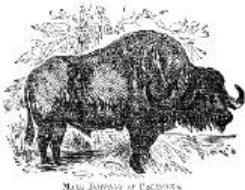
21. Lion’s mouth… horns of the unicorns—Two descriptions of imminent death. The lion’s mouth is already open to devour its prey. The unicorn was either a fabulous animal, as is most probable, or belonged to some extinct species of the bovine genus. The word “unicorn” is not in the Hebrew. The Vulgate, unicornium, is the representative of the Septuagint, μονοκερωτων, both signifying an animal with one horn. The Hebrew ראם, (reem) denotes no such animal. The word occurs nine times, and best suits the Asiatic buffalo. In Deuteronomy 33:17 two horns are given. In Psalm 29:6, a “young unicorn” and a calf are synonymous. In Isaiah 34:7 unicorns are classed with “bullocks and bulls,” as animals to be offered in sacrifice. In Psalm 92:10 “horn” is not in the Hebrew. A wild buffalo, refusing the yoke, (Job 39:9-12,) is undoubtedly intended. See note on verse 12. If the extinct urus, or wild bull, is meant, it is yet to be verified by discovery. The wild buffalo sufficiently answers the description of the reem of the Scriptures. It must have been an animal with which the Hebrews were familiar. Livingstone says of the African buffalo: “A herd of buffaloes kept a number of lions from their young by the males turning their heads to the enemy, the cows and their young being in the rear. One toss from a bull would kill the stoutest lion that ever breathed.” Van Lennep says of the Hindu buffalo, that it is “of such power and vigor as by his charge to prostrate a well-sized elephant.”
Cited across the library (3 references)
I will declare thy name unto my brethren: in the midst of the congregation will I praise thee.
John Wesley on Psalm 22:22
V. 22. Declare-When thou hast delivered me. Thy name-that power and faithfulness and goodness, which thou hast manifested on my behalf. Congregations-The same whom he calls the congregation, and the seed of Jacob and Israel: which also does not so fitly agree to David, who never gives this title to any, but such as were near a-kin to him, as it does to Christ, who extends this name to all his disciples, Matthew 12:48,49, and to whom this very text is applied, Hebrews 2:11,12.
Adam Clarke on Psalm 22:22
Verse 22. I will declare the name unto my brethren] I will make a complete revelation concerning the God of justice and love, to my disciples; and I will announce to the Jewish people thy merciful design in sending me to be the Saviour of the world.
Joseph Benson on Psalm 22:22
Verse 22. I will declare thy name — “Nothing is more common in the Psalms than these sudden transitions, and nothing more beautiful. Our Saviour here passes from the mournful view of death to the comfortable prospect of his resurrection. He intimates that, after God shall have delivered him from the power of death, by a glorious resurrection, he would more fully publish his gospel, by which the adorable perfections of God, and especially his wisdom and mercy, would be more eminently displayed among his apostles, and among the rest of his disciples and followers, whom he is not ashamed to call his brethren, Hebrews 2:11. The following verses can certainly be applied to David only in a very restrained sense, but are literally true of Christ and his triumphant reign; when in the latter days, all the people upon earth, even in the most remote corners of the world, shall worship and adore him.” — Dodd.
Daniel Whedon on Psalm 22:22
22. I will declare thy name unto my brethren—A sudden break in the connexion, and an abrupt opening of the final division of the psalm are apparent. From the deepest dejection and peril the tone and theme are changed to thanksgiving, hope, and triumph. Prophetically, the former part describes the passion; that which follows, the triumphs of the Redeemer after the resurrection. The transition point is found in the words, (verse 21,) “Thou hast heard me.” Certainly the answer to his prayer intervenes between verses 21, 22. Bishop Horsley and others read it thus:—
21. Save me from the mouth of the lion,
And from the horns of the unicorns.
22. ——Thou hast heard me.
I will declare thy name, etc.
The same sudden answers to prayer, marked by abrupt transitions, elsewhere occur. Psalm 6:8; 20:5; 28:6; 60:6. Unto my brethren— Historically applied, these words are remarkable. David, though cut off from his people and exiled, still counts himself in the brotherhood of the saints, to whom his first thought is to divulge the glad tidings. But, prophetically, these are the words of Christ to his disciples, thus quoted in Hebrews 2:11. Christ calls his disciples “brethren,” (John 20:17,) and “friends,” (John 15:15,) and he alone reveals the Father to us. Luke 10:22; John 1:18. Congregation—The word commonly used to denote the general assembly, or collective whole, of the covenant people. In verse 25 called the “great congregation,” and defined as “them that fear God.” The quotation of this, in Hebrews 2:12, is made verbally from the Septuagint, where εκκλησια is the common Greek word for קהל, (congregation,) as it is in the New Testament for Church. See on Psalm 35:10, 18.
Cited across the library (2 references)
Ye that fear the LORD, praise him; all ye the seed of Jacob, glorify him; and fear him, all ye the seed of Israel.
Adam Clarke on Psalm 22:23
Verse 23. Ye that fear the Lord] This is an exhortation to the Jews particularly, to profit by the preaching of the Gospel. Perhaps, by them that fear him, the Gentiles, and particularly the proselytes, may be intended. The Jews are mentioned by name: Glorify him, all ye seed of Jacob; fear him, all ye seed of Israel.
Joseph Benson on Psalm 22:23–25
Verses 23-25. Ye that fear the Lord, praise him — Not only for my sake, (they are the words of the risen and exalted Saviour,) but chiefly for your own benefit, received through my deliverance from death, and exaltation to God’s right hand, by which I am made head over all things, for the good of my church and people. All ye seed of Jacob, &c. — He first addresses himself to his ancient people, to whom the gospel was first to be preached. How long, O Lord, holy and true, shall thy once highly favoured nation continue deaf to this gracious call of thine? For he hath not despised thee, &c. — He hath not rejected, but graciously accepted, my humiliation and sufferings, as a propitiation and sacrifice for the sins of the world, which acceptance is testified by my resurrection from the dead: inasmuch as the discharge of the surety proves the payment of the debt. This is the great subject of praise and thanksgiving in the church of Christ. My praise shall be of thee in the great congregation — In the universal church, made up of Jews and Gentiles, as the following verses explain it. I will pay my vows before them that fear him — Those praises and services which, in my distress, I vowed to return unto thee when thou didst deliver me. “The vow of Christ was to build and consecrate to Jehovah a spiritual temple, in which the spiritual sacrifices of prayer and praise should be continually offered. This vow he performed, after his resurrection, by the hands of his apostles, and still continues to perform, by those of his ministers, carrying on the work of edification in the great congregation of the Gentile Christian Church. The vows of Christ cannot fail of being performed. Happy are they whom he vouchsafeth to use as his instruments in the performance of them.” — Horne.
Daniel Whedon on Psalm 22:23
23. Ye that fear the Lord—The call is to spiritual Israel. Verses 23, 24, as Bishop Lowth suggests, contain the praise song of the preceding verse, which the psalmist now puts into the mouth of the Church.
Cited across the library (1 reference)
For he hath not despised nor abhorred the affliction of the afflicted; neither hath he hid his face from him; but when he cried unto him, he heard.
John Wesley on Psalm 22:24
V. 24. Abhorred-He did not turn away his face from it, as men do from things which they abhor. From him-For ever: tho’ he did so for a time.
Adam Clarke on Psalm 22:24
Verse 24. For he hath not despised] It is his property to help and save the poor and the humble; and he rejects not the sighings of a contrite heart. Perhaps it may mean, Though ye have despised me in my humiliation, yet God has graciously received me in the character of a sufferer on account of sin; as by that humiliation unto death the great atonement was made for the sin of the world.
Daniel Whedon on Psalm 22:24
24. For he hath not despised—Because “he hath not despised.” The answer of prayer, even of the afflicted poor, is the theme and occasion of this public praise.
My praise shall be of thee in the great congregation: I will pay my vows before them that fear him.
John Wesley on Psalm 22:25
V. 25. Great congregation-In the universal church, of Jews and Gentiles.
Adam Clarke on Psalm 22:25
Editorial note: Source collation note — paragraph 1: “and will be increasingly, קהל רב kahal rab, a great”. source PDF page 216: “and will be increasingly, רב קהל kahal rab a GREAT”. Compared with CLA_PSA.PDF PDF p. 216. The source-font or layout comparison does not securely establish every letter, mark or local sequence in these passages. The flagged language readings or layout are retained; the original source pages should be consulted for these specific readings. Additional-source investigation: an automated comparison of surrounding English text located possible corresponding passages in OCR from separately digitized printed volumes. The linked scan pages are research locators; their images have not been collated for this note's flagged readings. OCR agreement does not verify Greek or Hebrew letters, diacritics, word order, or table layout. The flagged readings or layout remain uncertain. CLA_PSA.PDF, PDF page 216; Additional printed-scan page locator (OCR context only; flagged reading unverified).
Verse 25. The great congregation] In Psalm 22:22 he declares that he will praise God in the midst of the congregation. Here the Jews seem to be intended. In this verse he says he will praise him in the GREAT CONGREGATION. Here the Gentiles are probably meant. The Jewish nation was but a small number in comparison of the Gentile world. And those of the former who received the Gospel were very few when compared with those among the Gentiles who received the Divine testimony. The one was (for there is scarcely a converted Jew now) קהל kahal, an assembly; the other was, is, and will be increasingly, קהל רב kahal rab, a GREAT ASSEMBLY. Salvation was of the Jews, it is now of the Gentiles.
Daniel Whedon on Psalm 22:25
Editorial note: Source collation note — paragraph 1: “which i vowed— my (זבח נדר) votive offering. this was”. source PDF page 121: “which I vowed— my נדר זבח votive offering. This was”. Compared with WHD_CO05.PDF PDF p. 121. The source-font or layout comparison does not securely establish every letter, mark or local sequence in these passages. The flagged language readings or layout are retained; the original source pages should be consulted for these specific readings. Additional-source investigation: an automated comparison of surrounding English text located possible corresponding passages in OCR from separately digitized printed volumes. The linked scan pages are research locators; their images have not been collated for this note's flagged readings. OCR agreement does not verify Greek or Hebrew letters, diacritics, word order, or table layout. The flagged readings or layout remain uncertain. WHD_CO05.PDF, PDF page 121; Additional printed-scan page locator (OCR context only; flagged reading unverified).
25. The great congregation—The full assembly of the faithful, as at the great national feasts; prophetically, the Church universal or “holy catholic Church.” I will pay my vows—I will pay the sacrifice which I vowed— my (זבח נדר) votive offering. This was one species of the שלמים, (shelameem,) peace offerings, consisting of a sacrifice accompanied by a social meal in the cloisters of the tabernacle or temple, as an acknowledgment of answer to prayer, and of peace and friendship with God. The allusion is to Leviticus 7:16-18.
The meek shall eat and be satisfied: they shall praise the LORD that seek him: your heart shall live for ever.
John Wesley on Psalm 22:26
V. 26. Satisfied-This is doubtless to be understood, of those spiritual blessings, that grace and peace, and comfort, which all believing souls have in the sense of God’s love, the pardon of their sins, and the influences of God’s spirit. Seek him-That seek his favour. Your heart-He speaks of the same persons still, though there be a change from the third to the second person, as is usual in these poetical books. For ever-Your comfort shall not be short and transitory, as worldly comforts are, but everlasting.
Adam Clarke on Psalm 22:26
Verse 26. The meek shall eat] ענוים anavim. the POOR, shall eat. In the true only Sacrifice there shall be such a provision for all believers, that they shall have a fulness of joy. Those who offered the sacrifice, fed on what they offered. Jesus, the true Sacrifice, is the bread that came down from heaven; they who eat of this bread shall never die.
Joseph Benson on Psalm 22:26
Verse 26. The meek — That is, the poor or humble, gentle and teachable, namely, believing and godly persons whose hearts the grace of God hath softened and sweetened, subduing their pride and passion, and their rebellion against God, and fierceness toward men; shall eat and be satisfied — Shall partake of those spiritual blessings which God hath provided for them in his gospel, that grace, and peace, and comfort, which all believing souls enjoy, in a sense of God’s love, in the pardon of their sins, and in the influences of God’s Spirit. Of these and not of any temporal blessings, this clause is doubtless to be understood. They shall praise the Lord that seek him — That seek his favour, and the true spiritual knowledge of, and communion with, him. Your heart shall live — He speaks of the same persons still, though there be a change from the third to the second person, as is usual in these poetical books. For ever — Your comfort shall not be short and transitory, as worldly comforts are, but everlasting.
Daniel Whedon on Psalm 22:26
26. The meek shall eat—The poor and humble shall eat the sacrificial meal (verse 25) with him in accordance with Deuteronomy 16:11.
All the ends of the world shall remember and turn unto the LORD: and all the kindreds of the nations shall worship before thee.
John Wesley on Psalm 22:27
V. 27. The world-All nations from one end of the world to the other. So this is an evident prophecy of the calling of the Gentiles, and a clear proof, that this psalm immediately speaks of Christ; to whom alone, this and divers other passages of it, belong. Remember-They shall remember their former wickedness with grief and shame, and fear; particularly in worshiping dead and impotent idols. They shall remember their great and manifold obligation to God, which they had quite forgotten, his patience in sparing them so long, in the midst of all their impieties, and in giving his son for them: they shall remember the gracious words and glorious works of Christ, what he did, and suffered for them; which possibly divers of them had been eye and ear-witnesses of. The Lord-Into the only true God, and unto Jesus Christ, to whom this name of Jehovah is often ascribed in scripture.
Adam Clarke on Psalm 22:27
Verse 27. All the ends of the world] The Gospel shall be preached to every nation under heaven; and all the kindred of nations, משפחות mishpechoth, the families of the nations: not only the nations of the world shall receive the Gospel as a revelation from God, but each family shall embrace it for their own salvation. They shall worship before Jesus the Saviour, and through him shall all their praises be offered unto God.
Joseph Benson on Psalm 22:27
Editorial note: Source collation note — paragraph 1: “of the nations — hebrew, כל משפחות, cal mishpechoth, all the”. source PDF page 571: “of the nations Hebrew, משפחות כל cal mishpechoth, all the”. Compared with BEN_VOL3.PDF PDF p. 570, BEN_VOL3.PDF PDF p. 571. The source-font or layout comparison does not securely establish every letter, mark or local sequence in these passages. The flagged language readings or layout are retained; the original source pages should be consulted for these specific readings. Additional-source investigation: the available separately digitized printed volumes were searched, but the corresponding passage was not securely located. The flagged readings or layout remain uncertain; this search provides no basis for reconstructing or silently normalizing them. BEN_VOL3.PDF, PDF page 570; BEN_VOL3.PDF, PDF page 571.
Verse 27. All the ends of the world — All nations, from one end of the world to the other. So this is an evident prophecy of the calling of the Gentiles to the knowledge of God and Christ by the gospel, and a clear proof that this Psalm immediately speaks of Christ; to whom alone this and divers other passages of it belong. Shall remember — They shall remember their former wickedness with grief, and shame, and fear; particularly in worshipping dead and impotent idols. They shall remember their great and manifold obligations to God, which they had quite forgotten, his patience in sparing them so long, in the midst of all their impieties, and in revealing his gospel to them, and in giving his Son for them: they shall remember the gracious words and glorious works of Christ, what he did and suffered for them; which possibly divers of them had been eye and ear witnesses of. And turn unto the Lord — Unto the only true God, and unto Jesus Christ, to whom this name of Jehovah is often ascribed in Scripture. All the kindreds of the nations — Hebrew, כל משפחות, cal mishpechoth, all the families. Which is not to be understood strictly of every particular person and family, but of all sorts, and of great numbers of them; as such universal phrases are often to be understood in Scripture.
Joseph Sutcliffe on Psalm 22:27
Ver. 27. All the ends of the world shall remember. David having described the sufferings of Christ, spake this of the glory that should follow. The nation that will not serve him shall be destroyed. The kingdom, and the greatness of the kingdom under the whole heaven, shall be given to the people of the Most High.
Daniel Whedon on Psalm 22:27
27. All the ends of the world—The language of this verse cannot apply to David’s kingdom, but is a prophecy of the calling of the Gentiles by the preaching of the gospel. Matthew 28:19; Romans 16:26; Zechariah 14:9. David could not, in sobriety of language, suppose that his personal sufferings and deliverance could have the worldwide effect to turn the heathen nations to God. It is one of those numerous passages foretelling Messiah’s universal reign, which lie along through the entire course of Old Testament revelation. Shall remember—They shall call to mind the wonderful death, resurrection, and ascension of Messiah, his triumph over all his foes, and the resultant effect of the preaching of the gospel.
Cited across the library (1 reference)
- DictionaryWatson’s Dictionary: Millenarians
For the kingdom is the LORD’s: and he is the governor among the nations.
John Wesley on Psalm 22:28
V. 28. For-This is added as a reason, why the Gentiles should be converted, because God is not only God and the Lord of the Jews, but also of the Gentiles, and of all nations.
Adam Clarke on Psalm 22:28
Verse 28. The kingdom is the Lord’s] That universal sway of the Gospel which in the New Testament is called the kingdom of God; in which all men shall be God’s subjects; and righteousness, peace, and joy in the Holy Ghost, be universally diffused.
Joseph Benson on Psalm 22:28
Verse 28. For the kingdom is the Lord’s — This is added as a reason why the Gentiles should be converted, because God is not only the God and Lord of the Jews, but also of the Gentiles, and of all nations. And, therefore, though for a time he thought fit to confine his kingdom or visible church to Israel, yet he had resolved, in due time, to enlarge it, and to set up his throne and government in the Gentile world, which were no less created and redeemed by him than the Jews, Romans 3:29, 30; Zechariah 14:9.
All they that be fat upon earth shall eat and worship: all they that go down to the dust shall bow before him: and none can keep alive his own soul.
John Wesley on Psalm 22:29
V. 29. Fat-Kings and princes, and the great men of the world. Shall eat-Shall feed upon the bread of life, Christ and all his benefits. Worship-This is added to shew what kind of eating he spoke of. Go down-That is, all mankind, for none can escape death.
Adam Clarke on Psalm 22:29
Verse 29. All they that be fat upon earth] The rich, the great, the mighty, even princes, governors, and kings, shall embrace the Gospel. They shall count it their greatest honour to be called Christian; to join in the assemblies of his people, to commemorate his sacrificial death, to dispense the word of life, to discourage vice, and to encourage the profession and practice of pure and undefiled religion.
That go down to the dust] Every dying man shall put his trust in Christ, and shall expect glory only through the great Saviour of mankind. None can keep alive his own soul.] The Vulgate has: Et anima mea illi vivet, et semen meum serviet ipsi; “and my soul shall live to him, and my seed shall serve him.” And with this agree the Syriac, Septuagint, Æthiopic, Arabic, and Anglo-Saxon. The old Psalter follows them closely: And my saule sal lyf til him; and my sede hym sal serve. I believe this to be the true reading. Instead of נפשו naphsho, HIS soul, some MSS., in accordance with the above ancient versions, have נפשי naphshi, MY soul. And instead of לא lo, not, two MSS., with the versions, have לו lo, to HIM. And for חיה chiyah, shall vivify, some have יחיה yichyeh, shall live. The text, therefore, should be read, My soul (נפשי napshi) shall live (לו lo) to him: my seed (זרעי zari) shall serve him. These may be the words of David himself: “I will live to this Saviour while I live; and my spiritual posterity shall serve him through all generations.”
Joseph Benson on Psalm 22:29
Verse 29. All they that be fat upon the earth — It was said, verse 26, that the meek, the lowly, and poor should eat and be satisfied: it is here foretold, that the fat ones of the earth; the rich and great, the nobles, princes, and kings, should be called in to partake of the feast. And worship — This word is added to show what kind of eating he spoke of, that it is a spiritual eating, a feeding upon the bread of life, a partaking of Christ and his benefits. High and low, rich and poor; all mankind are invited to partake of the gospel-feast. All they that go down to the dust — That is, the whole human race; for none can escape death; shall bow before him — “As I live, saith the Lord, every knee shall bow to me, and every tongue shall confess to God.” And none can keep alive his own soul — Can secure or preserve his natural life longer than God is pleased to continue it to him, or can be the author to himself of spiritual and eternal life. It is, therefore, the great interest as well as duty of all to bow before the Lord Jesus; to give themselves up to him to be his subjects and worshippers; for this is the only way, and it is a sure way, to secure happiness when they go down to the dust. Seeing we cannot keep alive our own souls, it is our wisdom, by an obedient faith, to commit our souls to Jesus Christ, who is able to save them, and keep them alive for ever. Observe, reader, all who would partake of the benefits of Christ’s passion, here or hereafter, must worship, confide in, love and obey him as a Saviour and a king, before they are called to bow before and adore him as a judge. But the latter part of this verse is understood differently by some. All that descend into the dust, they suppose to mean all the poor, who, as well as the rich, are called upon, and shall have the privilege to worship him. For none can keep alive his own soul — That is, the greatest, as well as the meanest, must acknowledge that their salvation proceeds from him alone.
Daniel Whedon on Psalm 22:29
29. Shall eat and worship—The idea of the sacrificial feast (see on verse 25) is resumed; but it is now a spiritual feast, differing from the shelameem in this, that of this gospel feast all classes, without distinction, may partake, not the poor only. See verse 26. All… fat upon earth—All rich, worldly prosperous, mighty. Deuteronomy 31:20; Psalm 92:14. All… that go down to the dust—A description here of sorrow and poverty. Job 30:19; Psalm 113:7; Isaiah 3:26; 47:1. None can keep alive his own soul—Literally, whosoever cannot keep his soul alive, or respite his life from the grave. “A strong expression for extreme destitution. He who was just about to perish is now seen kneeling at the sacrificial feast, in honour of this great salvation.”—Alexander.
A seed shall serve him; it shall be accounted to the Lord for a generation.
John Wesley on Psalm 22:30
V. 30. A seed-Christ shall not want a seed or posterity, for though the Jewish nation will generally reject him, the Gentiles shall come in their stead. A generation-That believing seed shall be reputed both by God and men, The generation, or people of the Lord, as the Jews formerly were.
Adam Clarke on Psalm 22:30
Verse 30. Shall be accounted to the Lord for a generation.] They shall be called Christians after the name of Christ.
Joseph Benson on Psalm 22:30
Verse 30. A seed shall serve him — Christ shall not want a seed or posterity, for though the Jewish nation will generally reject him, the Gentiles shall come in their stead. It shall be accounted for a generation — That believing seed shall be reputed, both by God and men, the generation, or people of the Lord, as the Jews formerly were.
Daniel Whedon on Psalm 22:30
30. A seed shall serve him—Posterity shall serve him—the descendants of the first generation of worshippers and their converts who succeed them. No limitation of time shall be fixed to Messiah’s honour and dominion. It shall be accounted—Numbered and registered, as the word denotes. To the Lord—Unto Adonah, not Jehovah; a title of dominion, and applies to Christ here, as in Psalm 110:1, 5, where see notes. For a generation— For the generation. The definite article belongs here, but is syncopated by the preposition. The “generation” is equal to “a peculiar people,” or purchased people. 1 Peter 2:9. “Generation,” here, is not used of time, but of kind, quality, species, (as Psalm 14:5; 24:6; 73:15;) running through all generations of time. Psalm 48:13; 78:4.
They shall come, and shall declare his righteousness unto a people that shall be born, that he hath done this.
John Wesley on Psalm 22:31
V. 31. They-The seed last mentioned. Come-From Judea and Jerusalem (from whence the gospel was first to go forth) to the Gentile world, to the several parts whereof the apostles went upon this errand. His-God’s righteousness: his wonderful grace and mercy unto mankind, in giving them Christ and the gospel; for righteousness is often put for mercy or kindness. Unto-Unto succeeding generations. Whereby David gives us a key to understand this psalm, and teaches us that he speaks not here of himself, but of things which were to be done in after-ages, even of the spreading of the gospel among the Gentiles, in the time of the New Testament. That he-They shall declare that this is the work of God, and not of man.
Adam Clarke on Psalm 22:31
Verse 31. Unto a people that shall be born] That is, one generation shall continue to announce unto another the true religion of the Lord Jesus; so that it shall be for ever propagated in the earth. Of his kingdom there shall be no end.
Joseph Benson on Psalm 22:31
Verse 31. They shall come — The seed last mentioned, or, some shall come, (for this may be indefinitely spoken,) and do the work here mentioned, namely, the apostles and ministers of the gospel shall come from Judea and Jerusalem, from whence the gospel was to go forth, to the Gentile world, to the several parts whereof the apostles went upon this errand. And shall declare his righteousness: either, 1st, His wonderful grace and mercy to mankind. in giving them Christ and the gospel: for righteousness is often put for mercy or kindness. Or, 2d, That righteousness which God hath appointed for the justification of sinners, called the righteousness of faith, Romans 3:21, 22; Philippians 3:9, which the Jews were ignorant of, and would not submit to, Romans 10:3, but which the Gentiles joyfully embraced. Or, 3d, His truth or faithfulness, (which is very frequently and properly called righteousness,) in the performance of those exceeding great and precious promises made and recorded in the Old Testament, and especially those two concerning the sending of Messias, and concerning the calling of the Gentiles; Unto a people that shall be born — Either, 1st, Spiritually, that is, born again: for conversion to God is sometimes called a birth, and creation, even in the Old Testament. Or rather, 2d, Naturally, that is, unto succeeding generations. Whereby David gives us a key to understand this Psalm, and teacheth us that he speaks not here of himself, or of the occurrences of his times, but of things which were to be done in after ages, even in the spreading of the gospel among the Gentiles, in the time of the New Testament. That he hath done this — They shall declare that this is the work of God, and not of man, and is carried on by his power alone in the world, against all the policy and power of men.
Daniel Whedon on Psalm 22:31
31. They shall come—The “seed,” or “generation” of the previous verse, shall come; that is, be born, appear upon the scene. Declare… unto a people that shall be born—Tell to the succeeding generation the wonderful works of God, as Psalm 48:13; 71:18; 102:28, and as the law of Moses required. Deuteronomy 11:19; 32:46. Thus shall Messiah’s kingdom be perpetual. Daniel 7:14. Righteousness, includes both the rectitude and the faithfulness of God in respect to the matters treated in the psalm, to wit: the sufferings and triumphs of Messiah, or the great work of redemption. That he hath done—Because he has finished it, namely, the work of redemption. The broad, significant term עשׂה, (‘asah,) here rendered “he hath done,” often takes the sense of accomplish, fulfil, execute, finish. It is the word which expresses the completion of the six days’ work of the Creator, (Genesis 2:2, 3,) the accomplishment of special, providential deliverances, as Psalm 37:5; 52:11; the redemption of the Church, as Isaiah 44:23. In this sense it should be here understood, answering to the last utterance of Christ, except one, upon the cross— “It is finished.” Thus the beginning and the final words of this wonderful psalm are the most solemn echoes of Calvary.
Closing reflections and analysis
Adam Clarke
ANALYSIS OF THE TWENTY-SECOND PSALM
This Psalm concerns the Messiah, his passion, and his kingdom. Though, in some sense, it, may be applied to David as a type, yet Christ is the thing signified, and therefore it is primarily and principally verified of and in him; for he is brought in here, speaking,
First, Of his dereliction; then showing his passion, and the cruelty of his enemies.
Secondly, Entreating ease and deliverance from his sufferings. Thirdly, Promising thanks to God; foretelling the preaching of the Gospel, and the enlargement of his kingdom by the accession of all nations. There are three chief parts in this Psalm:—
I. Our Saviour’s complaint, and the causes of it: prophetically expressing his sufferings nearly throughout the whole Psalm.
II. His petition and prayer that God would not absent himself, but deliver and save him, Psalm 22:3-5, 9-11, 19-21.
III. His thanksgiving and prophetic declaration concerning the conversion of the Gentiles; Psalm 22:22-31.
1. He begins with a heavy complaint of dereliction in his extremity; and that he was not heard, though he prayed with strong crying and tears: “My God, my God, why hast thou forsaken me?” &c. The words are repeated to show the deep anguish of his heart.
2. He shows how well-grounded his complaint was: for God had dealt with him contrary to his usual method; for when his saints called upon him, he heard them in their distress. Martyres si non eripuit, tum non deseruit. “If he did not deliver the martyrs, yet he did not desert them in their sufferings.” His case was more grievous than any that had gone before. Of this he speaks particularly in the three succeeding verses, Psalm 22:3-5, by which he reminds God of his promise: “Call on me in the time of trouble, and I will deliver thee.” Of this they who went before had experience: and as he was the same God still, why should this Sufferer only be deserted? for they were heard and comforted.
1. “Thou art holy,” propitious and benevolent. “Thou dwellest in the praises of Israel;” thou art continually helping them, and they are continually praising thee for this help.
To prove all this he brings the example of the fathers:—
2. “Our fathers trusted in thee, and thou didst deliver them.”
3. “They cried unto thee-and were not confounded.”
But my case is worse than any other: “I am a worm, and am no man.” He then details his sufferings:—
1. The scoffs and scorns cast upon him: “I am become the reproach of men, and the despised among the people.”
2. Their contempt is expressed both by words and gestures: “All they that see me laugh me to scorn: they shoot out the lip-and shake the head.”
3. They laboured to deprive him of his God. They uttered this insulting sarcasm: “He trusted in the Lord that he would deliver him; let him deliver him, since he delighted in him.”
II. He now breaks off the narration of his sufferings, has immediate recourse to God, refutes their irony, shows his confidence in God, and prays for assistance. This he strengthens by three arguments drawn from God’s goodness towards him:—
1. His generation and birth: “Thou-tookest me out of my mother’s womb.”
2. His sustenance and support ever since: “Thou didst make me hope when I was upon my mother’s breasts;—thou art my God from my mother’s belly.” In a word, he was his Saviour, Protector, and Preserver.
3. Trouble is near, and there is none to help. Therefore, “Be not far from me.”
Now he returns to the narration of his passion, in which he sets forth the despite, cruelty, and rage of the Jews towards him, whom he compares to bulls, lions, dogs, &c., Psalm 22:16.
1. They apprehended him: “Many bulls have compassed me;” &c.
2. They longed to condemn and devour him: “They gaped on me with their mouths, as a ravening and roaring lion.”
3. This was the cruelty of the lions and bulls, the chief rulers, and chief priests; and now follows the ravin of the dogs, the “multitude of the people:” they were the “assembly of the wicked;” and being stirred up by the priests and rulers, “they compassed him round about.”
4. They crucify him. And his passion is foretold, with what he should suffer in body and soul.
1. “I am poured out like water.” My blood is poured out freely; and no more account taken of it, than if it were water spilt on the ground.
2. “All my bones (when hung on the cross) are out of joint.”
3. “My heart (at the sense of God’s hatred to sin) is dissolved and melted like wax.”
4. “My strength (my animal spirits and muscular energy) is dried up like a potsherd;” or like a pot, whose fluid is evaporated by hanging long over a fierce fire.
5. “My tongue (for thirst) cleaveth to my jaws.”
6. “Thou hast brought me to death-to the dust of death:” to the grave.
7. “They pierced my hands and my feet.” I am crucified also, and die upon the cross.
8. By my long hanging upon the cross, my bones are so disjointed that they may be easily told: “I may tell all my bones.”
9. “They look and stare upon me.” They feel no compassion, but take pleasure in my agonies. This is an affection which is characteristic only of a devil.
10. “They part my garments among them.” They delighted in his destruction for the sake of his spoils.
Having thus far described his sufferings, and the malice of his enemies, he begins again to pray; which is, in effect, the same with that ejaculation with which Christ gave up the ghost: “Into thy hands, O Lord, I commend my spirit.” “Be not thou far from me, O Lord.” “Deliver my soul from the sword, my darling from the power of the dog.” “Save me from the lion’s mouth,” &c.
III. This part, which is a profession of thanks for deliverance, contains a clear prophecy of the resurrection of Christ; that, having conquered death and Satan, he was to reign and gather a Church out of all nations, which was to continue for ever. This is amplified,
First, By a public profession of the benefit received from God: “I will declare thy name in the midst of the congregation, I will pay my vows.” In which we have,
1. The propagation, proclamation, and preaching of the Gospel: “I will declare thy name;” which is amplified,
(1.) By the notation of the objects to whom preached, honoured here by the name of, 1. Brethren. 2. Those that fear the Lord. 3. The seed of Jacob, the seed of Israel. 4. The meek or poor. 5. The fat-rich, great, or eminent of the earth. 6. They that go down to the dust.
(2.) By the place: “The midst of the congregation”—the great congregation, i.e., both among the Jews and among the Gentiles.
(3.) By the worship they were to pay: 1. Praise. 2. Paying of vows.
3. Fear, or religious reverence.
2. An exhortation to his brethren, &c., to do this duty; and they must be fit for it, for every one is not fit to take God’s name in his mouth. It is, Ye that fear the Lord-the seed of Jacob-the seed of Israel, fear him, serve the Lord in fear, rejoice before him with reverence. Give him both external and internal worship.
3. And to engage them to this, he gives two reasons:
Reason 1. Drawn from God’s goodness, his acceptance of our worship, hearing our prayers, and affording help when we call: “For the Lord hath not despised nor abhorred the affliction of the afflicted. When he cried to him, he heard him.”
Reason 2. The great good that should happen to them who would believe and accept the Gospel; whom he calls here the meek, that is, the humble, broken-hearted, the penitent, the heavy laden; those who are oppressed with the burden of their sins, and astonished at a sense of God’s wrath. To them are made three promises of comfort:—
1. “They shall eat, and be satisfied.” They shall be fed with the word and ordinances of God.
2. “They shall praise the Lord for his mercy;” seeking his favour in his ordinances, which, under the Gospel, are generally eucharistical.
3. “Their heart shall live for ever;” their conscience being quieted and pacified, and freed from a sense of God’s wrath.
Secondly, The prophet proceeds, and shows us the amplitude of these benefits; that they belong, not only to the Jews but to the Gentiles, by whose conversion the kingdom of Christ is to be enlarged.
1. “All the ends of the world,” being warned by the preaching of the Gospel, and allured by these promises, shall remember-consider the lamentable condition in which they are, and deplore their former estate, impiety, and idolatry. And the mercy of God being now manifested to them-
2. They shall cast away their gods, turn from their evil ways, and seek that God from whom they have been alienated. And being converted—
3. They shall embrace a new form of religion under the Gospel: “All the kindreds of the nations shall worship before thee.”
4. Of which the reason is, because Christ is advanced to the throne; all power is given to him: “For the kingdom is the Lord’s, and he is governor among the people.”
5. He then shows the two kinds of people who should become subjects of the kingdom; in effect, rich and poor.
1. “The fat upon the earth.” The wealthy, the mighty; kings, princes, great men, are to be called into the kingdom, that they may be partakers of its grace: “All they that be fat upon the earth,” &c.
2. “They also that go down to the dust.” That is, the poor, the neglected, who draw out their life in misery, and sit, as it were, in the dust; those who are perpetual mourners, and have, as it were, perpetual dust and ashes upon their heads: “These shall bow before him.”
Lastly. He amplifies the greatness of this benefit by the perpetuity of Christ’s kingdom. It was not a feast of one hour, it was to continue.
1. “A seed shall serve him.” But this and the preceding clause may signify the psalmist’s resolution to live to God himself, and to show others the same way. See the notes.
This seed, however, shall be accounted to the Lord for a generation. It shall be a peculiar people, a royal priesthood, a holy nation, and called by Christ’s own name-CHRISTIANS.
2. When one generation is past, another shall come up to perform this duty, being instructed by their fathers: “They shall come and declare his righteousness to a people that shall be born.” Manebit semper ecclesia, “the Church is immortal.”
3. He concludes with the cause of all. Why called, justified, sanctified, saved. He hath done it; the GOD, the Author of all; the Fountain of all grace; the Giver of Jesus Christ, and eternal life through him. For by him, and of him, and through him, are all things; and to him be glory and dominion for ever and ever!
Joseph Sutcliffe
REFLECTIONS.
In the day and night of great trouble we must utter the sorrows of the heart to that ear which is always open, and display our griefs to that eye which always sees. The Saviour, who met the sorrows of Gethsemane, is here a pattern to his saints.
While David, a type of Christ, was uttering the anguish of his heart from the persecution of Saul, a flood of light broke in upon his soul with regard to the sufferings of the Saviour, and so powerfully that, in some sort, he forgot himself to speak of his Lord alone. He spake in one of the most luminous prophecies that a mortal tongue ever uttered. He saw the heart-rending tragedy of the bleeding Prince of peace. He saw beyond the dark cloud, the Redeemer rising from the tomb, delivered from the strong bulls of Bashan and from the horns of the unicorn, to his Father’s throne. He saw his Lord, trampled upon and crushed as a worm by the rulers, rising with morning beams to the full lustre of celestial day, and reigning as the prince and Lord of heaven and earth. Thus the suffering church must ever keep before her eyes the glory of an immortal hope.
We see in this tragic psalm, the curtains of futurity uplifted, and the Redeemer exposed in single combat against a nation of foes. We behold the horrifying scenes which melted all the prophets’ hearts, and bathed their eyes in tears. But which being now accomplished, the events are so many facts which become the strong pillars of support to the church. This assurance, the sure word of prophecy, is the sweet cup handed down to the church after the bitter cup of anguish and sympathetic grief. So many circumstances of the Redeemer’s passion, circumstances which no hyperbole of speech can apply to David, demonstrate him to be the true Messiah. He sees the travail of his soul, in a world of gentile converts, and is satisfied. In him the tears of Zion are crystalized to gems of heavenly joy.
John Wesley
PSALM 22.
It is confessed that David was a type of Christ, and that many passages of the Psalms, though literally understood of David, yet had a further and mystical reference to Christ. But there are some other passages, which were directly, and immediately intended for, and are properly to be understood of the Messiah; though withal there may be some respect and allusion to the state of the penman himself. And this seems to be the state of this psalm, which is understood of the Messiah, by the Hebrew doctors themselves, and by Christ himself and by his apostles. And there are many passages in it, which were literally accomplished in him, and cannot be understood of any other. In this psalm David speaks of the humiliation of Christ, ver. 1-21. Of the exaltation of Christ, ver. 22-31.
To the chief musician upon Aijeleth Shahar, A psalm of David. Title of the psalm. Shahar-This was the title of some musical instrument, name, or song, which was usually sung in the morning.
Adam Clarke
Editorial note: Source collation note — introduction paragraph 4: “many conjectures. the words אילת השחר aiyeleth hashshachar are translated”. source PDF page 209: “many conjectures. The words השחר אילת aiyeleth hashshachar are translated”. Compared with CLA_PSA.PDF PDF p. 209. The source-font or layout comparison does not securely establish every letter, mark or local sequence in these passages. The flagged language readings or layout are retained; the original source pages should be consulted for these specific readings. Additional-source investigation: an automated comparison of surrounding English text located possible corresponding passages in OCR from separately digitized printed volumes. The linked scan pages are research locators; their images have not been collated for this note's flagged readings. OCR agreement does not verify Greek or Hebrew letters, diacritics, word order, or table layout. The flagged readings or layout remain uncertain. CLA_PSA.PDF, PDF page 209; Additional printed-scan page locator (OCR context only; flagged reading unverified).
PSALM 22
Under great affliction and distress, the psalmist prays unto God, 1-3; appeals to God’s wonted kinkiness in behalf of his people, 4, 5; relates the insults that he received, 6-8; mentions the goodness of God to him in his youth, as a reason why he should expect help now, 9-11; details his sufferings, and the indignities offered to him, 12-18, prays with the confidence of being heard and delivered, 19-24; praises God. and foretells the conversion of the nations to the true religion, 25-31.
NOTES ON PSALM 22
The title of this Psalm, To the chief Musician upon Aijeleth Shahar, A Psalm of David, has given rise to many conjectures. The words אילת השחר aiyeleth hashshachar are translated in the margin, “the hind of the morning;” but what was this? Was it the name of a musical instrument? or of a tune? or of a band of music? Calmet argues for the last, and translates “A Psalm of David, addressed to the Musicmaster who presides over the Band called the Morning Hind.” This is more likely than any of the other conjectures I have seen. But aiyeleth hashshachar may be the name of the Psalm itself, for it was customary among the Asiatics to give names to their poetic compositions which often bore no relation to the subject itself. Mr. Harmer and others have collected a few instances from D’Herbelot’s Bibliotheque Orientale. I could add many more from MSS. in my own collection:—thus Saady calls a famous miscellaneous work of his Gulisstan, “The Country of Roses,” or, “The Rose Garden:” and yet there is nothing relative to such a country, nor concerning roses nor rose gardens, in the book. Another is called Negaristan, “The Gallery of Pictures; “ yet no picture gallery is mentioned. Another Beharistan, “The Spring Season; “ Bostan, “The Garden;” Anvar Soheely, “The Light of Canopus;” Bahar Danush, “The Garden of Knowledge; “ Tuhfit Almumeneen, “The Gift of the Faithful,” a treatise on medicine; Kemeea Isadut, “The Alchymy of Life; “ Mukhzeen al Asrar, “The Magazine of Secrets;” Sulselet al Zahab, “The Golden Chain; “ Zuhfit al Abrar, “The Rosary of the Pious:” Merat al Asrar, “The Mirror of Secrets; “ Durj ul Durar, “The most precious Jewels;” Deru Majlis, “The Jewel of the Assembly;” Al Bordah, “The Variegated Garment;” a poem written by Al Basiree, in praise of the Mohammedan religion, in gratitude for a cure which he believed he received from the prophet who appeared to him in a dream. The poem is written in one hundred and sixty-two couplets, each of which ends with [Arabic] mim, the first letter in the name of Mohammed. Scarcely one of the above titles, and their number might be easily trebled, bears any relation to the subject of the work to which it is prefixed, no more than Aijeleth Shahar bears to the matter contained in the twenty-second Psalm. Such titles are of very little importance in themselves; and of no farther use to us than as they serve to distinguish the different books, poems, or Psalms, to which they are prefixed. To me, many seem to have spent their time uselessly in the investigation of such subjects. See Clarke’s note on “2 Samuel 1:18”. On the subject of the Psalm itself, there is considerable diversity of opinion:
1. Some referring it all to David; 2. Others referring it all to Christ; and, 3. Some, because of the application of several verses of it to our Lord in his sufferings, take a middle way, and apply it primarily to David, and in a secondary or accommodated sense, to Christ. Of this opinion was Theodore of Mopsuestia. who gave a very rational account of his own plan of interpretation; for which he was condemned by the second council of Constantinople or fifth Œcumenic council. Grotius and others have nearly copied his plan; and I think, with a little correction, it is the only safe one. That several parts of it relate to David, primarily, there is very little reason to doubt; that several passages may be applied by way of accommodation to our Lord, though originally belonging to and expressing the state of David, may be piously believed; and that it contains portions which are direct prophecies of our Lord’s passion, death, and victory, appears too evident to be safely denied. On this plan I propose to treat it in the following paraphrase; keeping it as near to the Gospel standard as I can. Dr. Delaney supposes the Psalm to have been written by David when he was at Mahanaim, the very place where God appeared to Jacob in his distress. See Genesis 32:2. And on this supposition the third, fourth, and fifth verses may be easily and strikingly illustrated: Our fathers trusted in thee; why may not I? Thou didst deliver THEM; why may not I expect deliverance also? THEY cried unto thee, trusted in thee, and were not confounded; I cry until thee, trust in thee; and why should I be confounded? For thou art the same God, thou changest not; and with thee there is no respect of persons. Thus David encouraged himself in the Lord; and these considerations helped to sustain him in his painful exercises and heavy distresses.
Joseph Benson
PSALM 22.
A.M. 2944. — B.C. 1060.
It is confessed, that David was a type of Christ, and that many Psalms, or passages in the Psalms, though properly and literally understood of David, yet had a further and mystical reference to Christ, in whom also they were accomplished. But there are some other Psalms, or passages in the Psalms, which, either by the sacred penman of them, or, at least, by the Holy Ghost inspiring him, were directly and immediately intended for, and are properly and literally understood of, the Messiah; though withal there may likewise be in them some respect and allusion to the state of the penman himself, who, as being a type of Christ, must, of course, in many things resemble Christ. And this seems evidently to be the case with this Psalm, which was understood of the Messiah by the Hebrew doctors themselves, as it was also by Christ and by his apostles. And there are many passages in it which were most literally accomplished in him, and cannot, in a tolerable sense, be understood of any other. And therefore it cannot reasonably be doubted that David, though he had some reference to his own condition in some parts of it, yet was carried out by the Spirit of prophecy beyond himself unto Christ, to whom alone it truly and fully agrees, and to whose sufferings and the glory that should follow, it bears a clear and striking testimony. David speaks here of the humiliation of Christ, 1-21. Of his exaltation; 22-31.
NOTES ON PSALM 22.
Title. Aijeleth Shahar — That is, the hind of the morning. It may seem strange to the reader, on the first view of the subject, that such a title as this should be given to this solemn and mournful Psalm. And he may think that the forty-second Psalm might much better have borne such a title, because, as the hart panteth after the water-brook, so panted the soul of the penman of it after God: but there may appear to him no propriety in giving such a name to a Psalm on the sufferings and glory of the Messiah. And yet there are passages in this Psalm which seem to justify the appellation. For instance, Many bulls have compassed me, &c., have beset me round; they gaped upon me as a ravening, roaring lion: especially verse 16, Dogs have compassed me; the assembly of the wicked have enclosed me; words which evidently allude to the eastern method of hunting, namely, by assembling great numbers of people, and enclosing the creatures they hunt; and as the psalmists in the forty-second Psalm, rather chose to compare himself to a hart than a hind, the present much better answers this title; in which he speaks of the hunted soul of the Messiah in the feminine gender, verse 20, Deliver my soul from the sword, my darling from the power of the dog. Thus any one who reflects on the circumstances of David, at the time to which the fifty-sixth Psalm refers, and considers the oriental taste, will not wonder to see that Psalm entitled, The silent dove afar off, or, in distant places. Fenwick, however, thinks that the title of this Psalm should be rendered, The strength of the morning; and that it relates to Christ, as being the bright and morning-star, or day-spring from on high, as he is called, Luke 1:78; to Him, the dew of whose birth is of the womb of the morning. The title, therefore, says he, leads us to observe and contemplate, in this Psalm, the depth of that love and condescension which made the Son of God humble himself in the way here described, and even to the death of the cross, though he be the bright morning-star, and day-spring from on high. See Delaney and Dodd.
Joseph Sutcliffe
PSALM 22.
David, as we find in 2 Samuel 23:24., was in great trouble from the persecution of Saul; but he carried all his troubles to the Lord, and set the Messiah always before him. Psalm 16:8. In the dense cloud of his grief a vista opened, presenting the sufferings of the Saviour. And when we see the head suffering all these things, how can the members complain? His views went yet farther: he saw the Lord rising out of the hands of his enemies, and the strong bulls of Bashan roar and fight against him in vain. What do we say; he saw the whole gentile world converted to their king, and the kingdom made everlasting.
Daniel Whedon
PSALM 22.
To the chief Musician upon Aijeleth Shahar, A Psalm of David. In graphic delineation of Messiah’s sufferings, this psalm stands side by side with Isaiah 53. It belongs to the hour of David’s greatest perils and suffering, probably to the peril narrated in 1 Samuel 23:25, 26. This is the opinion of Delitzsch. The cliff in which David had then taken refuge as a last retreat was called Selaham-mahlekoth—the rock of escapes. Verse
28. His sufferings were made the occasion and medium of a prophetico-typical view of the agony of Messiah, to which, however, “they bore but a remote resemblance.”—Thrupp. The psalm is bipartite; the first part (verses 1-21) is descriptive of Messiah’s sufferings; the second, (verses 22-31,) of his triumphs. In the first part, verses 1-11 set forth his sufferings in general terms, and verses 12-21 enter more into particular descriptions. “In the whole psalm the most glorious contrast is presented of the Redeemer’s sufferings and triumphs that the whole Book of Psalms affords.”—Bishop Jebb. “David descends with his complaint into a depth that lies beyond the depth of his affliction, and rises, with his hopes, to a height that lies far beyond the height of the reward of his affliction.”— Delitzsch. But in the interpretation the historic outline, however faint, must not be lost sight of, while, guided by New Testament authority, and in conformity to all laws of Messianic prophecy, the excess of meaning which cannot be absorbed into the experience of David, nor resolved into hyperbole, must find its realization in Christ.
TITLE: Upon Aijeleth Shahar—Literally, Upon (or after) the hind of the earliest dawns, or day streaks. As it is a direction to the precentor for the performance of the piece, it seems most natural to understand “hind of the morning” as the name of a lost poem or song, to the melody of which this was to be chanted. On the “hind,” noted for her quick motions, see Song of Solomon 2:8. On such a poetical title given to a poem or song, see 2 Samuel 1:18, where David’s elegy upon Saul and Jonathan was called “The Bow,” because (verse 22) the bow of Jonathan was celebrated. Or, Aijeleth hashahar (according to Ibn Ezra, quoted by Furst) might have been the beginning of a lost poem, according to the Hebrew custom of naming books by their initial words. In our psalm, verses 1-21 are elegiac, like the deepest night, while verses 22-31 are like the breaking of morning.