Chapter introductions
Give unto the LORD, O ye mighty, give unto the LORD glory and strength.
John Wesley on Psalm 29:1
V. 1. Ye-Ye potentates and rulers of the earth. Glory-By an humble and thankful acknowledgment of it.
Adam Clarke on Psalm 29:1
Editorial note: Source collation note — paragraph 1: “1. o ye mighty] בני אלים beney elim, “sons of”. source PDF page 262: “1. O ye mighty אלים בני beney elim “sons of”. Compared with CLA_PSA.PDF PDF p. 262. The source-font or layout comparison does not securely establish every letter, mark or local sequence in these passages. The flagged language readings or layout are retained; the original source pages should be consulted for these specific readings. Additional-source investigation: an automated comparison of surrounding English text located possible corresponding passages in OCR from separately digitized printed volumes. The linked scan pages are research locators; their images have not been collated for this note's flagged readings. OCR agreement does not verify Greek or Hebrew letters, diacritics, word order, or table layout. The flagged readings or layout remain uncertain. CLA_PSA.PDF, PDF page 262; Additional printed-scan page locator (OCR context only; flagged reading unverified).
Verse 1. O ye mighty] בני אלים beney elim, “sons of the strong ones,” or “sons of rams.” The Chaldee has, “Ye hosts of angels, sons of God.” The Vulgate has, “Offer to the Lord, ye sons of God; offer to the Lord the sons of rams;” in this rendering agree the Septuagint, Æthiopic, Arabic, and Anglo-Saxon. The old Psalter has, Bringes til Lord ye goddes sonnes; brynges til Lord sonnes of wether: which it paraphrases thus: that es, yourself, sonnes of apostles, that war leders of goddes folk; qwam ye study to folow.
Glory and strength.] Ascribe all excellence and might to him. The whole Psalm is employed in describing the effects produced by a thunder-storm which had lately taken place.
Joseph Benson on Psalm 29:1–2
Editorial note: Source collation note — paragraph 1: “lord, ye mighty — hebrew, בני אלים, benee eelim, ye sons”; “or holy place, as קדש קדשים, kodesh kodeshim, is for”. source PDF page 603: “Lord, ye mighty Hebrew, אלים בני benee eelim, ye sons”. source PDF page 604: “or holy place, as קדשים קדש kodesh kodeshim, is for”. Compared with BEN_VOL3.PDF PDF p. 603, BEN_VOL3.PDF PDF p. 604. The source-font or layout comparison does not securely establish every letter, mark or local sequence in these passages. The flagged language readings or layout are retained; the original source pages should be consulted for these specific readings. Additional-source investigation: the available separately digitized printed volumes were searched, but the corresponding passage was not securely located. The flagged readings or layout remain uncertain; this search provides no basis for reconstructing or silently normalizing them. BEN_VOL3.PDF, PDF page 603; BEN_VOL3.PDF, PDF page 604.
Verses 1, 2. Give unto the Lord, ye mighty — Hebrew, בני אלים, benee eelim, ye sons of the mighty, or of gods: ye potentates and rulers of the earth. To these he addresses his speech, 1st, Because they are very apt to forget and contemn God, and insolently to assume a kind of deity to themselves: and, 2d, Because their conviction and conversion were likely to have a great and powerful influence upon their people, and therefore it was much for the honour of God that they should acknowledge his divine majesty, and do homage to him. Give unto the Lord — By an humble and thankful acknowledgment; for in any other way we can give nothing to God; glory and strength — That is, the glory of his strength or power, which is the attribute set forth in this Psalm; or, his glorious strength. Give unto the Lord — It is repeated a third time, perhaps to intimate that great men are very backward to this duty, and are hardly persuaded to practise it; and, on account of its great consequence to the interest of the kingdom of God among men, that they should comply with it; the glory due to his name — That is, the honour which he deserves and claims, namely, to prefer him before all other gods, and to forsake all others, and to own him as the Almighty, and only true God. Worship the Lord in the beauty of holiness — In worshipping the Lord we ought to have an eye to his beauty; to adore him, not only as infinitely awful, and therefore to be feared above all beings, but as infinitely amiable, and therefore to be loved and delighted in above all; especially we must have an eye to the beauty of his holiness, which the angels particularly celebrate in their praises, Revelation 4:8. Some, however, prefer rendering the words, the beauty of the sanctuary, for קדש, kodesh, is often put for the sanctuary, or holy place, as קדש קדשים, kodesh kodeshim, is for the holy of holies, or most holy. Thus the temple is termed, Isaiah 64:11, God’s holy and beautiful house. The chief beauty of the sanctuary was the exact agreement of the worship there performed with the divine appointment, the pattern shown in the mount. Now, in this holy place, says the psalmist, worship Jehovah; here, and only here, will he accept your prayers, praises, and oblations. So he exhorts them to turn proselytes to the Jewish religion; which was their duty and interest. Or he speaks of the manner of worship. We must be holy in all our religious performances, that is, devoted to God, and to his will and glory. There is a beauty in holiness, and it is that which puts an acceptable beauty upon all the acts of worship.
Daniel Whedon on Psalm 29:1–2
1, 2. These verses open the scene with a call upon celestial beings to praise and glorify Jehovah. O ye mighty—Hebrew, sons of God; angels and archangels. See Job chap. 38:7, and note on Psalm 89:6. Glory and strength—It was fit that beings in heaven should take the lead in praising Him who alone rideth upon the storm, and maketh the clouds his chariot. Psalm 18:13-15; 104:3. Beauty of holiness—The Septuagint reads “holy court,” (αυλη αγια,) and is followed by the Vulgate, as if the splendour of the sanctuary or of the high priest’s vestments was referred to. But it had better be understood of moral beauty; that beauty or ornament which is “produced by or consists in holiness.”—Alexander. Comp. 1 Peter 3:3-5. It can hardly be taken here, as some do, for holy or ornamental vestments, such as the priests wore. See note on Psalm 96:9; 110:3.
Give unto the LORD the glory due unto his name; worship the LORD in the beauty of holiness.
John Wesley on Psalm 29:2
V. 2. Give, &c.-The honour which he deserves: own him as the Almighty, and the only true God. Holiness-Or, in his holy and beautiful house.
Adam Clarke on Psalm 29:2
Editorial note: Source collation note — paragraph 1: “the beauty of holiness.] בהדרת קדש behadrath kodesh, “the beautiful”. source PDF page 262: “the beauty of holiness. קדש בהדרת behadrath kodesh “the beautiful”. Compared with CLA_PSA.PDF PDF p. 262. The source-font or layout comparison does not securely establish every letter, mark or local sequence in these passages. The flagged language readings or layout are retained; the original source pages should be consulted for these specific readings. Additional-source investigation: an automated comparison of surrounding English text located possible corresponding passages in OCR from separately digitized printed volumes. The linked scan pages are research locators; their images have not been collated for this note's flagged readings. OCR agreement does not verify Greek or Hebrew letters, diacritics, word order, or table layout. The flagged readings or layout remain uncertain. CLA_PSA.PDF, PDF page 262; Additional printed-scan page locator (OCR context only; flagged reading unverified).
Verse 2. The glory due unto his name] Rather, the glory of his name. His name is Mercy; his nature is love. Ascribe mercy, love, power, and wisdom to him. All these are implied in the name Jehovah. In the beauty of holiness.] בהדרת קדש behadrath kodesh, “the beautiful garments of holiness.” Let the priests and Levites put on their best and cleanest apparel; and let the whole service be conducted in such a way as to be no dishonour to the Divine Majesty. The Vulgate and others read, In the palace of his holiness. Let all go to the temple, and return thanks to God for their preservation during this dreadful storm. See on Psalm 29:9.
The voice of the LORD is upon the waters: the God of glory thundereth: the LORD is upon many waters.
John Wesley on Psalm 29:3
V. 3. The waters-Above in the clouds, which are called waters, Genesis 1:7 Psalm 18:11. The Divine power displays itself in those high places, which are far above the reach of all earthly potentates. Many-Upon the clouds, in which there are vast treasures of water, and upon which God is said to sit or ride, Psalm 18:10,11 104:3.
Adam Clarke on Psalm 29:3
Verse 3. The voice of the Lord] THUNDER, so called, Exodus 9:23, 28, 29; Job 37:4; Psalm 18:13; Isaiah 30:30. On this subject see the note on Job 37:4, where there is a particular description of the nature and generation of thunder; and of the lightning, clap, rain, and other phenomena which accompany it.
Upon many waters.] The clouds, which Moses calls the waters which are above the firmament.
Joseph Benson on Psalm 29:3
Verse 3. The voice of the Lord — That is, thunder, frequently so called; is upon the waters — Upon the seas, where its noise spreads far and wide, and is very terrible; or rather above the clouds, which are sometimes called waters, as Genesis 1:7; Psalm 18:11, because they are of a watery substance, and frequently much water is contained in them. And this circumstance is noticed here as being of considerable importance to magnify the divine power, which displays itself in these superior regions, which are far above the reach of all earthly potentates, and from whence he can easily and unavoidably smite all that dwell upon the earth, and will not submit to him. The Lord is upon many waters — Upon the clouds, in which there are sometimes vast treasures of water, and upon which God is said to sit and ride, Psalm 18:10, 11, and 104:3.
Joseph Sutcliffe on Psalm 29:3
Verse 3. The voice of the Lord, as heard in a tremendous storm of thunder and hail. The clouds at such a time assume peculiar forms, being charged with the electric fluid, which is diffused throughout all nature. This caloric, or fluid, does not exhibit appearances of fire and heat, till it is collected to a certain point, and put in motion. In a thunder storm there are generally two currents of air, and two or more ranges of clouds, the upper and the lower. When a positively electrified cloud touches another but negatively electrified, it discharges its fluid into the latter, in the form of a ball or globe of the most vivid flame, leaving a bright stream of fire behind it. One night, I saw on Salisbury plain, thirty or forty of those globes of fire run along the ground, some for half a mile, and others for a whole mile. Sometimes this globe, by touching the ground, would break into two, and once or twice into three; then the caloric expired quicker. Each of those globes emanated from a dense cloud, with loud reports. Those heavy clouds are often composed of smaller clouds but negatively electrified; then the electric fluid, discharging itself first into one, and then reverting to another, gives the beautiful zigzag or forked lightning. If this fluid strike a tree, it penetrates to the centre, and often splits it in two or more directions; but on striking a ship’s mast, where the deal is dry, it has been known to scatter the splinters like a star in all directions. If it strike the bellwire of a house, it completely fuses it, and leaves the oxides more than an inch broad on the paper. If it strike an animal, death is instantaneous; and yet it has been known to melt the chain of a man’s watch, affecting him only with a slight shock.
Daniel Whedon on Psalm 29:3
3. The voice of the Lord—This poetic name for thunder (Job 37:4; 40:9) has a sevenfold repetition, and is probably the type and basis of the apocalyptic “seven thunders,” (Revelation 10:3, 4,) as the allegoric imagery of that book is almost wholly borrowed from the Old Testament. Upon the waters—Either the “great waters”—that is, the sea, as in third line of the verse—or dark water clouds, as Psalm 18:11. Thunder upon the ocean has a peculiarly deep and solemn sound, which is probably referred to here.
Cited across the library (1 reference)
The voice of the LORD is powerful; the voice of the LORD is full of majesty.
Adam Clarke on Psalm 29:4
Verse 4. Is powerful] There is no agent in universal nature so powerful as the electric fluid. It destroys life, tears castles and towers to pieces, rends the strongest oaks, and cleaves the most solid rocks: universal animate nature is awed and terrified by it. To several of these effects the psalmist here refers; and for the illustration of the whole I must refer to the above notes on Job.
Full of majesty.] No sound in nature is so tremendous and majestic as that of thunder; it is the most fit to represent the voice of God.
Joseph Benson on Psalm 29:4–6
Verses 4-6. The voice of the Lord is full of majesty — Is a very awful and evident proof of God’s glorious majesty. Breaketh the cedars — By lightning, vulgarly called thunderbolts; which have torn asunder and destroyed trees and towers. The cedars of Lebanon — A place famous for strong and lofty cedars. He maketh them also — The cedars last mentioned; to skip like a calf — For, being broken by the lightning, the fragments of them are suddenly and violently hurled about hither and thither; Lebanon also, and Sirion — A high mountain beyond Jordan, joining to Lebanon: and these mountains may here be understood, either, 1st, Properly, and so they are said to skip and leap, both here and Psalm 114:4, by a poetical hyberbole, very usual both in Scripture and other authors; or, 2d, Metonymically, being put for the trees or people of them, as the wilderness is to be understood, verse 8; and as the earth, by the same figure, is frequently put for the inhabitants of it; like a young unicorn — Hebrew reem: see Numbers 23:22; Psalm 22:21.
Cited across the library (1 reference)
- DictionaryWatson’s Dictionary: Lebanon
The voice of the LORD breaketh the cedars; yea, the LORD breaketh the cedars of Lebanon.
John Wesley on Psalm 29:5
V. 5. Lebanon-A place famous for strong and lofty cedars.
Adam Clarke on Psalm 29:5
Verse 5. Breaketh the cedars] Very tall trees attract the lightning from the clouds, by which they are often torn to pieces. Woods and forests give dreadful proof of this after a thunderstorm.
Daniel Whedon on Psalm 29:5
5. Breaketh the cedars of Lebanon—Thunderbolts riving great trees and tearing up the earth, particularly as seen in tropical climates, have been the terror of all ages.
He maketh them also to skip like a calf; Lebanon and Sirion like a young unicorn.
John Wesley on Psalm 29:6
V. 6. Them-The cedars; which being broken by the thunder, the parts of them are suddenly and violently hurled hither and thither. Sirion-An high mountain beyond Jordan joining to Lebanon. Lebanon and Sirion are said to skip or leap, both here, and Psalm 114:4, by a poetical hyperbole.
Daniel Whedon on Psalm 29:6
6. Skip like a calf—A poetical hyperbole, as also “shaketh the wilderness” in verse 8, as if it had been an earthquake. The same occurs Psalm 68:8, 9; 18:7. The impression on the nerves is transferred to reality. Lebanon and Sirion— “Sirion” is the old Sidonian name for Hermon. Deuteronomy 3:9. The storm originates in the north, in Lebanon and Hermon, and the psalmist traces its progress southward, as if it were its natural pathway, to Arabia. This theory of storms agrees with Proverbs 25:23, where, instead of “The north wind driveth away rain,” it should be translated, “The north wind bringeth forth rain,” in the sense of “giveth birth to rain.” See note on Psalm 133:3. Unicorn—The buffalo. See on Psalm 22:21.
The voice of the LORD divideth the flames of fire.
John Wesley on Psalm 29:7
V. 7. The flames-The lightnings.
Adam Clarke on Psalm 29:7
Verse 7. Divideth the flames of fire.] The forked zigzag lightning is the cause of thunder; and in a thunder-storm these lightnings are variously dispersed, smiting houses, towers, trees, men, and cattle, in different places.
Joseph Benson on Psalm 29:7–8
Verses 7, 8. Divideth the flames of fire — That is, casteth out many flashes of lightning. The Hebrew, חצב, chatzeb, signifies hews, or cuts up, divides, or distributes. “So the thunder, or voice of the Lord, is said to send forth the lightning; which is, indeed, the precursor of the thunder; the cause, and not the effect of it. The thunder, however, or voice of the Lord, is here, with great beauty and propriety, considered as that which commands and distributes the lightning.” Shaketh the wilderness — That is, either the trees, or rather, the beasts of the wilderness, by a metonymy, as before. Compare this with the next verse; the wilderness of Kadesh — Which he mentions as an eminent wilderness, vast and terrible, and well known to the Israelites, Numbers 20:1, 16, wherein, possibly, they had seen some such effects of thunder as are here mentioned.
Daniel Whedon on Psalm 29:7
7. Divideth the flames of fire—A poetical description of forked lightning, as if it were cleaved or split. The word frequently means hewing and splitting, as Isaiah 10:15. The grammatical construction would make “the voice of the Lord” (thunder) the cause of cleaving or cutting out, the lightning; but the poet speaks phenomenally, as it appears. Elsewhere the thunder is put for the effect of lightning. Job 37:3, 4. “With every thunder peal comes the terrible forked lightning, so striking in tropical and eastern lands. Its vivid, zig-zag, serpent-like flash, is given in a few words.”—Perowne.
Cited across the library (1 reference)
The voice of the LORD shaketh the wilderness; the LORD shaketh the wilderness of Kadesh.
John Wesley on Psalm 29:8
V. 8. Kadesh-An eminent wilderness, vast and terrible, and well known to the Israelites, and wherein possibly they had seen, and observed some such effects of thunder.
Adam Clarke on Psalm 29:8
Verse 8. The wilderness of Kadesh.] This was on the frontiers of Idumea and Paran. There may be a reference to some terrible thunder-storm and earthquake which had occurred in that place.
Daniel Whedon on Psalm 29:8
8. Shaketh the wilderness of Kadesh—The describer has now followed the track of the storm from Lebanon in the north to Kadesh in Arabia in the south, about two hundred miles,—through the utmost extent of the Promised Land. This answers to the historic occasion we have assumed for the psalm, when a three years’ famine, as a judgment, had wasted the earth, and it is said: “After that God was entreated for the land.” 2 Samuel 21:14.
The voice of the LORD maketh the hinds to calve, and discovereth the forests: and in his temple doth every one speak of his glory.
John Wesley on Psalm 29:9
V. 9. To calve-Through the terror it causes, which hastens the birth. He names the hinds, because they bring forth their young with difficulty, Job 39:1,2. Discovereth-Heb. maketh bare, of its trees, which it breaks or strips of their leaves. Glory-Having shewed the terrible effects of God’s power in other places, he now shews the blessed privilege of God’s people, that are praising God in his temple, when the rest of the world are trembling under the tokens of his displeasure.
Adam Clarke on Psalm 29:9
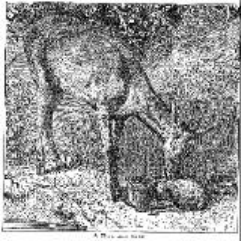
Verse 9. Maketh the hinds to calve] Strikes terror through all the tribes of animals; which sometimes occasions those which are pregnant to cast their young. This, I believe, to be the whole that is meant by the text. I meddle not with the fables which have been published on this subject both by ancients and moderns.
Discovereth the forests] Makes them sometimes evident in the darkest night, by the sudden flash; and often by setting them on fire. And in his temple] Does this refer to the effect which a dreadful thunder-storm often produces? Multitudes run to places of worship as asylums in order to find safety, and pray to God. See on Psalm 29:2.
Joseph Benson on Psalm 29:9
Verse 9. Maketh the hinds to calve — Through the terror which it causeth, which hastens parturition in these and some other creatures. But he names hinds, because they usually bring forth their young with difficulty. See note on Job 39:1. And discovereth the forests — Hebrew יחשׂף, jechesoph, maketh bare, &c., either of their trees, which it breaks and strips of their leaves; or of the beasts, which it forces to run into their dens. And, or but, in his temple doth every one speak, &c. — Having shown the terrible effects of God’s power in other places, he now shows the blessed privilege of God’s people, that are praising and glorifying God, and receiving the comfortable influences of his grace in his temple, when the world are trembling under the tokens of his displeasure. By this he secretly invites and persuades the Gentiles, for their own safety and comfort, to own the true God, and to worship him in his sanctuary, as he exhorted, verse 2. Or, therefore in his temple, that is, because of these, and such like discoveries of God’s excellent majesty and power, his people fear, praise, and adore him in his temple.
Daniel Whedon on Psalm 29:9
9. Hinds to calve—That is, prematurely. This effect of heavy thunder was well known. Pliny, (book viii, chap. 47,) affirms the same of sheep when alone from the flock, but being with the flock the evil was obviated. Discovereth the forests—To discover the forest is to uncover, to make it bare, to strip it of foliage. Devastation marks the storm track. In his temple doth every one speak of his glory—Literally, in his temple all of it speaks (is speaking) glory, namely, to God. The destructive force of the elements, no less than the fertilizing rain, glorifies God.
Cited across the library (3 references)
- JournalJohn Wesley’s Journal (1786-09-03)
- JournalFrancis Asbury’s Journal (1800-06-08)
- DictionaryWatson’s Dictionary: Hind
The LORD sitteth upon the flood; yea, the LORD sitteth King for ever.
John Wesley on Psalm 29:10
V. 10. The flood-The most violent waters, which sometimes fall from the clouds upon the earth. These are fitly mentioned, as being many times the companions of great thunders. And this may be alleged as another reason, why God’s people praised him in his temple, because as he sends terrible tempests and thunders, so he also restrains and over-rules them. Sitteth-He doth sit, and will sit as king for ever, sending such tempests when it pleaseth him.
Adam Clarke on Psalm 29:10
Editorial note: Source collation note — paragraph 1: “sitteth upon the flood] יהוה למבול ישב jehovah lammabbul yasheb, “jehovah”. source PDF page 264: “sitteth upon the flood ישב למבול יהוה Jehovah lammabbul yasheb “Jehovah”. Compared with CLA_PSA.PDF PDF p. 264. The source-font or layout comparison does not securely establish every letter, mark or local sequence in these passages. The flagged language readings or layout are retained; the original source pages should be consulted for these specific readings. Additional-source investigation: an automated comparison of surrounding English text located possible corresponding passages in OCR from separately digitized printed volumes. The linked scan pages are research locators; their images have not been collated for this note's flagged readings. OCR agreement does not verify Greek or Hebrew letters, diacritics, word order, or table layout. The flagged readings or layout remain uncertain. CLA_PSA.PDF, PDF page 264; Additional printed-scan page locator (OCR context only; flagged reading unverified).
Verse 10. The Lord sitteth upon the flood] יהוה למבול ישב Jehovah lammabbul yasheb, “Jehovah sat upon the deluge.” It was Jehovah that commanded those waters to be upon the earth. He directed the storm; and is here represented, after all the confusion and tempest, as sitting on the floods, appeasing the fury of the jarring elements; and reducing all things, by his governing influence, to regularity and order.
Sitteth king for ever.] He governs universal nature; whatsoever he wills he does, in the heavens above, in the earth beneath, and in all deep places. Every phenomenon is under his government and control. There is something very like this in Virgil’s description of Neptune appeasing the storm raised by Juno for the destruction of the fleet of Æneas. See at the end of this Psalm. See Clarke “Psalm 29:11”.
Joseph Benson on Psalm 29:10
Verse 10. The Lord sitteth upon the flood — He moderates and rules the most abundant and violent effusions of waters which are sometimes poured from the clouds, and fall upon the earth, where they cause inundations which would do much mischief if God did not prevent it. And this may be mentioned as another reason why God’s people praised and worshipped him in his temple; because, as he sendeth terrible tempests, thunders, lightnings, and floods, so he restrains and overrules them. But most interpreters refer this to Noah’s flood, to which the word מבול, mabbul, here used, is elsewhere appropriated. And so the words may be rendered, The Lord sat upon the deluge; namely, in Noah’s time, when, it is probable, those vehement and unceasing rains were accompanied with terrible thunders. Bishop Hare thus paraphrases the verse, “This is the same God who, in Noah’s flood, sat as judge, and sent that destruction upon the earth.” And so the psalmist, having spoken of the manifestation of God’s power in storms and tempests in general, takes an occasion to go back to that ancient and most dreadful example of that kind, in which the divine power was most eminently seen. And, having mentioned that instance, he adds, that as God had showed himself to be the King and the Judge of the world at that time, so he doth still sit, and will sit as King for ever, sending such tempests as it pleases him to send. And therefore his people have great reason to worship and serve him.
Daniel Whedon on Psalm 29:10–11
10, 11. The Lord sitteth upon the flood—The moral application of the psalm is given in these last two verses. In verse 10, the first corollary is given in the supremacy of God in nature, ruling and directing all its forces to wise and beneficent ends. The second is stated in verse 11, which brings out the special covenant relations of God to his people, to whom “he will give strength,” and the blessing of “peace,” of which this timely rain and terrible display of power are both the pledge and fulfilment.
The LORD will give strength unto his people; the LORD will bless his people with peace.
Adam Clarke on Psalm 29:11
Editorial note: Source collation note — paragraph 7: “* * * * *”. Compared with CLA_PSA.PDF PDF p. 264. The source-font or layout comparison does not securely establish every letter, mark or local sequence in these passages. The flagged language readings or layout are retained; the original source pages should be consulted for these specific readings. Additional-source investigation: the available separately digitized printed volumes were searched, but the corresponding passage was not securely located. The flagged readings or layout remain uncertain; this search provides no basis for reconstructing or silently normalizing them. CLA_PSA.PDF, PDF page 264.
Verse 11. The Lord will give strength] Prosperity in our secular affairs; success in our enterprises; and his blessing upon our fields and cattle. The Lord will bless his people with peace.] Give them victory over their enemies, and cause the nations to be at peace with them; so that they shall enjoy uninterrupted prosperity. The plentiful rain which God has now sent is a foretaste of his future blessings and abundant mercies. In the note on Psalm 29:10 I have referred to the following description taken from Virgil. Did he borrow some of the chief ideas in it from the 29th Psalm? The reader will observe several coincidences. Interea magno misceri murmure pontum, Emissamque hyemem sensit Neptunus, et imis Stagna refusa vadis: graviter commotus, et alto Prospiciens, summa placidum caput extulit unda. Disjectam Æneæ toto videt æquore classem, Fluctibus oppressos Troas, cœlique ruina. * * * * *
Eurum ad se zephyrumque vocat: dehinc talia fatur * * * * *
Sic ait: et dicto citius tumida æquora placat, Collectasque fugat nubes, solemque reducit. Cymothœ simul, et Triton adnixus acuto Detrudunt naves scopulo; levat ipse tridenti; Et vastas aperit syrtes, et temperat æquor, Atque rotis summas levibus perlabitur undas. * * * * *
Sic cunctus pelagi cecidit fragor, æquora postquam Prospiciens genitor, cæloque invectus aperto, Flectit equos, curruque volans dat lora secundo. Æn. lib. i., ver. 124.
“Mean time, imperial Neptune heard the sound Of raging billows breaking on the ground. Displeased, and fearing for his watery reign, He rears his awful head above the main, Serene in majesty; then rolled his eyes Around the space of earth, of seas, and skies. He saw the Trojan fleet dispersed, distressed, By stormy winds and wintry heaven oppressed. * * * * *
He summoned Eurus and the Western Blast, And first an angry glance on both he cast; Then thus rebuked.
* * * * *
He spoke; and while he spoke, he soothed the sea, Dispelled the darkness, and restored the day. Cymothœ, Triton, and the sea-green train Of beauteous nymphs, and daughters of the main, Clear from the rocks the vessels with their hands; The god himself with ready trident stands, And opes the deep, and spreads the moving sands; Then heaves them off the shoals: where’er he guides His finny coursers, and in triumph rides, The waves unruffle, and the sea subsides. * * * * *
So when the father of the flood appears, And o’er the seas his sovereign trident rears, Their fury fails: he skims the liquid plains High on his chariot; and with loosened reins, Majestic moves along, and awful peace maintains. DRYDEN.
Our God, Jehovah, sitteth upon the flood: yea, Jehovah sitteth King for ever.
The heathen god is drawn by his sea-horse, and assisted in his work by subaltern deities: Jehovah sits on the flood an everlasting Governor, ruling all things by his will, maintaining order, and dispensing strength and peace to his people. The description of the Roman poet is fine; that of the Hebrew poet, majestic and sublime.
Joseph Benson on Psalm 29:11
Verse 11. The Lord will give strength unto his people — To support and preserve them in the most dreadful storms and commotions, whether of the earth or its inhabitants; and, consequently, in all other dangers, and against all their enemies. He will strengthen and fortify them against every evil work, and furnish them for every good work: out of weakness they shall be made strong; nay, he will perfect strength in their weakness. He will bless his people with peace — Though now he sees fit to exercise them with some troubles. He will encourage them in his service, and give them to find by experience that the work of righteousness is peace, and that great peace have they that love his law, and walk according to it.
Cited across the library (1 reference)
Closing reflections and analysis
Adam Clarke
ANALYSIS OF THE TWENTY-NINTH PSALM
There are two parts in this Psalm:—
I. The exhortation itself, Psalm 29:1, 2.
II. The reasons on which it is founded. These are drawn,
1. From his power, Psalm 29:3-11.
2. From the protection he affords to his people, Psalm 29:11. I. The exhortation, which is singular. It proceeds from a king, and not from a common man; a prince, a great prince; and reminds princes and great men that there is One greater than they; and that, therefore, they should yield unto him his due honour and worship.
1. That they freely yield and give it up: for which he is very earnest, as appears from the urged repetition, give, give, give.
2. That in giving this, they must understand they are giving him no more than his due: “Give him the honour due to his name.”
3. What they are to give: glory and strength. 1. They must make his name to be glorious. 2. They must attribute their strength to him.
4. That they bow before and adore him.
5. That they exhibit this honour in the proper PLACE: “In his temple; and in the beauty of holiness.”
II. And that they may be more easily persuaded to give the Lord the honour due to his name, he proposes two reasons to be considered:— First. His power; for although they be mighty ones, his power is infinitely beyond theirs; which is seen in his works of nature; but, omitting many others, he makes choice of the thunder, and the effects it produces.
1. From its nature: for howsoever philosophers may assign it to natural causes, yet religious men will look higher; and, when they hear those fearful noises in the air, will confess, with the psalmist, that it is the voice of the Lord, which he repeats here seven times; and this voice has affrighted the stoutest-hearted sinners, and the mightiest of tyrants.
2. From the place where this voice is given: “The voice of the Lord is upon the waters; upon many waters.”
3. From its force and power. They are not vain and empty noises, but strike a terror: “The voice of the Lord is powerful; the voice of the Lord is full of majesty.”
4. From its effects; which he explains by an induction:—
1. Upon the strong TREES, the cedars of Lebanon: “The voice of the Lord breaks the cedars,” &c.
2. Upon the firmest MOUNTAINS, even Lebanon and Sirion; for sometimes the thunder is accompanied with an earthquake, and the mountains skip like a calf.
3. Upon the air; which is, to common minds, no small wonder; for, as nothing is more contrary to fire than water, it is next to miraculous how, out of a watery cloud, such flames of fire should be darted. “The voice of the Lord divideth the flames of fire.”
4. In the brute creation; for it makes them fear and leave their caves, dens, and woods; yea, makes some of them cast their young: “The voice of the Lord shaketh the wilderness,” &c.; “it maketh the hinds to calve.”
5. In the mighty rains which follow upon it; when the cataracts of heaven are opened, and such floods of water follow that a man might fear that the earth was about to be overwhelmed by a second inundation. Out of all which he draws this conclusion: “The Lord sitteth upon the flood; the Lord sitteth a King for ever;” therefore, the earth is not destroyed. Secondly. His second reason is drawn from the works of grace. 1. When He moves men to acknowledge his voice, and to give him glory in his temple: “In his temple doth every man speak of his honour.” 2. By the security He gives to his people, even in the time when he utters his voice, and speaks in thunder; whereas the wicked then tremble and quake: “The Lord will give strength unto his people; the Lord will bless his people with peace,” i.e., bodily security, and peace of conscience. PSALMS
Joseph Sutcliffe
REFLECTIONS.
The grandeur of God in a thunder storm, which moves with majesty, rolls the ocean, shakes the mountains, and breaks the trees, should sublimely impress the heart and inspire devotion. All the elements of nature are at his command. The affrighted herds, the trembling flocks, and blaspheming tongues, terrified into prayer, should teach what his second advent will be, when he shall roar out of Zion, and cause the heavens to depart as the coiling of a scroll of parchment. This awful God reigns, not for an hour, riding on the tempest, but sitteth above the waterfloods, and reigneth king for ever. Give unto the Lord, oh ye saints, give unto the Lord glory and strength. Borrow language of the elements, and let all nature inspire your song, in giving glory to his name.
John Wesley
PSALM 29.
It is probable David wrote this psalm, during a storm of thunder, lightning, and rain; as that he wrote the eighth in a moon-shining night, and the nineteenth in a sun-shining morning. He calls on the great to give glory to God, ver. 1, 2. Observes his power in thunder and lightning, Ver. 3-9. His dominion over the world and care over the church, ver. 10, 11.
A psalm of David.
Adam Clarke
PSALM 29
The psalmist calls upon the great and mighty to give thanks unto God, and to worship him in the beauty of holiness, on account of a tempest that had taken place, 1, 2. He shouts the wonders produced by a thunderstorm, which he calls the voice of God, 3-9. Speaks of the majesty of God, 10; and points out the good he will do to his people, 11.
NOTES ON PSALM 29
In the Hebrew, this is called A Psalm for David. The Vulgate says, “A Psalm of David, when the tabernacle was completed.” The Septuagint says: “A Psalm of David, at the going out or exodus of the tabernacle.” The Arabic states it to be “A prophecy concerning the incarnation; and concerning the ark and the tent.” Numbers 5:12. The Syriac, “A Psalm of David, concerning oblation.” The Psalm was probably written to commemorate the abundant rain which fell in the days of David, after the heavens had been shut up for three years; 2 Samuel 21:1-10.
Joseph Benson
PSALM 29.
A.M. 2987. — B.C. 1017.
It is probable this Psalm was composed after some terrible storm of thunder, lightning, and rain; whereby God had discomfited David’s enemies, and put them into such disorder that he easily got the victory over them, 2 Samuel 8. Hence he takes occasion to admonish them, and the potentates of the earth, especially those that ruled in the neighbouring countries, to submit themselves, and give glory to that glorious Majesty from whom the thunder came; and who can, with the greatest ease, strike a sudden terror into the hearts of his stoutest and most resolute opposers. David calls on the great to give glory to God, 1, 2. Shows how he manifests his power in thunder and lightning, 3-9. Speaks of his dominion over the world, and care over the church, 10, 11.
NOTES ON PSALM 29.
Joseph Sutcliffe
PSALM 29.
Daniel Whedon
PSALM 29.
A Psalm of David.
The artistic finish of this psalm places it in the first class of the sacred lyrics, while the conception and expression spring from the soul of poetry and devotion. Its earnest, exultant tone, its graphic delineations, and its devout spirit, point to some external occasion. The thunderstorm itself could not have been that occasion. Above the storm, and in the wild confusion of warring elements, there was a providence, a moral significance, which made God himself the ultimate thought, and gave to the scene its real sublimity. This religious element is indicated in the highly Jehovistic character of the psalm, and is directly expressed in the concluding verse. The name Jehovah—the covenant name of God—occurs eighteen times; the name God, twice. The majesty and the power of Jehovah are climaxed with the thought, “Jehovah will give strength unto his people; Jehovah will bless his people with peace.” Verse 11. The manifestations of God in physical nature were subordinate to the doctrine of his faithfulness to his people, while the storm itself was Jehovah’s blessing of peace, and his pledge of protection. The whole seems to point to the transactions of 2 Samuel 21:1-14. The psalm is divided into five strophes. Verses 1, 2, the introduction; vers. 3-9, the description of the storm, which is in three parts—(vers. 3, 4, the storm rising in the distant north; verses 5-7, its lowering and discharging itself upon Lebanon; verses 8, 9, its passing south into Arabia and producing its effects on inanimate nature and animals—and verses 10, 11, the conclusion and application.