1774
4 January 1774
TuesdayMaryland
My body has been indisposed for some days past; but the grace of God has rested on my soul, and I have been enabled to preach several times with freedom, power, and great boldness, the Lord being my helper. Feeling rather better to-day, I ventured to ride in a chaise ten miles to Mr. Lynch’s, where we had some agreeable, Christian conversation. Returned the next day, and continued unwell—sometimes being confined to my bed for a day together; yet I preached at other times to large congregations. It frequently appears as if almost the whole town would come together to hear the word of the Lord. Surely it will not be altogether in vain. The Lord giveth me great patience, and all things richly to enjoy, with many very kind friends, who pay great attention to me in my affliction. Amongst others, Mr. Benedict Swope, a preacher in high Dutch, came to see me. He appeared to be a good man, and I opened to him the plan of Methodism.
ASB_VOL1.PDF, p. 109
14 January 1774
FridayMarylandThough this was the day for the return of my disorder, yet I felt much better. A blister under my ear has removed the pain in my head. A great sense of God rested on my heart, while meeting the class to-day. There is an apparent alteration in this family; and I must conclude the Lord directed my steps among them.
ASB_VOL1.PDF, p. 109
15 January 1774
SaturdayMarylandMy body is still weak, though on the recovery. Lord, if thou shouldst be pleased to raise me up, let it be to do more good! I desire to live only for this! Lord, I am thine, to serve thee forever, with soul and body, time and talents! O my God! now all I am and have is devoted to thee! Mercifully assist me, by thy grace, to persevere in all well-doing. Amen.
ASB_VOL1.PDF, p. 109
16 January 1774
SundayMarylandWhile preaching in town this evening, two young men, in the midst of the sermon, came in, and broke the order of the meeting. On Monday, my heart felt an uncommon burden, on account of the inhabitants of this place. And sometimes I despair of ever doing them much good. But a constant sense of God resteth on my own soul.
ASB_VOL1.PDF, p. 110
19 January 1774
WednesdayMarylandMy mind is kept in peace, though my body is weak; so that I have not strength sufficient for travelling: nevertheless, I can read and think. O that it may be to the glory of Him, who, in his great wisdom, thinks proper to confine me! Lord, ever draw my heart after thee! May I see no beauty in any other object, nor desire anything but thee! My heart longs to be more extensively useful, but is, at the same time, filled with perfect resignation to God in all my affliction.
Therefore, I cannot choose for myself, but leave all to him. A young man, who disturbed the congregation on the evening of last Lord’s day, has seen it expedient to excuse his conduct, as almost the whole town thought him culpable. Thus doth God bring good out of evil, and make the fierceness of man turn to his praise.
ASB_VOL1.PDF, p. 110
23 January 1774
SundayMarylandGreat numbers of people attended while I preached on the parable of the prodigal son.
ASB_VOL1.PDF, p. 110
25 January 1774
TuesdayMarylandThis was a day of sweet peace. I held a private conference with William Moore and Captain Stone, who both appeared to be convinced of sin.
ASB_VOL1.PDF, p. 110
27 January 1774
ThursdayMarylandMany people attended this evening, to hear an account of the rise, discipline, and practice of the Methodists; on which subject I enlarged with a warm exhortation, and had great liberty and satisfaction. If my labours should be in vain for the people, the Lord gives me a gracious reward in my own soul.
ASB_VOL1.PDF, p. 110
28 January 1774
FridayMarylandMy heart was fixed on God, and a great part of my time spent in reading. I also met a class, and received seven probationers into the society. May the Lord give them grace to stand!
ASB_VOL1.PDF, p. 110
30 January 1774
SundayMarylandIt appears that the people have a great desire to know the truth; for though it rained, and froze as it fell, yet a great many attended to hear. It was a very solemn time at night, while I discoursed on the awful day of judgment. Samuel Owings is tenderly affected for the salvation of his soul. And William Moore and Philip Rogers seem to be in earnest about this important matter. Glory to God for these things! Set out on Monday for our quarterly meeting, and met the preachers at brother Owings’s. They all appeared to have their hearts fixed on promoting the work of God for the ensuing quarter; and we consulted together with great freedom and love. On the first day I inquired into the moral character of the local preachers, appointed them their work, and gave them written licenses to officiate. The preachers who spoke at this meeting, manifested great earnestness and zeal for the salvation of souls; and many of the people were much affected; all was harmony and love. For the next quarter we had our stations as follows: Philip Ebert, Edward Dromgoole,1 and Richard Owings, in Frederick circuit; brother Yearbry and brother Rollins in Kent circuit; Henry Watters and brother Webster in Baltimore circuit; and myself in Baltimore town. We appointed our next quarterly meeting to be held in Baltimore on the first of May next. Much fatigued in my feeble frame by various exercises, I returned to town, and visited Mrs. Moore, who was afflicted in body and distressed in mind.
Thursday, Feb. 3. Last night, while we were all below stairs, my bed took fire by some unknown means, though it stood three yards from the fireplace. We happily came up in due time, and finding the room full of smoke, we discovered the fire, and extinguished it. Surely there was a kind providence in this! This day I wrote a letter to Mr. Otterbein,2 a German minister, relative to his settling in Baltimore town. Though the weather was very disagreeable, yet many attended at night to hear the word. God is still my chief object; and my desire is to glorify and serve him. On Saturday, Mr. Swope came to consult me in respect to Mr. Otterbein’s coming to this town. We agreed to promote his settling here; and laid a plan nearly similar to ours—to wit, that gifted persons amongst them, who may, at any time, be moved by the Holy Ghost to speak for God, should be encouraged; and if the Synod would not agree, they were still to persevere in this line of duty.
ASB_VOL1.PDF, p. 110
Notes (2)
- Frederick Circuit included Frederick, Montgomery, Washington, Allegany, and Carroll counties in Maryland and Fairfax County in Virginia. Edward Dromgoole (1751-1835), whose name appears among the appointments for the first time, arrived from Ireland in 1770 with a letter of introduction to his fellow countryman Robert Strawbridge. In 1773 he began his ministry in Frederick County and preached from 1773 to 1780 and from 1783 to 1786. He then settled in Brunswick County, Virginia, where his home was a stopping place for preachers for nearly half a century, and the base from which he extended his ministerial labors to the regions thereabout. His home became known as “Dromgoole’s Chapel.” He was ordained an elder in his home by Asbury on February 12, 1815, having entered the ministry before Methodist ordination was instituted and located soon thereafter. Two of the five children born to him and Rebecca Walton, whom he married in 1775, became local preachers. Another son, George Coke Dromgoole, served three terms as a Congressman from Virginia; and a grandson, the Rev. Edward Dromgoole Sims, was a college professor. (Arminian Magazine, XIV, 219, 220; Sweet: Religion on the American Frontier, IV, 123, 124, for biographical sketch and reprints of some of the Dromgoole papers at the University of North Carolina.) ↩
- The Rev. Philip William Otterbein (1726-1813) in 1774 organized and took charge of the congregation which he served for nearly forty years. He participated in the consecration of Bishop Asbury at the latter’s request. In 1785 he led in the erection of what is now called the Old Otterbein Evangelical United Brethren Church, 112 West Conway Street, Baltimore, which is still in active use. (See Drury, op. cit., 115; Methodist Magazine, VI, 210-14; Stevens: History of the Methodist Episcopal Church, I, 217-21.) ↩
6 February 1774
SundayMarylandWe had a moving time at the Point; and after dining with Mr. Swope, the German minister, many people attended at Mrs. Triplett’s to hear me preach; but a company of men, who would wish to support the character of gentlemen, came drunk, and attempted an interruption: however Philip Rogers, once their intimate associate in sin, had courage enough to defend the cause of God: nevertheless, I thought it expedient to dismiss the congregation; and know not how this will end: but this I know, Satan and his emissaries are greatly displeased.
ASB_VOL1.PDF, p. 111
7 February 1774
MondayMarylandAccording to appointment, I went to Elk Ridge, and was kindly received by Mr. John Worthington. I spent part of three days, labouring for the salvation of souls. In this place there are many wealthy and wicked people, destitute of all true religion. Numbers attended to hear the word, and some were affected. Lord, let it not be as the seed sown by the way-side! Returned to Baltimore on Wednesday, and the next day I advised the widow Triplett to seek redress of a magistrate, for the late riot made in her house. But they advised her to put up with it for this time. As Mr. William Moore offered the use of his house, I met the people there on Friday night, and found the disturbance had not diminished the congregation, but increased it. Thus Satan prepares a weapon to wound his own cause. After reading to the congregation part of the “Plain Account of the People called Methodists,”1 I told them we were a united body, and as such would defend our own cause; that I had qualified myself according to the act of toleration2 and had a legal right to preach the Gospel.
ASB_VOL1.PDF, p. 112
Notes (2)
- Wesley’s tract under this title was published in 1749 and many times thereafter. ↩
- The Act Concerning Religion, passed by the Maryland Assembly April 21, 1649, was known as the Act of Toleration. It provided that no person professing to believe in Jesus Christ should be molested. Asbury qualified himself legally under this statute. (Fiske: Old Virginia and Her Neighbors, I, 309-11, for copy of the statute; Smith: Religion Under the Barons of Baltimore, 318 ff.) ↩
11 February 1774
FridayMarylandEndeavoured to raise something by subscription, towards building a Methodist church; but as the whole lieth on my shoulders, I find the burden rather too heavy. However, God is my support, and my heart is with him.
ASB_VOL1.PDF, p. 112
15 February 1774
TuesdayMarylandA lively sense of God rested on my soul, while preaching to a number of attentive people collected at William Lynch’s; and in meeting the class at night, I found the members steady.
ASB_VOL1.PDF, p. 112
16 February 1774
WednesdayMarylandReturning to the Point, I received a melancholy account of a poor, abandoned wretch, who staggered into a brothel at night, and was found dead the next morning. He was found at the door of Mr. L., and there were reasons to suspect he was murdered. Thus we see the vengeance of God frequently overtakes impenitent sinners, even in this life. How awful the thought! that a soul, in such a condition, should be unexpectedly hurried to the judgment-seat of a righteous God! Let every poor drunkard take the warning; lest the next time he brutifies his immortal spirit, by depriving it of the proper use of its rational powers, it should be suddenly driven out of the reach of divine mercy. On my return to town at night, William Moore gave me a pleasing account of the unspeakable peace with which God had blest him. But, let him that most assuredly standeth, take heed lest he fall. The next evening, I finished reading the “Plain Account of the People called Methodists;” and then exhorted the congregation with much warmth of heart.
ASB_VOL1.PDF, p. 112
18 February 1774
FridayMarylandWhile preaching at the house of Mr. Moore, his father and mother were moved by the word of God. But after lying down at night to rest, my heart was oppressed with inexpressible feelings for the inhabitants of Baltimore. I am pressed under them as a cart full of sheaves; and would rather be employed in the most servile offices, than preach to them, if it were not from a sense of duty to God, and a desire to be instrumental in saving their souls. If honour and worldly gain were held out as motives to this painful work, they would to me appear lighter than vanity. But, Lord, thou knowest my motives and my ends! O prosper thou the work of my heart and my hands!
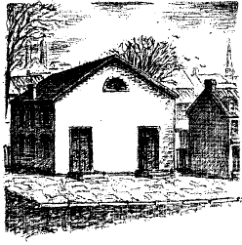
LOVELY LANE MEETINGHOUSE
ASB_VOL1.PDF, p. 113
19 February 1774
SaturdayMarylandThis day was chiefly spent in reading and prayer. Peace, purity, and a spirit of warm devotion filled my heart, Glory to God, the author of all my blessings! The next day the congregation at the Point were but little affected; but at night the attention of the people in town was much struck, while I preached from Matthew 3:7.
ASB_VOL1.PDF, p. 113
21 February 1774
MondayMarylandI rode eight miles and preached at Mr. Gatch’s. Rode afterward to Middle River,1 and had the satisfaction of seeing our new house raised and covered in. An opposer of the truth has been lately and suddenly summoned, by the smallpox, to answer for his conduct at the bar of Almighty God. Rode to Nathan Perigau’s the next day, and found some whose hearts were tender. Stephen Watters gave me an account of the happy departure of his brother, John Watters, from this wicked and dangerous world. He had acted in the capacity of a steward among us; and was a serious, faithful man.
“Happy soul, who, free from harms,
Rests within his Saviour’s arms.”
Nathan Perigau rode in company with me to William Lynch’s where we spent the evening comfortably. After preaching a few times, I returned on Thursday to town, and was much pleased to hear of the success which William Moore had met with in raising a subscription of more than a hundred pounds for our building.2 Thus doth the Lord give us favour in the sight of the people. Mr. Rogers took up two lots of ground for the purpose of building; and Mr. Moore seemed determined to prosecute the work at all events. Surely the Lord hath stirred up their minds to this pious enterprise, and will bless them therein. As my body has now gained a little strength, I am determined to rise early, and make the most of my precious time.
ASB_VOL1.PDF, p. 113
Notes (2)
- Middle River Neck was eight miles from the home of Philip Gatch and lay between Gunpowder and Middle rivers. ↩
- This building was the Lovely Lane Meeting House, the second Methodist place of worship in Baltimore. Its site is now occupied by the Merchants Club, 206 East Redwood Street, on which a bronze tablet reads: “Upon this site stood from 1774 to 1786, The Lovely Lane Meeting House in which was organized December, 1784, The Methodist Episcopal Church in the United States of America.” Here Asbury and Coke were consecrated bishops. The successor to Lovely Lane was the first Light Street Church, at Light Street and Wine Alley, started in August, 1785, and dedicated by Asbury on May 21, 1786. ↩
27 February 1774
SundayMarylandI rose with a solemn sense of God on my heart; and had many to hear, both in town and at the Point.
ASB_VOL1.PDF, p. 114
1 March 1774
TuesdayMarylandSeveral went with me to John Watters’ where we found a large company of people collected, who appeared both ignorant and proud. While attempting to preach to them from these words, “May we know what this new doctrine, whereof thou speakest, is?” my mind was oppressed above measure; so that both my heart and my mouth were almost shut: and after I had done, my spirit was greatly troubled. O my soul! if confined to the society of the wicked, what couldst thou find but vexation and grief? But, “where the Spirit of the Lord is, there is liberty.” Having frequently sixteen or twenty miles to ride, and then to preach before dinner, which is often as late as four o’clock, it shakes my constitution, and is painful to the flesh. But I cheerfully submit to these things for the sake of precious souls. What did the blessed Jesus suffer for me! The next day, a champion in sin, a man who had been a famous ringleader in absurd and diabolical sports, was deeply wounded by the Spirit of God, while, in the course of my sermon, I was describing the horrible torments to which those would be exposed in hell, who had been instruments in the hands of Satan, to train up others in sin and disobedience. He afterward invited me home; and we had some serious conversation. I then returned to Baltimore.
ASB_VOL1.PDF, p. 114
4 March 1774
FridayMarylandI was closely employed all this day, and enjoyed peace in my soul. But O! how does my spirit pant for more of God! The next morning my mind was somewhat dejected by the weight of my strong desires for more pure and undefiled religion. In reading the works of Mr. Brandon,1 especially his meditations, my heart was greatly melted. Through grace, I feel a fixed determination to live more than ever to the glory of God. On the Lord’s day, I laboured for my Master, both in the town and at the Point. Set off the next morning for Gunpowder Neck; and on Tuesday, preached at the funeral of W.P., who had waited for the consolation of Israel, and departed in peace, triumphantly declaring, “I have fought the good fight, I have finished my course, I have kept the faith.” Here we have a lively and steady class. O that they may remain so! The next day, many people attended while I preached at the funeral of I.M., who also died in the Lord. My text was, “Blessed and holy is he that hath part in the first resurrection.” The power of the Lord was present, and it was a melting time. The Spirit of God was present with us also at the upper ferry,2 while I preached to a large congregation from Psalm 126:3: “The Lord hath done great things for us, whereof we are glad.” Honest, simple Daniel Ruff has been made a great blessing to these people. Such is the wisdom and power of God, that he hath wrought marvellously by this plain man, that no flesh may glory in his presence.
ASB_VOL1.PDF, p. 115
Notes (2)
- John Brandon, an English divine, wrote Happiness at Hand, or a Plain and Practical Discourse of Just Men’s Souls in the State of Separation from the Body, in 1687. ↩
- The term “upper ferry” was applied to Bell’s Ferry to distinguish it from the lower ferry at Havre de Grace. Bell’s Ferry was established in 1727 and operated across the Susquehanna River from a point just south of Lapidum, Harford County, Maryland. ↩
11 March 1774
FridayMarylandOn my way to Joseph Presbury’s my horse tired, and fell down with me on his back; but I was not in the least hurt. Calling at Dr. Henderson’s, I met with I.R., a Quaker, who said it gave him pain to think that Joseph Pilmoor should go home for ordination, and expressed his disapprobation of our going to the Church for the ordinances, supposing we might have them amongst ourselves. But this was all a farce. He would rather that we should drop them altogether. And in the course of conversation, he laboured to overthrow them entirely. But when I told him it might appear to me as a duty to use them, though I should not suppose that all went to hell who did not use them; he asked, why we use them if they are not essential to salvation? What weak reasoning is this! Do they think laying them aside is thus essential, or wearing their clothes in such a shape, or using (as they call it) the plain language? Why then do they follow these practices? But what makes them so contracted and bitter in their spirit as some of them are? There is One that knoweth. After preaching the next day at Brother Presbury’s, and having the pleasure to find that the society there had increased both in number and grace, I then returned to Baltimore, and, though much fatigued, spoke at Baltimore in the evening.
Blessed be God! Samuel Owings seems determined to give up all for Christ. And the little society in town are still pressing on. The Lord has been the keeper of my soul in this journey; my peace has been great, and my intention pure.
ASB_VOL1.PDF, p. 115
14 March 1774
MondayMarylandSet out to-day with some agreeable company, for Mr. Worthington’s; and though it rained, a small congregation attended; but they discovered very little sensibility in the things of God. My frame seems lately much affected by nervous disorders. But let the will of the Lord be done! After feeling much dejection of mind, and preaching on Tuesday at the house of Joshua Owings, on Wednesday I visited Joseph Cromwell, a very stiff, old Churchman. But as his parson, Mr. Edmiston, disagreed with him in the doctrine of predestination, he was much displeased with him, and willing to receive us. I preached at his house in the day with some freedom, and expounded at night. May the Lord apply the word to their conviction and conversion!
Returned on Thursday to Baltimore, and was favoured with liberty and power, while preaching to a considerable congregation at night.
ASB_VOL1.PDF, p. 116
19 March 1774
SaturdayMarylandThe Lord blessed my soul with sweet peace in the day, and with the aid of his Holy Spirit in preaching at night. My heart is with God. The Lord Jehovah is my strength and my song: He also is become my salvation.
Satan assaulted me powerfully with his temptations on Monday; but by calling on the name of the Lord, I was delivered. How faithful and gracious is God! He will not suffer his people to be tempted above that they are able to bear; but will with the temptation make a way to escape. Precious truth! Sometimes we are tempted to the uttermost of our strength, but never beyond it. We always stand, at least, on equal ground with Satan: and by faith in Christ we may be more than conquerors.
ASB_VOL1.PDF, p. 116
22 March 1774
TuesdayMarylandI rode a few miles into the (Garrison) Forest, and preached at Mr. E——’s. The people were much quickened; and there were great appearances of real good.
ASB_VOL1.PDF, p. 116
23 March 1774
WednesdayMarylandAt the house of William Lynch I preached a funeral sermon on the death of his brother Joshua. Many of his friends and neighbours were present. It was a very solemn, awful, warning season. May the people retain the impressions they then received, and be found prepared for their own departure! The next day I rode to meet Mr. Webb, but took cold, as the weather was severe, and found myself much indisposed. Mr. Webb preached an animating discourse from Revelation 6:17. There is a great probability that his coming will be made a particular blessing to many.
Being much indisposed on Friday, Mr. Webb preached to a large congregation. There is something very singular in his manner; nevertheless the Lord owns and blesses his labours. Though I continued very unwell the next day, I went to church,1 and heard Mr. Thomas Chase deliver a good discourse on retirement and private devotion; and afterward I attempted to preach at the Point, but found myself much worse at my return to town. My indisposition and weakness of body have so pressed me down for some time past, that I do not expect to abide long in this world of danger and trouble; neither do I desire it. But, come life or come death, let the will of the Lord be done! After the physicians have given over I—I—and thought they could do him no more service, we had recourse to that old-fashioned remedy, prayer; and had reason to believe the Lord in mercy heard us.
ASB_VOL1.PDF, p. 116
Notes (1)
- Asbury attended St. Paul’s Church in Baltimore. ↩
31 March 1774
ThursdayMarylandMy illness has been so severe that I have preached but little for some days past; but felt myself rather better to-day. As Captain Webb had appointed to preach at Mr. W——’s, and was accidentally prevented, lest the people should be disappointed, I ventured to go in his stead. But after preaching was taken very ill, and obliged to go immediately to bed.
ASB_VOL1.PDF, p. 117
3 April 1774
SundayMarylandThough still very unwell, I attempted to preach. How difficult it is for a man who longs for the salvation of souls to be silent! Gratitude urges me to acknowledge the providence of God, and the kindness of my friends. The people who have had the chief trouble with me in my late afflictions, have shown remarkable care, tenderness, and concern. May the Lord reward their work and labour of love!
ASB_VOL1.PDF, p. 117
6 April 1774
WednesdayMarylandMy indisposition has been so great this week, that I have been incapable of all public exercises. Severe chills and burning fevers have been my portion both day and night. O that I may wisely and diligently improve these seasons of affliction! When shall I be all glorious within? My soul longs for the complete image and full enjoyment of God. Satan too often takes the advantage of my constitution, and betrays me into such a degree of cheerfulness as has, at least, the appearance of levity. But my prevailing and earnest desire is, to live and act as in the immediate presence of a holy and glorious God. Lord, make me more serious, watchful, and holy!
Ventured on Thursday to ride in a carriage twelve miles to town; but was very ill most of the night. On Saturday Captain Webb intended to have sailed in the packet; but when he saw the entertainment he was to have, he returned to abide with us for a short season. In great weakness of body, I met the congregation this evening, without any intention to preach; but seeing a great number of people collected, my spirit was moved within me, and I thought it my duty to exert what little strength I had, and preach to the people. But I was indisposed and confined all the next day. However, Captain Webb supplied my place.
ASB_VOL1.PDF, p. 117
11 April 1774
MondayMarylandI was somewhat better. But I find myself assaulted by Satan as well in sickness as in health, in weakness as in strength. Lord, help me to urge my way through all, and fill me with humble, holy love, that I may be faithful until death, and lay hold on eternal life. On Tuesday I ventured to go as far as Mr. Lynch’s, and my soul was kept in peace: though the next day my spiritual adversary assaulted me in a soft and artful way; but the Lord delivered me. May he ever grant me grace to confide in him, and devote my body and soul entirely to his service!
ASB_VOL1.PDF, p. 118
14 April 1774
ThursdayMarylandRode back to town, and was enabled to preach with freedom and comfort, from the case of Naaman, the leper. My heart is much drawn out after God, with a determination to be more devoted to him, and more fervent in prayer.
ASB_VOL1.PDF, p. 118
17 April 1774
SundayMarylandBoth yesterday and to-day my soul enjoyed more peace and more love. May these graces never be interrupted! A great number attended at the Point, while I enforced these awakening words, “O earth, earth, earth, hear the word of the Lord!” After meeting the class of young men, I returned and spoke in town from Proverbs 24:30. Was much fatigued, but desire to be thankful to God that I am gathering some strength for duty. We have reason to think the spirits of hartshorn have been serviceable in my disorder.
ASB_VOL1.PDF, p. 118
18 April 1774
MondayMarylandMy soul was in peace, but my body weak. This day the foundation of our house in Baltimore was laid.1 Who could have expected that two men, once amongst the chief of sinners, would ever have thus engaged in so great an undertaking for the cause of the blessed Jesus? This is the Lord’s doing, and it is marvellous in our eyes. He hath touched and changed their hearts. He hath moved them to this acceptable undertaking; and he will surely complete it; and raise up a people to serve him in this place.
ASB_VOL1.PDF, p. 118
Notes (1)
- This was the Lovely Lane Chapel. (See note under February 21, 1774.) ↩
19 April 1774
TuesdayMarylandMy soul was in a comfortable frame; but I did not employ all my time in so useful a manner as I might have done. This was partly owing to my bodily weakness. But in class meeting this evening, we had a happy and blessed time indeed. Hitherto the Lord hath helped. So my labour hath not been in vain.
ASB_VOL1.PDF, p. 119
20 April 1774
WednesdayMarylandPoor Mr. B. arrived here to-day from England. In great distress he applied to me for a little money. And is it come to this! Ah! what will be the end of those that forsake God, for wealth, a wife, or anything else? O my soul, keep these things always in remembrance as a perpetual caution. And may the Lord keep me ever humble, and dead to all created good! I read the rules, and met the society in the evening; and it was a melting, happy time.
ASB_VOL1.PDF, p. 119
21 April 1774
ThursdayMarylandMy heart was fixed on God, and kept in peace. I was able to walk some distance to-day, and believe the Lord is about to restore me to health. May it be to serve Him, and Him only!
ASB_VOL1.PDF, p. 119
23 April 1774
SaturdayMarylandThough weak in body, I have been able for a few days past to go through my public exercises; and was both instructed and delighted to-day in reading the Revelation with its comment. There we see the rise and spread of the Christian religion through the extensive and idolatrous empire of the Romans; the wars of the Saracens; the gradual rise and artful progress of Popery. What an amazing prophetic history is this, of all people and nations, in epitome! How expressive are the differently-coloured horses, and surprising representations seen by St. John! In this book, extraordinary events are foretold, as well as the proper rule of our faith and practice revealed. If this deep book were fully understood, need we go any farther after knowledge?
ASB_VOL1.PDF, p. 119
25 April 1774
MondayMarylandThe Lord favoured me yesterday with liberty in preaching to large companies both in town and Point. And this day my soul experienced a sweet mixture of peace, and joy, and grief. We had a very comfortable time at the class in the evening.
ASB_VOL1.PDF, p. 119
27 April 1774
WednesdayMarylandWe were all quickened by the grace of God in class meeting last night. Blessed be God! Calm serenity fills my mind; and my body recovers a little strength.
ASB_VOL1.PDF, p. 119
29 April 1774
FridayMarylandWhat a miracle of grace am I! How unworthy, and yet how abundantly blest! In the midst of all temptations, both from without and from within, my heart trusteth in the Lord. I was greatly delighted to-day in reading Dr. John Guyse on the Reign of Christ, which on earth will be spiritual, and in glory personal and eternal. O the beauties and joys of which I have some prospect in that celestial world! It seems rather strange that, till lately, I could discover no beauties in the Revelation of St. John. But now I think it is the grand key of all mysteries, whether pure or impure; opening to view all the revolutions, persecutions, and errors of the Church from that time till the end of the world. And then it favours us with a glimpse of what shall remain forever. In preaching to-night from these words, “Bodily exercise profiteth little, but godliness is profitable unto all things;” I took occasion to show,
I. That bodily exercise, or what is called religious actions, cannot change a sinful heart, or purchase love.
II. Wherein godliness consisteth; namely, In repentance, faith, love to God and man, meekness, resignation, chastity, and the pure, spiritual worship of God.
III. Wherein this is profitable; namely, In all states, in all commerce, in the felicity of the possessor, in the general benefit of others, and finally in eternal glory. My mind has been grieved by some who have spoken evil of ministers. But I must be sure to take care of my own soul; that is more to me than all the world, and all the men in it. And blessed be God! he fills me with peace and purity. Lord, grant that this may be my portion, increasing forever!
ASB_VOL1.PDF, p. 120
1 May 1774
SundayMarylandPreached twice and met two classes. In the morning, at the Point, I had some feeling; but found myself rather shut up at night in town.
ASB_VOL1.PDF, p. 120
2 May 1774
MondayMarylandMy soul loveth the Lord God! What a great and blessed portion is he for worthless man! This evening was spent in company with two German ministers who are very friendly, and intend to be present at our quarterly meeting to-morrow.
ASB_VOL1.PDF, p. 120
3 May 1774
TuesdayMarylandOur quarterly meeting began.1 I preached in the morning; and in the afternoon we settled our temporal business, with great order and much love. When inquiry was made relative to the conduct of the preachers, there were some complaints of a few, who had been remiss in meeting the societies, and catechising the children. The next day several of us spoke in public, and then we parted in peace. Had a friendly intercourse with Mr. Otterbein and Mr. Swope, the German ministers, respecting the plan of Church discipline on which they intended to proceed. They agreed to imitate our methods as nearly as possible.
ASB_VOL1.PDF, p. 120
Notes (1)
- This was the first quarterly meeting held in Baltimore. (Lee: A Short History of the Methodists, 50.) ↩
6 May 1774
FridayMarylandI preached from Matthew 12:50; but felt my mind dejected. Not meeting with success in this town as my soul ardently longs for, I rather feel a desire to depart, and to try some other people. But let the will of the Lord be done. My heart has been deeply affected by reading the Life of Col. Gardiner.1 Blessed be God for so many who experience the same work of grace which we preach, and at the same time are not of us! This is a great confirmation of the work of God. And “whosoever doeth the will of my Father who is in heaven,” of every denomination, “the same shall be my brother, and sister, and mother.”
ASB_VOL1.PDF, p. 121
Notes (1)
- This book was Some Remarkable Passages in the Life of the Honourable Colonel James Gardiner (1688-1745), by Philip Doddridge, 1747. ↩
7 May 1774
SaturdayMarylandMy soul longeth for God. My heart and my flesh cry out for him. O that I were wholly devoted to my God!
ASB_VOL1.PDF, p. 121
8 May 1774
SundayMarylandSeveral appeared to feel something of the power which attended the word, both at the Point and in town. On Monday my soul was in peace, and God was the object of my love. Mr. Chase attended our class meeting, and expressed his approbation. The Lord was with us, and we were greatly blessed. Mr. W.1 arrived to-day from Virginia. He gave us a circumstantial account of the work of God in those parts. One house of worship is built, and another in contemplation; two or three more preachers are gone out upon the itinerant plan; and in some parts the congregations consist of two or three thousand people. But some evil-minded persons have opposed the act of toleration, and threatened to imprison him. May the Lord turn their hearts, and make them partakers of his great salvation!
ASB_VOL1.PDF, p. 121
Notes (1)
- Mr. W. was either John Wade or William Watters. ↩
11 May 1774
WednesdayMarylandI went to Mr. Lynch’s, and preached to a large congregation; then called at Nathan Perigau’s, and preached a funeral sermon on the death of his sister, who was once happy in religion. Returned to town on Thursday, and preached with freedom to an attentive audience.
ASB_VOL1.PDF, p. 121
13 May 1774
FridayMarylandI packed up my clothes and books to be ready for my departure; and had an agreeable conversation with Mr. Otterbein, The next day some of my friends were so unguarded and imprudent as to commend me to my face. Satan, ready for every advantage, seized the opportunity and assaulted me with self-pleasing, self-exalting ideas, But the Lord enabled me to discover the danger, and the snare was broken. May he ever keep me humble, and little, and mean, in my own eyes!
ASB_VOL1.PDF, p. 121
15 May 1774
SundayMarylandAbout to take my leave for a season, I went to the Point, and enlarged on these words, “I am afraid of you, lest I have bestowed upon you labour in vain;” and trust some felt at last the worth and weight of divine truths. My subject at night in town was this: “I take you to record this day, that I am pure from the blood of all men.” In preaching from these words my mind was under some embarrassment. Perhaps my foolish heart desired to end with honour, and the Lord in mercy prevented it. May I ever be contented with that honour which cometh from God only!
ASB_VOL1.PDF, p. 122
16 May 1774
MondayMarylandWhen the time of parting came, I felt some unwillingness to leave my kind and valuable friends: however, I took horse and rode sixteen miles to Mr. Giles’s, where a large company attended to hear the word. Many were also present at Mr. Colgate’s. In examining the leaders, I found them steady; but refused to give a license to an exhorter, who had been too unwatchful. After a long prejudice, Mr. Jacob Giles invited me to his house, and treated me kindly. In preaching at Mr. Bond’s, my heart was troubled within me for the dullness and unbelief of the people.
ASB_VOL1.PDF, p. 122
18 May 1774
WednesdayMarylandRode to Susquehanna River and many of the leading men were present, with a large congregation. Simple Daniel Ruff has been an instrument of real and great good to the people in these parts.
ASB_VOL1.PDF, p. 122
19 May 1774
ThursdayMarylandI am happy in God after all my labours. But when amongst my friends, my mind inclines to a degree of cheerfulness bordering on levity. O for more watchfulness!—a more constant, striking sense of an omnipresent God! Preached to-day in the market house at Charlestown.1 The congregation was somewhat large, and many of them very attentive. The company was large at Bohemia Manor on Friday, and my own heart was deeply affected, and much drawn out while speaking from Revelation 3:3. At Newcastle (Delaware) on Saturday, Satan was there, diverting the people by a play. However, several came to hear me enforce these words, “Be not ye partakers with them.”
PENNSYLVANIA
ASB_VOL1.PDF, p. 122
Notes (1)
- Charlestown was in the present Cecil County, Maryland. ↩
23 May 1774
MondayMarylandAfter preaching yesterday at Newport and Red Clay Creek,1 I rode to-day to Chester; and though weary, spoke from Galatians 6:14. Here my old friends, Mr. Mann2 and Mr. Sause, from New York, met me; and the next day we rode to Philadelphia. Hitherto the Lord hath helped.
ASB_VOL1.PDF, p. 122
Notes (2)
- Asbury went by Newcastle, Newport, and Red Clay Creek in Delaware, en route to Philadelphia. ↩
- John Mann (1742-1816) was a local preacher in New York and was one of the preachers at Wesley Chapel during the Revolution. He was a Royalist and went to Canada after the war and continued to preach there. His brother, James, accompanied him to Nova Scotia and became a member of the conference there. (Seaman: Annals of New York Methodism, 54, 76, 120; Tipple, op. cit., 65.) ↩
25 May 1774
WednesdayNew YorkOur conference began. The overbearing spirit of a certain person had excited my fears. My judgment was stubbornly opposed for a while, and at last submitted to. But it is my duty to bear all things with a meek and patient spirit. Our conference was attended with great power; and, all things considered, with great harmony. We agreed to send Mr. Richard Wright to England; and all acquiesced in the future stations of the preachers. My lot was to go to New York. My body and mind have been much fatigued during the time of this conference. And if I were not deeply conscious of the truth and goodness of the cause in which I am engaged, I should by no means stay here. Lord, what a world is this! yea, what a religious world! O keep my heart pure, and my garments unspotted from the world! Our conference ended on Friday with a comfortable intercession.
ASB_VOL1.PDF, p. 123
29 May 1774
SundayNew YorkThis was a day of peace, and the Lord favoured me with faith and energy while preaching to the people. I visited Mr. Wright, who is going to England; but found he had no taste for spiritual subjects. Lord, keep me from all superfluity of dress, and from preaching empty stuff to please the ear, instead of changing the heart! Thus has he fulfilled as a hireling his day. We had a very solemn love feast to day. NEW YORK
ASB_VOL1.PDF, p. 123
30 May 1774
MondayNew YorkMy friends and I set off in the stage for New York,1 where we arrived on Tuesday evening about eight o’clock. We had some trifling company on the way, who talked much but to little purpose. My old friends in New York were glad to see me. But I still fear there is a root of prejudice remaining in the hearts of a few.2 May the Lord prepare me for all events, that I may act and suffer, in all things, like a Christian! Captain Webb3 preached a good sermon in the evening.
ASB_VOL1.PDF, p. 123
Notes (3)
- The party went by stage via Burlington to Perth Amboy and by ferry around Staten Island to Whitehall at the southern tip of Manhattan Island. ↩
- The leader of the small group that was still opposed to Asbury was probably John Chave. (See Journal entry under June 1, below.) William Lupton was soon reconciled. (See Journal entry for July 10, 1774.) ↩
- This was the last sermon preached by Webb in Wesley Chapel prior to his return to England because of the mounting political tension. (John Street Church Records.) ↩
1 June 1774
New YorkConsidering my bodily weakness, and the great fatigue through which I have gone, it seems wonderful that my frame should support it, and be still so capable of duty. My mind is also kept in peace. My heart was much drawn out both towards God and the people, while preaching this evening from Samuel 7:12. But too much of the old spirit is still discoverable in my few prejudiced friends. Mr. Chave,1 not contented with his unkind and abusive letter, is still exerting all his unfriendly force. I feel myself aggrieved; but patiently commit my cause to God. Therefore their contention may subsist among themselves. I shall not contend with them.
ASB_VOL1.PDF, p. 123
Notes (1)
- Asbury had appointed John Chave collector in the New York society in 1772. (See Journal entry under September 11, 1772.) The contents of the letter and whether it was written to Asbury or others are unknown. Chave eventually became reconciled to Asbury and with Lupton met him at Newark on his return to New York after the Revolution. (See Journal entry for August 27, 1784.) ↩
2 June 1774
ThursdayNew YorkIn the public exercise of the evening, my heart was warmed with affection for the people. And except a very small number of dissatisfied, restless spirits, the hearts of the people are generously opened towards me. My heart is still fixed on God; and determined through grace, both to serve him, and promote the prosperity of his cause.
ASB_VOL1.PDF, p. 124
3 June 1774
FridayNew YorkChrist is precious to my believing heart. Blessed be God for this! it is infinitely more to me than the favour of all mankind, and the possession of all the earth. The next day my soul was also sweetly drawn out in love to God; and found great freedom and happiness in meeting the leaders and the bands.1 I told them that the Spirit and providence of God would certainly assist in purging the society; that the time would come, when such as were insincere and half-hearted would have no place among us.
ASB_VOL1.PDF, p. 124
Notes (1)
- Some changes had taken place in the leadership of the society. Boardman and Pilmoor returned to England in January, and Captain Webb and John Southwell no longer lived in New York, and their places as trustees of Wesley Chapel were taken by John Mann, John Staples, Samuel Selby, and David Johnson, while Stephen Sands and William Ellsworth were elected as “additional trustees.” James Jarvis was still treasurer, and William Lupton and Henry Newton were the stewards. (John Street Church Records, I.) ↩
5 June 1774
SundayNew YorkAttended the old church,1 as usual, but clearly saw where the Gospel ministry was. The Spirit of grace mercifully assisted me in the public duties of this day. On Monday, I preached with great plainness and power in the Meadows;2 but while preaching on Tuesday evening, my ideas left me, though I felt myself spirited in addressing the people by way of exhortation.
ASB_VOL1.PDF, p. 124
Notes (2)
- The “old church” was St. Paul’s Chapel (Anglican) at Broadway and Fulton streets, where Asbury frequently worshiped. ↩
- Lispenard’s Meadows was part of the estate of Leonard Lispenard. It was about a mile and a half north of Wesley Chapel and a little south of present Canal Street. Lispenard had loaned six hundred pounds to the trustees. (See notes under September 6, 1772.) They subsequently bought two lots adjacent to the chapel from him. Lispenard was coexecutor of the estate of Rector Barclay, from whose widow the first lots were purchased; and as such he signed the original deed. (See note under November 13, 1771.) ↩
8 June 1774
WednesdayNew YorkThe fire of divine love glowed in my heart. My soul was in peace. My affections were pure, and withdrawn from earthly objects. But I fear, lest self-complacency should have any place in me. May the Lord keep me in the spirit of humility, prayer, and loving zeal!
ASB_VOL1.PDF, p. 124
9 June 1774
ThursdayNew YorkWhile reading a sermon of Mr. Brandon’s on “Quench not the Spirit,” in company with a few friends, both they and I were much quickened. Blessed be God! My soul is kept in peace, and power, and love. Had great liberty this evening in pointing out the causes, why we have not more of the spirit of devotion; of neglect or dullness in prayer; of too much heart-attention to the world; of the want of more faith in the realities of eternity, and the promises of God; of not looking more earnestly to God in humble expectation of receiving his grace, &c.
ASB_VOL1.PDF, p. 124
12 June 1774
SundayNew YorkBoth my body and mind are weak. As Mr. Ritzman1 was thought by many to be a great preacher, I went in the afternoon to hear him. He was very stiff and studied in his composition, and dwelt much on their favourite doctrine of imputed righteousness. He appeared to have very little liberty, except in a short application. With great enlargement of heart, I spoke in the evening from these words, “If they hear not Moses and the prophets, neither will they be persuaded though one rose from the dead.” In meeting the society at night, I spoke plainly of some who neglected their bands and classes; and informed them that we took people into our societies that we might help them to become entire Christians, and if they wilfully neglected those meetings, they thereby withdrew themselves from our care and assistance. The next day many people attended the preaching at the Meadows.
ASB_VOL1.PDF, p. 125
Notes (1)
- The Rev. John Ritzman was minister of the Reformed Dutch Church. Asbury heard him at the Middle Dutch Church on Nassau and Cedar streets. In 1761 he married Miss Joanna Schuyler, related to General Schuyler, to William Lupton. Tipple’s identification (op. cit., 66) of him as Thomas Rankin was erroneous, as Rankin was at St. George’s Church in Philadelphia at this time. (Seaman, op. cit., 422, 440; see Minutes.) ↩
14 June 1774
TuesdayNew YorkMy heart seems wholly devoted to God, and he favours me with power over all outward and inward sin. My affections appear to be quite weaned from all terrestrial objects. Some people, if they felt as I feel at present, would perhaps conclude they were saved from all indwelling sin. O my God, save me and keep me every moment of my life! The next day my soul was under heavy exercises, and much troubled by manifold temptations; but still, all my care was cast on the Lord. I find it hurtful to pore too much on myself. True, I should be daily employed in the duty of self-examination, and strictly attend both to my internal and external conduct; but, at the same time, my soul should steadily fix the eye of faith on the blessed Jesus, my Mediator and Advocate at the right hand of the eternal Father. Lord, cause thy face to shine upon me; and make me always joyful in thy salvation.
ASB_VOL1.PDF, p. 125
16 June 1774
ThursdayNew YorkMy soul was more and more delighted in God. I felt myself uneasy to-day on account of riding out,1 though I was conscious it was intended for my health. Yet to some it might have the appearance of pleasuring, and encourage them to seek their carnal pleasure in such things.
ASB_VOL1.PDF, p. 125
Notes (1)
- Certain friends, perhaps Sause, White, Jarvis, and Molloy, had probably arranged riding trips for Asbury. Sause narrowly escaped drowning on one such ride. (See Journal entry for June 27, 1774.) ↩
18 June 1774
SaturdayNew YorkThe Lord was my helper; and my mind was in peace.
ASB_VOL1.PDF, p. 125
19 June 1774
SundayNew YorkThis was a blessed and delightful day to my soul. The grace of God was eminently with me in all my public duties. Heard Mr. E. Charles English at St. Paul’s church preach from these words, “Put on the new man, which after God is created in righteousness and true holiness.’’ He spoke well on man’s fallen state, and the new creation; and brought good reasons to prove that we must be renewed in order to dwell with God. But he did not insist on the necessity of repentance and faith in order to obtain this change.
ASB_VOL1.PDF, p. 125
20 June 1774
MondayNew YorkMr. Richard Sause, Mr. Charles White, and Mr. Thomas Tucker1 bore me company as far as Kingsbridge, on my way to New Rochelle. Was much indisposed when I reached the house of my friend Mr. Frederick Deveau; nevertheless, thought it my duty to preach to the people. The Lord is doing something for several souls in this place. Though they have had but very few sermons for twelve months, yet the class is lively and engaged with God.2
ASB_VOL1.PDF, p. 126
23 June 1774
ThursdayNew YorkAfter preaching as often as I could to many people who attended at New Rochelle,1 I set off for New York, and was met at Kingsbridge by Mr. Sause and Mr. Jarvis. But on my arrival in the city I found myself very unwell, and had a painful, restless night.
ASB_VOL1.PDF, p. 126
Notes (1)
- The preaching places from Monday evening to Thursday morning were probably the homes of Deveau and Bonnette, leaders of the class. ↩
24 June 1774
FridayNew YorkFound myself better; and was much refreshed by letters from Mr. Lindsay and Mr. Shadford,1 in Maryland. But one of these letters informed me that Mr. Strawbridge2 was very officious in administering the ordinances. What strange infatuation attends that man! Why will he run before Providence?
ASB_VOL1.PDF, p. 126
25 June 1774
SaturdayNew YorkMy fever was very high last evening, so I took an emetic this morning. I found liberty in my own soul, and great meltings amongst the people, while preaching on the Lord’s day. Though my disorder has a tendency to oppress my spirits, yet, blessed be God! I am favoured with power to conquer every spiritual foe; and my heart is sometimes wonderfully raised, as on the wings of faith and love.
ASB_VOL1.PDF, p. 126
27 June 1774
MondayNew YorkRichard Sause, who accompanied me a few miles into the country to-day, was very near being drowned. He went into a stream of water to wash his horse and chaise, but accidentally got out of the horse’s depth, and they must all have been unavoidably lost, had not two men swam in and dragged them to the shore. Thus the Lord preserveth both man and beast. I went to bed this evening in much pain, and had an uncomfortable night.
ASB_VOL1.PDF, p. 126
28 June 1774
TuesdayNew YorkMany of my good friends kindly visited me to-day; and in the afternoon I took another emetic. My heart is fixed on God, as the best of objects, but pants for more vigour, and a permanent, solemn sense of God. Rose the next morning at five, though very weak, and spent a great part of the day in reading and writing. Many people attended the public worship in the evening, though I was but just able to give them a few words of exhortation. Seeing the people so desirous to hear now I am unable to say much to them, Satan tempts me to murmuring and discontent. May the Lord fill me with perfect resignation!
ASB_VOL1.PDF, p. 126
30 June 1774
ThursdayNew YorkMy body was very weak and sweated exceedingly. If I am the Lord’s, why am I thus? But in his word he hath told me, “If I be without chastisement, then am I a bastard and not a son.” O that this affliction may work in me the peaceable fruits of internal and universal righteousness! An attempt to speak a little in exhortation this evening greatly augmented my disorder.
ASB_VOL1.PDF, p. 127
1 July 1774
FridayNew YorkIn prayer to-day with I.B.,1 a soldier in the 23d regiment, the Lord greatly refreshed and strengthened my soul. My mind was strongly impressed with a persuasion, that God, through mercy, would restore me to health. If so, I am determined, by his assistance, to be more than ever intent on promoting his cause and his glory. Gave an exhortation at night, and met the leaders: but the next day I was much indisposed; nevertheless, I spent part of my time in reading the afflicted condition of the Waldenses, when so wickedly persecuted by the Dominicans, with the rise of those brutish men.
ASB_VOL1.PDF, p. 127
Notes (1)
- The soldiers of the twenty-third regiment mentioned here and below (Monday, July 4) are otherwise unidentified. They were referred to as “my Christian brethren” by Asbury when they left New York on July 27, 1774. The daughter of I.B. was killed in the storm of July 28. ↩
3 July 1774
SundayNew YorkPoor Mr. H. came to me in great distress. He is a native of Stowbridge, where, as he supposes, he has a wife now living; and he has been so unwatchful as to suffer his affections to stray. May the Lord deliver him out of this dangerous snare of Satan! If not, he may be undone. I spoke with freedom this morning from Job 10:2, and spent part of the day in reading of the holy war which was carried on against the Waldenses and Albigenses, by the devil, the pope, and their emissaries. Though my body is still weak, my soul is strong in the Lord, and joyful in his salvation. And at night I was able to preach with spirit, and found myself happy in addressing a large and attentive audience.
ASB_VOL1.PDF, p. 127
4 July 1774
MondayNew YorkI spent part of this day in visiting a few friends, and found my heart much united to I.S., a musician of the 23d regiment. Was much better to-night than I had been for some time, and enjoyed a good night’s rest.
ASB_VOL1.PDF, p. 127
5 July 1774
TuesdayNew YorkIn reading the Life of Calvin, it appeared that many, in his day, had opposed the doctrine of predestination; and all who opposed it were spoken of by him and his followers, as bad men. My fever returned this evening, and it was a painful, restless night. But the will of the Lord be done! Though he slay me, yet will I trust him! Found very great lassitude of body the next day also; but my soul hungered and thirsted for more of God. In reading Clark’s Life of Origen, I felt a strong desire to imitate that great and good man, as far as he went right.
ASB_VOL1.PDF, p. 127
7 July 1774
ThursdayNew YorkMy disorder was much abated, and I had power to speak plainly and pointedly to both saints and sinners.
ASB_VOL1.PDF, p. 128
10 July 1774
SundayNew YorkMy bodily weakness has been such, for a few days past, as to prevent my officiating much in public; however, I ventured to preach twice to-day, but in the evening was so weak that I could scarce stand in the pulpit: but while preaching on the parable of the prodigal son, the Lord greatly refreshed and strengthened me; though I went to bed very ill at night. Satan tempted me to-day to think much of my gifts. Alas! what poor creatures we are; and to what dangers we are exposed! What are all our gifts, unless they answer some good purpose? Unless properly improved, they neither make us holier nor happier. We have nothing but what we have received; and unless we are humble in the possession of them, they only make us more like devils, and more fit for hell. How wonderfully is the language and behaviour of Mr. Lupton changed towards me! Before, I was everything that was bad; but now, all is very good. This is a mistake: my doctrine and preaching are the same; and so is my manner. But such is the deceitfulness of the man. His favourite, Mr.——, is now gone.1 Had I preached like an archangel it would have been to no purpose, while I thought it my duty to oppose him.
ASB_VOL1.PDF, p. 128
Notes (1)
- Lupton’s favorite was probably Joseph Pilmoor, who had returned to England on January 2, 1774. Tipple (op. cit., 69) thought the favorite was Richard Wright. However, Wright had spent little time in New York and with indifferent success, most of his work being in Philadelphia, Maryland, and Virginia. On March 27, 1771, Wesley wrote to Pilmoor and addressed him at Lupton’s house. In that letter Wesley said complaint had been made that Boardman and Pilmoor had secured a deed to Wesley Chapel which replaced the original deed. This second instrument included the doctrinal phrases of Wesley’s Model Deed and substituted the names of Boardman and Pilmoor for Embury and Heck. It seems that some laymen had protested the naming of itinerating preachers as improper. Sause and White had come from Dublin, from which place Wesley’s letter was written; and they may have written their objections to friends there. This was probably a factor in the troubles of the New York Society in late 1771 and early 1772. (See note under November 22, 1771, et seq. See Letters of John Wesley, V, 232.) ↩
11 July 1774
MondayNew YorkMy soul is not so intensely devoted to God as I would have it; though my desires for more spirituality are very strong. Lord, when shall my poor heart be as a rising, active, holy flame? Blessed be God! my illness is more moderate to-day than it has been for some days past. On Wednesday, a letter from Samuel Owings1 informed me that the house in Baltimore was then ready to be enclosed,2 He also expressed a great desire to persevere. May the Lord give him grace so to do!
ASB_VOL1.PDF, p. 128
Notes (2)
- Samuel Owings (1733-1803) was the nephew of Joshua Owings and cousin of Richard Owings. (See Journal entry for November 25, 1772.) Samuel Owings was a leader in the Baltimore Society and a trustee of Cokesbury College. (See notes under November 12 and 25, 1772; Armstrong: Old Baltimore Conference, 18, 89.) ↩
- This house was the Lovely Lane Chapel. (See Journal entry for October 19, 1774.) ↩
14 July 1774
ThursdayNew YorkMy mind is in peace. I have now been sick near ten months, and many days closely confined; yet I have preached about three hundred times, and rode near two thousand miles in that time; though very frequently in a high fever. Here is no ease, worldly profit, or honour. What, then, but the desire of pleasing God and serving souls, could stimulate to such laborious and painful duties? O that my labour may not be in vain! that the Lord may give me to see fruit of these weak, but earnest endeavours, many days hence! After preaching this evening with some warmth of heart, I was very close and pointed in meeting the society.
ASB_VOL1.PDF, p. 128
16 July 1774
SaturdayNew YorkMy heart was much taken up with God. Letters from my dear friends, Mr. James Foster1 and Mr. Thomas Rankin, gave me great satisfaction. In meeting the band society, I showed them the possibility of using all the means, and, without sincerity and spirituality, they might still be destitute of true religion.
ASB_VOL1.PDF, p. 129
Notes (1)
- James Foster, whom Asbury had known in Baltimore, was admitted to the conference in 1776 and assigned to that city with Asbury. (Lednum, op. cit., 168; Minutes, 1776.) Tipple identifies him as Mr. Fiddler, but gives no supporting data. (Op. cit., 69.) He probably had John Fiddler in mind. However, Fiddler did not enter the conference until 1784, and it may be doubted that he was in familiar correspondence with Asbury in 1774. ↩
18 July 1774
MondayNew YorkThe Lord assisted me in yesterday’s duties; and he is the keeper and comforter of my soul to-day. A poor, unhappy young woman, who had abandoned herself to the devil and wicked men, being at the point of death, and expecting to go shortly and render an account of herself to God, sent for me to visit her. I felt some reluctance; but considering the danger her soul was in, thought it my duty to go. She was very attentive while I spoke plainly to her, and made prayer to God in her behalf. Strange infatuation! that men will not seriously think of preparing for death, till it comes upon them! If we were sure of dying in a few hours, most men would think it their duty to labour for a preparation: but when no man is sure of living a few hours, very few think seriously about it. So does the god of this world blind the minds of mankind!
ASB_VOL1.PDF, p. 129
21 July 1774
ThursdayNew YorkMy heart enjoys great freedom, with much peace and love both towards God and man. Lord, ever keep me from all sin, and increase the graces of thy Holy Spirit in my soul! A letter from Mr. Thomas Rankin brought melancholy tidings of Abraham Whitworth. Alas for that man! He has been useful, but was puffed up, and so fell into the snare of the devil. My heart pitied him: but I fear he died a backslider.1
ASB_VOL1.PDF, p. 129
Notes (1)
- For the moral collapse of Abraham Whitworth see note under April 27, 1773. The phrase “I fear he died a backslider” was probably inserted at a later date, since Whitworth seems to have lived during the Revolution and died of wounds received while fighting with the British forces. (Lednum, op. cit., 129.) In the following January, Asbury reported that he was still alive. (See Journal entry for January 7, 1775.) ↩
24 July 1774
SundayNew YorkEnded the parable of the prodigal son. Does it not appear from this parable, that some, who, comparatively speaking, have all their lifetime endeavoured to please God, and are entitled to all his purchased, communicative blessings, are nevertheless not favoured with such rapturous sensations of divine joy as some others. I remember when I was a small boy and went to school, I had serious thoughts, and a particular sense of the being of a God; and greatly feared both an oath and a lie. At twelve years of age the Spirit of God strove frequently and powerfully with me: but being deprived of proper means and exposed to bad company, no effectual impressions were left on my mind. And, though fond of what some call innocent diversions, I abhorred fighting and quarrelling: when anything of this sort happened, I always went home displeased. But I have been much grieved to think that so many Sabbaths were idly spent, which might have been better improved. However, wicked as my companions were, and fond as I was of play, I never imbibed their vices. When between thirteen and fourteen years of age, the Lord graciously visited my soul again. I then found myself more inclined to obey; and carefully attended preaching in West Bromwich; so that I heard Stillingfleet,1 Bagnel,2 Ryland,3 Anderson,4 Mansfield,5 and Talbott,6 men who preached the truth. I then began to watch over my inward and outward conduct; and having a desire to hear the Methodists, I went to Wednesbury,7 and heard Mr. Fletcher8 and Mr. Ingham,9 but did not understand them, though one of their subjects is fresh in my memory to this day. This was the first of my hearing the Methodists. After that, another person went with me to hear them again:10 the text was, “The time will come, when they will not endure sound doctrine.” My companion was cut to the heart, but I was unmoved. The next year Mr. Mather11 came into those parts. I was then about fifteen; and, young as I was, the word of God soon made deep impressions on my heart, which brought me to Jesus Christ, who graciously justified my guilty soul through faith in his precious blood; and soon showed me the excellency and necessity of holiness. About sixteen I experienced a marvellous display of the grace of God, which some might think was full sanctification, and was indeed very happy, though in an ungodly family. At about seventeen I began to hold some public meetings; and between seventeen and eighteen began to exhort and preach. When about twenty-one I went through Staffordshire and Gloucestershire, in the place of a travelling preacher; and the next year through Bedfordshire, Sussex, &c. In 1769 I was appointed assistant in Northamptonshire; and the next year travelled in Wiltshire. September 3, 1771, I embarked for America, and for my own private satisfaction, began to keep an imperfect journal.
To-day Dr. Ogilvie preached a pertinent discourse on the shortness of time. The Lord favoured me with great liberty in the evening, while preaching to a large congregation from Genesis 19:17. And I was enabled to speak plainly and closely in meeting the society at night.
ASB_VOL1.PDF, p. 129
Notes (11)
- Edward Stillingfleet, descendant of Edward Stillingfleet, bishop of Worcester, was head minister of West Bromwich from 1757 to 1782. As chaplain to the Earl of Dartmouth he was one of the more important evangelical influences in the Midlands, and probably had greater influence on Asbury than anyone else. ↩
- This was possibly Gibbons Bagnall (1719-1800), who was not otherwise known as an evangelical. ↩
- John Ryland (1736-1822) was ordained in 1759 to serve as curate for his elder brother Richard, rector of Sutton Coldfield. In 1774 he was appointed the first vicar of St. Mary’s, Birmingham, which became the home of the “Church Methodists” in the area. (Proceedings of the Wesley Historical Society, III, 193-96.) ↩
- This was possibly Sir William Anderson, rector of Epworth, who was sympathetic to Wesley in 1780. (Wesley’s Journal, VI, 287.) ↩
- This was probably John Mansell, whom the Rev. John Fletcher lists as among the evangelical clergy in 1764. ↩
- William Talbot (1719-74), vicar of Kineton, Warwicks, was the son of a wealthy family; and Samuel Walker of Truro, one of the earliest evangelicals, exerted considerable influence upon his ministry. (Elliott- Binns: The Early Evangelicals, 252, 291-92.) ↩
- Wednesbury is about three miles from West Bromwich. It was the scene of the first Methodist preaching in Staffordshire, and here the Methodists encountered their worst persecution. Richard Whatcoat was also a member of the Wednesbury group, and it is believed that both Asbury and Whatcoat heard John Wesley preach there on March 4, 1760. (Baker: A Methodist Pilgrim in England, 74-77.) ↩
- The Rev. John W. Fletcher (1729-85) was one of the greatest of John Wesley’s evangelical collaborators among the Anglican clergy. Wesley designated Fletcher as his successor in charge of the Methodist societies after the death of himself and his brother Charles. (Tyerman: Wesley’s Designated Successor.) ↩
- The Rev. Benjamin Ingham (1712-72) was a member of the Holy Club at Oxford and a companion of the Wesleys on their mission to Georgia in 1735. On his return to England he became the pioneer evangelist in northern England and founded many religious societies which in later years he transferred to the care of the Moravians. In 1741 he married Lady Margaret Hastings, sister of the Earl of Huntingdon, but continued to itinerate widely from his headquarters at Aberford. Although the fresh societies he founded were known as Inghamites, he continued to preach to many Methodist congregations; however, negotiations for a fusion of the Inghamites and the Methodists fell through. (Tyerman: Oxford Methodists, 57-154.) ↩
- Briggs (op. cit., 17) suggests that Asbury’s companion was named William Emery. ↩
- Alexander Mather (1733-1800) was a Scots baker who was accepted by Wesley as an itinerant preacher in 1757. He became one of the leading preachers and in 1788 was ordained by Wesley as a “superintendent,” apparently with the intention of serving as a bishop for England as Coke and Asbury had done for America. He was stationed in Staffordshire in the summer of 1760 and witnessed a widespread revival of religion there, one of the key points being the prayer meeting at Wednesbury. Mather was the second president of the British Conference after the death of Wesley. (Jackson: Lives of Early Methodist Preachers, II, 158-239.) ↩
26 July 1774
TuesdayNew YorkMy soul is in peace. But I long to be more spiritual—to be wholly devoted to God. Some circumstances make me fear that we have a few bad characters in the society here. These are the people that injure the cause of God. Like Judas, they betray the Lord with a kiss. It is not easy to conceive how such characters counteract the most faithful preaching. If their conduct is not fully known to the preachers, it is so known to many of their acquaintances, that Satan takes the offered advantage, and hardens the hearts of many against all the power of religion. Of all characters, that of a designing sinner under the fair appearance of religion, is the most odious. O that the Lord may strip all such unsound professors, in every place, of their covering, and show them to his servants in their own proper colours; that Israel may be able to put away the accursed thing from among them; and so increase both in strength and number!
ASB_VOL1.PDF, p. 130
27 July 1774
WednesdayNew YorkI rose early this morning to see my Christian brethren, the soldiers, go off; but was much affected at parting with those worthy men, I.S. and I.B.1 May the Lord go with them!
ASB_VOL1.PDF, p. 131
Notes (1)
- See Journal entry and note under July 1, 1774. ↩
28 July 1774
ThursdayNew YorkThe Lord shows me the snares of Satan, and enables me to avoid them. He favours me with the light of his countenance, and fills me with holy love. Surely we stand in jeopardy every hour! This day the thunder and lightning struck four people dead on the spot. Awful scene! And will man still venture to be careless and wicked? I made some improvement on the subject in the evening.
ASB_VOL1.PDF, p. 131
29 July 1774
FridayNew YorkI rose unwell this morning, and received a melancholy account, that the daughter of I.S. was beat overboard.1 Poor man! He has lost both his children by going to sea. I was much blessed at intercession to-day, but shut up in preaching at night. My soul is determined to live more to God.
ASB_VOL1.PDF, p. 131
Notes (1)
- Ibid. ↩
31 July 1774
SundayNew YorkEditorial note: The supplied edition cites “Psalm 1:13”. The 1821 printed journal reads “Psalms l. 13,” corresponding to Psalm 50:13. The reading text has been corrected using this older printed witness; the supplied form is documented here and remains in the original PDF. The supplied edition’s suggestion of Psalm 11:3 is conjectural and is not the reading of this older witness. Francis Asbury, Journal (1821), PDF page 98.
We had a feeling time this morning while I preached from Psalm 50:13.1 After the various duties of the day, I met the society, and showed them the utility of our economy, the advantages of union and the fearful end of leaving our fellowship.
ASB_VOL1.PDF, p. 131
Notes (1)
- Psalm 1 has only six verses. The reference may be to Psalm 11: 3. ↩
1 August 1774
New YorkSome of my good friends accompanied me1 as far as Kingsbridge, on my way to New Rochelle. I visited my little flock with some satisfaction. Here are some of the offspring of the French Protestants, who, on account of their religion, fled from Rochelle in France; and God has mercifully remembered them unto the third and fourth generation.2
I have great discoveries of my defects and weaknesses. My soul is not so steadily and warmly devoted to the Lord as it might be. Lord, help me, and supply me with grace always! In preaching from Ephesians 2:12, 13,3 I had great freedom, It seems strange, that sometimes, after much premeditation and devotion, I cannot express my thoughts with readiness and perspicuity; whereas at other times, proper sentences of Scripture and apt expressions occur without care or much thought. Surely this is of the Lord, to convince us that it is not by power or might, but by his Spirit the work must be done. Nevertheless, it is doubtless our duty to give ourselves to prayer and meditation, at the same time depending entirely on the grace of God, as if we had made no preparation. Rose early the next morning, but found myself weak both in body and mind. In this tabernacle I groan, earnestly desiring to be clothed upon with the house which is from heaven. My soul longs to fly to God, that it may be ever with him. O happy day, that shall call a poor exile home to his Father’s house! But I must check the impetuous current of desire, for it is written, “He that believeth shall not make haste.” After preaching to a large auditory in the evening at Peter Bonnette’s, I rested in peace. Visited Mr. Burling (?) a partial friend, the next day, and had some serious, weighty conversation with him. I then went to Mr. Deveau’s very unwell, and in trouble and pain spoke from Job 21:15. After a very restless night, I rose the next morning much indisposed, and was obliged to go to bed again. However, on Friday, 5, I set off for New York; and there met with William Watters.4
ASB_VOL1.PDF, p. 131
6 August 1774
SaturdayNew YorkMy mind is calm and comfortable, but grieved by the imprudence of some, and the loose conduct of a few others. Though much afflicted, I met the band leaders and body bands; and we had a singular blessing.
ASB_VOL1.PDF, p. 132
7 August 1774
SundayNew YorkWe had a solemn, happy love feast. Though very weak, I made out to preach in the evening with some enlargement of heart. Brother Watters has much courage in preaching.
ASB_VOL1.PDF, p. 132
9 August 1774
TuesdayNew YorkMy soul was assaulted by trials of a very severe kind: but the Lord was my keeper. I have been reading Newton on the Prophecies.1 He is pretty clear in his views, and affords a good key for many passages; but confines himself too much to the literal meaning of the Revelation.
ASB_VOL1.PDF, p. 132
Notes (1)
- The Rev. Thomas Newton (1704-82), bishop of Bristol, wrote Dissertations on the Prophecies, which have been remarkably fulfilled, and are at this time fulfilling in the world, the first volume of which was published in 1754 and two other volumes in 1758. (Dictionary of National Biography, XIV, 403-5.) ↩
10 August 1774
WednesdayNew YorkMy frame is much afflicted. But it is worse to be afflicted in mind by the misconduct of professors. It grieves me much to see the deceit of a few persons who have crept in amongst us. It is a thousand pities that such, whose hearts are not right with God, should ever thrust themselves in amongst the people of God. They are too apt to make all they are connected with as a rope of sand. I clearly see that professors who are rotten at heart, are a hinderance and curse to the rest. May the Lord thoroughly purge his floor! I was very low, but met my class, and preached in the evening. There appeared to be but little depth of religion in the class. It is a great folly to take people into society before they know what they are about. What some people take for religion and spiritual life is nothing but the power of the natural passions. It is true, real religion cannot exist without peace, and love, and joy. But then, real religion is real holiness. And all sensations without a strong disposition for holiness are but delusive.
ASB_VOL1.PDF, p. 132
11 August 1774
ThursdayNew YorkMy soul is in peace; and longs to be more devoted to God. My heart was enlarged and happy in exhorting the people this evening.
ASB_VOL1.PDF, p. 133
12 August 1774
FridayNew YorkThis was a day of trouble and dejection of mind. But, committing my cause to God by faith and prayer, I have a hope that he will always stand by and deliver me. My soul was greatly straitened in public speaking. I received several letters to-day; some of which revived my spirits; but one from Mr. Rankin gave me pain. Satan makes use of all his cunning and tricks. But the Lord will rebuke him. My duty is clear—to bear all things patiently, and silently commit my cause to God. Even in this city there are some restless minds, who are not much disposed to spiritual union. Going into the pulpit this evening, I found an inflammatory letter without a name. My trials are multiplied and weighty: but glory to God! he strengthens and comforts me by an abundant manifestation of his love. Oh, how is my soul taken up with God! He is all in all to me! and if he is for me, I need not care who is against me.
ASB_VOL1.PDF, p. 133
14 August 1774
SundayNew YorkMr. Peabody1 visited and dined with the rector to-day,2 and what the event will be, I know not. Attending at church, as usual, I heard Dr.——3 blow away on, “This is the day that the Lord hath made.” He makes a strange medley of his preaching; though he delivers many good things, yet, for want of some arrangement of his ideas, all appears to be incoherency and confusion. The Spirit of the Lord was with me, while declaring his counsel to a large, listening audience. O that I could bring them to the arms of Christ by thousands!
ASB_VOL1.PDF, p. 133
Notes (3)
- Numerous references to this man appear until Monday, October 10, when Asbury with several others escorted him across the Hudson River to New Jersey. Evidently Peabody carried on a preaching mission among nonconformist congregations. Asbury heard him several times and had personal contacts with him. He preached at Wesley Chapel on October 7, 1774. ↩
- The Rev. Samuel Auchmuty, D.D., was the rector of Trinity Church. (See Journal entry for August 28, 1774.) ↩
- This was probably Dr. John Ogilvie at St. Paul’s Chapel. ↩
15 August 1774
MondayNew YorkI felt some conviction for sleeping too long; and my mind was troubled on account of a conversation which had past between Mr. Rankin, Mr. S.,1 and myself. But the great Searcher of hearts knoweth my intentions; and to him I submit all future events. Mr. Laidlie2 waited on Mr. Peabody, and told him he appeared to be more taken up in reading Mr. Berridge’s Christian World Unmasked,3 than the Bible. Mr. Berridge kept his room, in a very gloomy state of mind, about five years ago; and now he is come forth with his facetious pen to dictate to the Christian world. But Mr. Fletcher, in his Fifth Check,4 has fully answered all his witty arguments. Mr. Berridge was a good man, no doubt; but unfortunately drank deep into the principles of Antinomianism.
ASB_VOL1.PDF, p. 133
Notes (4)
- This was probably George Shadford. There is a possibility that it was Robert Strawbridge. Tipple (op. cit., 72) identifies this man as Richard Sause, Asbury’s close friend in the New York Society; but the problem discussed appears to have been of general administration and not local to New York. The conversation was evidently of some time past, referred to in the painful letter recently received from Rankin (Journal, August 12, 1774). Several references in the next six months attest a tense situation with Rankin, to which either Shadford or Strawbridge, or both, may well have been committed. ↩
- The Rev. Archibald Laidlie, D.D. (1727-78) was minister of the North Dutch Church at William and Fulton streets in New York and a religious and civic leader. He had been brought from Scotland to conduct services in English for the Dutch congregation. He greatly influenced the girl who was to become Mrs. Livingston and the mother of Mrs. Freeborn Garrettson. (See Journal entries for July 3, 1799, and August 1, 1800.) Tipple (op. cit., 73) identifies him as Lupton, but it seems improbable that the merchant would have engaged in a theological argument with a trained preacher; Tipple identifies Laidlie on p. 474. (See Greenleaf: History of the Churches in the City of New York, 15, 16.) ↩
- The Rev. John Berridge (1716-93), vicar of Everton, was one of the most learned men and outstanding preachers of his day. He was a Calvinist, and in his early life he, like Wesley, “sought to be justified by works,” but in 1756 he experienced a change of heart and became intimately related to the Methodist revival and an associate of Wesley. In 1759 he was the leader of a revival at Everton, of which Wesley left accounts. He wrote Christian World Unmasked and Sion’s Songs. Asbury had heard him in England. (Wesley: Journal, IV, 291, 317-22, 338-43 et seq.; Tyerman: Life and Times of Wesley, II, 309-13, 331-33 et seq.; see Asbury’s Journal entry for February 1, 1795.) ↩
- John Fletcher of Madeley, the saintly man whom Wesley once designated as his successor, was the author of the famous Checks to Antinomianism. (See Journal entry for February 1, 1795.) ↩
17 August 1774
WednesdayNew YorkMy mind is free; and my soul delighteth in God. He taketh such possession of my heart, as to keep out all desire for created objects. In due time, I humbly hope, through Jesus Christ, to enter into the full fruition. O blessed day, when my soul shall be swallowed up in God! “In hope of that immortal crown,
I now the cross sustain;
And gladly wander up and down,
And smile at toil and pain.”
ASB_VOL1.PDF, p. 134
19 August 1774
FridayNew YorkI was very unwell; and in much pain of body spoke to the people at night. Thus it seems, at present, weakness and pain are a part of my portion. O that my soul may be made perfect through sufferings!
ASB_VOL1.PDF, p. 134
21 August 1774
SundayNew YorkMy body is afflicted, and my way is rough; nevertheless, I cheerfully submit to the will of God. And though very unwell, I met a class and preached at night.
ASB_VOL1.PDF, p. 134
22 August 1774
MondayNew YorkMy heart panteth for God, even for the living God. A letter came to hand to-day from E.B., giving an account of the work of the Lord in Gibraltar, and inviting me to go. But my way is not open.
ASB_VOL1.PDF, p. 134
23 August 1774
TuesdayNew YorkA degree of the peace and happiness of heaven possessed my soul to-day. And although it was a rainy evening, many people attended while I preached from 2 Kings 5:14, 15, 16.
ASB_VOL1.PDF, p. 134
24 August 1774
WednesdayNew YorkMy mind is much exercised about going to Gibraltar. May the Lord direct my steps! On Friday, at intercession, my heart was greatly moved by the power of God.
ASB_VOL1.PDF, p. 134
28 August 1774
SundayNew YorkMy soul was expanded and filled with love, while preaching from Isaiah 55:1. Mr. Peabody attended at the church to-day, but was not invited to preach.1
ASB_VOL1.PDF, p. 134
Notes (1)
- Peabody attended Trinity Church. He had dined with the rector, Auchmuty, on the 14th. (See Journal entry for that date.) ↩
29 August 1774
MondayNew YorkI visited Second River,1 where a number of Low Dutch people attended the word, which was delivered with a blessing. J.K., one of our local preachers, has been made useful to the inhabitants of this neighbourhood.
Thursday, Sept. 1. My system gathers strength; and though variously and sorely exercised, the Lord is graciously with me, blessing both my soul and my labours. I clearly see that I must be cut off from every creature, to do the will of God with an undivided heart. May the Lord sanctify me wholly for himself, and every moment keep me from all appearance of evil!
ASB_VOL1.PDF, p. 134
Notes (1)
- Second River was a tributary of the Passaic River and the boundary between Belleville and Newark, in New Jersey. Arent Schuyler established a fund for the support of a clergyman, and in 1725 a church was erected. There was a break in the pastorates in the 1770’s, and during this period Methodist preaching began. After 1790 Asbury often traveled through Second River on his trips between New York and Philadelphia because of improved roads and the Passaic and Hackensack bridges, and he preached there on occasions. (Disosway and Gregory: Earliest Churches of New York and Vicinity, 356 ff.) ↩
3 September 1774
SaturdayNew YorkCalm serenity sat on my mind, and all my soul was fixed on God, and sweetly inclined to do his will in all things. In the afternoon I felt unwell, but met the leaders and bands. The next day, though my body was very feeble, I went through my public duties.
ASB_VOL1.PDF, p. 135
5 September 1774
MondayNew YorkI visited Mrs. D., who hardly escaped falling into ruin, both of body and soul. She opened the matter to me, and found deliverance. A solemn report was brought to the city to-day, that the men-of-war had fired on Boston.1 A fear rose in my mind of what might be the event of this. But it was soon banished by considering—I must go on and mind my own business,2 which is enough for me; and leave all those things to the providence of God.
ASB_VOL1.PDF, p. 135
Notes (2)
- This was a false alarm, believed by many historians to have been circulated by patriot extremists to incite the people to action or to demonstrate to General Gates, the British commander, what would be the American reaction to attack. (Lossing: Pictorial Field-book of the Revolution, I, 511-12.) ↩
- See Journal entry for September 10, 1774, for a similar expression of Asbury’s determination to remain aloof from the political problems of the day. ↩
6 September 1774
TuesdayNew YorkI rose very early this morning in great peace, and determined not to let an hour of the day slip without earnest prayer to God. Went the next day to hear Mr. Peabody preach at Flatbush.1 He spoke pretty well, though very tenderly, on the fall and recovery of man. And the report of his great abilities exceeds the reality. We returned just time enough for preaching: I spoke with great liberty from 2 Kings 5:17, 18, 19; but afterward found myself very unwell.
ASB_VOL1.PDF, p. 135
Notes (1)
- Flatbush was four or five miles southeast of Brooklyn. It is now a part of Brooklyn Borough of New York. It had a historic Dutch church built in the pre-British period. ↩
8 September 1774
ThursdayNew YorkAm both grieved and ashamed that my soul is not more steadily and fervently devoted to God.
“And shall I ever live
At this poor, dying rate—
My love so faint, so cold to thee,
And thine to me so great?”
No: I will both labour and strive to be more swallowed up in the holy will of God. My determination is strong; may Divine grace make it stronger and stronger every day!
ASB_VOL1.PDF, p. 135
9 September 1774
FridayNew YorkMy soul was happy in God: yet I felt some grief on account of the weakness and deceit of a few who profess religion.
ASB_VOL1.PDF, p. 136
10 September 1774
SaturdayNew YorkGod is still my principal object. Tidings came to-day, of some dissatisfaction between Mr. Rankin1 and the people in Philadelphia. But my duty is before me; I have my own business to mind.
ASB_VOL1.PDF, p. 136
Notes (1)
- Thomas Rankin was then stationed at St. George’s Church in Philadelphia. (See Minutes.) ↩
11 September 1774
SundayNew YorkDr. —— went on with his trumpery in his old strain; and the great Mr. Peabody had crowds to hear him in the French church. We also had a crowded audience and solemn time in the evening. A young woman of our society, who was seated in the congregation last Lord’s day, is now a corpse. How short, how precarious is life! and yet what awful and weighty things depend upon it! On Monday evening I spoke on the occasion, from Job 19:25, 26. We have lost a promising disciple of twenty-two years of age: but her flesh resteth in hope. When will the Saviour extend the arms of his mercy to make me perfectly and eternally free? I heard the celebrated Mr. Peabody again to-day. He insisted on eternal election; the gift of the Father to the Son; the renewal of the little flock by grace; and the Father’s good pleasure; from Luke 12:32. He detained us two hours; and had many devoted admirers. He spoke to the sinners with great words, but to little purpose.
ASB_VOL1.PDF, p. 136
14 September 1774
WednesdayNew YorkMy mind is in great peace, and my body in better health. And though my heart cleaveth to the Lord, yet I long—O! I greatly long to be more swallowed up in the will of God.
ASB_VOL1.PDF, p. 136
15 September 1774
ThursdayNew YorkAll my desire is unto the Lord, and to the remembrance of his name. To please him is my chief delight; but there is more in view for which I pant:—
“A heart in every thought renew’d,
And full of love divine;
Perfect, and right, and pure, and good,
A copy, Lord, of thine,”1
ASB_VOL1.PDF, p. 136
Notes (1)
- The quotation is from Charles Wesley’s hymn “O for a heart to praise my God.” ↩
16 September 1774
FridayNew YorkI rose this morning dejected in mind. But my purposes to be wholly given up to God, are stronger than ever. And I hope to live to him in a more devoted manner than heretofore. Peace, and power, and love filled my soul, while speaking at night from Hosea 12. Glory be given to God!
ASB_VOL1.PDF, p. 136
17 September 1774
SaturdayNew YorkMy affections are raised from earth and all its objects. My treasure is above, and there also is my heart. In meeting the bands, I showed them the impropriety and danger of keeping their thoughts or fears of each other to themselves: this frustrates the design of bands; produces coolness and jealousies towards each other; and is undoubtedly the policy of Satan.
ASB_VOL1.PDF, p. 137
18 September 1774
SundayNew YorkLosing some of my ideas in preaching, I was ashamed of myself, and pained to see the people waiting to hear what the blunderer had to say. May these things humble me, and show me where my great strength lieth! In meeting the society I urged the necessity of more private devotion, and of properly digesting what they hear. Set off the next morning for New Rochelle, and found E. Deveau1 in distress of soul. This is an agreeable family, and the children are both affectionate and obedient to their parents. I hope she and the rest of them will become true Christians, and be finally bound up in the bundle of life. I preached from 2 Timothy 4:2; and many strangers were present. Satan is frequently assaulting me with his temptations; but the Lord enables me to discover and resist his first attacks.
ASB_VOL1.PDF, p. 137
Notes (1)
- The given name of Mrs. Frederick Deveau is not known. She was converted by the following Thursday. (See Journal entries and notes under September 22, 1774; December 10, 1771.) ↩
20 September 1774
TuesdayNew YorkChrist was precious. At Peter Bonnette’s I spoke too plainly for some who were present. The next evening, at Frederick Deveau’s, we had a heart-affecting time; and I trust it will not be forgotten by all.
ASB_VOL1.PDF, p. 137
22 September 1774
ThursdayNew YorkThe Lord has graciously visited E. Deveau, and turned all her mourning into joy. Her soul is happy in the love of God. May the Lord carry on his work of grace through this family and neighbourhood; turning all their hearts unto himself! The power of God was present in the congregation to-night, while I took my leave for a season from Isaiah 66:2.
ASB_VOL1.PDF, p. 137
23 September 1774
FridayNew YorkI set off for New York, and met some of my good friends at Kingsbridge. They brought me a letter from Thomas Rankin, who thought himself injured; but I am determined to drop all disputes as far as possible. Mr. Peabody is going on in New York with his Antinomianism unmasked. How prone is man to do what is wrong! And what watchfulness and diligence are necessary for a man to be right both in sentiment and practice!
ASB_VOL1.PDF, p. 137
25 September 1774
SundayNew YorkAccording to the particular request of sister G., I preached her funeral sermon, from Isaiah 49:10. She had been brought up a Calvinist; but when she found peace with God, she renounced all her Calvinistic principles, which she said had been a check to her industry in seeking the Lord. In the time of her last illness, she manifested a great degree of patience, and expressed a strong desire for entire purity of heart. A little before her death, she was filled with perfect love; and seemed to want more strength and language to praise God. However, she did it to the uttermost of her power.
ASB_VOL1.PDF, p. 137
26 September 1774
MondayNew YorkMy soul is sweetly drawn out after God, and satisfied with him as a sufficient portion. But O! how I long to be more spiritual! “Come, and possess me whole,
Nor hence again remove;
Settle and fix my wav’ring soul
With ALL thy weight of love.”
ASB_VOL1.PDF, p. 138
29 September 1774
ThursdayNew YorkWilliam Lynch1 gave me an account of the manner of Mr. Rankin’s treating him, because he would not go to Schenectady. But my mind is bent on loving God, and doing his will in all things. I have had frequent calls of late to visit the sick. May it prove a blessing both to them and me! My heart was warm while addressing the congregation this evening, and I hope it was not labour lost. At two o’clock in the night, we were all alarmed by a fire which burned down a house in Peck Slip.2 What a resemblance of the general judgment! But, if the cry of fire alarms us, how much more shall we be alarmed by the archangel’s trumpet! When all the ungodly shall have ten thousand times more cause to fear, than the loss of houses, and goods, and life, how will they endure the cutting anguish? But they are after the flesh; therefore they mind the things of the flesh, and them only.
ASB_VOL1.PDF, p. 138
Notes (2)
- Tipple (op. cit., 74) identifies this man as William Lupton, but the merchant had little use for Rankin and would hardly have made such a request of him. (See Journal entries for November 20, 1772; September 5, 1773; January 8, 1775; Lednum, op. cit., 84, 90, 116, 207.) ↩
- Peck Slip was a wharf embankment of an estuary a little less than a mile northeastof Wesley Chapel. Nearby was Beekman’s Swamp, where tanneries were located and where Asbury preached on October 17, 1774. Present-day Peck Slip is between Fulton Street and Brooklyn Bridge near the Fulton Fish Market, but the estuary has been filled in. ↩
2 October 1774
SundayNew YorkThough I have lately heard several preachers of some fame, I am fully of the opinion that there is room enough for us to preach repentance, faith, and all the work of God on the soul of man. They almost leave this field entirely our own. We had a solemn love feast to-day: though some imposed on us who will not meet in class.
ASB_VOL1.PDF, p. 138
3 October 1774
MondayNew YorkMy soul was in peace, but assaulted by Satan. The next day Mr. Peabody sent for me, and requested permission to preach in our house. I told him, that as he had refused it at first, our people did not take it well.1
ASB_VOL1.PDF, p. 138
Notes (1)
- Despite Asbury’s critical reply the arrangement was made, and Peabody preached at Wesley Chapel on Friday of that week. (See entry for that date.) ↩
5 October 1774
WednesdayNew YorkI rose early this morning, and found my soul devoted to God. But it troubles my mind that I am not more so. Lord, come and save me now with all thy great and glorious salvation! O, hasten the time! “Jesus, see my panting breast;
See, I pant in thee to rest;
Gladly would I NOW be clean;
Cleanse me NOW from every sin.”
ASB_VOL1.PDF, p. 139
7 October 1774
FridayNew YorkMr. Peabody had appointed to preach in our house, and a very large congregation attended on the occasion. He spoke on the chaff and wheat, from Matthew 3:12; and perhaps felt himself under some obligation to come as near to our doctrine as his principles would admit of; and thereby gave tolerable satisfaction.
ASB_VOL1.PDF, p. 139
8 October 1774
SaturdayNew YorkMy heart was enlarged towards God. I saw a letter from Mr. Pilmoor,1 filled with his usual softness. Poor man! he seems blind to his own conduct. We had a very happy time in meeting the bands this evening.
ASB_VOL1.PDF, p. 139
Notes (1)
- Joseph Pilmoor had returned to England months before; and the letter was probably addressed to William Lupton, formerly one of Pilmoor’s closest associates at Wesley Chapel. (See Journal entry for July 10, 1774.) ↩
9 October 1774
SundayNew YorkThe Lord assisted me in my public exercises both morning and night: and going to church to-day, as usual, I heard a stranger preach; but he was a workman that needed to be ashamed. Attended Mr. Peabody on Monday, and found him very affectionate. The elders of the French church1 wept over him with much tenderness. Several friends, with myself, conducted him across the river; then, after singing a parting hymn, he prayed very feelingly, and we took our leave of each other. I afterward went to preach in the Swamp,2 where we had many people and a good time.
ASB_VOL1.PDF, p. 139
Notes (2)
- The French Protestant Church was located on King Street east of Nassau. ↩
- Beekman’s Swamp lay north of Beckman Street and east of Gold Street in the direction of the East River. Adjacent to the swamp were the famous tan-yards with clusters of hovels and cottages of the workers. It was to the people of this location that Asbury preached, and he evidently went there quite often. ↩
11 October 1774
TuesdayNew YorkLast night my soul was greatly troubled for want of a closer walk with God. Lord, how long shall I mourn and pray, and not experience all that my soul longeth for? And this day, my mind is in nearly the same frame.
ASB_VOL1.PDF, p. 139
12 October 1774
WednesdayNew YorkThe Lord blessed me with great peace. I. Molloy1 brought a letter from New Rochelle, containing an agreeable account of the work of God there. With much enlargement of heart, I preached tonight from 1 Kings 19:11; and hope it was made a blessing to many present.
ASB_VOL1.PDF, p. 139
Notes (1)
- I. Molloy was related to a family active in the society at New Rochelle. (See Journal entries for November 25, 1771; January 5, 1772.) ↩
13 October 1774
ThursdayNew YorkMy soul is not so intensely stayed on God as it might be. O that he would bring me nearer to himself; and so transform me into his divine likeness, that there may be no diversity of will; but that it may be my meat and drink to promote his glory from moment to moment in all I do! I had much company in the course of this day.
ASB_VOL1.PDF, p. 139
14 October 1774
FridayNew YorkMy heart was much devoted to God. But having been here now four months, preaching or exhorting every day, and twice on the Lord’s day, besides society meetings; it seems to be too much for both the people and the preacher.1 We have now more unity in the society here than we have had for some time past. But we want more of the life and power of religion amongst us.
ASB_VOL1.PDF, p. 140
Notes (1)
- Asbury’s residence in New York at this time was to be almost six months because of prolonged illness. ↩
16 October 1774
SundayNew YorkYesterday Satan assaulted me powerfully; but the Lord was my keeper; so that I may with great propriety adopt the language of the poet,—
“In all my temptations he keeps me, to prove
His utmost salvation, his fulness of love.”
This day the Spirit of grace assisted me in my public exercises. Mr. S.T., once a silversmith of this city, preached a good sermon at church;1 though his voice was so low that he could scarce be heard.
ASB_VOL1.PDF, p. 140
Notes (1)
- This was either Trinity Church at Broadway and Wall Street or St. Paul’s Chapel at Broadway and Fulton Street. ↩
17 October 1774
MondayNew YorkMany people attended preaching in the Beekman’s Swamp; and my soul was greatly blessed in the discharge of my duty. But O, my heart is bowed down within me; and I feel strongly determined to be more watchful and diligent in pleasing God.
ASB_VOL1.PDF, p. 140
18 October 1774
TuesdayNew YorkMy heart was much taken up with God. I drank tea this afternoon with an old Moravian, who belonged to their fraternity in Fetter Lane, at the time when Mr. Wesley was so intimate with them.
ASB_VOL1.PDF, p. 140
19 October 1774
WednesdayNew YorkCaptain Webb informed me by letter, the house in Baltimore was so far finished that he had preached in it. With great liberty and satisfaction, I both met class and preached in the evening; and feel more encouragement to hope for the people here.
ASB_VOL1.PDF, p. 140
20 October 1774
ThursdayNew YorkNotwithstanding all my grievous temptations, God is still the object of my faith, my hope, my love, my joy. O that he may fill me always with filial fear, and give me grace to die to all but him! My soul abounds with sweet peace; and an exhortation which I gave this evening, was made a blessing, I trust, to several that heard it.
ASB_VOL1.PDF, p. 140
21 October 1774
FridayNew YorkA solemn, comfortable sense of God rested on my mind, and he has kept me from what I hate. And though Satan made some attempts upon my soul, yet the Lord gave me power to withstand him. The next day we had a refreshing time in band meeting.
ASB_VOL1.PDF, p. 140
23 October 1774
SundayNew YorkDr. Magaw,1 from Dover, preached to-day at church, on fellowship with God. He spoke well on the subject, as far as it relates to the fruits and effects of the Spirit; but was deficient in respect to the witness, supposing that some may be in favour with God and not know it. Our carnal hearts are too prone to draw destructive conclusions from such a doctrine as his. Dr. Ogilvie,2 as usual, made a mighty clutter in the pulpit about Noah’s ark. Our congregation was large, and we were not left without a blessing.
ASB_VOL1.PDF, p. 141
Notes (2)
- McGaw was rector of the Anglican Church in Dover, Delaware. (See Journal entry for April 2, 1779.) ↩
- This appears to be the last time Asbury heard Ogilvie preach. He was smitten with apoplexy while preaching at St. Paul’s on Sunday, November 20, 1774, when Asbury was in Westchester. (See note under August 30, 1772, and Journal entry for November 24, 1774.) ↩
24 October 1774
MondayNew YorkI still look to Jesus, the Author and Finisher of my faith, and trust in him for supplies of strength and consolation. But O, when shall my attention be so fixed, that nothing may divert it a single moment from its beloved object! We are informed that three of our preachers are coming over from England, and that we may look for them every day.1
ASB_VOL1.PDF, p. 141
Notes (1)
- These preachers were James Dempster, Martin Rodda, and possibly William Glendenning. ↩
25 October 1774
TuesdayNew YorkThis morning my spirit wrestled with principalities and powers; but in the duty of prayer the Lord delivered me. After preaching at night from Matthew 24:12, a man from Morristown1 came to me to inquire into my principles; and told me the Lord was bringing souls to himself in his neighbourhood, and that more than one hundred were converted there.
ASB_VOL1.PDF, p. 141
Notes (1)
- Morristown was about twenty miles west from Newark or Elizabeth in New Jersey. ↩
26 October 1774
WednesdayNew YorkMy soul is in peace, but longs to be more spiritual. After meeting a class and preaching in the evening, I found myself indisposed with a cold and fever. The next day my disorder continued, attended with a sore throat, so that it was with difficulty and pain I spoke to the people.
ASB_VOL1.PDF, p. 141
28 October 1774
FridayNew YorkI do not sufficiently love God, nor live by faith in the suburbs of heaven. This gives me more concern than the want of health. “‘Tis worse than death my God to love,
And not my God alone.”
I was not able to preach, and was obliged to go to bed early; but could not sleep. On Saturday, as my disorder continued, I felt a strong desire for more patience. Mr. Jarvis, his wife, and daughter, are all very ill; brought on chiefly through fatigue.
ASB_VOL1.PDF, p. 141
30 October 1774
SundayNew YorkI kept close house till evening. And O! what happiness did my soul enjoy with God! So open and delightful was the intercourse between God and my soul, that it gave me grief if any person came into my room, to disturb my sweet communion with the blessed Father and the Son. When my work is done, may I enter into that fulness of joy which shall never be interrupted, in the blissful realms above! In the evening I ventured to preach from 1 Corinthians 1:21; and spoke with great freedom and plainness; and felt better afterward than could have been expected. Found myself something better on Monday, and met two classes.
ASB_VOL1.PDF, p. 141
1 November 1774
TuesdayNew YorkMy soul was in a lively frame, and sweetly inclined to live to God, and to do all his holy will. Many people appeared to feel the word, while I preached in the evening from Luke 8:18.
ASB_VOL1.PDF, p. 142
2 November 1774
WednesdayNew YorkMy friends in this city concluded to write to Mr. Rankin,1 requesting that I might continue some time longer in New York and the country adjacent, supposing it would endanger my life to go into the low countries. But to stay or go, I submit to Providence. As my legs, hands, and feet were swollen, it was thought proper to consult a physician, who sent me a certain mixture of bitters.
ASB_VOL1.PDF, p. 142
Notes (1)
- For reasons of health Asbury had overstayed the normal period of residence in New York. Evidently Rankin agreed that he might remain until relieved by one of the new men expected from England. ↩
3 November 1774
ThursdayNew YorkMy mind was much taken up with God; but I must lament that I am not perfectly crucified with Christ. I visited Mr. Jarvis, who appeared to be near death; and am ready to say, Art thou he? O, how changed! The next morning about eight o’clock he died, being about forty-two years of age, leaving a wife and six children behind him. At present a spirit of harmony subsisteth amongst our leaders; but I want to see them also deeply engaged to take the kingdom of heaven by violence.
ASB_VOL1.PDF, p. 142
6 November 1774
SundayNew YorkBoth my body and mind were afflicted to-day. In the morning I showed the congregation the danger of settling on their lees; as all do who rest in dead formality, or trust in any past experience. In the evening, I addressed the people on the heartfelt inquiry of the trembling jailor, “What must I do to be saved?”
ASB_VOL1.PDF, p. 142
7 November 1774
MondayNew YorkMy body was weak, and my mind was much tempted. Lord, support and comfort me under every trial! I met the class of Mr. Jarvis deceased: found much love amongst them; and by general consent, appointed Richard Sause1 to act as their leader. I found much satisfaction in preaching the next evening; but had sore conflicts with Satan in the course of the day.
ASB_VOL1.PDF, p. 142
Notes (1)
- In addition to being designated class leader in Jarvis’ stead, Sause along with Charles White became treasurer of the society, succeeding Jarvis in that office. (John Street Records.) ↩
9 November 1774
WednesdayNew YorkMy soul is strengthened with might, and filled with peace. But I see the propriety and great necessity of living every moment more and more to God. We are informed from Philadelphia, that it is eight weeks since the preachers sailed from England;1 though they are not yet arrived.
ASB_VOL1.PDF, p. 142
Notes (1)
- See entries for October 24, 1774, and November 19, 1774. ↩
11 November 1774
FridayNew YorkMy heart is grieved, and groaneth for want of more holiness. A letter from E. Deveau, at New Rochelle, informs me of a gay young woman, and one or two more, who are turning to God through Christ Jesus. They call aloud for preachers to come amongst them.1 On Saturday we had a blessed time in band meeting; though my mind had been somewhat depressed by finding one or two of my best friends drawn into a measure of party spirit.2
ASB_VOL1.PDF, p. 143
Notes (2)
- Demands were being made in Westchester County for more frequent preacher visitation than could be provided from Wesley Chapel; and after the Revolution, New Rochelle became a separate appointment. ↩
- Apparently this was a brief flare-up of the conflict between Lupton and Chave against Sause and White, caused by the emergence of Sause and White into posts of leadership following the death of Jarvis. ↩
13 November 1774
SundayNew YorkEditorial note: The supplied edition cites “Psalm 1:12” (ASB_VOL1.PDF, PDF page 143), but this is not a valid reference in the library’s KJV numbering. The source’s own footnote discusses the difficulty: There is no verse 12 in Psalm 1. This is probably a misprint for Psalm 1:2. Note that Asbury used this text at New Rochelle the next day. These suggestions remain conjectural. The 1821 printed journal also reads “Psalm i. 12”; that older witness does not remove the citation difficulty. Francis Asbury, Journal (1821), PDF page 109.
Dr. Inglis, at St. Paul’s, was on his old tedious subject of the Lord’s supper. He cannot be at any great loss in saying the same thing over and over again so frequently. Many people attended at our church in the morning; and in the evening there were about a thousand who seriously listened, while I preached from Psalm 1:12.1
ASB_VOL1.PDF, p. 143
14 November 1774
MondayNew YorkI set off for New Rochelle; but by the disagreeable gait of the horse, was exceedingly wearied on my arrival: nevertheless, I gave an exhortation to some serious people who were collected there. The next day my mind was troubled by turning on political subjects, which are out of my province. Alas! what a small matter may interrupt our communion with God; and even draw away our affections from him. Though we had a profitable time, while I preached from Psalm 1:2.
ASB_VOL1.PDF, p. 143
16 November 1774
WednesdayNew YorkI went to Peter Bonnette’s,1 where we had many people and some power. There is a very perceivable alteration in the people of these parts: they both hear and understand, in some measure, the things of God; and can feel his awful truths. I had some conversation with a certain Mr. Burling, a sensible man, though he is tainted with the indolent spirit of Quakerism.
ASB_VOL1.PDF, p. 143
Notes (1)
- Peter Bonnette was co-leader with Frederick Deveau of the New Rochelle class. ↩
17 November 1774
ThursdayNew YorkAll my desire was after God, and him alone: though my spirit was grieved by some involuntary thoughts which crowded in upon me. But in the midst of all, there was a calm and settled peace.
ASB_VOL1.PDF, p. 143
18 November 1774
FridayNew YorkUnguarded and trifling conversation has brought on a degree of spiritual deadness. But, by the grace of God, I will rouse myself, and endeavour to be more watchful and spiritual in all my ways; and in all things please him whom my soul loveth far above every other object.
ASB_VOL1.PDF, p. 143
19 November 1774
SaturdayNew YorkI set off with an intention to go to New York, but at the bridge1 was informed that Mr. Dempster2 had come to the city. Therefore I returned to Mr. Bonnette’s; and preached twice there the next day, as also once at Mr. Deveau’s: and am persuaded that the power of God attended the word at both places. We have here a small class of about thirteen persons,3 most of whom enjoy peace and consolation in Christ Jesus. I met them on Monday, and we were greatly comforted together.
ASB_VOL1.PDF, p. 143
Notes (3)
- The reference is to Kingsbridge. Word of Dempster’s arrival at New York had been sent forward by the officials at Wesley Chapel so that Asbury might complete his duties at New Rochelle, knowing that the preaching and work was now covered by the new arrival. ↩
- James Dempster (?-1803) was born in Scotland and studied at Edinburgh University. He served the Wesleyan itinerancy about ten years before accepting Wesley’s appointment to America. Arriving in America he was assigned to relieve Asbury at New York and was reappointed there at the 1775 conference. Later that year his health failed, causing his retirement; but after some months he was able to resume preaching. He later became pastor of the Presbyterian Church at Florida, Montgomery County, New York, where he remained until his death. His son, the Rev. John Dempster, D.D., became a distinguished Methodist minister and was “the father of theological education’’ in the Church. He assisted in the establishment of several biblical institutes, notably the present Garrett Biblical Institute. (Stevens, op. cit., I, 264-65; Lednum, op. cit., 143; Wakeley, op. cit., 250ff.; Seaman, op. cit., 69-70; Barclay, op. cit., I, 44, 347 n.; John Street Church Records, I, several entries in 1775.) ↩
- Asbury had inducted this group into the New York Society on June 23, 1773. (See note under that date.) ↩
24 November 1774
ThursdayNew JerseyMy heart is weaned from visible objects; and, by grace, raised to its Best-beloved above. But, O! I greatly long for more solid, lasting union—to be inwardly adorned with all the virtues and graces of evangelical religion. We were this day informed of the death of Mr. Ogilvie.1 May the Lord help me to be faithful, lest I should not live out half my days! I set off the next day for New York, and met brother Sause at Kingsbridge. When we got within about ten miles of New York, we found that about fifteen minutes before a man had been robbed of his money and his coat from off his back. One of the rogues pursued us, but we were too far before him. We reached our church just as Mr. Dempster began to preach.
NEW JERSEY
ASB_VOL1.PDF, p. 144
Notes (1)
- The word received by Asbury on the 24th should have been of Ogilvie’s impending death, as he did not succumb until two days later. (Dix: A History of the Parish of Trinity Church in the City of New York, I, 359-60; see Journal entry for November 30, 1772.) ↩
28 November 1774
MondayNew JerseyAfter taking my leave of my good friends in New York the last evening,1 from Philippians 1:27, Captain Webb and myself set off this morning for Perth Amboy. We met with a person who came a passenger with us from England in the character of a gentleman, by the name of Wilson, but now he calls himself Clarkson; and since then he has called himself Lavingston. He has been apprehended for passing a counterfeit bill, for which he was both imprisoned and whipped. When he saw me, he knew me and I knew him: but he was in such perplexity that he could eat no breakfast, and went off in the first wagon he could meet with. To what fears and anxiety are poor sinners exposed! And if the presence of a mortal man can strike such terror into the minds of guilty sinners, what must they feel when they stand without a covering before a heart-searching and righteous God? On Tuesday, we arrived at Burlington, very weary; and were saluted with the melancholy news, that two unhappy men were to be hung on the Monday following; one for bestiality, and the other for abusing several young girls in the most brutish and shocking manner. Alas for the dignity of human nature! The next day I visited them; and found one of them, who was a Papist, a little attentive; but he wanted to know if he might not trust for pardon after death. The other was a young man who appeared to be quite stupid. Both Captain Webb and I spoke freely and largely to them; though there was very little room to hope that we should do them any good. Here Mrs. H. gave an account of the triumphant death of her sister, whose heart the Lord touched about two years ago under my preaching. In preaching this evening, I showed the people the emptiness of mere externals in religion, and the absolute necessity of the inward power and graces thereof.
ASB_VOL1.PDF, p. 144
Notes (1)
- Asbury was not to see New York again until August 25, 1783. ↩
2 December 1774
FridayPennsylvaniaMy soul enjoys great peace; but longs for more of God. We visited the prisoners again; and Captain Webb enforced some very alarming truths upon them, though very little fruit of his labour could be seen. Mr. Rankin came to Burlington to-day, and desired me to go to Philadelphia. So, after preaching in the evening from Proverbs 28:13, I set off the next morning for the city; and found the society in the spirit of love.
PENNSYLVANIA
ASB_VOL1.PDF, p. 145
4 December 1774
SundayPennsylvaniaI preached twice with some freedom; and went to hear Mr. Stringer,1 but it was the same thing over again. The next day my mind was in a sweet, calm frame, and I felt a strong determination to devote myself wholly to God and his service. I spoke my mind to Mr. Rankin, but we did not agree in judgment. And it appeared to me, that to make any attempt to go to Baltimore would be all in vain.
ASB_VOL1.PDF, p. 145
Notes (1)
- The Rev. William Stringer was the rector of St. Paul’s Church in Philadelphia. (See note under June 7, 1772.) ↩
6 December 1774
TuesdayPennsylvaniaVisited some of my friends in the city; and wrote a letter to Mr. Wesley, which I read to Mr. Rankin, that he might see I intended no guile or secret dealings. It is somewhat grievous that he should prevent my going to Baltimore, after being acquainted with my engagements, and the importunities of my friends there. However, all things shall work together for good to them that love God. The next day Mr. Rankin appeared to be very kind; so I hope all things will give place to love.
ASB_VOL1.PDF, p. 145
11 December 1774
SundayPennsylvaniaMr. Rankin preached a close sermon, on the neglect of public worship. At church Mr. Stringer had the same thing over again: but the power of the Lord attended our preaching in the evening, from 2 Thessalonians 1:7, 8.
ASB_VOL1.PDF, p. 145
13 December 1774
TuesdayPennsylvaniaYesterday my heart was fervently engaged in acts of devotion; and with some enlargement of heart, I gave an exhortation at a private house near my lodging. But to-day, my cry is, O for more spirituality!—more purity of heart! Lord, form me by the power of divine grace, according to all thy righteous will, that my soul may enjoy thee in glory forever! Though concurring circumstances required me to speak this evening, in a manner unprepared, yet we were blessed with a comfortable season.
ASB_VOL1.PDF, p. 145
14 December 1774
WednesdayPennsylvaniaMr. Rankin was sick, and Captain Webb was busy, so I spent my time in study and devotion; and enjoyed a blessed sense of the divine presence. But what need can there be for two preachers here to preach three times a week to about sixty people? On Thursday night about sixty persons attended to hear Captain Webb preach. This is indeed a very gloomy prospect. But my heart delighteth in God. He is the object of my hope; and I trust he will be my portion forever.
ASB_VOL1.PDF, p. 146
18 December 1774
SundayPennsylvaniaMy soul was happy while preaching in the morning. Mr. Stringer gave us an old piece at church; and Mr. Rankin was very furious in the evening.
ASB_VOL1.PDF, p. 146
19 December 1774
MondayPennsylvaniaMy body was indisposed, but my soul enjoyed health. The Lord gives me patience, and fills me with his goodness. In meeting sister Mary Thorne’s1 class we had a mutual blessing. “O that I could all invite,
His saving truth to prove!
Show the length, and breadth, and height, And depth of Jesus’ love.”
ASB_VOL1.PDF, p. 146
Notes (1)
- Mrs. Mary Thorne was the first woman class leader at St. George’s Church in Philadelphia. Of Welsh descent she was a native of Bristol in Buck County. Her parents, named Evans, settled at Newbern, North Carolina, where she joined the Baptists. After being widowed she went to Philadelphia, where she heard the preaching of Pilmoor and joined the Methodists. (Lednum, op. cit., 42, 43.) In 1778 Mrs. Thorne married a Captain Parker and moved to England. (See Letters, 156.) ↩
21 December 1774
WednesdayPennsylvaniaI began to read Neal’s History of the Puritans.1 The Lord keeps me from all impure desire, and makes me to abound with divine peace. In prayer meeting this evening all present were greatly blest.
ASB_VOL1.PDF, p. 146
Notes (1)
- Daniel Neal (1678-1743), Puritan historian and minister, published among other works the History of the Puritans, in four volumes. ↩
23 December 1774
FridayPennsylvaniaMr. Neal, in his history, is tolerably impartial; though he seems rather inclined to favour the Non-conformists. But how strange! that the reformation should be carried on in such a reign as that of Henry VIII, and in the time of Edward VI, while he was but a child. The good bishops, no doubt, carried the matter as far as they could; but it was not in their power to disentangle themselves and the nation from all the superstition of Popery. But queen Elizabeth and her friends bore hard for the supremacy. It seems the dispute began at Frankfort; and Calvin was in the consultation. In the evening I preached from these words, “Neither give place to the devil:” and believe it was good for some that they were present. Took my lodging the next day at Mr. W.’s.
The next day, as the snow was near two feet deep, I did not go out, but had a comfortable time at home.
ASB_VOL1.PDF, p. 146
29 December 1774
ThursdayPennsylvaniaMy soul is happy in the love of God. He gives me grace to die daily to the world, and all the desires of the flesh. Dr. Stringer delivered a good discourse from Isaiah 26:20, 21, on the solemn occasion of a fast and preparation for the Lord’s supper. I spoke at night from John 1:12, 13.
ASB_VOL1.PDF, p. 147