1780
1 January 1780
SaturdayDelaware
I preached at Edward White’s on Luke 3:6-9, with great liberty; not in much order, but useful to the people. Went to see James Peterkins; he is continually praying now death is before him. Lord, hear and answer his prayer! Now commences the new year; these two years past have been trying years to me, and I doubt not but this will be so likewise; only, my God keep me through the water and fire, and let me rather die than live to sin against thee!
ASB_VOL1.PDF, p. 329
2 January 1780
SundayDelawareRode to Cardeen’s, eight miles through the swamp, by ten o’clock, and preached at eleven to about two hundred people, from, “Today, if ye will hear his voice, harden not your hearts.” I had the presence of God, and spoke more than an hour. I believe good was done. We came back safe through the snow and ice: preached at brother Edward White’s a little after two o’clock, on Deuteronomy 29:10-13, upon renewing their covenant: addressed the family at night. It was a dreary night of rain, wind, snow, and frost. I have been much tried and much blest. “It is through much tribulation we must enter the kingdom.”
ASB_VOL1.PDF, p. 329
3 January 1780
MondayDelawareExceeding cold weather: thank the Lord for a house and home, and all necessary things.
ASB_VOL1.PDF, p. 329
4 January 1780
TuesdayDelawareRead a chapter in the Bible, read the Good Steward, a Sermon upon the Reformation of Manners, and Mr. Wesley’s Sermon on Mr. Whitefield’s death:1 was closely employed: prayed three times in the family, and attended private prayer my usual times. I long to be holy and to make the best use of a short life. How much skill is required to be a doctor! What diseases the human body is subject to! What regimen and care are necessary! How many diseases hath the soul! What skill ought a preacher to have to know the causes and cures!—it will require all his time and study: the consequences of miscarriages are greater in the soul than the body.
ASB_VOL1.PDF, p. 329
Notes (1)
- For an account of the preparation and delivery of this sermon in Tottenham Court Road Chapel, London, and its repetition in the tabernacle at Greenwich, see Wesley’s Journal, November 10, 23, 1770. ↩
5 January 1780
WednesdayDelawarePrayed and read closely till three o’clock in Mr. Wesley’s fourth volume of Methodized Works.1 I have my trials, and believe it is because I am not so extensively in the work as I hope to be shortly.
ASB_VOL1.PDF, p. 330
Notes (1)
- This was probably Wesley’s Christian Library. Volumes II-XII were published in 1751. ↩
6 January 1780
ThursdayDelawareI did not travel; but read my Testament, and some of Young’s poetry,1 which is very sublime: was much taken up in prayer. I want to be employed in travelling and preaching, if the weather would permit. Europeans cannot judge of the inclemency of our climate but by experience. I have hard struggles; but, glory be to God, his grace is sufficient.
ASB_VOL1.PDF, p. 330
Notes (1)
- This was probably The Complaint, or Night Thoughts on Life, Death, and Immortality, 1742, by Edward Young (1683-1765). He was an English poet, playwright, and clergyman. ↩
7 January 1780
FridayDelawareThe ice on the ground, and the coldness of the weather, prevents my travelling. This was a day of fasting: I ate nothing till after three o’clock, and then only a bowl of milk; amidst all my exercises, I feel as though I advanced in the Divine life; am thankful that I am so well provided for, when, no doubt, thousands are suffering the want of food, firing, house room, and clothing. O! may I act worthy of these favours! At four o’clock began reading Mr. Fletcher’s Checks.1
ASB_VOL1.PDF, p. 330
Notes (1)
- John Fletcher (1729-85) was a native of Switzerland. Although a clergyman of the Church of England, Fletcher became one of the most ardent and helpful associates of Mr. Wesley, who once designated him as his successor. Fletcher’s Checks on Antinomianism is a work distinguished for scholarship and doctrinal disagreement without bitterness. ↩
8 January 1780
SaturdayDelawareI spent in reading and prayer.
ASB_VOL1.PDF, p. 330
9 January 1780
SundayDelawarePreached on 2 Corinthians 13:5: “Examine yourselves whether ye be in the faith;” and was as pointed as I could be. Lord, make it a blessing to souls!
ASB_VOL1.PDF, p. 330
10 January 1780
MondayDelawareSpent part of the day in examining the list of Mr. Wesley’s books; employed some time in prayer, but not so much as I had appointed.
ASB_VOL1.PDF, p. 330
11 January 1780
TuesdayDelawareI read the Checks; went to view a spot of land for building a preaching house1 upon, formed a subscription paper, and obtained subscribers for about £80.
ASB_VOL1.PDF, p. 330
Notes (1)
- This house was familiarly called the White Brown Chapel, near the present Seaford, Sussex County, Delaware. ↩
12 January 1780
WednesdayDelawareWas principally employed in assorting the books for sale.
ASB_VOL1.PDF, p. 330
13 January 1780
ThursdayDelawareFinished reading the First Check: the style and spirit in which Mr. Fletcher writes, at once bespeak the scholar, the logician, and divine.
ASB_VOL1.PDF, p. 330
14 January 1780
FridayDelawareA day of fasting, prayer, writing, and visiting the society: was kept in peace, but did not spend so much time in prayer as I wished to do.
ASB_VOL1.PDF, p. 331
15 January 1780
SaturdayDelawareI am going into Sussex: my mind is serene, raised to God and heaven, and longing for the salvation of souls as much as ever. I rode to Johnstown:1 the roads are spread with sheets of ice; but my horse, rough shod, went safe.
ASB_VOL1.PDF, p. 331
Notes (1)
- Johnstown is one mile east of Greenwood, Delaware. ↩
16 January 1780
SundayDelawareRead my selections, and part of the Revelation, and preached at Alexander Law’s, to about a hundred and fifty people, an argumentative sermon, from John 4:48. There were some opposers today. I met the family, and spoke to the Africans.
ASB_VOL1.PDF, p. 331
17 January 1780
MondayDelawareSpoke from 1 Timothy 1:15, with great enlargement, to about one hundred and fifty people; and Tuesday at Sharp’s, on 1 John 1:8, 9. I had much light and liberty while speaking. I lodged at Mr. Rawlston’s, a candid, conversable Presbyterian elder.
ASB_VOL1.PDF, p. 331
19 January 1780
WednesdayDelawarePreached on Mark 8:34-36, at William Law’s, to about one hundred and fifty people; met the society. I was led out upon the subject, and believe many felt it. The Presbyterians appeared to be very attentive: truth will bear a strict scrutiny.
ASB_VOL1.PDF, p. 331
20 January 1780
ThursdayDelawarePreached at Spencer Hitchen’s to about thirty people, on Titus 1:15, 16. I was searching, and the weather very piercing: afterward went to Mr. Daniel Polk’s.
ASB_VOL1.PDF, p. 331
21 January 1780
FridayDelawareRode to White Brown’s. This week past I have been in much haste, but have read a little every day, and finished the book of Joshua. O, for more holiness of heart! I cannot rise so early as I would, it is so extremely cold these days and nights. I long to be more spiritual. I am glad to hear that brother Joseph Cromwell’s labours are blest in the Fork,1 to the stirring up and awakening of several. Glory be to God! May I rejoice more heartily in the success of others, and yet be moved to emulation, to live holier, to labour more, and preach with greater fervour!
ASB_VOL1.PDF, p. 331
Notes (1)
- The Fork was a short term for North West Fork Hundred, Sussex County, in which White Brown and other Methodist families lived. ↩
23 January 1780
SundayDelawareAbout three hundred people flocked together upon short notice, to whom I preached on Matthew 1:21: “Thou shalt call his name Jesus:” was very plain, but not methodical: met the society; the strangers who stayed, fled when I had nearly done, for fear I should speak to them. In the afternoon I had a long conference with a Nicolite,1 who wanted to find out who were right—they or we; a man of no great argument, and I fear but little religion: this makes these people so troublesome to us.
ASB_VOL1.PDF, p. 331
Notes (1)
- For a description of this sect see Journal entry for February 20, 1780. ↩
24 January 1780
MondayDelawarePreached a funeral sermon for Solomon Turpin, to near three hundred people, from Genesis 50:24. Was much assisted, and spoke including the funeral service and exhortations in all, three hours: the people stayed with great patience and seriousness, except a few wild young men. The work revives, and truth will spread.
ASB_VOL1.PDF, p. 332
25 January 1780
TuesdayDelawarePreached to about thirty people at Joseph Turpin’s on Psalm 27:10,—the “orphan’s hope.” I had not great enlargement, but the few present, old and young, were in some degree affected. Satan has tried me, but cannot prevail. I read but little: the weather is so severe I cannot keep from the fire; the rooms are cold and unfinished, and families are in the way. I kept my times for prayer; but not so long or so feeling as I desire.
ASB_VOL1.PDF, p. 332
26 January 1780
WednesdayDelawarePreached a funeral for one Sizer; though it was a cold day, I had about one hundred people: spoke from Psalm 90:12. The house being uncomfortable, and the people cold, I had not the satisfaction I wished for, but hope there was some good done; cold as it was, I read the burial service, and made some observations upon it that ought to impress our minds. I returned to John Flowers’s, spent some time in conversation and prayer, and then came to R. Turpin’s. There are three serious girls, left by their father in possession of a good plantation: they are young, but if they are faithful, God will stand by them: Rebecca is a pattern of piety, and a stay to all the rest. I could not but advise them to keep house. Lord, help me to improve! What is man! I am much troubled at times. I must travel; I always find a blessing in it: God has given me health, the best convenience, and some gifts; and I have some particular business that others cannot so well do. Lord, pardon my past slothfulness!
ASB_VOL1.PDF, p. 332
27 January 1780
ThursdayDelawareThe weather was very cold, and the wind so exceedingly high, it was hardly safe to travel: as I had no appointment I stopt for one day, and read my Bible in course, through Judges; read a part of Fothergill’s Journal;1 instructed Thomas Garrettson2 a little in English.
ASB_VOL1.PDF, p. 332
28 January 1780
FridayDelawareA fine day for travelling: yesterday was so cold, it was hardly possible to travel without getting one’s limbs frozen. I rose soon after five o’clock, prayed four times before I left my room, and twice in the family. I then set out for Isaac Moore’s below Broad Creek, met with some difficulty in the way from the ice, but came there safe. Was variously exercised with thoughts, and had hard fightings. After riding twenty-five miles I took a little food, this being a day of abstinence and prayer with me.
ASB_VOL1.PDF, p. 332
29 January 1780
SaturdayDelawareRose at five o’clock, prayed five times in private, once in the family, and transcribed into my collection a piece for the preachers, from Baxter’s Works. Read a few chapters in the Old and one in the New Testament. My soul is more at rest from the tempter when I am busily employed. Very cold weather yet; we are under great disadvantages in large families, people want much to talk; no glass in the windows; some places not a room to sit in with any solitude. Went to visit a young woman, near her end, in a dropsy: she was in some doubt about her acceptance with God, though a professor. I came in to her comfort—surely it is a serious thing to die!
ASB_VOL1.PDF, p. 333
30 January 1780
SundayDelawarePreached on John, Second Epistle, 8th verse: had many to hear, and I spoke with zeal.
ASB_VOL1.PDF, p. 333
31 January 1780
MondayDelawareRose at five o’clock, and prayed six times, and hope God will be with and bless us, and make it a time of power; but O! I pass through the fire day after day. Lord let me rather die than live to dishonour thee! I preached on Psalm 113:1; had many to hear, but not great liberty in speaking. Joseph Cromwell came in and gave an exhortation: the people were very serious. In the evening we divided the circuit,1 and settled the preachers’ stations—John Cooper for Sussex and Somerset; Hartley and Stephen Black for Kent and part of Sussex.
ASB_VOL1.PDF, p. 333
Notes (1)
- This was the Delaware Circuit. Asbury’s division by counties was superseded at the Baltimore Conference about three months distant by the creation of Sussex Circuit in Delaware and Dorset, or Dorchester, Circuit on the eastern shore. Sussex County was in Delaware, and Somerset County was in Maryland. (Scharf: History of Delaware, II, 1159.) ↩
1 February 1780
TuesdayDelawareAt nine o’clock we had a love feast—a time of great tenderness; after some time brother Cromwell spoke, his words went through me, as they have every time I have heard him—he is the only man I have heard in America with whose speaking I am never tired; I always admire his unaffected simplicity; he is a prodigy—a man that cannot write or read well, yet, according to what I have heard, he is much like the English John Brown, or the Irish John Smith, or Beveridge’s Shepherd’s Boy: I fear he will not stand or live long.1 The power of God attends him more or less in every place, he hardly ever opens his mouth in vain; some are generally cut to the heart, yet he himself is in the fire of temptation daily. Lord, keep him every moment. I preached on 1 Thessalonians 1:5, and was much led out; there were about five hundred people. This meeting will be attended with a great blessing—rich and poor approved the doctrine. I heard of the sudden death of my dear friend Jonathan Sipple. About eighteen months ago he was brought home to God, from an open sinner, to be a happy, faithful man. He is soon taken away from the evil to come; he was loved, and is much lamented: in extreme pain, but full of patience, and rejoicing in God, he made a blessed end. All hail, happy soul! Soon taken thy flight to rest! This is clear gains indeed—late brought in, soon taken away; my mind moves with mixed passions of joy and grief. Freeborn Garrettson spoke in his usual plainness, as to matter and manner, but it moved the people greatly.
ASB_VOL1.PDF, p. 333
Notes (1)
- To Asbury the native ability and the reckless zeal of Cromwell were reminiscent of Wesley’s eyewitness accounts of Brown and Smith, and the misfortunes of the former. (Wesley’s Journal, April 24, 1747; September 28, 1749; June 13, 1759; and July 11, 1771; May 24, 1773.) ↩
2 February 1780
WednesdayDelawareI preached a funeral sermon over a young woman by the name of Amelia Dodwell: I had hope in her death. I spoke on Ecclesiastes 9:10, with great fervour and clear views; brother Joseph Cromwell exhorted: I spoke at the grave; the people were serious. Strangers attended, that did not, would not, before quarterly meeting. These people were drawn, and friends refreshed; life begets life. I have been humbled in spirit, but, blessed be God, all things go well in my own heart. Freeborn Garrettson had a desire to go to Dorchester; I consented to his going, and the Lord go with him.
ASB_VOL1.PDF, p. 334
3 February 1780
ThursdayDelawareRode to Mr. Freeny’s, about ten miles, and preached to about one hundred people. I spoke upon “To-day, if ye will hear his voice,” &c. Brother Cromwell exhorted, and some were moved.
ASB_VOL1.PDF, p. 334
4 February 1780
FridayDelawareRode to Jonathan Boyer’s, and preached to about eighty people: the Baptists followed us about. Here we met with a woman in deep distress; we both spoke to her, and, I hope, sent her away comforted. I had today a providential escape: my horse started, turned round in the woods, hardly escaped running me on the trees; which, if he had, would have overset me, and might have broken the carriage and my limbs, the ground being so hard; but, thanks be to God, I received no hurt. I spoke at Boyer’s from these words, “Will ye be also his disciples?”
ASB_VOL1.PDF, p. 334
5 February 1780
SaturdayDelawareCame to Morgan Williams’s, and was received kindly for the first time. I found one of my countrymen under deep distress, a backslider, and a man of sense; if restored it may be he will be a preacher. He is afraid it is impossible he should be restored. I showed him the meaning of Hebrews 6th chap., that it must be one who denied the work of the Holy Spirit, and opposed as the Jews did, and in enmity to crucify Christ, which he never did.
ASB_VOL1.PDF, p. 334
6 February 1780
SundayDelawareSpoke on Hosea 13:9. There were more people than the house could hold, and they were very attentive. The people seem quite ripe in the Fork for the Gospel. I rode to Choptank, near thirty miles.
ASB_VOL1.PDF, p. 335
7 February 1780
MondayDelawareI went to see the old people, Mr. and Mrs. James Peterkin, rejoicing in God, and willing to die. Made an addition to my book to the preachers. I have done but little of account, but visiting the sick, and praying with them.
ASB_VOL1.PDF, p. 335
8 February 1780
TuesdayDelawareI added to my book, and kept my times of prayer; I abridged from Mr. Law. My mind was well taken up with God.
ASB_VOL1.PDF, p. 335
9 February 1780
WednesdayDelawareHave peace, but long to be more employed in the public work. I hear the work spreads in Bolingbroke and Talbot.1 So the Lord leads us on through many hinderances. Perhaps there never was such a work carried on by such simple men, of such small abilities, and no learning. The Lord shows his own power, and makes bare his own right arm! Brother Garrettson set off for Dorchester to preach the Gospel. We committed the remains of Mrs. Peterkin to the dust at Thomas White’s; she died in full triumph of faith; many people were present, and we gave exhortations suited to the occasion.
ASB_VOL1.PDF, p. 335
Notes (1)
- In this vicinity, in which Trappe, Maryland, is located, a Dr. Allen was the leader in one of the earliest societies, from which Bolingbroke Chapel took its name. (Coke’s Journal, 49; Lednum, op. cit., 261, 262; Hallman, op. cit., 337.) ↩
10 February 1780
ThursdayDelawareI read a little in the morning, and visited the sick. Was blessed in talking with John White’s family.1 I must spend whole nights in prayer; I have been in peace, but want more love. Brother Hartley has obtained a discharge from Talbot jail, after much labour and pains; the grand jury returned the bill of indictment, Ignoramus. Thus God makes way for us in all trials. Prayed for an hour after I took my room; I took my bed about ten o’clock. Had not prayed in the day so much as I should. O, my God, keep me in the spirit of prayer!
ASB_VOL1.PDF, p. 335
Notes (1)
- This was probably the family of John White, a brother of Dr. Edward White and nephew of Judge Thomas White. Freeborn Garrettson, who was with John White when he was converted on his deathbed and conducted his funeral, says that he was once “a great persecutor.” The widow and children became Methodists. (The Arminian Magazine, XVII, 228.) ↩
12 February 1780
SaturdayDelawareVisited my friends, and prayed from house to house; met the class, and was much blessed. Spent some time in prayer; but Satan hath many devices.
ASB_VOL1.PDF, p. 335
13 February 1780
SundayDelawareI rode eight miles, and preached to about two hundred people, who seemed dead and unfeeling. Spoke on Romans 5:19, 20, and laboured hard to make them understand, but fear they did not. At three o’clock preached on 1 Timothy 3:5, with some life; we had but few people, and most of them strangers.
ASB_VOL1.PDF, p. 335
14 February 1780
MondayDelawareThe work of God revives, but the people are not so faithful as they ought to be.
ASB_VOL1.PDF, p. 336
15 February 1780
TuesdayDelawareA rainy morning: I had to go to Slaughter’s; and on my way called at John Case’s, prayed, and went on to the place of preaching. There were about one hundred very attentive, poor, ignorant people. Spoke on Acts 13:26, with great liberty. It was through great tribulation I went; I am tried as by fire. I called at Diall’s, and spoke to him about his soul; went to see old Mrs. Cox, a great professor of religion, but now going out of her senses on account of the loose behaviour of one of her children; which makes me fear she was upon a self-righteous foundation. She is now in a delirium, insensible of anything. Spoke rousingly to her, but could not wake her at all. Went from thence to Mr. Peterkin’s: he is sick, but has no deep sense of religion.
ASB_VOL1.PDF, p. 336
16 February 1780
WednesdayDelawareA bright, blessed morning, but I am in heaviness through manifold temptations; but trust the Lord will keep me. Have read in the intervals of these two days twelve of Mr. Wesley’s Sermons; and cannot read them without conviction and great instruction. God is with me: he is preparing me for great labours, and I hope yet to endure to the end; but must be more sanctified:
“Lord, hasten the hour, thy kingdom bring in,
And give me the power to live without sin.”
Keep me holy and constant in thy work, always industrious, that Satan may have no fair occasion to tempt. I lectured at Edward White’s on John 14:19-21, and had great liberty, love, and life; and the people likewise. After all my trials, God blesses me. Satan is a liar, and Christ is true, and will never leave nor forsake me.
ASB_VOL1.PDF, p. 336
17 February 1780
ThursdayDelawareI am going to preach a funeral sermon for Zach. Nichols, a schoolmaster, a reading Churchman, an Englishman, and wish I could say assuredly, a Christian. I found great liberty in preaching from Matthew 24:44; read and explained the funeral service; there was a great melting among the people, and I hope not in vain.
ASB_VOL1.PDF, p. 336
19 February 1780
SaturdayDelawareI rode through bad roads to Morgan Williams’s; and was in peace and prayer. Stepped into Johnson’s, took dinner, and had some close conversation with him; he is a mild, conversable man. I came in late; the people were met; exhorted, and felt some life among the people.
ASB_VOL1.PDF, p. 336
20 February 1780
SundayDelawareWas solemn in prayer. Spoke on James 1:22-24. I was assisted to be close, moving, and argumentative; but have in general hard labour. Here they are an unsettled people, and weak of understanding; preached in the afternoon at the widow Brady’s, from James 1:8: “A double-minded man is unstable in all his ways.” This text was pressed upon me to speak from, while at Williams’s, and I could not get over it. In the afternoon I found there was a cause; the Nicolites had been working upon several of our friends, and had shook them with their craft. These are a people who sprung from one Nicols, a visionary, but I hope a good man: he held Quaker principles, but the Friends would not receive him. A certain James Harris is at present their leader; they clothe in white, take everything from nature, and condemn all other societies that do not conform to the outward: If a man were to speak like an archangel; if he sung, prayed, and wore a black, or a coloured coat, he would not be received by these people. They were almost asleep when the Methodists came, but now are awake and working with simple, awakened people. They love, like some other denominations, to fish in troubled water. They oppose family prayer as much as any sinners in the country; and have much to say against our speakers: profess what they will, there is nothing in names.
ASB_VOL1.PDF, p. 337
21 February 1780
MondayDelawareI am kept in peace. Preached twice yesterday, and met the society. Joseph Hartley is sick. I see there is no way like prayer for the life of my own soul. Some lazy, backsliding people among us are gone, after the Nicolites: let them go, for they were become as salt that had lost its savour; we want no such people. I preached at the Draw-Bridge to about two hundred people; spoke on “Ye cannot serve God and mammon”—was clear and searching. Mr. ——, who has been a man much in pursuit of the world, and who was condemned by our friends in his conduct, rose up after I had done, and said, he was the man pointed at, and desired another hearing.
ASB_VOL1.PDF, p. 337
22 February 1780
TuesdayDelawareRode to Andrew Purden’s, had about sixty people, and spoke on Luke 11:28: “Blessed are they that hear the word of God, and keep it”—met the class. John Beauchamp and Dr. Bowness, both professed sanctification: I hope it is so. The society is much increased: but all is not gold that shines.
ASB_VOL1.PDF, p. 337
23 February 1780
WednesdayDelawareI rode to Richard Shaw’s, it came up cold and snowed; had about fifty people; a solid society, tender, and in a measure faithful. I have been much in haste these two days, but had little time for prayer and private duties; but I take mornings and nights, and am resolved, that if not in the day, I will have it at night and morning. I was tried in getting off; called at two of the friends’ houses, and had prayer; and had my trials also. Spoke at Shaw’s, on 1 John 3:10; felt warm in spirit, although I suffered on the road with cold; have read but little, but am labouring for souls.
ASB_VOL1.PDF, p. 337
24 February 1780
ThursdayDelawareRode ten miles out and ten miles in, to Joseph Wyatt’s; about two hundred people: a very cold day; spoke on Titus 2:11, to the end; was much led out, and kept in peace all day.
ASB_VOL1.PDF, p. 338
25 February 1780
FridayDelawareA day of fasting and rest; sorely tempted: this made me think, that had I gone to preach, or to town and met class, it would not have been the case: so I must for the future be more employed, for this is the will of God concerning me. This morning I read the Testament; and had a good time in general this week, but O! the workings of heart I labour under! Have spent much time in prayer night and morning: I am much led out at such times.
ASB_VOL1.PDF, p. 338
26 February 1780
SaturdayDelawareRode to Boyer’s, and met society; most of the hearers present met in class. Spoke as searching as possible; and gave an exhortation: the people were much stirred up. At night I was greatly engaged in prayer.
ASB_VOL1.PDF, p. 338
27 February 1780
SundayDelawareSpoke from Luke 11:24-27. There were many people, and a good time. I showed how the devil is cast out, and how he returns: then rode to Dover, and came in just as church was ended. I preached with great labour on Acts 24:25. Some had eaten and drank more than enough, and were fit to go to sleep; but the greater part were attentive. But O! what a continual burden have I to come and preach here! Went home with lawyer Richard Bassett,1 a very conversant and affectionate man, who, from his own acknowledgments, appears to be sick of sin. His wife is under great distress; a gloom of dejection sits upon her soul; she prayeth much, and the enemy takes an advantage of her low state.
ASB_VOL1.PDF, p. 338
Notes (1)
- This was among the first of many visits to the three Bassett homes located in Dover and Wilmington, Delaware, and in Bohemia Manor, Maryland. Mrs. Bassett was the former Ann Ennalls, sister of Henry Ennalls and niece of Judge Ennalls of Dorchester County, Maryland. ↩
28 February 1780
MondayDelawareI rode to Shaw’s, spoke at three o’clock, on Acts 28:28. I was blessed with a calm, sweet frame, and had great ease and freedom in my soul and subject; an attentive congregation. I feel a peculiar love to these people; and expect if Mr. Bassett ever comes to God, he is to preach. I have been kept in peace, and am ready to think sometimes God has saved me from all sin, properly so called. Satan made one sudden stroke at me, but I looked to God. Last Sunday morning I was drawn out in prayer, and felt the effect in a particular manner in preaching at Boyer’s: the word went like fire; a little of it in the evening, but there is so much pride, and so much of unbelief in the Dover people, that a man needs the faith and power of Stephen to bear up and speak to them.
ASB_VOL1.PDF, p. 338
29 February 1780
TuesdayDelawareRode to Scotten’s, had about fifty people; they were disappointed in expecting me the day before, and I was misinformed. I spoke with liberty on 1 Timothy 1:5. The roads were bad beyond my expectation. I rode on horseback; returned to Shaw’s, took dinner, heard of Freeborn Garrettson’s being put in jail in Dorset. So Satan has stretched his chain; but this shall work for good. Spent a night with Mr. Magaw; had great satisfaction in conversing with him relative to his having a closer connexion with us.
ASB_VOL1.PDF, p. 339
1 March 1780
WednesdayDelawareRode twelve miles to the Thomas chapel; four or five miles the roads were so bad that I was obliged to get out of the carriage and walk; I came late, and much fatigued. Spoke on Matthew 5:16: “Let your light so shine before men;” spoke freely, and was blessed; the work revives here, and over in Queen Annes County, a few miles distant from this. Through bad roads with difficulty I rode to Fatad’s mills—stayed that night—could not get to Choptank.
ASB_VOL1.PDF, p. 339
2 March 1780
ThursdayDelawareHeard of Mr. James Peterkin’s death, he died last night; I came to his house, and went to Thomas White’s; find it is a fact that brother Garrettson was put into jail last Sunday.1
ASB_VOL1.PDF, p. 339
Notes (1)
- Freeborn Garrettson was lodged in the Dorchester County jail, Cambridge, February 27, 1780. (Garrettson, op. cit., 152.) ↩
3 March 1780
FridayDelawareRose between four and five o’clock, and prayed some time; have begun reading Robertson’s History of Scotland, in two vols.1 Went to Stradley’s, spoke on Revelation 3:20, with liberty; met class, came back, and spoke a few words to the people, who were met to put the remains of James Peterkin in the ground: at the repeated solicitations of Mrs. M. White, I attended those old people in life and death.
ASB_VOL1.PDF, p. 339
Notes (1)
- William Robertson (1721-93) was the author of History of Scotland during the Reigns of Queen Mary and of James VI until his Accession to the Crown of England. ↩
4 March 1780
SaturdayDelawareI wrote to Pedicord and Cromwell; and have appointed Joshua Dudley for Dorset: he is qualified by law.1 Rested and read Robertson’s first volume. O! what treachery and policy attendeth courts! and how does court policy, without design, give way to a reformation! This has been the case in England and Scotland.
ASB_VOL1.PDF, p. 339
Notes (1)
- This probably meant that Joshua Dudley had taken the Maryland oath of allegiance. ↩
5 March 1780
SundayDelawareI went to church and heard Mr. Neill preach a good sermon on, “O! that they were wise.” I preached at Edward White’s, on Micah 6:6-8. The subject was too laboured for the congregation, yet searching, and the people were solemn.
ASB_VOL1.PDF, p. 340
6 March 1780
MondayDelawareI was kept close in reading the first volume of the History of Scotland, and was kept in quiet. In the morning I wrote to brother Garrettson to comfort him under his imprisonment.
ASB_VOL1.PDF, p. 340
7 March 1780
TuesdayDelawareA rainy day, but went to my appointment: there were a few people; I spoke on Ephesians 1:8, 9, and had great liberty. I think a certain person here, that has been a high churchwoman, will yet be a Methodist. Called at Vincent Dorothy’s, took dinner, talked and prayed with the family. I am to preach at his house.
ASB_VOL1.PDF, p. 340
8 March 1780
WednesdayDelawareI rose at five, and began reading in Mr. Wesley’s Notes on the Acts of the Apostles. This day I visited the widow Cox, who has nearly lost her reason. She was pleased to see me, and showed some tenderness and intervals of reason, though I had but little satisfaction with her. Lectured on Jeremiah 3:15-19, and was blest. Came back to Thomas White’s.
ASB_VOL1.PDF, p. 340
9 March 1780
ThursdayDelawareI am under a gloomy heaviness through manifold temptations. Read Mr. Wesley’s Notes on the Epistle to the Romans. Some of his sentiments I have adopted, and thought them my own, perhaps they are not, for I may have taken them first from him. Prayed often, and shut myself up. I find meditating on past unfaithfulness humiliating; but I must go on: pondering my ways so much dejects and weakens my faith. Lord, keep me; keep me, gracious Lord, and never let me go! I met class at night, though none but the Whites’ families. It was made a blessing, and made me examine my own heart.
ASB_VOL1.PDF, p. 340
10 March 1780
FridayDelawareI rose between four and five o’clock, spent some time in private prayer and with the families; read Mr. Wesley’s Notes on 1 Corinthians, and ended the reading of the second book of Kings, in my reading in course the Bible through. To-morrow I am to go down into the North West Fork, where, I am told, the Lord revives his work. In the evening was unwell, and went to bed early.
ASB_VOL1.PDF, p. 340
11 March 1780
SaturdayDelawareRose under some exercise of soul, set off for the Fork about eleven o’clock, stopped at brother Gozeley’s, fed my horse, and heard of the severity used to brother Garrettson in Cambridge jail, and that they would not let the people come to speak with him. All this shall work for good, and we will rejoice that we are counted worthy to suffer for righteousness’ sake. Found it bad travelling; when I came into by-roads, my horse nearly overset; but with difficulty came to White Brown’s, and was blest in praying with and speaking to the family.
ASB_VOL1.PDF, p. 340
12 March 1780
SundayDelawareRode to Solomon Turpin’s; and fear something is the matter here. I cannot preach with freedom, and am not happy. Spoke on Ezekiel 18:19, in light and liberty, and as searching as I well could.
ASB_VOL1.PDF, p. 341
13 March 1780
MondayDelawareReceived a letter from brother Garrettson: his enemies are softened towards him. I think the Lord will deliver me yet from all evil. I heard Cromwell was put in jail, but did not credit it. I labour to be more spiritual, and to be holy in heart and life. I rode to John Cannon’s, and spoke on John 1:8, 9; had liberty. There were about a hundred people, and some little stir. One of the sons has a religious frenzy; he was panic struck, and prayed some hours: he kneeled down in time of preaching; he may be sincere, and come to something. Rode to Morgan Williams’s; met brother Lowry, now rejoicing in God, his backslidings healed, and his soul restored. Received another letter from brother Garrettson, wherein he informs me the people want to get rid of him, and that they are not so cruel to him as formerly, nor to the people who visit him.
ASB_VOL1.PDF, p. 341
14 March 1780
TuesdayDelawareRose in peace, spent near an hour in retirement, and was blessed. Read some chapters in the Bible. My soul is kept in peace; glory be to God! I wrote to Philip Rogers, and spent my time till noon in reading, writing, and prayer.
ASB_VOL1.PDF, p. 341
15 March 1780
WednesdayDelawareBrother Garrettson expects to come out of jail by the favour of the governor and council of Maryland in spite of his foes: so the Lord works for us. In Somerset they are using some of Bishop Warburton’s Works1 against Mr. Wesley and Mr. Whitefield. I was much blest in speaking at Spencer Hitchen’s, on Titus 3:2-8, to nearly two hundred serious people; their prejudices wear off: it is to be observed, bad as these people were, they never persecuted us, as they have done at some other places; it cannot be for our being falsely reported to be Tories, for in Somerset some of our greatest enemies are of that stamp.
ASB_VOL1.PDF, p. 341
Notes (1)
- William Warburton (1698-1779) was bishop of Gloucester. In 1762 he published his Doctrine of Grace directed against John Wesley’s views. ↩
16 March 1780
ThursdayDelawareI have peace; rose at five o’clock, read the Scriptures, ended the first Book of Chronicles. Last night I gave an exhortation; a young girl wept enough to break her heart. I hope she will seek the Lord. I am kept in faith, and feel my heart much melted and moved to poor opposers, and can pray for them as I do for myself.
ASB_VOL1.PDF, p. 341
17 March 1780
FridayDelawareRose at five o’clock, prayed, and read awhile in an old author, who warmly attacks Popery in its capital errors, and in a strong, argumentative manner; but is full of Greek and Latin quotations. I rode to Johnstown, and from thence to William Law’s; met Freeborn Garrettson, who came out of jail by order of the governor and council of Maryland, who had sent to the governor of Delaware to know if Freeborn Garrettson were not a fugitive, and had received satisfactory information. Brother Garrettson preached on Matthew 25:10: “And they that were ready went in with him to the marriage, and the door was shut.” I spoke a few words after him. 1. That the way some kept off convictions was, by neglect of prayer. 2. Some not uniform in prayer. 3. Others never intended to give up all sin. 4. Others rest in present attainments, and take pride in what God hath done for them, and fall away: and closed with an application suited to the cases and consciences of the people.
ASB_VOL1.PDF, p. 342
18 March 1780
SaturdayDelawareRose at four o’clock, and spent some time in prayer. Brother Garrettson took my place and appointments: we drew some outlines for our conference while together. I preached at John Lewis’s, on John 8:31-37, and had great liberty, and more people than I expected, as it rained.
ASB_VOL1.PDF, p. 342
19 March 1780
SundayDelawareEditorial note: The supplied edition cites “2 Thessalonians 1:7-13” (ASB_VOL1.PDF, PDF page 342), but this is not a valid reference in the library’s KJV numbering. The historical wording is retained; the intended passage has not been established. The 1821 printed journal also reads “2 Thess. i. 7–13”; that older witness does not remove the citation difficulty. Francis Asbury, Journal (1821), PDF page 284.
Preached at Alexander Law’s, and spoke searchingly; the people were attentive; some Presbyterians brought to think very seriously. I rode to William Law’s, and spoke on 2 Thessalonians 1:7-13, had living liberty, and I hope not in vain.
ASB_VOL1.PDF, p. 342
20 March 1780
MondayDelawareRose early, wrote an hour, and then rode twenty-four miles to Caleb Furby’s to preach; was late, but came before Caleb Boyer had done meeting the class. Spoke on John 3:24, and felt quickenings. Went home with Waitman Sipple;1 he and Philip Barratt determined to go about the chapel, and to set it near the drawbridge.
ASB_VOL1.PDF, p. 342
Notes (1)
- Waitman Sipple was the father-in-law of Philip Barratt (1730-84), for whom the chapel was named. The latter was converted in 1778 under the ministry of Freeborn Garrettson. The chapel was begun in May, 1780, dedicated in August, and opened for services that autumn. The deed of conveyance of land, August 17, 1780, from Philip Barratt, was made to Reynear Williams and eight other trustees. (Barratt: Barratt’s Chapel and Methodism; Boehm, op. cit., 50-52, 226, 227; Lednum, op. cit., 265, 266; Deed Book W, I, 247, Dover Courthouse.) ↩
21 March 1780
TuesdayDelawareRode to Purdin’s, and had many people; spoke on Malachi 3:16-18. Had much power in speaking: then rode to Choptank, to the funeral of James Peterkin and Elizabeth his wife, at Thomas White’s.
ASB_VOL1.PDF, p. 342
22 March 1780
WednesdayDelawareMr. Magaw preached the funeral sermon of James and Elizabeth Peterkin, in Mr. White’s barn: there were about four hundred people; I only stood as clerk. Joseph Cromwell gave an exhortation, pretty long and rough: Mr. Neill gave an exhortation. Mr. Magaw and myself returned to the baptizing the children. I have been collecting all the minutes of our conferences in America, to assist me in a brief history of the Methodists; and an account of our principles.
ASB_VOL1.PDF, p. 342
23 March 1780
ThursdayDelawareRose early: have some trials among my friends; but it is all well, God is with me. Company is not agreeable at all times; but the will of the Lord be done, if he calls me to it.
Good-Friday, 24. A cloudy day; it began raining when I was a few miles on my way; I could not turn back; about eleven o’clock it cleared away. I came to the chapel, there were about forty people. Spoke on Isaiah 53:10, then rode to brother Richard Shaw’s, and was much blest, as I always am in this family. I have deep and sore trials: the remembrance of them depresses my soul.
ASB_VOL1.PDF, p. 343
25 March 1780
SaturdayDelawareHave peace of soul, but am not enough given up to God. I purpose to be more devoted to God in prayer and meditation: rode to Boyer’s, and met the society: the people appear to be more alive to God than when I was here last; preached on 2 Timothy 2:18, 19, and had much light and liberty.
ASB_VOL1.PDF, p. 343
26 March 1780
SundayDelawareRode to church,1 where we had a smooth, sensible discourse on 1 Peter 1:3. I attended the communion—communicants increase daily, for people get awakened by us; when this is the case, they go to the Lord’s supper. In the afternoon I preached; many flocked to hear, it being Easter Sunday. Spoke plainer than ever on Acts 17:18; had enlargement of heart; the church minister was present.
ASB_VOL1.PDF, p. 343
Notes (1)
- Christ Protestant Episcopal Church, Dover, Delaware. ↩
27 March 1780
MondayDelawareCalled at the Rev. Mr. Magaw’s; spent an hour, changed books and sentiments, and came off to Mrs. Beauchamp’s, then to Andrew Purdin’s, there were near two hundred people; spoke on 1 Peter 1:7- 12; was blest, and felt some things I spoke; nothing but hard trials could make me speak so.
ASB_VOL1.PDF, p. 343
28 March 1780
TuesdayDelawareI rode to Stradley’s, and spoke on 1 Peter 3:18, with great opening—entered deep into the nature of Christ’s sufferings, and some sublime truths of the Gospel.
ASB_VOL1.PDF, p. 343
29 March 1780
WednesdayDelawareSpent what time I had to spare in transcribing from Robert Walker a part of one of his sermons to the preachers, and put it in my selections. I went to preach at Vincent Dorothy’s, and spoke on Luke 24:25, 26. Made a faithful discharge of truth to the people; they were attentive. I have been very much exercised in mind; the time for leaving this place draws nigh. Never was confinement in one State, Delaware, so trying to me. Lord, help me, I am weak! At night I went to Edward White’s, and gave an exhortation; was greatly troubled in mind.
ASB_VOL1.PDF, p. 343
30 March 1780
ThursdayDelawareI am going to Sussex, on my way to the quarterly meeting at the Fork. I fear there will be great commotions this summer; God only knows what the end of these things will be; but “Blessed are those people that are found watching.” I lost my way and wandered into the swamp, and feared I must lie in the woods, but came to a friend’s house, and then pushed on and reached Mr. Daniel Polk’s about seven o’clock. Read a wonderful book against Methodists, but it will do no great harm.
ASB_VOL1.PDF, p. 344
31 March 1780
FridayDelawareWaked before three o’clock, though I did not go to bed till after ten o’clock—was weather-bound, and read the second volume of Robertson’s History of Scotland. The fate of unfortunate Mary Queen of Scots was affecting; and the admired Queen Elizabeth does not appear to advantage in the Scotch history. Prayed an hour this morning, and retired twice; used abstinence, though not so severe as I commonly use on Fridays.
ASB_VOL1.PDF, p. 344
1 April 1780
SaturdayDelawareRose about half-past three o’clock, and set out for Broad Creek—was kept in peace all the way; when in temptation, I pray, and it flies. Came in about three o’clock; and found that the spirit of lying and fury reigned! I received a satisfactory letter from William Moore; he hopes a reconciliation will take place in Virginia, if healing measures are adopted.
ASB_VOL1.PDF, p. 344
2 April 1780
SundayDelawareRose about six o’clock; I lay in a dark room, and was a little unwell: I am kept near to God, but under some dejection; I believe it was because the people of this house are not right toward God. Spoke to-day on Acts 28:22: “As for this sect, we know that everywhere it is spoken against.” Spoke long and freely, but the people were not greatly moved. Preached in the afternoon at George Moore’s, on 1 Peter 4:18: “If the righteous are scarcely saved,” &c.; and a blessing followed.
ASB_VOL1.PDF, p. 344
3 April 1780
MondayDelawareRose at five o’clock, spent some time in prayer, and my reading in course to the twenty-third Psalm. Preached at Thomas Jones’s to about sixty careless, ignorant people; had very little comfort; spoke from 2 Timothy 2:19. Read in the afternoon the Appendix to the History of Scotland. I am in heaviness through the deadness of the people, and the lies of the wicked about us—of which there appear to be enough; and it does seem now as if they could freely shed our blood: Lord, give me faith and patience! The present state of things is, Report, say they, and we will report it; nothing can come amiss; all is fish that comes to the net: the wicked will say anything; yes, all manner of evil against us.
ASB_VOL1.PDF, p. 344
4 April 1780
TuesdayDelawareThere came on rain, but I went to Gitting Bradley’s; there were about forty people, though it rained rapidly. Spoke on Revelation 3:20, and was much blessed; then returned to George Moore’s.
ASB_VOL1.PDF, p. 345
5 April 1780
WednesdayDelawareA snowy morning. Rode to Levin Bacon’s: there were about thirty people; I was led out to speak close to them, and some felt it to the heart.
ASB_VOL1.PDF, p. 345
6 April 1780
ThursdayDelawareRode to Mr. Freeny’s. I preached from 2 Chronicles 7:14, and was led, though with labour, to deliver my soul to them. Set off to go seven miles, through a dreary road and deep swamps, to Calloway’s; came in about seven o’clock, and found liberty as soon as I came. God has a people in these rude wastes: I expect to go, after preaching, to the seaside.
ASB_VOL1.PDF, p. 345
7 April 1780
FridayDelawareAbout three days ago I was moved to pray for good weather, when I saw what a condition we should be in: there is a change in the weather. I have peace this morning, and my heart is lifted up to God in thankfulness. An appearance of good weather: blessed be God! though, when the weather was so uncomfortable, I was tempted to murmur. Lord, pardon me in this also! Surely, what the Lord does is right, whether he does it against a single person or to a whole nation. Preached at Calloway’s, on 2 Peter 3:18, and was blessed. There were about fifty souls—an attentive, feeling people. After preaching, I rode thirty miles to the sea-side: there met brother Garrettson, confident that God had, in a vision of the night, sanctified him.
ASB_VOL1.PDF, p. 345
8 April 1780
SaturdayDelawareWent to the sea and bathed, though cold: and then rode about nine miles from Evans’s to Gray’s. Our quarterly meeting began:1 I preached on Romans 5:6, 7, and had liberty. The Baptists show their enmity, and go from house to house persuading weak people to be dipped, and not to hear the Methodists; and they bring their preachers in our absence.
ASB_VOL1.PDF, p. 345
Notes (1)
- Lednum locates the meeting “at the Sound,” which is the present Sound Chapel on the Roxana Charge, Sussex County. (Lednum, op. cit., 279; Boehm, op. cit., 124; Schaff: History of Delaware, II, 1949.) ↩
9 April 1780
SundayDelawareI have peace: it has been very rainy; but clear this morning. We had a great day: preached on 1 John 5:19: “We know that we are of God, and the whole world lieth in wickedness.” Brother Garrettson exhorted, there was some melting; John Cooper spoke to purpose; Joseph Cromwell brought up the rear with great success. The people were serious.
ASB_VOL1.PDF, p. 346
10 April 1780
MondayDelawareI have peace of soul; but too much talk like trifling; the devil throws his firebrands, but grace is sufficient. I appointed brother Joseph Wyatt to keep the ground against the Baptists, and to supply our places here instead of the travelling preachers that are going to conference: for John’s people intend to come a fishing about, when we are gone. We had a love feast at eight o’clock; many spoke in a very feeling manner. God was with us at eleven o’clock—I preached on 2 Corinthians 4:12. Brother Cromwell and brother Garrettson exhorted: the people were moved at what was said, though simple, and the same things he frequently says; but he is a man of God, and their spiritual father.
ASB_VOL1.PDF, p. 346
11 April 1780
TuesdayDelawareWe rode fifty miles to Choptank.
ASB_VOL1.PDF, p. 346
12 April 1780
WednesdayDelawareI was employed in writing a short history of the Methodists; also in preparing my papers for conference. I am going from my home, Thomas White’s.
ASB_VOL1.PDF, p. 346
13 April 1780
ThursdayDelawareI set off for Richard Shaw’s, in Kent; and came in about five o’clock, and kept a watch evening. I spoke on 1 Corinthians 16:13, 14. Caleb Pedicord exhorted.
ASB_VOL1.PDF, p. 346
14 April 1780
FridayDelawareA day of fasting. I was employed in preparing my paper for conference; Caleb Pedicord is my scribe. I am under some apprehensions that trouble is near. Thomas M’Clure is confined sick in Philadelphia. Henry Kennedy and William Adams are dead: so the Lord cuts off the watchmen of Israel. But sure I am that it is better to die early, than to live, though late, to dishonour God.
ASB_VOL1.PDF, p. 346
15 April 1780
SaturdayDelawareI spent the afternoon with Mr. Magaw.
ASB_VOL1.PDF, p. 346
16 April 1780
SundayDelawareRode twelve miles, and preached at the Thomas chapel, on Psalm 122:6-8. Had some life among the people, but I fear they did not properly understand me. Preached at Richard Shaw’s, my farewell sermon, on Acts 21:32. The people were solemn, but not deeply affected with a sense of the worth of their souls.
ASB_VOL1.PDF, p. 346
17 April 1780
MondayMarylandOur quarterly meeting began.1 Our little chapel with galleries, held about seven hundred; but there were I judge near one thousand people. I preached on Philippians 1:27: “Only let your conversation be as it becometh the Gospel of Christ.”
ASB_VOL1.PDF, p. 347
Notes (1)
- The participation in this meeting in Thomas Chapel of two clergymen of the Established Church, Samuel Magaw and Hugh Neill, tended to reduce the local prejudice against the Methodists. ↩
18 April 1780
TuesdayMarylandAfter love feast, Mr. Magaw read prayers, and Mr. Neill preached a good sermon, on “Feed my sheep;” brother Garrettson and myself exhorted. The power of God was present in the love feast: many spoke in our meeting with light, life, and liberty.
ASB_VOL1.PDF, p. 347
19 April 1780
WednesdayMarylandI left Mr. Emory’s, where we were very kindly entertained in the dreary forest; they live well; these people were brought off their prejudices by Mr. Magaw’s preaching in the chapel; they and their family connexions promise fair. Brother Garrettson spoke on, “Ye now have sorrow.” But he could not move the people here as at the sea-side: they are cooler, and he is not their spiritual father.
ASB_VOL1.PDF, p. 347
20 April 1780
ThursdayMarylandSet off for Baltimore,1 and called at Mr. Magaw’s; we parted in much affection. Called at Mr. Bassett’s, and had a warm conversation with Warner Mifflin. We prayed, and Mrs. Bassett made a confession of finding peace.
MARYLAND
We rode to Solomon Symmond’s.
ASB_VOL1.PDF, p. 347
Notes (1)
- Asbury was leaving the Peninsula. He was to attend the conference of the northern preachers set for April 24, 1780. ↩
21 April 1780
FridayMarylandWe rode to Robert Thompson’s, Maryland, Cecil County; dined, prayed, and spoke close to him, who had fainted in his mind, being now left alone. We came to Susquehanna River a little before sunset, and passed over in the night; rode six miles in the dark, and a bad road; but Providence has preserved me hitherto. I had a very tender feeling for the people I left behind; this makes me think I must return.
ASB_VOL1.PDF, p. 347
22 April 1780
SaturdayMarylandI could not pray for our friends we left behind without weeping. We rode to Mr. Gough’s, Baltimore County; my friends appeared very joyful to see me; brother Glendenning1 had his objections to make, and pleaded some in favour of the Virginia brethren, who had made a division.1* We prayed after dinner, and God was with us: I had cause to talk more than I desired.
ASB_VOL1.PDF, p. 347
Notes (1)
- Apparently Glendenning, who gradually grew more disputatious and erratic, on this occasion irritated Asbury. See the footnote by “W.S.” below, which appears in the original Journal. (See Journal entries for November 6, 1780; December 26, 1790: The Life of William Glendenning, Preacher of the Gospel.) ffi25* See what a poor unsettled creature this Glendenning ever was. This was long before he went into his mighty trances, visions, &c., that he talks so much about. No wonder that a person of his selfish temper should behave as he has done to his brethren the Methodists.—W.S. ↩
23 April 1780
SundayMarylandLord give me wisdom that is profitable to direct. This is a dumb Sabbath:1 I have no freedom to preach; there are strange changes; what has taken place with our brethren seems parallel with the commotions of the southward; and the same spirit. I am kept in peace, through grace, and am casting my care upon the Lord. If I cannot keep up old Methodism in any other place, I can in the peninsula: that must be my last retreat. Spent some time in private, and prepared some conditions for a partial reconciliation, in hopes to bring on a real one in Virginia. Brother Freeborn Garrettson preached in the afternoon, on these words, “Disallowed indeed of men, but chosen of God, and precious:” he was short and profitable; I prayed with my heart full. Met brother Samuel Selby, whom I have not seen for near six years, one of my old friends from New York, driven about by the commotions of the present times: he with great joy fell upon my neck and wept. I am more moved than ever before, with leaving and meeting my friends; these are humbling times, and make the Christians love one another: I found the spirits of the preachers much melted and softened. I hope things will be made easy.
ASB_VOL1.PDF, p. 347
Notes (1)
- Asbury applied the word “dumb” to any day on which he was prevented from preaching. ↩
24 April 1780
MondayMarylandWe made a plan for the appointment of the preachers. Received three epistles from the Jerseys, soliciting three or four preachers, with good tidings of the work of God reviving in those parts. The petitioners I shall hear with respect. I am kept in peace; praise the Lord, O my soul! Rode to Baltimore, and my friends were much rejoiced to see me; but silence broke my heart. The act against non-jurors reduced me to silence, because the oath of fidelity required by the act of the State of Maryland, was preposterously rigid. I became a citizen of Delaware,1 and was regularly returned. I was at this time under recommendation of the governor of Delaware as taxable.
ASB_VOL1.PDF, p. 348
Notes (1)
- The name of Francis Asbury appears on the assessment list of Mispillion Hundred, County of Kent, Delaware, in July, 1779. The governor of Delaware to whom Asbury refers was Caesar Rodney. (Original assessment list in Public Archives Commission, Hall of Records, Dover, Delaware; see Journal entry for February 5, 1781.) ↩
25 April 1780
TuesdayMarylandOur conference met in peace and love.1 We settled all our northern stations; then we began in much debate about the letter sent from Virginia. We first concluded to renounce them; then I offered conditions of union.
I. That they should ordain no more.
II. That they should come no farther than Hanover circuit. III. We would have our delegates in their conference.
IV. That they should not presume to administer the ordinances where there is a decent Episcopal minister.
V. To have a union conference.
These would not do, as we found upon long debate, and we came back to our determinations; although it was like death to think of parting. At last a thought struck my mind; to propose a suspension of the ordinances for one year, and so cancel all our grievances, and be one. It was agreed on both sides, and Philip Gatch and Reuben Ellis, who had been very stiff, came into it, and thought it would do.
ASB_VOL1.PDF, p. 348
Notes (1)
- This conference met in the new Lovely Lane Chapel at Baltimore. The only southern preachers were Philip Gatch and Reuben Ellis, who represented Virginia. The meeting disapproved the action of the Virginians, regarded them as “no longer Methodists,” and asked them to suspend the ordinances for one year and meet in a joint conference at Baltimore. (General Minutes, I, 11-12; Garrettson, op. cit., 161 ff.; Watters, op. cit., 79-80; Gatch, op. cit., 73-4.) ↩
27 April 1780
ThursdayMarylandEditorial note: The supplied edition cites “Acts 2:48” (ASB_VOL1.PDF, PDF page 349), but this is not a valid reference in the library’s KJV numbering. The historical wording is retained; the intended passage has not been established. The 1821 printed journal also reads “Acts ii. 48”; that older witness does not remove the citation difficulty. Francis Asbury, Journal (1821), PDF page 290.
Read the advice, to preachers. At twelve o’clock we had a melting love feast; preachers and people wept like children. At night I preached on Acts 2:48, with great liberty, to about six hundred people. Joseph Cromwell and Freeborn Garrettson spoke. At the recommendation of the conference William Watters too; these three volunteered, and were to be my spokesmen. Myself and brother Garrettson are going to the Virginia Conference, to bring about peace and union. I am kept in peace, through much business; little sleep, cold weather and damp. Lord, return, and visit us!
ASB_VOL1.PDF, p. 349
28 April 1780
FridayMarylandI have peace, and am going to brother William Lynch’s this day. I had a melting sense of Divine love upon my heart after dinner: this family professeth sanctification; whether this be so in the fullest sense I know not; but this I know, that they are much more spiritual than ever I knew them: so far it is well, and we go upon safe ground.
ASB_VOL1.PDF, p. 349
29 April 1780
SaturdayMarylandRode to Mr. Gough’s; this is a good house to do business at.
ASB_VOL1.PDF, p. 349
30 April 1780
SundayMarylandI went to the Fork preaching house; an Episcopalian minister preaching just by. Spoke on Psalm 78:4-8. It was not made a great blessing to the people: I was much tried to know if the subject was proper, and I think it was; I could not make choice of any other. Spoke at Mr. G— —’s, on 1 Peter 1:5-10; had only the family to preach to. This is not like Kent (in Delaware) for life and congregations. There were many of us, and much talking prevented my reading, writing, and praying.
ASB_VOL1.PDF, p. 349
1 May 1780
MondayMarylandI am going to Virginia; am kept, but not so much employed for God as I ought to be. Preached at Baltimore on John 5:19. A rainy night, but many came to hear.
ASB_VOL1.PDF, p. 349
2 May 1780
TuesdayMarylandI rode to John Worthington’s,1 and spoke at night; God was present. I once had an opportunity of seeing Charles Scott,2 apparently full of the Holy Ghost; but what is he now! He died in a drunken revel. VIRGINIA
ASB_VOL1.PDF, p. 349
Notes (2)
- John Worthington and his wife Ann, a daughter of Nicholas Dorsey, resided in the Jessup-Fort Meade Junction of Howard County. For nearly a decade the Worthington home was open for preaching and quarterly meetings, but there is no evidence of Asbury’s being a guest there after June 8, 1783. (See Journal entry for that date.) ↩
- Charles Scott, whose name appeared as “on file” in 1781, was appointed to the Frederick Circuit that year. The tribute to Scott on October 30, 1780, Asbury later was obliged to retract. (See note under that date.) ↩
3 May 1780
WednesdayVirginiaI rode to Georgetown, from thence to William Adams’s in Virginia; came in late and fatigued.
ASB_VOL1.PDF, p. 350
4 May 1780
ThursdayVirginiaPrepared some papers for Virginia Conference. I go with a heavy heart; and fear the violence of a party of positive men: Lord, give me wisdom. I preached at the chapel in Fairfax;1 and met Mr. Griffith, an Episcopal minister, who was friendly; and we spent the afternoon together.
ASB_VOL1.PDF, p. 350
Notes (1)
- This was Adams’ Chapel. (See note under June 16, 1777.) ↩
5 May 1780
FridayVirginiaSet out in company with brother Freeborn Garrettson,1 rode near forty miles, lodged at Garratt’s tavern, where we were well entertained. Brother Garrettson talked to the landlord on the subject of religion, and prayed with him at night and in the morning, though he would not consent to call his family together. We rode on to Mr. Arnold’s,2 about thirty miles, the roads good. Brother Garrettson will let no person escape a religious lecture that comes in his way. Sure he is faithful, but what am I? We found the plague was begun; the good man Arnold was warm for the ordinances. I spoke on “Strive to enter in at the strait gate.” There were about forty people, but dead enough.
ASB_VOL1.PDF, p. 350
Notes (2)
- Sweet, Men of Zeal, 136, says, “Of all the native preachers, Freeborn Garrettson undoubtedly stands at the head of the list in total influence exerted on the development of American Methodism.” He was born in Maryland in 1752. His parents belonged to the Established Church. The first Methodist he met was Robert Strawbridge; and through the influence of Strawbridge, Asbury, and Daniel Ruff he became a preacher. It was Garrettson who was sent out to summon the preachers to the Christmas Conference, where he was ordained. In 1787 he was made presiding elder of the Baltimore District and in the same year was appointed by Wesley to Canada. He married Catherine Livingston, daughter of Judge Robert R. Livingston, and in later years they lived on the estate of Rhinebeck in New York. Both Garrettson and his wife inherited considerable estates, and Garrettson declined to accept any salary during his entire ministerial career of more than fifty years. (Bangs: Life of Freeborn Garrettson, 151.) ↩
- This was George Arnold, who lived in Spottsylvania County and at whose home Asbury died in 1816. Asbury had traveled across Fairfax, Prince William, and Stafford counties. ↩
7 May 1780
SundayVirginiaWe rode eighteen miles to Brown’s tavern.1 I preached on Isaiah 55:6, 7. On entering into Virginia, I have prepared some papers for the conference, and expect trouble, but grace is almighty; hitherto hath the Lord helped me.
ASB_VOL1.PDF, p. 350
Notes (1)
- Brown’s tavern was in Caroline County. ↩
8 May 1780
MondayVirginiaWe rode to Granger’s,1 fifteen miles; stopped and fed our horses. These people are full of the ordinances; we talked and prayed with them; then rode on to the Manakintown2 ferry, much fatigued with the ride: went to friend Smith’s, where all the preachers were met: I conducted myself with cheerful freedom, but found there was a separation in heart and practice. I spoke with my countryman, John Dickins, and found him opposed to our continuance in union with the Episcopal Church; Brother Watters and Garrettson tried their men, and found them inflexible.
ASB_VOL1.PDF, p. 350
Notes (2)
- Bennett, Memorials of Methodism in Virginia, 127, says that Granger’s and Thomas Crenshaw’s were the same place. Here Asbury established the first Sunday school. Tradition places this event in 1786, though H. Bernard in the American Journal of Education in the Library of Congress gives the date as 1783. Asbury visited the spot in the latter year, but there is no record of a visit to Crenshaw’s in 1786. At least a dozen historians state that here was established the first Sunday school of the Raikes type in America. It was in the Crenshaw home. On June 14, 1791, Thomas Crenshaw and eight others purchased a lot on Beaver Creek for a church in which Asbury and other persons should preach, provided they adhered to the doctrines of Wesley. The Beaver Creek Church was one of three in the community, the others being St. Mark’s and St. Peter’s. The last named is still in existence and the direct descendant of the Crenshaw Sunday School. ↩
- Manakintown was in Powhatan County and was a French Huguenot settlement. Colonel William Byrd in 1698 invited the Huguenots who had fled from France and gone to England to come to Virginia. They cleared the lands abandoned by the Manacan Indians, the former foes of Powhatan. Manakintown was made famous in Methodist history by the conference held there this year and by the ordinances controversy. (Gwathmey: Twelve Virginia Counties, 220-21.) ↩
9 May 1780
TuesdayVirginiaThe conference was called: brother Watters, Garrettson, and myself stood back, and being afterward joined by brother Dromgoole, we were desired to come in, and I was permitted to speak; I read Mr. Wesley’s thoughts against a separation: showed my private letters of instructions from Mr. Wesley; set before them the sentiments of the Delaware and Baltimore conferences; read our epistles, and read my letter to brother Gatch, and Dickins’s letter in answer. After some time spent this way, it was proposed to me, if I would get the circuits supplied, they would desist; but that I could not do. We went to preaching; I spoke on Ruth 2:4, and spoke as though nothing had been the matter among the preachers or people; and we were greatly pleased and comforted; there was some moving among the people. In the afternoon we met; the preachers appeared to me to be farther off; there had been, I thought, some talking out of doors. When we—Asbury, Garrettson, Watters, and Dromgoole— could not come to a conclusion with them, we withdrew, and left them to deliberate on the conditions I offered, which was, to suspend the measures they had taken for one year. After an hour’s conference, we were called to receive their answer, which was, they could not submit to the terms of union. I then prepared to leave the house, to go to a near neighbour’s to lodge, under the heaviest cloud I ever felt in America: O! what I felt!—nor I alone!—but the agents on both sides! they wept like children, but kept their opinions.
ASB_VOL1.PDF, p. 350
10 May 1780
WednesdayVirginiaI returned to take leave of conference, and to go off immediately to the North; but found they were brought to an agreement while I had been praying, as with a broken heart, in the house we went to lodge at; and brother Watters and Garrettson had been praying upstairs where the conference sat. We heard what they had to say; surely the hand of God has been greatly seen in all this: there might have been twenty promising preachers, and three thousand people, seriously affected by this separation; but the Lord would not suffer this; we then had preaching by brother Watters on, “Come thou with us, and we will do thee good;” afterward we had a love feast; preachers and people wept, prayed, and talked, so that the spirit of dissension was powerfully weakened, and I hoped it would never take place again.
ASB_VOL1.PDF, p. 351
11 May 1780
ThursdayVirginiaI rode to Petersburg, thirty-five miles, through much fatigue and want of rest; found myself indisposed with the headache. With difficulty I spoke at brother Harding’s,1 on, “We know that we are of God;” but was so unwell I could scarcely speak at all. Though having prevailed with God and man, I yet halt on my thigh.
ASB_VOL1.PDF, p. 351
Notes (1)
- See note under June 29, 1775. ↩
12 May 1780
FridayVirginiaI am a little better; rest this day to write to Mr. Wesley. In Petersburg, our friends who had a little religion before these times, have declined; I fear their hearts are worldly. Some who had religion before these times have lost it; and many who had none, have gained much; like some who had no fortunes, have gained great ones; and many of those who had great fortunes, are in a fair way to lose them, if these times hold long.
ASB_VOL1.PDF, p. 351
13 May 1780
SaturdayVirginiaWent to Nathaniel Lee’s, and preached to about fifty people, on Ephesians 5:8, and had freedom; the congregation small, owing to a muster and cock-fighting not far off. I then rode to Wood Tucker’s, a great friend to the old plan of Methodism; and was kept in peace.
ASB_VOL1.PDF, p. 352
14 May 1780
SundayVirginiaRode to George Booth’s;1 he is a curious genius for a mechanic. We had a great house, and about three hundred people; I spoke on 1 Corinthians 2:14, plain, warm and searching; but they seemed in general careless: I fear there is but little solid, pure religion here.
ASB_VOL1.PDF, p. 352
Notes (1)
- Both Wood Tucker and George Booth lived in Dinwiddie County. ↩
15 May 1780
MondayVirginiaWas much exercised; Lord! keep me every moment. As this is rest day, I intend to employ my time in reading and writing principally; but my spirit is restless various ways; and I think I ought always to be employed. I am for attending my twelve times of prayer, and resisting the devil steadfastly in the faith. I am much humbled before the Lord; a blessing I want, and will not cease crying to the Lord for it. I read Dr. Chandler’s Appeal to the Public; I think upon the whole he is right. Why might not the Protestant Episcopal Church have as much indulgence in America as any other society of people?
ASB_VOL1.PDF, p. 352
16 May 1780
TuesdayVirginiaSpent near an hour in private prayer, and twice in the family; then went to Nottoway church, where Mr. Jarratt gave an excellent sermon on, “A man shall be a hiding-place.” He was rather shackled with his notes. We then had sacrament; afterward I returned to George Booth’s, spent the evening with Mr. Jarratt, and found him as friendly as ever. He labours, but the people give him little or nothing.
ASB_VOL1.PDF, p. 352
17 May 1780
WednesdayVirginiaRode to the Widow Heath’s;1 about seventy people were waiting for me; it was twenty miles, my horse lame, and the road rough; the enemy tried me just before I came to the house, as he generally does, if the distance is more than I expect; I spoke on Luke 13:23, and was pointed, and had liberty; God moved upon the hearts of the people; met the society, about fifteen pious people; most were blessed, and they seem all on stretch for holiness; spent my afternoon in reading and study. There seems to be some call for me in every part of the work: I have travelled at this time from north to south to keep peace and union: and O! if a rent and separation had taken place, what work, what hurt to thousands of souls! It is now stopped, and if it had not, it might have been my fault; it may have been my fault that it took place; but I felt a timidity that I could not get over; preachers and people making the trial, they see the consequences, and I hope will do so no more. They have suffered for their forwardness. May we all be more prudent!
ASB_VOL1.PDF, p. 352
Notes (1)
- Asbury was traveling through Sussex and Southampton counties to Nansemond, and the places mentioned here were in those counties. ↩
18 May 1780
ThursdayVirginiaWhen I came to Andrews’s the people had no notice; I was much tried on the way, my horse lame and the road rough; but I lifted up my heart to God. The family sent out and called in about sixty people, black and white. Spoke on Revelation 22:13-18. I had liberty, and felt a moving in my own soul. Two women were cut to the heart and were in an agony of soul for holiness: I prayed with them twice, while the people stayed, and afterward spoke to them; they both, notwithstanding their agony, had a clear sense of the blessing they stood in need of, and believed God had purified their hearts; I saw them both happily breathing a Divine calm and heavenly sweetness. I see clearly that to press the people to holiness, is the proper method to take them from contending for ordinances, or any less consequential things. I read and transcribed some of Potter’s Church Government; and must prefer the Episcopal mode of Church Government to the Presbyterian. If the modern bishops were as the ancient ones, all would be right; and there wants nothing but the spirit of the thing.
ASB_VOL1.PDF, p. 353
19 May 1780
FridayVirginiaA very warm day. I rode over to Black Water to Bedding-fields, and spoke with liberty to about one hundred people, on Acts 26:19; when I came to treat on sanctification, I melted into tenderness, and the people also; met class, and had a blessed tenderness among the people. Kept a fast day till four o’clock, then ate no meat. It is a day of peace and purity, but I might have been more in prayer. I called to see Capt. Nicholas; his wife is confined to her bed; but she was blessed: thank the Lord.
ASB_VOL1.PDF, p. 353
20 May 1780
SaturdayVirginiaI rode to Bartlett’s, ten miles, and preached to about thirty insensible people: afterward rode to Warren’s, who was in distress, being of a melancholy cast, which is a family disorder. He is a man of understanding; and in time past followed the Quakers. He was in bed in perfect health: I raised him up, and after prayer he appeared better. The people are young, and have no deep sense of religion here; but they must have a trial.
ASB_VOL1.PDF, p. 353
21 May 1780
SundayVirginiaI have a peace of mind, but fear we shall have few hearers today: it is not far from the rich and great upon James River. I read and transcribed some of Potter’s Church Government, till ten o’clock; was assisted in speaking to about two hundred people, who appeared very ignorant and unfeeling. After awhile, I gave them another sermon, not very acceptable to me, and perhaps less so to them: however, I am clear—they are warned. We then set out at four o’clock, rode sixteen miles over high hills, and deep valleys, in the dark; but came safe: went to bed at eleven o’clock, and was up at five o’clock. It is well if this will do long: I am always on the wing, but it is for God.
ASB_VOL1.PDF, p. 354
22 May 1780
MondayVirginiaI laboured with brother Hill; I showed him the evil of a separation, which he seems to be afraid of. Our people’s leaving the Episcopal Church has occasioned the people of that Church to withdraw from our preaching. I preached on Romans 8:7-9, and had an opening; the people appeared pleased, and some wept, and I hope were profited. I advised our friends to attend the Episcopal Church, that prejudice might be removed; then their people will attend us: if I could stay, some would attend. We suffer much by young preachers and young people; yet they would do their duty if they knew it; but those that knew a little of our discipline, and have been first in the work, came into the notion of ordinances, and neglected the direction in the Minutes.
ASB_VOL1.PDF, p. 354
23 May 1780
TuesdayVirginiaI went to the great preaching house, in Nansemond: it has been a store house, now turned into a preaching house:1 there were about three hundred people: I saw but one trifler among them; and he arose and went out, when I came about the consciences of the sinners. I spoke on 1 Peter 4:18; had uncommon freedom; they appear to be an affectionate, good people; they collected me money, but I took none; a man offered me a silver dollar, but I could not take it, lest they should say I came for money. There is a general prospect of a work; the minister, Mr. Burgess, is a very respectable man, and preaches, the people say, plain good sermons. No doubt the introduction of the ordinances by us would be offensive where there is a clergyman so worthy. I had a meeting at night at Pinner’s;2 the society came. I exhorted them to holiness, and relative duties, and spoke of Satan’s temptations; there was a great melting. I read between preaching and the evening meeting, Bishop Burnett’s plain and honest Account of the Earl of Rochester: it was a great thing to see such a man brought to God!—a check to infidels, a confirmation of truth. I was melted and filled with God. O, how the Lord blesses me among these people! I have laboured to get our friends well affected to the Episcopal Church; what could I do better, when we had not the ordinances among us?
ASB_VOL1.PDF, p. 354
Notes (2)
- Nansemond Meeting House was an Established Church completed in 1752. It was a cross-shaped brick structure with a pipe organ and three galleries. It was torn down in 1802. Other Anglican churches used by the Methodists were Somerton Chapel in Nansemond County; Holy Neck Chapel, about three miles northwest of Somerton which was later taken over by James O’Kelly, and used as a Methodist, then a Republican Methodist, and later as a Christian church; Nottoway Chapel in the present Southampton County, and Cyprus Chapel in Nansemond County, one mile west of Dismal Swamp, which also was taken over by James O’Kelly and became a Christian church. (See Mason: Colonial Churches in Tidewater, Virginia, 186.) ↩
- Pinner’s was in Nansemond County. ↩
24 May 1780
WednesdayVirginiaI have peace, and power, and love to God. This was appointed for a rest day, but one of my old friends gave out for preaching. While I have my health, and God is with me, I shall never say it is enough. There is a prospect of a good work in Nansemond, Virginia; near one hundred people joined, in the neighbourhood. Rode to Philips’s,1 six miles, and preached to about one hundred people. After preaching, rode on to the widow Lane’s, twenty-five miles; rode over Black Water, through Southampton,2 and with hard riding (and some part bad roads) reached there about nine o’clock; where I slept in peace, and arose early. O, for faith to be saved from all sin! At twelve o’clock went to preach, and God was with us of a truth, while I spoke upon 1 Peter 1:7-12; afterward met the society, and gave the people liberty to speak; many of them spoke, and there were great meltings among them: one woman testified sanctification. I was blessed, and felt more spiritual; I can speak with a full heart till tears flow: the people are more moved by my easy speaking than ever before. Blessed be the Lord!
ASB_VOL1.PDF, p. 355
28 May 1780
SundayVirginiaYesterday I rode to William Graves’s, spoke on Hebrews 4:13-15, and had some life. There were about thirty people to hear: met the class, then rode to Robert Jones’s, twenty-five miles.1 Have peace this morning, but not so tender as I would always wish to be. I read a pamphlet written by Mr. Jarratt, in answer to the Baptists, in a dialogue; and I think it is well written, and ought to be published. I have had my mind tried about approaching troubles; but I ought rather to mind my own business, and trust all to God. Spoke at Robert Jones’s, on Revelation 21:5-8. Some feared the soldiers would come to press our horses; but I had faith to believe they would not; and was led out much in speaking. Some wild young men kept talking, till I came to that part fitted for them, then they listened. I met the class; they were stirred up, thirsting for full sanctification. I felt a tenderness for brother Hartley’s sister,2 who wept for his absence. Bless the Lord, who gives me to weep with them that weep! But O! what must my dear parents feel for my absence! Ah! surely nothing in this world should keep me from them, but the care of souls; and nothing else could excuse me before God. I read my select Scriptures, the Law, the Sermon on the Mount, and the Revelation; and prayed often: God was with me. Preached at Mabry’s;3 they have built a new house: there was a woman sat by the desk, and cried, “Glory and praise! I drink of the water of life freely; I am at the fountain; my flesh praises God, I never heard such singing in my life.” I spoke with great power from 2 Thessalonians 1:6-9, and then met society. This day has been a high day. Was led out to speak to saints and sinners; the people spoke in society; God was with us; some expressed their joy in the union. I rode to Booth’s; and am kept in peace and love, and have great consolation in public and private.
ASB_VOL1.PDF, p. 355
Notes (3)
- William Graves and Robert Jones both lived in Sussex County. ↩
- Joseph Hartley was the preacher on the Dorchester, Maryland, circuit this year. (See Minutes.) ↩
- Joel Mabry lived in Brunswick County. This year, however, that part of Brunswick County became Greensville County. Mabry’s is sometimes listed in Brunswick and sometimes in Greensville County. ↩
29 May 1780
MondayVirginiaRead Mr. Wesley’s second volume of Sermons; rode to Wood Tucker’s; spoke on Hebrews 12:1-4. Then met society, or rather gave them an exhortation; the people of the world were by, and God was with us. I hope what was spoken was blessed to saint and sinner. I am kept by grace, though I have been in temptation.
ASB_VOL1.PDF, p. 356
30 May 1780
TuesdayVirginiaI arose at five o’clock, with peace of mind, and was employed in writing letters to my friends in the Peninsula. Then rode to George Smith’s, preached on 1 Peter 4:17, to about sixty people: spent some time in speaking; but had not as much liberty as at some other times. Spoke to the class; the people spoke afterward of the goodness of God. Afterward I rode to Boisseau’s; some were gone home for fear of the horse-press. Captain Boisseau is dead, and the work dies with him. Before I had done prayer, there came up soldiers and horses; the people were affrighted, but there was no need: the officers came in, and sat down; one soon tired; the other could not stay it out. I spoke from 1 Peter 5:10, and addressed myself according to my audience; the people were greatly alarmed; I was tempted to go back to the north, there is such a commotion in the country; the troops are going to Camden, South Carolina. But I must go on, and not faint in the way. I have been very well off; but am following trouble. What matters it, where I go, what comes upon me, if God is with me; or where I live or where I die, if holy and ready!
ASB_VOL1.PDF, p. 356
31 May 1780
WednesdayVirginiaI find some left the society here, at the time of the division; and between one thing and another, it is bad times here, and a sorrowful day with me.
ASB_VOL1.PDF, p. 356
1 June 1780
ThursdayVirginiaRode to Mr. Jarratt’s, and was kindly entertained. Preached in the barn to about seventy people; but not so lively as when I was here four years ago; spoke on 1 John 3:23, had much free conversation among the people; Mr. Jarratt is as kind as formerly.
ASB_VOL1.PDF, p. 356
2 June 1780
FridayVirginiaWent to White Oak;1 and spoke on Titus 3:2-5, and was blessed: then met the society and spoke to the people. Mr. Jarratt wept, and all the people, at the joy of union.
ASB_VOL1.PDF, p. 357
Notes (1)
- This was White Oak Chapel where the revival broke out in Jarratt’s work. It was in Dinwiddie County. ↩
3 June 1780
SaturdayVirginiaRode to Gillum Booth’s, had about sixty people, and I spoke on Matthew 7:21-23. Here Captain Benson1 came twelve miles to see me; poor man, I wept over him, and exhorted him to seek the Lord; which, if he does not, I fear he will never come back; but his family are praying for him: I felt an uncommon love for him, and a hope God will bless and keep him alive in the day of battle. (1810. Now General Benson is living in Talbot, Maryland.)
ASB_VOL1.PDF, p. 357
Notes (1)
- Perry Benson (1751-1827), captain of Talbot County, Maryland, Militia in the Revolution, colonel of Maryland Militia in the Whiskey Rebellion of 1794, and cited in 1810 as General Benson, was the ancestor of Charles C. Duke, retired Baltimore banker and prominent active Baltimore Conference layman. (Maryland Sons of the American Revolution publication, Patriotic Maryland, 159.) ↩
4 June 1780
SundayVirginiaI rode twelve miles to Mrs. Merritt’s meeting house: there were about three hundred people, white and black. Spoke on Romans 2:7-9; after sermon I spoke to the society, some of them are happy souls; but there is a slackness in meeting: the rules of the society have not been kept up here. I spoke to some select friends about slave-keeping, but they could not bear it: this I know, God will plead the cause of the oppressed, though it gives offence to say so here. O Lord, banish the infernal spirit of slavery from thy dear Zion.
ASB_VOL1.PDF, p. 357
5 June 1780
MondayVirginiaI have peace; though I am grieved at some things: it will be long, I fear, before the good Virginia brethren will be brought into close discipline; though there are many gracious people.
ASB_VOL1.PDF, p. 357
6 June 1780
TuesdayVirginiaHave peace of mind: preached at Walker’s barn on Hebrews 3:2. Met some faithful people in society. Have been reading Knox’s first volume of Sermons; they are sublime, though not deep: I approve the spirit and principles of the man; he appears to be of the spirit of Mr. Magaw; he gives some favourable hints of restoration; that natural evil should purge out moral evil; but gave it not as his own opinion, but as that of others. In another place he says, “Perhaps the heathen world shall have an after-trial;” if in time, it is true. So it sometimes is, that if a man is a rigid Calvinist, and turns, he must go quite round; but general redemption and conditional salvation is the plan. I keep up prayer in public or private twelve times a day; and am exercised not a little. Lord, keep me through the approaching troubles of the continent! I preached at Benjamin Johnson’s; had many to hear, and some of the rich. Went as near the conscience as I could get; spoke on Luke 13:23-25, then met society, and had a melting time: the people spoke their experiences, and joyed in the union, and to see my face.
ASB_VOL1.PDF, p. 357
7 June 1780
WednesdayVirginiaRode to Rose Creek; here my old friend William White would not come to hear me. Spoke on Romans 13:11-13; was much assisted; all the friends were moved; but sinners are callous! God was with us. Thus the Lord made us to rejoice; and although there has been a falling off, I hope God will revive the people and his work in this place. Rode home with friend Rivers; and think I am more given up than ever I was in my life; I see the need of living near to God, to be able to preach the travails of God’s people, to get freedom and love to bear with sinners, and to deal faithfully. I am labouring for God, and my soul is pressing after full salvation.
ASB_VOL1.PDF, p. 358
8 June 1780
ThursdayVirginiaIn my way I called to see friend Marks and family; he is worn down with family troubles: also called to see Mrs. Clayburn at Brunswick court house; she is under some despondency from weakness of body. Spoke at Mark Crowder’s on 1 Peter 1:5-10. The word was blest to believers. In society some spoke of the goodness of God. In the afternoon, I rode through a steep, dangerous place, into the river; but though it was frightful, I came safe over to Wharton’s. Edward Dromgoole is a good preacher, but entangled with a family. We spoke of a plan for building houses in every circuit for preachers’ wives, and the society to supply their families with bread and meat; so the preachers should travel from place to place, as when single: for unless something of the kind be done, we shall have no preachers but young ones, in a few years; they will marry and stop.
ASB_VOL1.PDF, p. 358
9 June 1780
FridayVirginiaPreached at Woolsey’s barn, on Jude 1:20-22. James Morris exhorted, and the people were moved very much. I rode to friend Owen’s, had the comfort to see my Portsmouth friends, and was pleased to find their faces Zionward.
ASB_VOL1.PDF, p. 358
10 June 1780
SaturdayVirginiaPreached to about sixty people, was blest in speaking; rode on to my old friend, Samuel Yeargin’s—as kind as ever, but a dissenter in heart. I spoke at the chapel with great power, on Isaiah 3:10, 11. Here I was taken sick, a smart fever, I could get no farther; was very bad on Monday, Tuesday, and Wednesday. Providence dark; my spirits much dejected.
ASB_VOL1.PDF, p. 358
14 June 1780
WednesdayVirginiaCannot read, write, think, pray, or speak much, I have such pain; but I trust in the Lord. It is no matter where I die, if in the Lord; I commend all to him: the more I suffer, the better it will be in the end, if it is for souls I labour and suffer.
ASB_VOL1.PDF, p. 358
15 June 1780
ThursdayNorth CarolinaI am better in health; but have the toothache violently, and am forced to use tobacco, that I had laid aside; but putting this in my tooth, I found some relief. Lord, give me patience! I am never so holy as when travelling and preaching: I hope to set out again tomorrow. Lord, give me patience under all my suffering, and a happy issue out of all, in thine own time! Have read as far as Isaiah, in going through my Bible; have but little time. I see the need of returning to my twelve times of prayer; I have been hindered and interrupted by pains and fevers. Pain is trying; but I am kept from murmuring hitherto. Satan has tried me, and I have had some dejection of spirit. Lord, keep me every moment!
NORTH CAROLINA
ASB_VOL1.PDF, p. 359
16 June 1780
FridayNorth CarolinaI crossed Roanoke (North Carolina),1 felt a little better, though weak. We rode near thirty miles, was like to faint in the carriage; but at brother Edward’s2 felt refreshed, and ease from pain; slept well; blessed be God!
ASB_VOL1.PDF, p. 359
Notes (2)
- Asbury entered Halifax County, North Carolina, near present Roanoke Rapids. It was his first tour through that state. His leading purpose was to heal the split caused by the action of the Virginians on the sacraments. Pilmoor had been in the state in 1773 and preached the first Methodist sermon at Currituck Court House, being entertained by Colonel Hallowell Williams, an active Methodist. There were Methodists in North Carolina much earlier, having come down from Virginia or converted by George Whitefield, who toured the state in 1739-40. No society was formed, however, until Robert Williams extended his Petersburg Circuit across the state line to Bute and Halifax counties in 1773 or 1774. When Asbury arrived in 1780, there were four circuits in North Carolina, and Asbury covered three of them. He traveled for two months in twelve counties, and his movements can be traced only approximately and with great difficulty. (Grissom: History of Methodism in North Carolina, 29, 35; Woodmason: The Carolina Backcountry on the Eve of the Revolution, 20.) ↩
- Edwards probably lived in Northampton County near the Halifax line. ↩
17 June 1780
SaturdayNorth CarolinaI am in peace, and much blest always when travelling. Preached at Jones’s barn1 to about one hundred people; spoke on Hebrews 4:11-15; was weak, but spoke long. A few felt and understood. The unawakened appeared unmoved; my discourse was not for them. I think my immediate call is to the people of God: others seem in a hardened state; they have heard much, obeyed little. Went to Mrs. Yancy’s2 an afflicted, distressed woman, sunk into rigid mortification, thinking she ought to fast excessively.
ASB_VOL1.PDF, p. 359
Notes (2)
- Jones’s barn seems to have been in Halifax County, North Carolina. Jesse Lee preached his first sermon “at a place called the Old Barn” on this circuit while assisting John Dickins, who lived in the county. (Lee: Life and Times of the Rev. Jesse Lee, 64.) There was a Jones Chapel in Sussex County, Virginia; and in a “barn near Brother Jones’ house” Methodist meetings were held. (Sweet: Virginia Methodism, 121, 122, 160.) ↩
- “Mrs. Yancy was one of the most self-denying, holy women that ever was; the Rev. John Dickins married a Miss Yancy.” (Lednum, op. cit., 173.) ↩
18 June 1780
SundayNorth CarolinaI rode fifteen miles to brother Bustion’s,1 and preached to about five hundred people; was much led out on Isaiah 55:6, 7. The people were solemnly attentive: I was tempted to think I had done well; but I opposed the devil and overcame him. Brother Dickins2 spoke on charity very sensibly, but his voice is gone; he reasons too much; is a man of great piety, great skill in learning, drinks in Greek and Latin swiftly; yet prays much, and walks close with God. He is a gloomy countryman of mine, and very diffident of himself. My health is recovered; thank the Lord. Thus he makes my strength sufficient for my day; glory to God!
ASB_VOL1.PDF, p. 359
Notes (2)
- Mr. Bustion lived in Halifax County, not far from the home of John Dickins near the present town of Halifax. Martha Bustion is listed in Heads of Families, Census 1790, N.C., as having three sons, three daughters, and sixteen slaves. ↩
- John Dickins (1746-98), preacher on the Roanoke Circuit and one of Methodism’s outstanding leaders, was born in London and educated at Eton. He came to America in 1774 and entered the traveling ministry in Virginia in 1778. He had served the North Carolina, Brunswick, and Roanoke circuits. In 1781 he located, presumably because of ill health, and lived in his own house near Halifax, North Carolina. He was readmitted in 1783 and appointed to New York; in his church there Thomas Coke preached his first sermon in America on the night of November 3, 1784; and it was to Dickins that Coke first communicated Wesley’s plan for the consecration of Asbury and the organization of the Methodists into a church. Dickins was a leading member of the Christmas Conference, where he was ordained a deacon and suggested the name of Methodist Episcopal Church for the new body. In 1786 while on the Bertie Circuit in North Carolina he prepared the Discipline of 1786, the first in its present form. When the Methodist Book Concern was organized in 1789, he became book agent, and continued in that post until his death of yellow fever in 1798. (Dictionary of American Biography, V, 292, 293; Sweet: Virginia Methodism, 101, 155; and various histories of Methodism; see Journal entries and notes for March 25, September 16, 1786.) ↩
19 June 1780
MondayNorth CarolinaRose about five o’clock, was a little disturbed in my rest with company. Brother Dickins drew the subscription for a Kingswood school in America; this was what came out a college in the subscription printed by Dr. Coke.1 Gabriel Long and brother Bustion were the first subscribers,2 which I hope will be for the glory of God and good of thousands. We set off in the rain, rode over Fishing Creek to Davis’s, ten miles; I spoke on 1 Thessalonians 1:8, 9, had some light, but the people were very little moved; rode twelve miles to Gabriel Long’s, through the woods. I hope John Dickins will ever after this be a friend to me and Methodism. My health is greatly restored; am blest among my friends.
ASB_VOL1.PDF, p. 359
Notes (2)
- The plan for the first Methodist school in America was prepared at John Dickins’ house on Fishing Creek near the Halifax and Edgecomb County line. Asbury had discussed such a project on November 30, 1779. The phrase about “the subscription printed by Dr. Coke” indicates a later entry, since Coke was not to appear on the scene for more than four years. It seems that the school was to be in North Carolina, though the funds were later used for Cokesbury College in Maryland. The North Carolina school was established some time before 1793 and was called Cokesbury. It was the first conference school in America. (See note under April 2, 1794. Cummings: Early Schools of Methodism, 71, 72, Grissom: Methodism in North Carolina, 134, 135; Turner and Bridgers: History of Edgecomb County, 468.) ↩
- Messrs. Bustion and Long of North Carolina thus have the distinction of being the first contributors to a Methodist school in America. The former lived in Halifax County, and the latter doubtless lived in Edgecomb, since Asbury rode twenty-two miles from the chapel to his residence. (Turner and Bridgers, op. cit., 468.) Jesse Lee lived in the home of Gabriel Long before he became a traveling preacher. Lednum describes Long as “a great Christian” and calls Bustion “another good man.” (Op. cit., 173; Lee, op. cit., 63, 64.) ↩
20 June 1780
TuesdayNorth CarolinaAfter an hour spent in prayer, private and in the family, I read a few chapters in the Bible; began reading Watt’s first volume of Sermons; was pleased and profited. Preached at noon to fifty people, on Titus 2:11-14, had some liberty among the people; they were very little affected—but the faithful, for whom I principally spoke, were tender; then rode over to Joseph John Williams’s, a rich man of this world, and I hope sincere. I am kept through mercy.
ASB_VOL1.PDF, p. 360
21 June 1780
WednesdayNorth CarolinaI had to ride alone better than twelve miles to Mr. Duke’s; when I came there, found about thirty people, and they quite ignorant. After preaching I took dinner, and in talking found three or four of them tenderly serious; gave them advice: the man and his wife have had conviction, and have sinned it away. They say it was the disputes of the Baptists that turned them aside. I then rode home with a Mr. Green, a Presbyterian; and was much blest in reading Watt’s first volume of Sermons.
ASB_VOL1.PDF, p. 360
22 June 1780
ThursdayNorth CarolinaI rode to Jenkins’s1 and spoke plainly to about eighty people, and found the word was fitted to their cases; met class; it was a day of peace to me; the Lord was with me at this poor, but good man’s house. I was kept by the power of God; my soul is breathing after the Lord at all times. There is a hardness over the people here: they have had the Gospel preached by Presbyterians, Baptists, and Methodists; the two former appear to be too much in the spirit of the world; there is life amongst some of the Methodists, and they will grow because they preach growing doctrines. I heard of Mr. Hart,2 from Charleston, passing north, and one of the Countess of Huntingdon’s3 men turning Baptist. They have soon turned about; but they may follow Mr. Whitefield in Calvinism.
ASB_VOL1.PDF, p. 360
Notes (3)
- Jenkins seems to have lived in Franklin County. ↩
- The Rev. Oliver Hart had resigned from the Particular Baptist Church (now First Church) in Charleston and was on his way to Hopewell, New Jersey, where he spent the rest of his life. Pilmoor preached in his church in January, 1773. ↩
- The Countess of Huntingdon was the leader of the Calvinistic Methodists, to which group George Whitefield also belonged. The person mentioned was probably one of the preachers brought to Bethesda Orphanage by Whitefield, who perhaps planned to organize a Calvinistic Methodist group in America. (Lee and Luccock: Illustrated History of Methodism, 134.) ↩
23 June 1780
FridayNorth CarolinaI have peace, the Lord is my portion; this was a day of fasting; I rode fifteen miles, preached, prayed, and sung near two hours; ate a little about four o’clock, and preached at Nutbush Creek chapel,1 (a little log-house, about twenty-five feet long and twenty wide,) to about one hundred and fifty people; here I found a broken society. Rode home with Dr. King; his wife was in society. I slept in peace, and rose about five o’clock: my heart is with God! Glory be to thee, O Lord! I had too mean an opinion of Carolina; it is a much better country, and the people live much better than I expected from the information given me.
ASB_VOL1.PDF, p. 360
Notes (1)
- Nutbush Creek Chapel was in Vance County about a mile north of Williamsboro and near the Roanoke River. It was built in 1757 by the Lewis family, and in 1772 was moved to its present site in Williamsboro, where it is now St. John’s Episcopal Church. (S.T. Peace, Vance County, North Carolina, historian.) ↩
24 June 1780
SaturdayNorth CarolinaThough the weather was extremely hot, I, yet weak in body, rode to Col. Edmund Taylor’s;1 and at the school house spoke to about seventy people, on 1 Peter 4:18. Afterward was kindly entertained at Col. Taylor’s: they were for ordinances here, though not heated.
ASB_VOL1.PDF, p. 361
Notes (1)
- Colonel Taylor’s family lived on Tar River, probably in Vance County, and “was a chief family in the beginning.” (Lednum, op. cit., 173.) ↩
25 June 1780
SundayNorth CarolinaRode six miles to the Tabernacle;1 about four hundred people, rich and poor, attended; had very little liberty in speaking—the people very insensible. I think these people must be awakened by judgments, for it appears the Gospel will not do it. I spoke near two hours to little purpose; held a love feast; all the friends were stirred up. Then rode eight miles, lodged over Nutbush Creek at brother Reeves’s. I am kept in peace, but felt much ashamed for my unfaithfulness.
ASB_VOL1.PDF, p. 361
Notes (1)
- The Tabernacle was in Vance County north of Colonel Taylor’s according to the probable route being followed by Asbury. ↩
26 June 1780
MondayNorth CarolinaRose early; my legs are so inflamed I cannot tell what to do; but we must bear all things: I read Watts’s first volume of Sermons last week, and transcribed a little of it. I preached at Turner’s; he has lost the use of his limbs. I advised him to use the cold bath, or electricity; either might help him. I had liberty in the word; the hearers were stirred up; many came to hear who do not, will not, attend the other preachers. Now the end of this may be good; for if they get their hearts affected, they will come to hear others, and by constant travelling I may do good. I had in both meetings eighty or ninety people; the circuit preachers have but about twenty. The Baptists appear to be very dead; their own people will not attend only on Sabbath days. The people are taken away, and times are so difficult that they appear to be under a judicial hardness, having heard so much and felt so little.
ASB_VOL1.PDF, p. 361
27 June 1780
TuesdayNorth CarolinaPreached at William Price’s, many came to hear. Lord, set home thy word to their hearts! Rode to Haw Tree,1 many came to hear; my text was, 1 Peter 1:5-13. I had great freedom, and held a love feast, the people were affected. There is the most religion here of any place in the circuit, and yet nothing great: I was much refreshed, rode through the woods, a blind path, to a friend’s. I am always upon the run, though kept in peace; was grieved to see the distress of the people—some taken out to war, others expecting it every day. Lord, help thy people! There are many things that are painful to me, but cannot yet be removed, especially slave-keeping and its attendant circumstances. The Lord will certainly hear the cries of the oppressed, naked, starving creatures. O, my God! think on this land. Amen. I am in peace, but have hard labour; I hope it will be for good: I expect to meet trouble, but the Lord can keep me in the greatest danger as in apparent safety.
ASB_VOL1.PDF, p. 361
Notes (1)
- The 1808 map of North Carolina shows Haw Tree in upper Warren County. Both Haw Tree and Nutbush creeks flow into Roanoke River. Asbury was traveling in the northern counties near the Virginia line, and the persons mentioned lived there. ↩
28 June 1780
WednesdayNorth CarolinaRode to Todd’s, six miles: I am dejected to see so little religion. I am comforted when I pray much, and find deliverances. I am badly situated: and cannot go out into the woods; have no place of retirement at some houses. I preached at Todd’s, to about seventy people, but very insensible; met class, talked a little, and then gave the people liberty to speak of the goodness of God. I laboured in public; and hope some will take it home: spoke from Luke 6:46, many came to hear. I have read John Claget against Chubb:1 he writes well for a layman; but I suspect he would write as much against us, whom he deems Arminians. Chubb is quite wrong; Claget is no ways smooth and entertaining, though he has truth and argument on his side. I found here two old English folks— an old man near sixty, in society; an old woman eighty-nine years old, Nodder by name, and can walk, read, sing, and pray, who was converted to God about a year ago. O, my God! when shall I be established in purity?
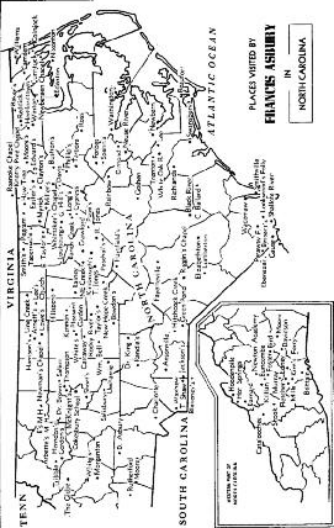
ASB_VOL1.PDF, p. 362
Notes (1)
- Thomas Chubb (1679-1747) was an English Deist who wrote several works in which he controverted orthodox opinion on inspiration, miracles, and other articles of belief. William Clagett (1646-88) was a controversialist who published around two dozen works, but he was not a layman and the titles of none of his works were directed against Chubb. (Dictionary of National Biography, IV, 297, 298, 367, 368.) ↩
29 June 1780
ThursdayNorth CarolinaRead several chapters in Isaiah. I have thought if I had two horses, and Harry (a coloured man)1 to go with, and drive one, and meet the black people, and to spend about six months in Virginia and the Carolinas, it would be attended with a blessing. I rode to widow Pegram’s, had about sixty people, it being a muster-day; but these were happy souls. As soon as we began to sing, the power of God came over us; I spoke from 1 Peter 5:6-8, then rode to Capt. Burrows’s: the people in many places are but children in understanding; we have many things to say, but they cannot bear them now. I am much blessed in my own soul. I began to form a plan for myself and all the preachers for next year, if we live. I am still seeking full and final salvation. I preached at Burrows’s; but fear there is very little religion in this place: I was uncomfortable. The congregation about sixty people, but they were very dead; their minds and mouths full of the world. I came off to the widow Ellis’s,2 and found the Lord was here. There has been a heavy rain these two nights past; if it continues, it will destroy the full, ripe crops of wheat.
ASB_VOL1.PDF, p. 363
Notes (2)
- Harry Hosier, or Black Harry, was a Negro preacher of considerable eloquence who sometimes traveled with Asbury. He accompanied Thomas Coke on Coke’s preaching tour in 1784, and went with Freeborn Garrettson to New England in 1790. It is said that the first mention of Methodism in a New York newspaper related to Black Harry. The Negro servant and preacher later “fell from grace” and became addicted to drink. (Hurst: History of Methodism, IV, 290, 339, 437.) ↩
- The Ellis family was prominent in North Carolina Methodism. Reuben Ellis was one of the first preachers. (Lednum, op. cit., 173. Lednum identifies most of the persons with whom Asbury stayed on this trip.) ↩
30 June 1780
FridayNorth CarolinaSlept in peace last night; rose with a deep sense of God: met with Henry Jones, a serious young man, and believe he is called to the work of the ministry; I advised him to go with me.
ASB_VOL1.PDF, p. 363
1 July 1780
SaturdayNorth CarolinaMy soul pants after God more and more. O, that I were filled with strong, constant, humble, suffering love! I preached at the widow Ellis’s, on Hebrews 10:21-24. I was fervent, had liberty, and spoke as searchingly as I could to saints and sinners. Here Edward Dromgoole1 met me; and I appointed James Mallory2 for Norfolk circuit, as there have been a few people kept together, notwithstanding the absence of the preachers.
ASB_VOL1.PDF, p. 363
Notes (2)
- See note under January 30, 1774. Edward Dromgoole was living with his family in Brunswick County, Virginia. He had no regular appointment between 1778 and 1783. ↩
- James Mallory was a local preacher. The following year, in the conference held at Choptank, Delaware, he was admitted on trial and appointed to the Pittsylvania Circuit; and he was admitted into full connection the year following and sent to the South Branch Circuit. ↩
2 July 1780
SundayNorth CarolinaI rode to Lindsey’s, a rough road; had about seventy people; and spoke on 2 Corinthians 4:4-6. Now I have done in this circuit; the Lord has blessed me in body and soul. Tomorrow I am going to Tar River. Edward Dromgoole is hearty in good old Methodism; we have had great union; I hope he will check the spirit of some of the divisive men. I wrote to Reuben Ellis;1 read my select Scriptures. God is with us: it may be trials are coming, but no matter; why should I fear?—the Lord liveth, and he is my rock.
ASB_VOL1.PDF, p. 364
Notes (1)
- Reuben Ellis had been on the Mecklenberg Circuit the previous year. (See Minutes.) ↩
3 July 1780
MondayNorth CarolinaVery rainy night, with thunder and lightning. I am grieved to see slavery, and the manner of keeping these poor people. I set out for Tar River: after riding about five miles I was told I could not cross Bear Swamp; but by the guidance of a Baptist friend, came through that and two very deep creeks.1 Afterward I left my guide: we had travelled a few miles together, and talked in a friendly manner. Rode three miles farther, and was stopped by what was called Bens Creek; the bridge was gone, and a man said it was ten feet deep: I then made for Falcon’s bridge, on little Fishing Creek; but the low ground was covered, and no bridge to be seen: lodged at Mr. John Falcon’s, was known, and kindly entertained. I laboured to make Mrs. Falcon sensible of her danger, and hope not in vain; prayed evening and morning in the family.
ASB_VOL1.PDF, p. 364
Notes (1)
- The two creeks were probably Swift and Fishing creeks in Edgecomb County, North Carolina. (Turner and Bridgers, op. cit., 467.) ↩
4 July 1780
TuesdayNorth CarolinaI rode by Miller’s cross roads to Great Fishing Creek, a rough way—but got safe along, and was comforted in mind; crossed Great Fishing Creek; stopped at Sandy Creek, where I found a kind old man, brother Howell; lodged with him and spent my time peaceably.
ASB_VOL1.PDF, p. 364
5 July 1780
WednesdayNorth CarolinaSet out to Green Hill’s; but with difficulty I got along; but this was not all, for in going the distance of four miles I rode eight, and was tried to purpose; on account of the waters, I have ridden about thirty miles out of my way; and am now twenty-six miles from the place of preaching tomorrow. Have been happy till today; but when lost, I began to feel like fretting against persons and things. O, my God! pardon me in this. I was very kindly entertained, and blessed with fellowship at Green Hill’s;1 but never met with so many difficulties as I have met with in this circuit: I hope for the greater blessings; am kept by grace, and enjoy health in this hot weather, though so far to the south; have peace of soul, bless the Lord.
ASB_VOL1.PDF, p. 364
Notes (1)
- The Rev. Major Green Hill was a local preacher, prosperous farmer, and prominent political figure who lived in Franklin County, one mile from Louisburg. His home still stands, and after Hill’s removal to Tennessee in 1799, it was occupied by his brother-in-law, Joel King, the son of Dr. John King. Here Asbury held the first conference after the organization of the Methodist Episcopal Church. (See note under April 19, 1785.) Green Hill entertained four annual conferences in his home. (See Journal entries and notes under April 19, 1785, and October 1, 1808. Davis, op. cit., 63, 279.) ↩
6 July 1780
ThursdayNorth CarolinaRode twenty-six miles; exceeding hot, and my horse suffered greatly. When I came to the place about seventy people were met, singing and praying. I spoke on Hebrews 4:13-16, had not much strength of soul or body. The people appeared inattentive and their minds full of the present troubles.
ASB_VOL1.PDF, p. 364
7 July 1780
FridayNorth CarolinaA day of fasting, till near three o’clock; I was weak, and lodging on the floor was uncomfortable.
ASB_VOL1.PDF, p. 365
8 July 1780
SaturdayNorth CarolinaRode to Cypress chapel;1 had liberty in speaking on 1 John 1:8, 9, to about one hundred people. Here James O’Kelly2 met me; he spoke, and appeared to be a warm-hearted, good man; but he was troubled with the people about these times. At Ross’s I spoke on Revelation 22:10-19. I had an opening; and one Lindsay an exhorter, spoke; an honest, zealous man: he has lost his little property by these times. I have ridden near one hundred miles this week; and as severe, constant hot weather as I ever knew.
ASB_VOL1.PDF, p. 365
Notes (2)
- Cypress Chapel was in Franklin County on Cypress Creek, or in nearby Halifax County. ↩
- James O’Kelly (1775-1826) was on the Tar River Circuit, one of the circuits through which Asbury was traveling. He was admitted to the conference in 1778 and was one of those ordained elders at the Christmas Conference in 1784. Asbury had been with him in the meeting at Manakintown, Virginia, in May, 1780. He traveled widely in North Carolina and Virginia. He was a. member of the short-lived Council, which was established in 1789. He became dissatisfied with Asbury’s administration, and in the General Conference of 1792 he proposed a resolution providing that any preacher who was dissatisfied with an appointment given him by the bishop could appeal to the conference. When this resolution was defeated, O’Kelly withdrew and organized a rival denomination known as the Republican Methodist Church. Several preachers, including William McKendree for a brief period, and numerous members followed him, and the schism seriously affected the growth of the Methodist Episcopal Church for several years. (Grissom, op. cit., 175-86; Simpson: Cyclopedia of Methodism, 678-79; Hurst, op. cit., V, 510, 513, 519-21, 886; Sweet: Virginia Methodism, 128-34.) ↩
9 July 1780
SundayNorth CarolinaPreached at Green Hill’s to about four hundred souls, on 1 Thessalonians 2:4. The subject was new, the people dead. I had not much liberty. James O’Kelly spoke on, “Have ye understood all these things?” He raised high, and was very affecting, but to little purpose. There are evils here; the meeting not solemn; the women appeared to be full of dress, the men full of news. These people are Gospel slighters. I fear some heavy stroke will come on them. James O’Kelly and myself enjoyed and comforted each other: this dear man rose at midnight, and prayed very devoutly for me and himself. He cries, give me children or I die; but I believe no preaching or preacher will do much good at present. I was condemned for telling humorous anecdotes, and knew not whether it was guilt or fear, lest my friends should think I go beyond the bounds of prudent liberty. It is dreadful, when a preacher is put to it to vindicate himself.
ASB_VOL1.PDF, p. 365
10 July 1780
MondayNorth CarolinaThrough heat and for want of retirement, I suffer loss; but bless God for health and faith. I made my journey to Roger Jones’s.1 About sixty people; God was with us; the people spoke of the goodness of the Lord.
ASB_VOL1.PDF, p. 365
Notes (1)
- Roger Jones lived near present Kittrell, North Carolina. From this meeting a society was formed and a log chapel erected. This was later replaced by a building of planks which was called Plank Chapel. It is still in existence under the same name and in the same form. ↩
11 July 1780
TuesdayNorth CarolinaHad a heavy night; rose up, and laid myself down on the floor upon my nightgown; slept in pain; rose at four o’clock; prayed in private and in the family; then set off at six o’clock; had hilly roads; and after riding five or six hours, came to my appointment; had very little freedom in speaking to about one hundred people: here I met with W. Partridge. The Lord keeps me in health: I cast all my care upon him.
ASB_VOL1.PDF, p. 365
12 July 1780
WednesdayNorth CarolinaI rode to Cooper’s1 upon Tar River, had about one hundred and twenty people; I was under discouragement before I began, but the Lord helped me. These people have heard Baptists and Presbyterians, but I fear to little purpose. God assisted me to deliver my own soul. I rode to a friend’s, and had great difficulty on the way; but I am kept from murmuring: while labouring for other souls, my own is blessed— have felt nothing contrary to love for some days past.
ASB_VOL1.PDF, p. 366
Notes (1)
- Cooper probably lived in Granville County. Note the fact that Asbury seemed to go back and forth through the same areas. ↩
13 July 1780
ThursdayNorth CarolinaRode to the chapel: had an insensible people, full of the spirit of the world. I laboured hard to preach on Luke 13:23-25. Then rode to Captain Pope’s;1 I am distressed with the troubles of the times; and hear there are great commotions. I went to the preaching house, and poured out my soul to God for some time in the evening—my heart found rest, and felt power to trust God with my life and my all. O! why doth my cowardly flesh complain?
ASB_VOL1.PDF, p. 366
Notes (1)
- Captain Pope lived in Wake County, and Pope’s Chapel was located there. ↩
14 July 1780
FridayNorth CarolinaGod was with me; I was comforted with brother Pope, a lame, wise, and pious man; he has built a preaching house almost himself. Who can tell what a man may do under divine assistance? He makes a few cards, teaches a few children, and says he lives as well as ever he did in his life. I was much comforted at the preaching house this morning. I suffered much for want of a place of retirement; I cannot go into the woods, there are so many ticks, chiegoes [chiggers], and such insects at this season upon the ground; retired at six o’clock to the chapel; it has been a bethel to me: my day of fasting and humiliation has been blest to my soul.
ASB_VOL1.PDF, p. 366
15 July 1780
SaturdayNorth CarolinaAfter spending some time in the chapel alone, I set out to Paschal’s, about six o’clock; I came in before twelve, I spoke very close and plain on Acts 26:18, to about thirty people, and had but little faith for them. Rode on to B. Hartfield’s,1 about twenty miles, much fatigued with the badness of the road.
ASB_VOL1.PDF, p. 366
Notes (1)
- Paschal lived in lower Wake County, and B. Hartfield lived across the line in Harnett County. ↩
16 July 1780
SundayNorth CarolinaI rose unwell, and somewhat dejected. Lord, keep me from the power of wicked men, devils, and sin. Sometimes I think, will that Infinite Being we call God, who commands kingdoms, continents, and worlds, take care of such a worm as I? Then I consider, he is INFINITE, and cannot be hurried so as to forget any person. He can keep me as securely as if there were none but myself in the world. Lord, give me faith to trust in thee every moment, even in my greatest dangers! I spoke on 2 Thessalonians 1:6-9. I had great light; but the people seemed hardened. I fear judgment will overtake them before they will be awakened; I never felt more engaged, and hardly a person moved! I read my select Scriptures, and had my soul much taken up with God; the few people in society seemed tender at brother Hartfield’s.
ASB_VOL1.PDF, p. 366
17 July 1780
MondayNorth CarolinaI set out about five o’clock, and rode to Crawford’s upon Neuse River, about twenty miles, alone; was tried at times, but had some sense of God; was not so free from my temptations, but kept from sinning or yielding in heart: there were many people. I spoke with liberty on 1 Peter 4:18. There was a melting among the people; but they are rich, and are not cured of the love of money.
ASB_VOL1.PDF, p. 367
18 July 1780
TuesdayNorth CarolinaRode to Kimborough’s, sixteen miles, crossed Neuse River. Many Baptists to hear; they were serious, and I spoke feelingly, and aimed at their hearts, from Romans 8:24-26. I met brother Poythress,1 much cast down; the people are lifeless in religion; but, bless the Lord, I have had a good entrance, and a comfortable sense of the divine presence. After dinner, I was alone in the woods an hour, had sweet meltings, came back and wrote these lines for future consolation.
ASB_VOL1.PDF, p. 367
Notes (1)
- Francis Poythress was on the New Hope Circuit west of the Tar River Circuit, and one of the circuits through which Asbury was traveling. ↩
19 July 1780
WednesdayNorth CarolinaI rode to Abraham Hill’s, and had great liberty in speaking from Hebrews 4:10, &c., then brother Poythress spoke; and we had a refreshing shower according to prayer: we afterward spent some time in reading, out of what I had written and abridged, upon the art of speaking and preaching. I find the spirit of separation on account of the ordinances, is very high among preachers and people; but I hope it will be checked.
ASB_VOL1.PDF, p. 367
20 July 1780
ThursdayNorth CarolinaRode twelve miles to Tignal Jones’s;1 hilly, rocky roads; about eighty people to hear. While I was speaking General Hugine came in, and heard part of my sermon; he is a polite, well-behaved, conversable gentleman; we dined together. After dinner, I set out on my journey; we came to a desperate creek called North-East, in Chatham county, where the bridge was carried away by the freshet; we had to go through among rocks, holes, and logs; I was affrighted; yea, it was wonderful that the carriage did not overset: brother Poythress said the horse was down twice, and covered all but his head; however, the water kept up the carriage, and we came safe through all our difficulties, to brother Merritt’s. Hitherto the Lord hath helped—body, soul, horse, and carriage; there is a providence attending animate and inanimate creation. Here I met brother Beverly Allen2—a promising young man, but a little of a Dissenter.
ASB_VOL1.PDF, p. 367
Notes (2)
- Tignal Jones lived in Wake County near present Apex, ten miles west of Raleigh, North Carolina. There also were two Tignal Joneses in Virginia. (Heads of Families, 1790.) ↩
- Beverly Allen was a brilliant preacher and one of the original elders ordained at the Christmas Conference in 1784. He had preached on the New Hope Circuit with James O’Kelly in 1779, although his name does not appear in the Minutes. According to a letter from him to John Wesley he “was unable to travel at large” in 1780 and “spent most of the summer on New Hope and Bladen.” He introduced Methodism in Salisbury, North Carolina, and formed a class there in 1783. He was the first preacher appointed to Georgia, in 1785, and in 1786 was among the first elders designated by appointment, being assigned to the Santee and Pee Dee circuits with three preachers under him. He later became an apostate and a criminal. (See notes under December 18, 1785; January 11, 1786; and March 13, 1791. For his life and experiences see Smith: Georgia Methodism, 27, 28; Bowen: Wilkes County, 118-19; Gilmer: Early Settlers of Upper Georgia, 105, 106; Grissom, op. cit., 99, Strickland: Autobiography of Peter Cartwright, 28; McIntosh: History of Elbert County, 71-73.) ↩
22 July 1780
SaturdayNorth CarolinaWe set out for Crump’s, over rocks, hills, creeks, and pathless woods and low land; and myself in the carriage. The young man with me was heartless before we had travelled a mile; but when he saw how I could bush it, and sometimes force my way through a thicket, and make the young saplings bend before me, and twist and turn out of the way, or path, for there was no proper road, he took courage; with great difficulty we came in about two o’clock, after travelling eight or nine hours; the people looking almost as wild as the deer in the woods; I preached on Titus 2:10-12.
ASB_VOL1.PDF, p. 368
23 July 1780
SundayNorth CarolinaWe passed Haw River, wide, but shallow, bad going down and coming up; they took the carriage over by hand; then we had to travel the pathless woods and rocks again: after much trouble, and fear, and dejection, we came to Taylor’s preaching house,1 where they were pressing horses, as we expected; but I came off safe, and spoke on 2 Peter 1:5-12. I had some liberty, but the people’s minds were in confusion; poor souls, well they might, when there were such works carried on. The time to favour this people, I fear is past; and they seem hardened, and no preaching affects them, at least not mine; they are exceedingly ignorant withal. There are a few serious people, but much distressed one way or another. I have travelled thirty miles, and could not avoid travelling on Sunday, for I had not where to stay; rode to brother Beck’s, and was much fatigued: found brother Beck sick; he has a gracious wife.
ASB_VOL1.PDF, p. 368
Notes (1)
- Taylor’s preaching house was probably in Chatham County, North Carolina. ↩
24 July 1780
MondayNorth CarolinaCool, like the fall; I am kept in peace; rose with a sense of God’s presence; have only time to pray and write my journal; always upon the wing, as the rides are so long, and bad roads; it takes me many hours, as in general I walk my horse. I crossed Rocky River about ten miles from Haw River; it was rocky, sure enough; it is in Chatham county, North Carolina. I can see little else but cabins in these parts, built with poles: and such a country as no man ever saw for a carriage. I narrowly escaped being overset; was much affrighted, but Providence keeps me, and I trust will. I crossed Deep River in a flat boat, and the poor ferryman sinner swore because I had not a silver shilling to give him. I rode to friend Hinton’s,1 borrowed a saddle, and rode near six miles to get three, as we were lost; when we came to the place there were about sixty people. I was at some loss whom to preach to, saints or sinners; but found sinners as unfeeling as those who are out of the reach of mercy. I spoke on 1 Peter 5:9-12. I was glad to get away, for some were drunk, and had their guns in meeting. I expect to see some of these people again, and believe they will be humbled in time, but I fear not by the Gospel, which they have slighted, but by judgments. We came back and found a serious family: was blest in a family meeting; the Lord filled our hearts with his love. I had a fever in the night; rose refreshed in the morning.
ASB_VOL1.PDF, p. 368
Notes (1)
- Dempsey and Sarah Hinton were among the earliest converts to Methodism in North Carolina. Their home was on Deep River in Randolph County, but they later moved to the town of Washington on the Pamlico River in Beaufort, where they were instrumental in establishing the Methodist Church. One of their sons, James Hinton, became a preacher and was admitted on trial in 1783 and appointed to Salisbury Circuit. (Grissom, op. cit., 150-51. See articles on Asbury’s travels on Deep River and in neighboring counties by S.S. Robins in Chapel Hill News Leader June 20 and July 4, 1955.) ↩
25 July 1780
TuesdayNorth CarolinaWas engaged in private and family prayer for divine protection; for I dwell as among briars, thorns, and scorpions: the people are poor, and cruel one to another: some families are ready to starve for want of bread, while others have corn and rye distilled into poisonous whiskey; and a Baptist preacher has been guilty of the same; but it is no wonder that those who have no compassion for the non-elect souls of people should have none for their bodies. These people have had some religion; but if any seeth his brother need, and shutteth up his bowels of compassion, so as neither to give nor sell, “how dwelleth the love of God in that man?” These are poor Christians. We left our worthy friend Hinton’s, a kind family, who parted with us in tears: I hope to see this place again (I have seen it many times) with a change for the better. We forded Deep River, rode to White’s, within ten miles of the camp,1 into a settlement of people from Pennsylvania, some were Quakers. I preached at White’s to about twenty people; was very unwell by a disorder in my bowels; then rode sixteen miles to R. Kennon’s;2 it was rainy, and we rode two miles in the dark through the woods, but came safe about ten o’clock, fatigued, and under a temptation to stop; but reading Paul to Timothy, where he says, “I charge thee before God,” &c., I resolved to go on; and though but little time and opportunity for retirement, not any for reading or gaining knowledge, yet saving souls is better. But people are so distracted with the times, they are afraid to leave their houses, or ride their horses. I acknowledge the providence and immediate hand of God in my journey; though it be not of general benefit, I shall gain a general knowledge of the preachers and people, and strengthen our union.
ASB_VOL1.PDF, p. 369
26 July 1780
WednesdayNorth CarolinaI preached at Harris’s to about one hundred people with some opening; it was well I did not give way and rest today.
ASB_VOL1.PDF, p. 369
27 July 1780
ThursdayNorth CarolinaRose in some consolation, and read a few chapters in the Testament. I acknowledge the goodness of God in preserving my health, life, and horse, from these people; they are very vile, and if there is any mischief done it is laid to the soldiers: people rob, steal, and murder one another with impunity. Rode twelve miles to West’s, about one hundred people; some faithful Baptists. I spoke with Thomas Brown, a preacher, who, with twelve more, is separated from the separate Baptists on account of their slackness in discipline: I had fellowship with the man; we spent some time together. I told him the danger of being alone; and advised them to meet in a class, one with another. My trials are great; riding twenty miles a day, or more; rocky roads, poor entertainment, uncomfortable lodging; little rest night or day; but thanks be to God, he keeps me: the more I do and suffer, the greater the crown.
ASB_VOL1.PDF, p. 369
28 July 1780
FridayNorth CarolinaRode twelve miles to the chapel, and preached to one hundred people, on 1 Peter 4:18, with some life; but the people were unfeeling. I had an exceeding rough road, through woods, over rocks, through creeks, &c. I expect fewer trials every day, and frequently find more; I will therefore expect greater. I rode seven miles to Mr. Trice’s; was kindly entertained; had the pleasure of seeing and conversing with brother Bailey, from Ireland,1 a good and sensible man: I slept well, and am better. I praise God for health.
ASB_VOL1.PDF, p. 370
Notes (1)
- Edward Bailey was from Ireland and had been appointed to the Fairfax Circuit at the Virginia section of the conference the previous year. He fell ill and died while on this journey with Asbury. (Larrabee: Asbury and His Coadjutors, I, 53, 54.) ↩
29 July 1780
SaturdayNorth CarolinaRode to Roades’s, and preached to about two hundred people, on Titus 3:2-8. I had some light: brother Bailey and Allen spoke; I hope it will revive the work. I then went on to Alston’s.
ASB_VOL1.PDF, p. 370
30 July 1780
SundayNorth CarolinaPreached at Neuse preaching house1 to about four hundred people—had not much liberty. These people have had an abundance of preaching from the Baptist and Methodists, till they are hardened. I am kept in peace, power, and love to God, and from every moral evil. In the evening a heavy rain came on. I lodged at Mr. Allen’s. There are many trials in my way, but the Lord hath brought me on—to him be all glory now and ever! I have lately passed through Cumberland, Chatham, Orange and Wake counties, in North Carolina: brother Bailey has agreed to give up all business and travel with me, and go to labour in the north. Beverly Allen and Edward Bailey spoke at Neuse after me. I hope some good was done, and the work will revive. The people in these parts have been hurt with Calvinism; our first preachers moved their passions, and they hastily and improperly joined; and afterward they dropped off from society, and there was a great falling away. The ordinance places seem very barren.
ASB_VOL1.PDF, p. 370
Notes (1)
- Neuse Meeting House was probably in the southeastern part of Durham County near the Wake County line. Asbury had turned eastward. ↩
31 July 1780
MondayNorth CarolinaA very rainy day. I rested at Mr. Allen’s, read in the New Testament, and prayed in the family four times.
ASB_VOL1.PDF, p. 370
1 August 1780
TuesdayNorth CarolinaWe were discouraged by the rivers, but set out late to Clenny’s, crossed Eno1 with difficulty—the water ran over the foot-board of my carriage. After that, I rode a stony, hilly way about twelve miles, came in by the time Edward Bailey had preached an alarming sermon on “Seek the Lord while he may be found.” Then I preached from Hebrews 2:1-3. Afterward Beverly Allen spoke, and prayed mightily. This is a settlement of Irish Pennsylvanians. Through all my troubles I am kept in peace, faith, and love; we were blest in family prayer, speaking to them, and praying for them. I am this day to go towards Hillsboro with reluctance—but at God’s command I go, and from no other motive; I feel no temper or desire but to do the will of God.
ASB_VOL1.PDF, p. 370
Notes (1)
- Eno Creek was in Orange County; and Asbury crossed near Hillsboro, having turned northward. ↩
2 August 1780
WednesdayNorth CarolinaRode seven miles to Hillsboro, and preached in the house of Mr. Cortney, a tavern,1 to about two hundred people, on Hosea 10:12: “It is time to seek the Lord.” They were decent, and behaved well; I was much animated, and spoke loud and long. Before I set off this morning, I felt dejected, but on the way it vanished. I felt faith to believe we should have a peaceable, profitable meeting, and trust it was so: they have had a warning. Edward Bailey and brother Allen gave exhortations. I came back to hold a watch night, without eating or drinking—though importuned to take refreshment; hitherto the Lord has helped me through continual fatigue and rough roads: little rest for man or horse, but souls are perishing—time is flying—and eternity comes nearer every hour.
ASB_VOL1.PDF, p. 371
Notes (1)
- There was no Methodist society at Hillsboro, Orange County, at this time. The Hillsboro Methodist Church was organized about 1807. ↩
3 August 1780
ThursdayNorth CarolinaWe set off for Pittsylvania,1 and travelled twenty-five miles to John Lee’s; came in about eight o’clock. God is at work, and I hope I shall be blessed here more than in the three circuits past. I felt a solemn, melting sense of God upon my heart in family prayer. I had a sensible feeling for my northern friends, when I heard of the fighting in the Jerseys; I fear they will be distressed. I am kept in peace.
ASB_VOL1.PDF, p. 371
Notes (1)
- The Pittsylvania Circuit had been formed in 1776, embracing territory in Virginia and North Carolina. In 1780 the Yadkin Circuit in North Carolina was formed from a part of the Pittsylvania. The Yadkin was west of the New Hope Circuit and extended to the Blue Ridge and southward to the South Carolina line. Asbury was probably in Caswell County. ↩
4 August 1780
FridayNorth CarolinaI was never more devoted to God—it makes me think I am in my duty. I was tempted and tried in Delaware to prepare me for, and drive me to, this work; and believe if I had not started I should have suffered great loss in my soul. I admire the hand of God in disposing of me, and wonder and own his providence.
ASB_VOL1.PDF, p. 371
5 August 1780
SaturdayNorth CarolinaOur quarterly meeting began at Henley’s preaching house. I preached on Colossians 1:27-29, then brother Bailey, Ivey, and Morris1 spoke, there was some reviving among the people. We lodged at John Lee’s—my mind was much drawn out; we retired to an old log shop, and prayed frequently, and found our hearts sweetly united together.
ASB_VOL1.PDF, p. 371
Notes (1)
- Richard Ivey was on the Pittsylvania Circuit. In 1779 he served the Brunswick Circuit in Virginia with Thomas and James Morris. The Morrises do not appear in the appointments for 1780. Because the conference was split in two sections over the row in Virginia about the sacraments, the appointments for all the preachers do not appear. In 1779 there were forty-nine preachers, in 1780 there were forty-two, and in 1781 when the breach had been healed there were fifty-four. ↩
6 August 1780
SundayNorth CarolinaWe had a great meeting, love feast at ten—very warm weather; a log house, covered with long shingles; the sun beating through. At one o’clock preaching began, I spoke on Ephesians 3:16-18, to about five hundred people; was blest, and the word went with power. Some were moved, some hardened, yet I hope good was done and the work will revive.
ASB_VOL1.PDF, p. 372
7 August 1780
MondayNorth CarolinaExceeding hot weather; I rose with a comfortable sense of the Divine presence on my heart; we prayed alone in the woods; I pleaded in private; great labours are before me: the Lord keeps me. At ten I preached in Lee’s chapel, in Caswell county, to about sixty people, on Matthew 7:21: “Not every one that saith, Lord, Lord, &c.” I possessed clearness of ideas, liberty of speech, and the people serious: the preachers are under great difficulties here for want of places of study; most places but one room, or if a chamber, they cannot live there, it is so hot. I found the people much united to me, and appeared to think too highly of me. Lord, keep me from pride, and all high thoughts of myself; but daily travelling and other labours will humble me. There is a good work of God here; but some of the Baptists rage because we have what they lost; but while we keep close to God, and preach the power of religion, they can do us no harm. (True!)1
ASB_VOL1.PDF, p. 372
Notes (1)
- This interjection, True! was doubtless added by one of the early editors of the Journal. ↩
8 August 1780
TuesdayNorth CarolinaI rode to Baxter’s, sixteen miles; about eighty people, many came that never attended at other times. My text was 1 John 1:8, 9. I had great liberty, but was tried in getting there; we crossed the Line Creek. After preaching, rode six miles, but was an hour too late. About eight o’clock, came to a cabin, an earthen floor, and damp bed. I was very weary and had a pain in my head; but the people were kind: I knew not how to lie down. Edward Bailey lay down, and slept well.
ASB_VOL1.PDF, p. 372
9 August 1780
WednesdayNorth CarolinaI rode sixteen miles to White’s, came in about three o’clock; no preaching appointed. I had time to write, and plan for another trip through Carolina. I have had little time or place for prayer till I came here: the roads are so bad, I have my carriage to refit almost every week. This is Caswell County; the poor people have been much put to it, the year past, for bread; the present year they have exceeding fine growing corn: Lord, remember the poor!
VIRGINIA
ASB_VOL1.PDF, p. 372
10 August 1780
ThursdayNorth CarolinaI rode for the state of Virginia; we were lost, stopped at Thomas Dickinson’s, and took dinner; then rode on to Sylvester Adams’s, several creeks to cross, and bad roads to travel. Edward Bailey led my horse down a steep hill, and the carriage overset, the horse struggled, but kept his feet: one shaft broke which we strapped up; and rode on near thirty miles: we found the Rollinses there. Abraham is incurable: I have a mind to try Isaac again, having a hope that he is humbled: Lord, direct me what to do in this matter. I made proposals to him, but he rejected them: I fear he is also incurable, being too lazy to ride a circuit.
ASB_VOL1.PDF, p. 372
12 August 1780
SaturdayVirginiaI went down Dan River two miles, and preached to about eighty people on James 4:8-11. Edward Bailey spoke very zealously after me; it is very hot, myself weak and distressed; have no place for retirement but the woods, and the heat dispirits me: there is a great difference between this and the northern part of the continent. I am kept in faith, and seek the glory of God.
ASB_VOL1.PDF, p. 373
13 August 1780
SundayVirginiaI rode to Watson’s preaching house,1 a round, long building after the plan of this part of the country. There were about five hundred people; I spoke on the parable of the sower, a lengthy discourse. Edward Bailey preached much to the purpose about Christian discipline and fellowship, from those words: “Where two or three are gathered together, in my name,” &c. There was a moving.
ASB_VOL1.PDF, p. 373
Notes (1)
- Watson lived at Chatham, Virginia, in Pittsylvania County. ↩
14 August 1780
MondayVirginiaI brought Isaac Rollins to some acknowledgment, and appointed him to ride Pittsylvania, New Hope, and Tar River, till conference. His greatest admirers saw his obstinacy, and would have disowned him if he had not submitted; for they began to tire with his lounging about. I hope this will be a warning to him, and will make him take more care, and submit to order. I preached at Colonel John Wilson’s to about two hundred people. I spoke on Hebrews 12:1-4.
ASB_VOL1.PDF, p. 373
15 August 1780
TuesdayVirginiaI rode thirty miles to Mr. Martin’s, the roads and creeks are rendered bad for travelling by the late freshets.
ASB_VOL1.PDF, p. 373
16 August 1780
WednesdayVirginiaI preached at Dowby’s store to about three hundred people, some gay ones. I spoke on 1 John 2:13-17, the people were attentive: Edward Bailey thundered away on “Is there not a cause?” I have been very unwell, and travelling down Dan River and among the creeks, am in danger of the fever and ague. We were obliged to swim the horses over Birche’s Creek,1 and bring the carriage over the shattered bridge.
ASB_VOL1.PDF, p. 373
Notes (1)
- Birche’s Creek in Halifax County unites with other creeks and flows into Dan River. ↩
17 August 1780
ThursdayVirginiaI stopped at friend Baker’s, being very unwell. Brother Bailey went to a chapel ten miles from this. I want to write, and to recover strength, or I shall run myself down. I am kept in peace, humility and watchfulness. I have been unwell for this week past; this has made it an additional burden to travel, and the sun is so violent, that it appears to me I could not stand it, were it not for the top-carriage. I thought it would be well for me to have a person with me always, and I think Cromwell is the man. If I should preach a systematical, dry sermon, he would pay the sinners off. I was kept in peace, my body some little recruited. I rested comfortable, retired often to prayer, that God would go with me to the next circuit. I suppose, upon a calculation, I have ridden better than a thousand miles since February last, when I was at quarterly meeting at the seaside in Delaware.
ASB_VOL1.PDF, p. 374
18 August 1780
FridayVirginiaFelt unwell, something like an ague; this being an unhealthy spot amongst the rivers. I rode twelve miles to Boyd’s church;1 about sixty people; they had but little notice. I asked the people if they chose to have the service read; they did, and I read as far as the first lesson, not having time to read all: then spoke on 2 Chronicles 7:14, in great plainness; the people did not feel. I prevailed on our preachers to use that church once a fortnight.
ASB_VOL1.PDF, p. 374
Notes (1)
- Boyd’s Church in Halifax County seems to have been an Established Church. (See Heads of Families, Virginia, 22-24, for the names of the people.) ↩
19 August 1780
SaturdayVirginiaI am unwell in body, but my mind is happy: this is a comfortable house to be at, (Mr. Griffin’s,)1 I shall have half a day’s rest. I preached on Acts 13:16, about eighty people, very wild and unfeeling. I rode to brother Parish’s, ten miles, crossed Shoko Creek2 at the Fishtrap, a very bad ford, occasioned by the late freshet that rose near forty feet.
ASB_VOL1.PDF, p. 374
20 August 1780
SundayVirginiaI could not read, write, think, or converse much. At twelve o’clock I preached to about five hundred souls; an unawakened people, but the Lord assisted me greatly, from Luke 3:23-25. Some solemnity and quickening: brother Bailey exhorted. I cannot get clear of a cold, and a slow fever. I praise God for cooler weather, it is what I have prayed for, and God has sent it: for the heat is one cause of my being unwell.
ASB_VOL1.PDF, p. 374
21 August 1780
MondayVirginiaWe rode to Carter’s,1 five miles: I was unwell, and Edward Bailey preached on “We preach not ourselves.” We rode on, and crossed Dan and Stanton rivers at Sir Peyton’s ferry; there is a short canal cut from one river to the other.2 I rode through the woods to our friend Crowder’s, about ten miles from Carter’s; came in about sunset.
ASB_VOL1.PDF, p. 374
22 August 1780
TuesdayVirginiaI am some little better in health; my spirit is refreshed at kind entertainment and a loving family, old Methodists of a right spirit. I hear the work revives in this circuit; bless the Lord! I shall have better entertainment, and better roads; but above all, better people: I thankfully acknowledge the goodness of God in all my travels. May He, who alone is able to keep my soul and body, be ever with me! I preached at Dr. Crowder’s1 to about three hundred people, on Titus 3:2. Had liberty and life, though unwell. After preaching set out on the way, about thirteen miles, came in about eight o’clock: the people seemed not greatly pleased to see us. I slept some little, rose early for the quarterly meeting at Colonel Bedford’s;2 rode about ten miles to breakfast; met Henry Willis and Moses Parks,3 rather stiff for ordinances. I spoke on Habakkuk 3:2; spoke freely to them. I was a little grieved. Brother Parks preached a sermon on the “Grace of our Lord Jesus Christ,” &c. He was much out of his harness; I thought they were but children, and that I ought to bear with, and take care of them. I retired into the barn, prayed, and felt the Lord near. Next day, at nine o’clock, love feast: we had much prayer, some singing and speaking; at last brother Parks prayed, and some of the honest-hearted people broke out into a shout. At twelve o’clock I preached under an arbour near the church, to about three hundred people, on John 3:17, 18; was assisted at first, but was not close or clear in the application. Thomas Morris gave a good exhortation; Edward Bailey spoke very fervently. God blessed him; his greatest gift is exhortation. So all ended in peace. This day there came an account that the southern army was defeated, and all taken to a man, except Gen. Gates, which cannot be all true. I am kept in resignation and faith, and praying that God may bless my labours, and bring peace and union among the Methodists in Virginia. I received comforting letters from Mr. White and Mr. Gough: all these comfort me in the house of my pilgrimage. Mr. White informs me of Thomas Haskins, a young man that was convinced, who has a good education, has been reading the law three years; now he must read and preach the gospel.
ASB_VOL1.PDF, p. 375
Notes (3)
25 August 1780
FridayVirginiaI rode to Page Mann’s, sixteen miles, was much assisted in speaking on Hebrews 4:11-13, to about three hundred people, who appeared serious and somewhat moved.
ASB_VOL1.PDF, p. 375
26 August 1780
SaturdayVirginiaRode to Robinson’s, a smith, who braced up my carriage; we rode on to Little Falling River, and then to the New Store, where was a company stationed. The captain wanted our certificates; Bailey disputed with him—I showed him mine. We rode on to Great Falling River:1 I stopped at one Vincent Glass’s; the man was kind, our entertainment plain; I did not sleep well. We talked with our host, he had catched some notions from the Baptists and Presbyterians; though he was going another way, he changed his purpose and came with us; we rode twelve miles, over hills and creeks, and through woods. About eleven o’clock I spoke on Isaiah 35:6, 7, to about five hundred people, wild enough: this is a running life. The devil roars, and men threaten; but God is with us. I laboured to come at the consciences of the people, but could not. I keep my health to a wonder; but I want time for retirement; we had near thirty miles from Page Mann’s to Staples’s. I can hardly get time and place to note down anything. I spent some time at the quarterly meeting in the barn, alone. O, how good did that feel!
ASB_VOL1.PDF, p. 375
Notes (1)
- These rivers are in Campbell County, so it would seem that Asbury went to that county; however, he shortly returned to Charlotte County. (See Virginia map, 1820.) ↩
28 August 1780
MondayVirginiaRode sixteen miles to Fore’s,1 about one hundred people; some serious souls. Spoke to the society—about thirty members.
ASB_VOL1.PDF, p. 376
Notes (1)
- Fore’s was in Charlotte County. ↩
29 August 1780
TuesdayVirginiaRode to friend Martin’s;1 came in about ten o’clock, preached from 2 Corinthians 4:1-4, to about five hundred hearers, some Baptists, some Methodists, some old Churchmen, some independent people, who have joined with one Mr. Roberts to be Independent Presbyterians. I see very little religion among the people in these parts; some professors came to see what was going on.
ASB_VOL1.PDF, p. 376
Notes (1)
- Martin’s was in Charlotte County. (Heads of Families, 14.) ↩
30 August 1780
WednesdayVirginiaRode thirty miles to Billups’s barn;1 about one hundred and thirty people, rich and unfeeling: I could not get in till two o’clock, spoke freely from Hebrews 10:12-16. I lodged at Col. Billups’s.
ASB_VOL1.PDF, p. 376
Notes (1)
- Billups lived in Amelia County. (Ibid., 12.) ↩
31 August 1780
ThursdayVirginiaRode to Tucker’s, spoke on 1 Peter 4:18, had great light; met brother Parks, found him more teachable: we have hot weather.
ASB_VOL1.PDF, p. 376
1 September 1780
FridayVirginiaA day of fasting. I was kindly entertained by the people, who refitted our clothing. Rode to Brown’s, eighteen miles, came in about ten o’clock; spoke on 1 Peter 5:6-10, with some freedom, though very unwell by fasting and riding.
ASB_VOL1.PDF, p. 376
2 September 1780
SaturdayVirginiaRode fourteen miles to my old friend Johnson’s, spoke from 1 Peter 3:17, 18, to about one hundred people; felt life; some of the people were moved; then met society; some of them felt and spoke of the goodness of God, and were put in mind of old times, and old preaching. Brother Johnson is a solid, true Methodist; he laments the falling away that I told him of. I am a true prophet of evil tidings, as it suits my cast of mind.
ASB_VOL1.PDF, p. 376
3 September 1780
SundayVirginiaThis day nine years past I sailed from Bristol, Old England. Ah! what troubles have I passed through!1 What sickness! What temptations! But I think, though I am grown more aged, I have a better constitution, and more gifts; and I think much more grace. I can bear disappointments and contradiction with greater ease. Trials are before me, very great ones, but God hath helped me hitherto. I can with greater confidence trust him! and, indeed, what have any of us to trust in for futurity, except the living God?
ASB_VOL1.PDF, p. 377
Notes (1)
- See Asbury’s letter to John Wesley dated September 3, 1780. ↩
4 September 1780
MondayVirginiaThis being a day of rest, affords me an opportunity of reading and writing. I enjoy a serene mind.
ASB_VOL1.PDF, p. 377
5 September 1780
TuesdayVirginiaI rode to Easlin’s preaching house;1 where I spoke to about one hundred people. Some few warm hearts, I thought, among many more cold. I spoke on Hebrews 13:6; and had much liberty. At night met the people at B. Clark’s, and exhorted them closely to relative duties. A poor sinner who was drunk had prepared a bottle of spirits for the disturbance of the congregation; his horse threw him, and the fall had nearly killed him. I had had a foreboding of mischief.
ASB_VOL1.PDF, p. 377
Notes (1)
- This was probably Easter’s meeting house. There is no record of Easlin, but frequent reference is made to Easter’s in Mecklenburg County. ↩
6 September 1780
WednesdayVirginiaAt Morgan’s, to about one hundred people, I spoke in great plainness of speech on 2 Corinthians 4:2, 3; preaching has not been accompanied with success here; the audience were, however, generally attentive. I met with F.H., he is gone from the Methodists. I dealt very plainly with him; he was, in his way, very affectionate to me; but what is that to me?
ASB_VOL1.PDF, p. 377
7 September 1780
ThursdayVirginiaAt Malone’s1 spoke to about one hundred souls, on Matthew 24:12, 13. We had a love feast, some speaking. After meeting we had some friendly contention with Andrew Yeargan and Watters2 about the ordinances: so far as this was a loss of precious time, so far Satan prevailed, and I am sorry.
ASB_VOL1.PDF, p. 377
8 September 1780
FridayVirginiaMy mind is calm; I have had close communion with God. My hours of retirement have been kept. When I can get a barn or a preaching house I am happy. Though I have talked much, I have kept my temper. I feel nothing but love; and no contradiction I meet with makes me angry. I have a natural affection for my own countrymen; yet I can hear them called cruel people, and calmly listen to threatenings of slaughter against them. Were a people spreading desolation with fire and sword in England, I, as an inhabitant, whether the invaders were right or wrong, would probably feel as the Americans now do, and use the same harsh expressions: thus I reason, and cannot therefore condemn—but the grace of God is sufficient to set us all above the world, and all things here.
ASB_VOL1.PDF, p. 377
9 September 1780
SaturdayVirginiaRode to Edward Pegram’s; about seventy people there. I was under great dejection; and spoke with very little life on Hebrews 13:6.
ASB_VOL1.PDF, p. 378
10 September 1780
SundayVirginiaAt Boisseau’s chapel I spoke to about four hundred people on the parable of the sower; and although my fever came on before I began, I was greatly assisted. I spoke long, and was ready to weep over them. After the meeting I rode seventeen miles, and came to Capt. Smith’s. I have travelled since Friday morning about sixty miles. I went to bed, and had a strong fever on me all night, it was an intermittent. Monday, very weak, but happy! Received letters from Jesse Hollingsworth, from White, and from Pedicord.
There is a great work of God in Delaware; but a drought, and very awful distresses in the land; I mourn with them, and I rejoice with them.
ASB_VOL1.PDF, p. 378
11 September 1780
MondayVirginiaThough unwell, I spoke on Hebrews 3:12-14. I first stood up and prayed, but was obliged, through illness, to commit my labours to Edward Bailey, who spoke afterward: resuming my station, I preached with liberty.
ASB_VOL1.PDF, p. 378
12 September 1780
TuesdayVirginiaI visited my friends. These kind people have made me a dress of Virginia cloth, which I much needed, as my dress approached to raggedness. I saw L. Cole, a serious, good man, under a strong bias to ordinances, because he opened his book on, “They shall not profit my people:” with this he was affected. I saw brother Dromgoole, brother M- s,1 all loving, and showed me more respect than is due to me.
ASB_VOL1.PDF, p. 378
Notes (1)
- Morris, Moore, Major, or Monroe. (Lednum, op. cit., 280.) ffi110*The answer to this letter was made through Dr. Coke, Richard Whatcoat, and Thomas Vasey, in 1784, who all came to America properly ordained. And here I will take occasion to correct a mistake into which Dr. Whitehead has fallen in his Life of Mr. Wesley. It is in that work stated, that had Mr. Wesley obtained the consent of the American preachers and people, he might have sent ministers regularly ordained, to the society in that part of the world: the truth is, that the American Methodists, both ministers and people, wished to have such ministers among them, that they might partake, like other Christian societies, of the ordinances of the Church of God; and when ministers did thus come they received them generally and joyfully. I will further presume, that Mr. Wesley received few letters from America in which that subject was not pressed upon him. (This note is in the original Journal.) ↩
13 September 1780
WednesdayVirginiaA little better in health. Have read the first volume of Keysler’s Travels through Switzerland. I am much unfitted for business by this tertian. Prayer, both in public and in private, has not been neglected.
ASB_VOL1.PDF, p. 378
14 September 1780
ThursdayVirginiaRode to Mr. Jarratt’s, and was kindly received. I am very unwell.
ASB_VOL1.PDF, p. 378
15 September 1780
FridayVirginiaPreached with freedom at the barn, on Romans 13:11.
ASB_VOL1.PDF, p. 378
16 September 1780
SaturdayVirginiaWrote to Mr. Wesley, at the desire of the Virginia Conference; who had consented to suspend the administration of the ordinances for one year.1* I want to be more devoted. I had liberty in speaking. God was with us. I am but feeble in body, and not so fervent in spirit as I desire to be.
ASB_VOL1.PDF, p. 378
Notes (1)
- Morris, Moore, Major, or Monroe. (Lednum, op. cit., 280.) ffi110*The answer to this letter was made through Dr. Coke, Richard Whatcoat, and Thomas Vasey, in 1784, who all came to America properly ordained. And here I will take occasion to correct a mistake into which Dr. Whitehead has fallen in his Life of Mr. Wesley. It is in that work stated, that had Mr. Wesley obtained the consent of the American preachers and people, he might have sent ministers regularly ordained, to the society in that part of the world: the truth is, that the American Methodists, both ministers and people, wished to have such ministers among them, that they might partake, like other Christian societies, of the ordinances of the Church of God; and when ministers did thus come they received them generally and joyfully. I will further presume, that Mr. Wesley received few letters from America in which that subject was not pressed upon him. (This note is in the original Journal.) ↩
17 September 1780
SundayVirginiaI had some close talk with Mr. Jarratt: he seems willing to help what he can, and to come to the conference. My health is much restored. Rode to White’s chapel—a miserable place it is; unfinished, and one part lying open to the sun. A company of young men diverted themselves under the trees, laughing and mocking while I discoursed with great plainness to about five hundred people on Hebrews 4:2, 3. I was determined, if possible, they should hear. Rode on about twelve miles to Lewis Featherstone’s,1 a good man.
ASB_VOL1.PDF, p. 379
Notes (1)
- Lewis Featherstone apparently lived in Dinwiddie or Amelia County. There were many Featherstones in Amelia County, but Lewis is not listed in Heads of Families in that county. However, Nelson Reed in his Journal refers to Lewis Featherstone as being in Amelia. White’s Chapel was in Amelia. ↩
18 September 1780
MondayVirginiaPeace! I preached on Psalm i, with some liberty, to a few faithful souls.
ASB_VOL1.PDF, p. 379
19 September 1780
TuesdayVirginiaRode to Green’s, sixteen miles. What with opposers, the bad times, and a worse devil, there has been a great falling away here. I spoke on Galatians 5:16, 17, and was close and home, enforcing the power of religion to my hearers, among whom were some people warm for the new way.
ASB_VOL1.PDF, p. 379
20 September 1780
WednesdayVirginiaI came to Richard Walters’s—sixteen miles. Spoke on Colossians 1:26-28. Had light, and spoke long. Brother Bailey also spoke. Brother James Foster, a feeling, good soul, worn out in the Lord’s work, met me here; I felt much love and tenderness for him: he concluded by prayer. My manner is, to pray in the morning for the prosperity of the work in every circuit: in the afternoon for all the travelling preachers, for our union, and the spirituality of each. I am greatly blessed in my soul by day and by night.
ASB_VOL1.PDF, p. 379
21 September 1780
ThursdayVirginiaTravelled over rough roads sixteen miles, to Foster’s.1 I spoke on 2 Peter 3:16, 17. I preached with some life. The people are kind, and appear loving; but there is a great falling away; the devil has not been idle, and opposers have preached to them water, more than holiness; and have thus brought confusion among the Methodists.
ASB_VOL1.PDF, p. 379
Notes (1)
- Foster lived in Amelia County. (Heads of Families, 12-13.) ↩
22 September 1780
FridayVirginiaI am weak, and not able to fast altogether, I eat sparingly. Rode twenty-seven miles, and came to a good house; yesterday it was very warm for the season. I feel the weight of the work, the greatness of my charge, and resolve to be more given up to God than ever. From brother Foster’s conversation, I am led to hope our breaches will be healed.
ASB_VOL1.PDF, p. 379
23 September 1780
SaturdayVirginiaI preached at Hayes’s, to about five hundred people. They were gay and careless; I spoke with fervency, but they were unmoved. We rode on to John Finney’s, a serious man and a preacher.
ASB_VOL1.PDF, p. 380
24 September 1780
SundayVirginiaI spoke long and in much plainness on the latter part of the eighth chapter of Mark, to about seven hundred people; some of the gay sort among them, and hope there was good done. I have enjoyed great fellowship with brother Foster; he was once for the new, he is now for the good old way.
ASB_VOL1.PDF, p. 380
25 September 1780
MondayVirginiaRode to Stoney Hill preaching house; spoke to about fifty serious, feeling people. Trials and blessings accompany me. After dinner retired to Benjamin Tucker’s. I was much blessed in private, while pleading for wisdom to go before the people, and for a spirit of supplication in my accustomed morning and evening prayers for all the preachers and circuits in America. I begin at the north and go to the south in order. He that faithfully cares for others, others will care for him: above all, the Lord, who is not unrighteous to forget the work of faith and labour of love we show towards the saints, He will care for him.
ASB_VOL1.PDF, p. 380
27 September 1780
WednesdayVirginiaRode to George Pegram’s; preached to about eighteen, great and small, on 2 Peter 3:17, 18. I rode on to Mr. Yearbury’s; he lives well; is kind and decent in behaviour: delivered a family lecture. Rode ten miles to Petersburg. A heavy rain induced us to put off preaching until two o’clock: spoke on Rev. 3:10; was led out—upon the whole blessed; there were some old friends from the country present.
ASB_VOL1.PDF, p. 380
28 September 1780
ThursdayVirginiaRode twelve miles to Mr. Patrick’s.1 Some soldiers and officers came to hear the word. Rode on twelve miles to Baker’s, and was kindly received. Brother Davis went with me. I spoke on 1 John 1:8, 9; had some liberty. I sometimes feel gloomy: trying circumstances prevent me from making an exertion; yet if I would try to force myself on such occasions it might be well.
ASB_VOL1.PDF, p. 380
Notes (1)
- This was Father Patrick, the old Methodist, in Chesterfield County. Asbury traveled from Amelia into Dinwiddie County to Petersburg. ↩
29 September 1780
FridayVirginiaI have a sense of God upon my heart; although little rest, and much tempted. I was greatly led out in preaching at Baker’s; both parents and children wept in silent tears, while I spoke on Genesis 18:19. Rode that evening to the Manakintown, where a watch-night was held by brothers Finney, Bailey, and Foster. I spoke to our brethren upon a firm and lasting union; it was opposed, and with tears; tears and feelings will not induce me to give up my charge. It began to be a doubt with me whether I should leave Virginia until conference. I sent certain proposals by brother Finney to the preachers at their quarterly meetings.
ASB_VOL1.PDF, p. 380
1 October 1780
SundayVirginiaI preached at the Manakintown to about five hundred people; I was led out and spoke plainly.
ASB_VOL1.PDF, p. 381
2 October 1780
MondayVirginiaRode to Maxey’s, twelve miles. Preached from Luke 13:23-25, and had some liberty.
ASB_VOL1.PDF, p. 381
3 October 1780
TuesdayVirginiaRode twenty miles, crossed James River, and lodged at Tucker Woodson’s. I spoke and prayed with an old Presbyterian, who was once pleased with our preachers.
ASB_VOL1.PDF, p. 381
4 October 1780
WednesdayVirginiaWe had not ridden far before it began to rain again. Edward Bailey was so unwell I feared for him, and stopped at a tavern; it was Duke’s, in Goochland, about twelve miles from our last stage. Here my companion was confined to his bed. I dried our clothes, and talked with the woman of the house, who had been under conviction by hearing our preachers in Carolina, but now unhappily in a way of life unfriendly to religion: we brought them to prayer,—forced prayer.
ASB_VOL1.PDF, p. 381
5 October 1780
ThursdayVirginiaSet off without any breakfast. Passed onward to Lindsey’s tavern, inquiring the way to the Broken Back Church; we could not get any positive directions until we came within eight miles of it, and found it to be on this side of the fork of James River, about twenty miles distant from Duke’s. We met about sixty people, after riding nearly as many miles. I spoke on Genesis 18:19; very little moving. O, how different was it from the effect produced on Tuesday last, when discoursing on the same text! We crossed the North River in a canoe, and the carriage was brought over in the same way: were kindly received at Roger Thomson’s;1 and here it was the Broken Back Conference2 was held, in which the subject of the ordinances was brought into consideration. I have been much tried in this journey by the lodging, people, and weather. O that I could bear all things! My companion is sick and much dispirited, and I myself am very unwell. I expect some of this circuit is very inaccessible. O why should I take all this labour in vain, if it be yet in vain? my work and my reward are with the Lord. Every morning and evening I pray for all the preachers and circuits; and as I am so led out to pray for them, I hope they will all be united once more as they have been.
ASB_VOL1.PDF, p. 381
Notes (2)
- Roger Thomson was the father-in-law of Philip Gatch, the second native American Methodist itinerant. He was a native of Maryland. ↩
- In 1779 there was the first split over the ordinances. The Virginia preachers no longer professed adherence to the Established Church and took steps to become independent. It had been the rule (conference, 1773) that “all the people among whom we labor [are] to be earnestly exhorted to attend the church and receive the ordinances there.” At the conference held in 1777 in Harford County, Maryland, and in 1778 at Leesburg, Virginia, the question was asked, “What shall be done with respect to the ordinances?” The answer was “Let the preachers and people pursue the old plan as from the beginning.” The crisis came at the Broken Back Church. The question was asked, “Ques.: What are our reasons for taking up the administration of the ordinances among us? Ans.: Because our Episcopal Establishment is now dissolved, and, therefore, in almost all our circuits the members are without the ordinances.” Eighteen preachers approved. They were Isham Tatum, Charles Hopkins, Nelson Reed, Reuben Ellis, Philip Gatch, Thomas Morris, James Morris, James Foster, John Major, Andrew Yeargin, Henry Willis, Francis Poythress, John Sigman, Leroy Cole, Carter Cole, James O’Kelly, William Monroe (or Moore, Lednum, op. cit., 280), Samuel Roe. Other questions were: “What form of ordination shall be observed to authorize any preacher to administer? Ans. By that of a presbytery. Ques. Who are the presbytery? Ans. Philip Gatch, Reuben Ellis, James Foster and in case of necessity, Leroy Cole. What power is vested in the presbytery by this choice? First to administer the ordinances themselves; second, to authorize any other preacher or preachers, approved by them, by the form of laying on of hands.” Asbury disapproved and assembled the northern preachers at Baltimore. They also asked questions: “Ques. 20: Does this whole Conference disapprove the steps our brethren have taken in Virginia? Ans. Yes. Ques. 21: Do we look upon them no longer as Methodists in connection with Mr. Wesley and us until they come back? Ans. Yes. Ques. 22: Shall Brother Asbury, Garrettson and Watters attend the Virginia Conference and inform them of our proceedings in this and receive their answer? Ans. Yes.” In May, 1780, Asbury, Garrettson, and Watters went to Manakintown in Powhatan County, Virginia, to the conference. There was no bitterness but brotherly love and prayer. The committee from the north was about to leave in failure and Asbury was praying alone in his room. Watters and Garrettson were also praying when the conference suddenly decided to accept Asbury’s proposition that the ordinances be suspended for one year. They also agreed to submit the matter to Wesley and to meet the next year in General Conference to settle the matter. Actually the matter was not settled until the Christmas Conference in 1784 when elders were ordained, two for Nova Scotia and ten for the United States. (Bennett, op. cit., ch. 4.) ↩
6 October 1780
FridayVirginiaWe went forwards; the Fork Church seven miles distant.1 Brother Bailey was taken sick upon the road: I left him about two miles below the church, went on and preached on Romans 8. Returning to brother Bailey, I found him very ill with a fever: he rode twelve miles in the carriage to brother Hopkins’s, in Amherst. Riding on horseback fatigued me.
ASB_VOL1.PDF, p. 381
Notes (1)
- There were two Fork churches, this one in Fluvanna County and an old Established Church in the western part of Hanover County. The Hanover church derived its name from the location between two rivers, the North Anna and South Anna; and many Methodists preached and worshiped there. ↩
7 October 1780
SaturdayVirginiaRode to Martin’s; I spoke on Joshua’s resolution, with some pleasure, to about eighty people. Continued on seven miles up into the mountains, to Mr. Haines’s—the ways bad enough. Brother Bailey travelling so far without eating anything, came in very sick.
ASB_VOL1.PDF, p. 382
8 October 1780
SundayVirginiaRode thirteen miles to the Sugar Loaf Mountains. Edward Bailey, after riding a few miles, was taken with a second fit, and very ill; I left him in the carriage and proceeded on. About five hundred people had assembled, to whom I spoke on 2 Corinthians 4:2-4. Returning after preaching to brother Bailey, I found him with all the symptoms of a severe bilious attack, and like a dead man in appearance; he passed the night in great distress—prayer was made for him; through mercy his fit went off. I took brother Bailey to help me; his affliction has given me much trouble. Greatly distressed for him as I have been, I am much consoled in being able to leave him with Doctor Hopkins, who is a kind, skilful, sensible man.
ASB_VOL1.PDF, p. 382
9 October 1780
MondayVirginiaSet out alone for Maupin’s. After riding about twenty-five miles night overtook me at Wallace’s mill; it was some time before I could find my way, which I discovered to be under the trunk head race of the mill; here the top of the carriage being too high, set fast: I took the horse out, and with much trouble came clear without breakage of any kind. The people of the house were Presbyterians; they gave me lodging. I prayed night and morning with them.
ASB_VOL1.PDF, p. 382
10 October 1780
TuesdayVirginiaRode over the mountains ten miles, came to the new preaching house; spoke on 2 Corinthians 5:17-19; was much blessed. Here I saw Robert Wagden, a soldier, and James Signal, Englishmen, captured with Burgoyne. The first I saw in New York seven years ago; since then he fell, and was restored at the barracks in Albemarle when a prisoner. I spent the night with them comfortably. Two soldiers in the neighbourhood have occasioned scandal among the Baptists. Soldiers, I think, should be in society with one another, and exhort and preach among themselves.
ASB_VOL1.PDF, p. 382
11 October 1780
WednesdayVirginiaI rode to Fretwell’s, twenty miles: was troubled in getting the carriage into the flat at the river-side. I spoke to about forty people on Acts 13:26. I rode to Mr. Grymes’s, a comfortable house:1 arriving about eight o’clock, I was blessed and consoled for all my toils.
ASB_VOL1.PDF, p. 382
Notes (1)
- Fretwell lived in Albemarle County, and Grymes’s was in Orange County. (Heads of Families, 80, 98.) ↩
12 October 1780
ThursdayVirginiaI have peace and love, although unwell: I intend to spend this day in retirement. I preached at Mr. Grymes’s at twelve o’clock to about thirty people, white and black, on 2 Peter 3:17, 18. I had great liberty and clear ideas. Though employed thus, I have had a little time for retirement and writing. I am happy; but I see the great need of doing, being, and suffering, what I preach to others. I have travelled so much that it seems like confinement to rest one day; I hope I shall travel as long as I live; travelling is my health, life, and all, for soul and body. I am not well, but I am kept upright in heart; and am much concerned for a union with the preachers. I am alternately in hope and despair about it.
ASB_VOL1.PDF, p. 383
13 October 1780
FridayVirginiaRode to Bohannon’s, passing the Rapid Dan River. About two o’clock I arrived, after some difficulties, and found Henry Fry preaching to about eighty people,1 I spoke after him on Luke 13:23-25: was fervent; but the people thought I must speak like thunder to be a great preacher. I shall not throw myself into an unnatural heat or overstrained exertions. I rode home about ten miles with brother Fry; he is a serious man. My carriage broke, and his overseer mended it very well; meantime I rested, and read at times the Valley of Lilies of à Kempis; it is much in the style of his Pattern or Imitation. I wonder Mr. Wesley has never abridged this work.
ASB_VOL1.PDF, p. 383
Notes (1)
- When Asbury crossed the Rapid Dan River, he entered Culpepper County. In 1792 that part of Culpepper became Madison County, which accounts for Asbury’s later reference to Fry’s as being in Madison County. ↩
15 October 1780
SundayVirginiaI rode to Roberts’s, under the mountains, about ten miles. Spoke to about five hundred people; I was zealous, but the people languid. A certain kind of preaching, of which these people have lately heard much, leaves the most stupid souls, to my mind, that I find anywhere. I have been much tempted; but I am stirred up to pray much; so I make a necessity of a calamity: I remember all the preachers and societies twice a day. We had to ride back to Henry Fry’s in the rain.
ASB_VOL1.PDF, p. 383
16 October 1780
MondayVirginiaI have peace. Rose at five o’clock, spent nearly an hour in retirement; had all the circuits and preachers on my mind; I was led to plead with God for a union: I have peace with, and love to all mankind. I rode twenty miles yesterday. Brother M’Clure1 came in from the north, on his way to see his parents in the west. I preached at Henry Fry’s on Galatians 5:16-18, had life in speaking. Spent some time with the family.
ASB_VOL1.PDF, p. 383
Notes (1)
- Thomas McClure is listed among the preachers in the Minutes of 1780, though his name is not included in the appointments. ↩
17 October 1780
TuesdayVirginiaRode ten miles, preached at Stockdale’s to about thirty people. Rode on fifteen miles; put in at Ragland’s; a Baptist spoke to the family. Next morning rode eighteen miles to the Broken Back church;1 got in a little after twelve o’clock. Preached on Zephaniah 1:12. Here I received the melancholy tidings of the death of my companion and friend, Edward Bailey: it was very distressing to me; riding together so long had created a great sympathy between us. He died on Tuesday last, about five o’clock, in full confidence; he spoke to the last, and bore a testimony to the goodness of God. He would sometimes get upon his knees in the bed, weak as he was, and pray. It troubles me to reflect that he was neglected so long; yet it was unavoidable. The doctor supposed a mortification took place in his bowels, inflamed by the corrosive nature of the bile. It was a sorrowful quarterly meeting to me: few people; they lifeless, and my dear friend dead! I spoke to the preachers about a union.
ASB_VOL1.PDF, p. 384
Notes (1)
- Stockdale’s was probably in Orange County, and the Broken Back Church was in Fluvanna County. ↩
19 October 1780
ThursdayVirginiaI preached on John 3:16, 17, to a very unfeeling people; friends parted in much love. On Friday I rode sixteen miles to John Lasley’s;1 lectured on 2 Peter 1:4-9, to some inanimate souls.
ASB_VOL1.PDF, p. 384
Notes (1)
- John Lasley lived in Louisa County, where was located Lasley’s Meeting House. ↩
21 October 1780
SaturdayVirginiaI set out as soon as it was light, and came about three o’clock to the widow Granger’s, and Ground Squirrel Bridge; a distance of forty miles. I travel very heavily now. I have lost my poor Bailey; so suddenly called away! Lord, humble me, and make me more watchful! He desired me to see into his temporal matters, for his poor sister, and wife, and children. I have reason to praise God that I have health under such fatigue. I said I should have trouble, before I went into Fluvanna; yet I little thought my friend would die there. If my affections were naturally tender, I should be bathed in tears, for I have great cause to weep; but the Lord hath ordered it: it may be that I suffer more than those who weep away distress. I was ready to say, “None shall ride with me hereafter.” Satan works upon my gloomy mind greatly. I was comforted in meeting John Beck and Caleb Boyer, Philip Bruce, Thomas Crenshaw;1 a solemn meeting. We have lost three useful preachers within one year. The Lord cuts Israel short.
ASB_VOL1.PDF, p. 384
Notes (1)
- (See note under May 8, 1780.) Bennett indicates that Crenshaw’s and Granger’s were the same place. Nelson Reed in his Journal says he was at Mrs. Crenshaw’s on this date, but mentions no other preacher than Asbury. John Kobler’s Journal makes frequent reference to visiting the widow Crenshaw. (See Kobler’s Journal, Methodist Historical Society, Baltimore Conference, Lovely Lane Museum.) ↩
22 October 1780
SundayVirginiaI spoke long and freely on the parable of the sower to four hundred people; but it appears as if sinners were Gospel-proof.
ASB_VOL1.PDF, p. 384
23 October 1780
MondayVirginiaI rode twelve miles to Friend Ellis’s; spoke to about sixty people, on 2 Corinthians 4:16-18. John Tunnell spoke after me. I wrote to the preachers jointly and severally about a union.
ASB_VOL1.PDF, p. 384
24 October 1780
TuesdayVirginiaRode to Mr. Meredith’s, thirty-five miles. We were entangled in the way; came in late, leaving the carriage in the woods. I was unwell by long fasting, although among very kind people. We heard a rumour of the British landing up James River: I was afraid they would interrupt me in the circuit appointments.
ASB_VOL1.PDF, p. 385
25 October 1780
WednesdayVirginiaI am unwell, but happy in God; that is, I feel a solemn determination to labour more for God, because others desert the work. I preached with great liberty at Tally’s; there were some young preachers present; they shook whilst I showed the call to the ministry; how they ought to evidence it, by having the same end in view our Lord had; “to preach the Gospel to the poor; to bind up the broken-hearted, and to set at liberty them that are bound;” to imitate the prophetic and priestly office of Christ,—thus to set up Christ among the people, or to conclude they had not the call. I met the society; some spoke, and the Lord blessed us. At night the alarm was made for the seventh division of the militia. The rumour was, that there were five thousand of the British troops; that they had torn two counties to pieces, and had been within six miles of Williamsburg. As my appointments lay down that way, I put off to the north across the river.
ASB_VOL1.PDF, p. 385
26 October 1780
ThursdayVirginiaI set off; rode across Hanover to the court house, crossed Pamunkey, a little below, and proceeded on to Collins’s, thirty-seven miles.
ASB_VOL1.PDF, p. 385
27 October 1780
FridayVirginiaRode on to Fredericksburg: my horse failed through fatigue, bad feed, and not enough of it. I stopped and fed by the way; mistaking my road, I met a serious man, and spoke to him about his soul; it may be, the losing my way was ordered by Providence. Came to Garratt’s, at Stafford court house: fell in with a Presbyterian, an acquaintance of Mr. Pillmore; I spoke freely to him, and had prayer; two young men from Winchester joined us. Saturday morning, after paying eight continental dollars for my horse, and my supper and bed, I rode on to Dumfries, about twelve miles. Rode on four miles farther, fed my horse, and got a cup of boiled milk for myself: here my paper-money failed, and I was obliged to pay in silver. Rode on, carrying my corn, and fed upon the road. Missing my way to William Adams’s, when on the south side of Colchester, I went down the state road within two miles of Alexandria, making my journey near fifty miles; my horse was much fatigued, and myself in a fever with hard riding: I was blessed in the family I put up with. O, how sweet is rest! But O, for eternal rest!
ASB_VOL1.PDF, p. 385
29 October 1780
SundayDelawareI am happy in the review of my labours; in the reflection that my heart is in the work of God; and that it is not in vain. I rejoice in the prospect of returning home to Delaware.
MARYLAND
ASB_VOL1.PDF, p. 386
30 October 1780
MondayDelawareCrossed Georgetown ferry; stopped at Baggerly’s1 Rode on in great peace, and came to John Worthington’s about five o’clock, after a ride of thirty miles. I was kindly entertained. I called at Mr. Thomas Dorsey’s;2 kind people. I breakfasted with them. I put forward to Baltimore: when within about two miles there came up an autumnal storm; there was fear of the trees falling, and that the wind would overset the carriage. I came in safe, stopped an hour, and proceeded on to Mr. Gough’s, and arrived between eight and nine o’clock. There has been some snow to-day, and the night is cold. I have spent my stock of money, three guineas and two half johannas, given me by Mr. Gough and Mrs. Chamier;3 two guineas and a half, and a half-crown went in Virginia. Rode on about twelve miles to dinner, eight miles afterward to Swan Creek, being kept in peace. Here I met that man of God and prisoner of Christ, Charles Scott; he is like a flame of fire; he has good sense, good utterance, and professes the sanctifying grace of God: a useful man; dealing faithfully with the societies. I gave him some Virginia cloth to make him a suit of clothes. O, how sweetly were we united to each other!3*
ASB_VOL1.PDF, p. 386
Notes (3)
- Henry Baggerly (1748-1831) was born on the western shore of Maryland and was among the first Methodist converts. He attended the first conference in Maryland. (See Life of Henry Baggerly in Maryland, a manuscript fragment of an apparent autobiography in the library of the Baltimore Conference Historical Society, Lovely Lane Church, Baltimore, Maryland; memoir in Advocate and Journal, April 15, 1831, 132.) ↩
- Colonel Thomas Dorsey’s mansion, “Troy Hill,” is near the junction of Dorsey Road and Washington Boulevard. Colonel Dorsey commanded the Elk Ridge Battalion during the Revolutionary War. His second wife, Elizabeth Ridgely, was the daughter of Nicholas Ridgely of Dover, Delaware, and the niece of Dr. Abraham Ridgely. Years after the death of the colonel, Asbury conducted services in the Dorsey home. ↩
- Mrs. Achsah Chamier, the eldest sister of Captain Charles Ridgely, builder of Hampton. She married first Dr. Robert Holliday, whose estate lay south of Hampton. Her second husband was John Carnan; and their daughter, Prudence, married Henry Dorsey Gough. Mrs. Carnan’s third husband was Daniel Chamier (1720-78), merchant and high sheriff of Baltimore County. He was a Tory and went to New York City, where he died. Mrs. Chamier died in 1785 at Perry Hall, the home of her daughter. Asbury conducted her funeral service. (Maryland Historical Magazine, XLV, 33 ff.; Journal entries for August 7-21, 1785.) ffi25* He died an apostate—was in the habit of speaking maliciously of his former friends; he became horribly wicked. (This note is in the original Journal.) ↩
2 November 1780
ThursdayDelawareI set out for Susquehanna ferry. I passed over in a calm, and gained Robert Thompson’s about three o’clock. The old man is stirred up.
DELAWARE
ASB_VOL1.PDF, p. 386
3 November 1780
FridayDelawareSet off for my favourite Dover. (I believe Little Pipe Creek now, 1813.) Mr. T. and B. are the offspring of very pious parents. I hope God has touched their hearts. I stopped awhile at Dr. Abraham Ridgely’s, to deliver a message to him from Colonel Thomas Dorsey of Elk Ridge, in Maryland. While tarrying after dinner, Dr. Magaw came in. I went home with the Doctor, and was kindly received. The Doctor’s intentions were not to go to the quarterly meeting; but having this opportunity, I went and took him along. It was one o’clock before we arrived; about three hundred people had been waiting for us. Mr. Magaw preached an excellent sermon on “Who shall ascend the hill of the Lord?” Brothers Hartley and Glendenning exhorted. We all stayed at Mr. Barratt’s; Mr. Magaw prayed with much affection: we parted in great love.
ASB_VOL1.PDF, p. 386
5 November 1780
SundayDelawareWe had between one and two thousand people; our house forty-two by forty-eight,1 was crowded above and below, and numbers still remained outside: our love feast lasted about two hours; some spoke of the sanctifying grace of God. I preached on John 3:16-18; a heavy house to preach in: brothers Pedicord and Cromwell exhorted.
ASB_VOL1.PDF, p. 387
Notes (1)
- This house was Barratt’s Chapel. ↩
6 November 1780
MondayDelawareI preached to about four hundred people on 2 Chronicles 8:18, and had liberty: I spoke of the necessity of getting and keeping the power of religion; William Glendenning exhorted afterward; then we parted. I see the footsteps of Providence in my coming back. The people regretted my absence, and the preachers would have been at variance one with another. William Glendenning plead hard to come to Dover; but I did not think him so fit as Thomas Chew. Brother Glendenning is a good little man, and though his utterance is less strongly marked with the Scotch than formerly, it is not yet good. The British had almost thrown themselves in my way on my return through Virginia; I wished not to fall into their hands: they left it soon after I came away. Here there has been good done in my absence; among believers we have been very solemn; and the work of God has been deep among the brethren; not so in Virginia; the preachers there do not know how to preach sanctification for want of experience. I stationed the preachers thus: Thomas Chew, and the two Cromwells, for Kent; for Dover, Pedicord and Law;1 Samuel Roe2 and James White, for Sussex; William Glendenning, Stephen Black, Joseph Wyatt, for Kent in Maryland; and Joseph Hartley and Joseph Everett, for Dorset.
ASB_VOL1.PDF, p. 387
Notes (2)
- James O. and Joseph Cromwell with Thomas Chew were appointed to Kent; Caleb B. Pedicord and either Alexander or William Law were sent to Dover. ↩
- Samuel Roe (1756-91) was a Methodist itinerant from 1779 to 1784. (For his career in the Protestant Episcopal Church see Rightmyer’s The Episcopal Church in Delaware, 65, 66, 119-21.) Roe’s name has been variously spelled; but it appears in its correct form, Samuel Roe, on his tombstone in the Dover, Delaware, churchyard. ↩
7 November 1780
TuesdayDelawareI was closely engaged in reading a volume of Mr. Wesley’s Journal of above three hundred pages; ended it on Wednesday morning. I felt dejection of spirits for want of public exercise: I have had so much of this, that within this six months, I have travelled, according to my computation, two thousand six hundred and seventy-one miles; yet am uneasy when still. I proposed meeting the children when I came again: I appointed a place for them to sit, and desired the parents to send a note with each, letting me know the temper, and those vices to which the child might be most subject. I long to spend a few minutes every hour in prayer. I see great need of living near to God—the people are so affectionate. Lord, humble me!
ASB_VOL1.PDF, p. 387
8 November 1780
WednesdayDelawareRode to Purden’s, calling at Caleb Furby’s and Daniel James’s; at Purden’s lectured on 1 Thessalonians 3:6. Engaged the friends to subscribe seven hundred weight of pork towards the meeting house at Barratt’s. I called at Laurence Combs’s, and had preaching there, although the master of the house differs from us in some points. While we are busy, others are not entirely quiet; others, less in the habit of teaching by stated speaking, can yet disseminate their books.
ASB_VOL1.PDF, p. 388
9 November 1780
ThursdayDelawareI came to my old lodgings at Thomas White’s—met the preachers. We spoke further about the work of God.
ASB_VOL1.PDF, p. 388
10 November 1780
FridayDelawareThis day I arranged my papers containing a brief account of the beginning and progress of our divisions: it was transcribed into a book by Caleb Pedicord.
ASB_VOL1.PDF, p. 388
11 November 1780
SaturdayDelawareI wrote to Mr. Gough, Mr. Lynch, and Mr. Skinner. To-day the quarterly meeting begins at Caroline. I am kept in faith and love to God and all mankind. William Glendenning has handed me a book written by Jeremiah Burroughs, in the time of the commonwealth, upon heart-divisions, and the evil of the times:1 in this work I promise myself good arguments against our separating brethren. The Lord does greatly carry on his work; some little wild-fire; a few disorderly walkers. Read a volume of Mr. Wesley’s Journal.
ASB_VOL1.PDF, p. 388
Notes (1)
- Heart Divisions, the Evil of our Times, by Jeremiah Burrough (1599- 1646) and The Cure of Church Divisions by Richard Baxter (1615- 91). During the threatened division over ordinances Asbury arranged extracts from both books. They appeared in 1785 as The Causes, Evils, and Cures of Heart and Church Divisions, Extracted from the Works of Burrough and Baxter by Francis Asbury, One of the Bishops of the Methodist Episcopal Church. The preface is a letter by Asbury. (See Letters.) ↩
12 November 1780
SundayDelawareI preached at Edward White’s on 1 John 4:14-18. I spoke on perfection strongly and clearly: some strangers attended. The work goes on here; but although I want rest it is no place for me to stay; there is too much company. The quarterly meeting for Kent in Maryland was large and powerful: there were twelve preachers present. I am kept in peace of soul; expecting my ministering brethren, that we may consult about the work of God. Samuel Roe is going to Sussex1—one that has happily escaped the separating spirit and party in Virginia, and the snares laid for his feet;—and so also did poor William Spencer of late years. Eternal thanks to God!
ASB_VOL1.PDF, p. 388
Notes (1)
- Sussex Circuit in Delaware and Dorset Circuit on the eastern shore were formed in 1780 to provide for the expansion of the work of the Peninsula. ↩
13 November 1780
MondayDelawareI read Mr. Wesley’s Journal. In the afternoon the preachers came to consult further about the stationing. They all agreed to my first appointment, except one brother; he was unwilling to go back to Baltimore, although we had no one so well qualified: on Monday evening and Tuesday we met and conferred, when the judgment of the preachers prevailed against Freeborn Garrettson. We were blest in prayer with each other. Our appointments were as follows: Kent in Maryland, Glendenning, Stephen Black, Joseph Wyatt; Kent in Delaware, Thomas Chew, Joseph and James Cromwell; Sussex, Samuel Roe, James Martin, James White; Dorset, Pedicord.
ASB_VOL1.PDF, p. 388
14 November 1780
TuesdayDelawareWe parted in peace, united in heart and in judgment, and abounding in love. Glory be to God!
ASB_VOL1.PDF, p. 389
15 November 1780
WednesdayDelawareI ended the reading of a volume of Mr. Wesley’s Journal, giving an account of the rent made by Mr. Maxwell and Mr. Bell. I read a part of what I had transcribed upon the art of preaching. At night I met the society, and found them more and more spiritual—questioned closely— permitted some to speak: it was a solemn time. Thursday morning we made our plans.
ASB_VOL1.PDF, p. 389
16 November 1780
ThursdayDelawareI examined Joseph Everett, as to his call and qualifications, his circumstances, and his knowing and loving the Methodist doctrine: he gave full satisfaction; we, however, left the matter in suspense until Caleb Pedicord goes down, and we shall know from him what call there is in Dorset.
ASB_VOL1.PDF, p. 389
17 November 1780
FridayDelawareA day of fasting. We all parted after much business. Samuel Roe went to Sussex; the two Cromwells for the circuit, (Kent, in Delaware;) Pedicord to Dorset; myself to go through Kent and Sussex,— then to the Jerseys, Philadelphia, and Chester. I wrote to Watters, Joshua Dudley, and Micaijah Debrular. Friday, set out for Murderkill,1 stopping at Combs’s that night. I spoke freely to the man upon his mysticism, and to the family about their souls.
ASB_VOL1.PDF, p. 389
Notes (1)
- This was Murderkill Hundred, near Milford Hundred, Susssex County, Delaware. ↩
18 November 1780
SaturdayDelawareRode on to the chapel; Joseph Cromwell met the people in class; I gave an exhortation, took down the names of the children, and spoke to some of them: I desired the preachers to meet the children when they came along;—an important but much-neglected duty—to the shame of ministers be it spoken.
ASB_VOL1.PDF, p. 389
19 November 1780
SundayDelawareWe met at the chapel; my text, Psalm 78:4-7; the people came in late; I was incommoded, but at last felt liberty; the serious parents were much affected: Joseph Cromwell exhorted. I met the society, and gave a close exhortation. Settled the rules of the house, and appointed stewards.
ASB_VOL1.PDF, p. 389
20 November 1780
MondayDelawareI went to Purdin’s; spoke from 1 Samuel 12:23-25. I had a cloud over me all the time I was speaking; was severely tried. I was humbled and solemn.
ASB_VOL1.PDF, p. 389
21 November 1780
TuesdayDelawareRode to young Lockwood’s; spoke to about one hundred people from 1 Chronicles 14:11. Was much blest. Joseph Cromwell spoke much to purpose. I trust there will be a good work in this place. Rode to Richard Shaw’s. I was kept in much confidence in prayer—my soul was much drawn out after these people. My text here from Philippians 4:8. I had not much liberty. I met the society, exhorting them, and pressing them to close communion with each other, and reminding them of their obligations to us; they appeared deeply sensible of it with cries and tears; brother Joseph Cromwell exhorted. My mind is kept very serene.
ASB_VOL1.PDF, p. 390
23 November 1780
ThursdayDelawareI am much given up to God. Joseph Cromwell parted from me to go into his circuit. Mr. Coleman1 came up with me from Virginia, either to take charge of Dover school, or to preach; he expressed great satisfaction in the people of these parts. I went to see Mr. Lockwood: I have been waiting some time for his coming to the Lord; he hath long stood it out, but I believe he is now deeply engaged, and so are almost all the adults of his family. I met a man who took occasion to abuse me as ringleader of sedition with many hard sayings:—he was in his cups: I pitied, forgave, and prayed for him.
ASB_VOL1.PDF, p. 390
Notes (1)
- John Coleman (1758-1816) was a protégé of Devereaux Jarratt. After Coleman had withdrawn from the Methodist itinerancy (1781-85), his correspondence was published under the title The Life of the Reverend Devereux Jarratt, Rector of Bath Parish, Dinwiddie County, Virginia, written by Himself in a series of Letters addressed to the Rev. John Coleman. During his association with Asbury and Magaw an academy was established at Dover, Delaware. Coleman married Pleasure Goodwin, niece of Captain Charles Ridgely. (Ridgely: Old Brick Churches of Maryland, 99 ff.; Allen: The Garrison Church, 58-65; Lednum, op. cit., 323.) ↩
24 November 1780
FridayDelawareI rode ten miles to Mr. Boyer’s, and preached on Philippians 3:4. Had liberty, and the people were affected: Mr. Coleman exhorted. I spoke to the society, addressing them with respect to the rules and their loose walk. Answered a very affectionate letter from John Finney, relative to the union in Virginia.
ASB_VOL1.PDF, p. 390
25 November 1780
SaturdayDelawareWe rode to Mr. Magaw’s, and had some talk with him about his undertaking a plan for the education of youth, John Coleman being proposed as his assistant.
ASB_VOL1.PDF, p. 390
26 November 1780
SundayDelawareI rode to Shaw’s, preached with liberty to about one hundred people, from 1 Chronicles 28:9. In the afternoon again, at Dover, preached on Ephesians 3:11. Had some liberty, and spoke searchingly; but this people will, and they will not; they will in appearance be religious, but not in heart.
ASB_VOL1.PDF, p. 390
27 November 1780
MondayDelawareI rode down to Jones’s,1 and preached from Proverbs 1:24-26. I had life, and some appearance of effect produced. In the afternoon Mr. Magaw preached an excellent sermon on, “When Christ who is our life shall appear, then shall we also appear with him in glory.”
ASB_VOL1.PDF, p. 390
Notes (1)
- This was a shortened form for St. Jones, near Dover, Delaware, where the Widow Brady and the Sipple families opened their homes for preaching. (Hallman, op. cit., 243; Lednum, op. cit., 347.) ↩
28 November 1780
TuesdayDelawareI preached at Jos. Wyatt’s on these words: “If any man be in Christ he is a new creature;” had not much liberty. I met the society: many spake of the goodness of God. I went to lodge with Mr. Smith, a strong Churchman. I am kept in faith.
ASB_VOL1.PDF, p. 391
30 November 1780
ThursdayDelawareI have peace of mind and the love of God. I preached at Liverson’s, on Proverbs 28:13, 14; had Divine help. I found some simple-hearted people here, but very ignorant of true religion. I met class, and reproved two disorderly walkers: I hope they will reform. I rode to Mr. Cook’s,1 who desired my company: I talked and prayed with him, and proceeded on to the Cross Roads.2 I here met many of my friends, among about three hundred attentive people, to whom I spoke upon Matthew 3:7-10. I hope good will be done here. I rode to Blackstown,3 where I met about one hundred and thirty people, and spoke on “Take heed to yourselves:” some of them were greatly engaged. Lewis Alfrey has been made a blessing to these people; their number is increased, and they purpose building a chapel.
ASB_VOL1.PDF, p. 391
Notes (3)
- At this time Dr. Robert Cook lived in Greensboro, Caroline County, Maryland. His first wife was one of the three daughters of Judge Thomas White. Lednum says that they lived a little below Smyrna, Delaware; but Asbury locates them in Dover. (Lednum, op. cit., 270; see Journal entries for May 25, 1801, and April 29, 1803.) ↩
- This was the Duck Creek Cross Roads, the present Smyrna, Delaware. ↩
- Blackiston’s Corner or Crossroads is southwest of Clayton, Kent County, Delaware, and approximately three miles from the Maryland line. (Beers: Atlas of the State of Delaware, 5; Lednum, op. cit., 317.) ↩
1 December 1780
FridayDelawareI rode to Scotten’s. Here they have been disappointed in preaching, having had but two sermons this last quarter; the consequence was that they did not attend: they are not as steady as they should be. The day I rode to Richard Shaw’s being damp, I caught cold. I have suffered loss in my mind.
ASB_VOL1.PDF, p. 391
2 December 1780
SaturdayDelawareRode to Fatad’s, and although it snowed, there came together about thirty people: preaching was a blessing to them.
ASB_VOL1.PDF, p. 391
3 December 1780
SundayDelawareRode to the chapel:1 the weather was so bad that not more than thirty people attended; having a sore throat I spoke with difficulty. After meeting I went to Mr. Emory’s2 Monday, I was bled. I rode to Benjamin Blackiston’s, but found myself unfit to speak. Leaving Mr. Coleman I went on to Black’s, fearing my throat would be worse: I was afflicted. A useful letter from my trusty friend, Robert Furness,3 came to me; I have also received one from Pedicord, giving an account of the work in Dorset.
ASB_VOL1.PDF, p. 391
Notes (3)
- This was Blackiston Chapel. ↩
- This probably was the home of the parents of John Emory, who later became a bishop. In 1790 Spaniard’s Neck Methodist Episcopal Church was erected in the present village of Burrsville. (Emory: Queen Anne’s County, Maryland, 235, 447; Lednum, op. cit., 328.) ↩
- Robert Furness, keeper of an ordinary at New Castle, Delaware, “was a man of determined purpose and great force of character. At his home the first Methodist meetings were held.” (Scharf: History of Delaware, II, 868.) ↩
6 December 1780
WednesdayDelawareRode twelve miles to Jarratt’s, to preach the funeral of Edward Collins: for about eighteen months past he has attended our preaching; was convinced of sin, but had never joined us; in death was blest with the peace of God, departing in the faith. I spoke on these words, of Ecclesiastes 9:10: “Whatsoever thy hand findeth to do, do it with thy might.” I was ill able to speak on account of my throat; but was blessed: the people, among whom were some strangers, hearkened diligently. I have been in greater heaviness lately, than for some months past. My soul is much humbled.
ASB_VOL1.PDF, p. 391
7 December 1780
ThursdayDelawareThis is a day appointed for prayer and thanksgiving by the government: I intend to improve it for the Church and States. O what cause of thankfulness have we that there has not been a famine of bread and water, and the word of God; that every place has not been deluged in blood! and what cause to praise God, that hundreds have been brought to the Lord, year after year, in these times of trouble!
ASB_VOL1.PDF, p. 392
8 December 1780
FridayDelawareWas under dejection. Read thirty chapters of Isaiah. Rode to Benjamin Dill’s—had about forty people: was much led out to speak to the poor. Fasted, and intended to spend great part of the night in prayer, but I felt weak through want of rest. I spent better than an hour in fervent prayer and was much blest, having my soul divinely filled with love when I lay down. Rose about five o’clock in better health: passed some time in fervent prayer for the whole work—the preachers and people. Thomas Haskins1 is a young man of learning, and has been studying the law: like William Spencer, he has given it up for grace and divinity. Glory be to God! I believe the Lord has called Thomas Haskins for a preacher; he was convinced in Dover some months ago.
ASB_VOL1.PDF, p. 392
Notes (1)
- Thomas Haskins (1760-1816) was born near Preston, Caroline County, Maryland. In 1780 while studying law in Dover, Delaware, he was converted under the preaching of Freeborn Garrettson. In his widowed mother’s home the society was formed which in 1785 erected Frazier Flats Chapel, the second Methodist meeting place in Caroline County. It later united with the Preston church. Haskin’s itinerancy (1782-86) was followed by many years of service as a local preacher in Philadelphia. During this period he became a business partner of Colonel Caleb North. They led in establishing the Charter Fund Society. (Journal of Thomas Haskins, November, 1782; September 28, 1783; October 30, 1784; May 3, 1785. Library of Congress, Manuscript Division; Lednum, op. cit., 265, 356, 357.) ↩
9 December 1780
SaturdayDelawareI praise my God; I have great peace of soul.
ASB_VOL1.PDF, p. 392
10 December 1780
SundayDelawareI went to Mr. Thorne’s church1 and heard Mr. Thorne: he preached a good sermon on the passion of our Lord, on, “Whom having not seen, ye love;” the people seemed very solemn. I preached at Edward White’s—was much assisted in speaking on, “Happy art thou, O Israel!” These people do grow in grace: four or five of them profess sanctification—this I know, that they are very spiritual.
ASB_VOL1.PDF, p. 392
Notes (1)
- The Mispillion Church, Sydenham Thorne, incumbent, was westward some distance from the site of the present Milford, Delaware. For refusing to observe fast days and to cease praying for the royal family, he was not permitted to exercise his full profession during the Revolution. In 1787 he built a dam for a gristmill and sawmill at a ford on Tumbling Run, hence the name Milford. (Turner: Some Records of Sussex County, Delaware, 241; Delaware, a Guide to the First State, 208; Rightmyer, op. cit., 66, 67.) ↩
11 December 1780
MondayDelawareI have faith, and am kept in life and the spirit of prayer.
ASB_VOL1.PDF, p. 392
12 December 1780
TuesdayDelawareI rode to Kent and performed the funeral rite over a child—in exhortation I endeavoured to enforce the necessity of a strict and pious education; the people were much moved, and I felt some hope, that notwithstanding we have been greatly discouraged here in times past, this swamp will bring forth some fruit of three years’ labour.
ASB_VOL1.PDF, p. 392
13 December 1780
WednesdayDelawareI visited S. White, she is near her end; possessing calm and solid peace, and sweetly resigned to the will of God. Preached at Isaac Layton’s: called to warn my brethren against the poisonous and false principles of opposing sectarists. I was doing only what it was my bounden duty to do, and, indeed, acting on the defensive.
ASB_VOL1.PDF, p. 393
16 December 1780
SaturdayDelawareMy soul is kept in constant peace and love to God.
ASB_VOL1.PDF, p. 393
17 December 1780
SundayDelawarePreached at Joseph Turpin’s on “O that there were such a heart in them,” &c., Deuteronomy 5:29; the congregation was larger, and there was more of the power of God among them, than I have ever known at this place.
ASB_VOL1.PDF, p. 393
19 December 1780
TuesdayDelawareRose at five—my soul stayed upon God. Preached at Morgan Williams’s on the prayer of Jabez, to a small, inattentive congregation.
ASB_VOL1.PDF, p. 393
20 December 1780
WednesdayDelawareI preached to a faithful people at Thomas Layton’s, on Matthew 3:9, 10. The Methodists, blessed be God! do grow as well as the wicked; their little stock increases; I am pleased with their temporal, and rejoice in their spiritual prosperity.
ASB_VOL1.PDF, p. 393
23 December 1780
SaturdayDelawareI attended the funeral of E.T.; a man that had been convinced of sin many years ago, but had lost his convictions: about a twelvemonth past God made use of the Methodists to reach his heart again; he sought the Lord; joined our society, and at the last quarterly meeting appeared to be a very happy man. He was poor—persecuted by his wife, children, and family: he was so hardly treated that scarcely could he live with them: he was sensible of his death, and died in peace.
ASB_VOL1.PDF, p. 393
24 December 1780
SundayDelawareI received a letter from Freeborn Garrettson, and another from Thomas S. Chew, who promised me their filial obedience in the Gospel: on the same day a letter from William Glendenning, who is well satisfied with his station, and mentions a letter from LeRoy Cole, who says, the jarring string is broken, and those who were friends at first are friends at last, in Virginia. I rejoiced for the consolation, and many more will rejoice with me.
ASB_VOL1.PDF, p. 393
26 December 1780
TuesdayDelawareI preached to an unaffected people at J. Emory’s, on Matthew 3:17. My soul is stayed upon God, and kept in peace. I rise early and spend my usual time in prayer, and remember my dear friends before God.
ASB_VOL1.PDF, p. 393
28 December 1780
ThursdayDelawareWrote to Charles Twyford to take Samuel Roe’s place, while he goes down to the eastern shore of Virginia; I believe God has a work for us to do there.
ASB_VOL1.PDF, p. 394
29 December 1780
FridayDelawareI rode to Jonathan Boyer’s, where there had been a work breaking out; but so harassed are the people by opposers and their contrary principles, that I fear no lasting good will be done. “A double-minded man is unstable in all his ways.” From Boyer’s I went to George Moore’s,1 and met with a people I had not seen for more than nine months: we mutually rejoiced to see each other. Blessed be God, my soul is kept in peace.
Broad Creek, Saturday, 30. While I was preaching, I was seized with a putrid sore throat; the attack was violent. Sabbath day, I took physic, and applied two blisters that drew kindly; afterward put one on the back of my neck, and another behind the ear; had some blood taken from the arm, and some from the tongue; and it pleased kind Providence to relieve me sooner than I expected. I desire to give thanks to God for patience and resignation.
ASB_VOL1.PDF, p. 394
Notes (1)
- There were several Moore families in the Broad Creek Society. George Moore’s name appears in the General Minutes between the years 1780 and 1792. (Lednum, op. cit., 257.) ↩