Chapter introductions
Give ear, O my people, to my law: incline your ears to the words of my mouth.
John Wesley on Psalm 78:1
V. 1. My law-The doctrine which I am about to deliver.
Adam Clarke on Psalm 78:1
Verse 1. Give ear, O my people] This is the exordium of this very pathetic and instructive discourse.
Joseph Benson on Psalm 78:1–2
Verses 1, 2. Give ear, O my people — In these words “the psalmist opens his commission, and speaks as one having authority from above to instruct the world. He demands a large and attentive audience, while, by a series of examples, he sets forth the goodness of God, and the ingratitude of man, for the admonition of succeeding ages to the end of time.” To my law — The doctrine which I am about to deliver to you, concerning your duty, and the danger of neglecting it. I will open my mouth in a parable — I will speak to you with all freedom and plainness, uttering divers grave and weighty sentences, (such being often termed parables in Scripture,) or things of great moment for your instruction and advantage. I will utter dark sayings — So he calls the following passages, not because the words or sentences are in themselves hard to be understood, for they are generally historical and easy, but because the things contained in them, concerning God’s transcendent goodness to an unworthy people, and their unparalleled ingratitude for, and abuse of, such eminent favours, and their stupid ignorance and insensibleness under such excellent and constant teachings of God’s word and works, are indeed prodigious and hard to be believed. Of old — Of things done in ancient times, and in a great measure worn out of men’s minds.
Joseph Sutcliffe on Psalm 78:1
Verse 1. Give ear, oh my people. Hebrew poetry generally begins with bold addresses. Psalm 45:1. Isaiah 1:2.
I will open my mouth in a parable: I will utter dark sayings of old:
John Wesley on Psalm 78:2
V. 2. Parable-Weighty sentences. Dark sayings-Not that the words are hard to be understood, but the things, God’s transcendent goodness, their unparallel’d ingratitude; and their stupid ignorance and insensibleness, under such excellent teachings of God’s word and works, are prodigious and hard to be believed. Of old-Of things done in ancient times.
Adam Clarke on Psalm 78:2
Verse 2. In a parable] Or, I will give you instruction by numerous examples; see Psalm 49:1-4, which bears a great similarity to this; and see the notes there. The term parable, in its various acceptations, has already been sufficiently explained; but משל mashal may here mean example, as opposed to תורה torah, law or precept, Psalm 78:1.
Joseph Sutcliffe on Psalm 78:2
Ver. 2. A parable, a succession of wise and instructive sayings. It is a psalm of rehearsal, that the worshipper might derive instruction from the ways of providence.
Cited across the library (1 reference)
Which we have heard and known, and our fathers have told us.
Adam Clarke on Psalm 78:3
Verse 3. Which we have heard and known] We have heard the law, and known the facts.
We will not hide them from their children, shewing to the generation to come the praises of the LORD, and his strength, and his wonderful works that he hath done.
Adam Clarke on Psalm 78:4
Verse 4. We will not hide them] In those ancient times there was very little reading, because books were exceedingly scarce; tradition was therefore the only, or nearly the only, means of preserving the memory of past events. They were handed down from father to son by parables or pithy sayings, and by chronological poems. This very Psalm is of this kind, and must have been very useful to the Israelites, as giving instructions concerning their ancient history, and recounting the wonderful deeds of the Almighty in their behalf.
Joseph Benson on Psalm 78:4–5
Verses 4, 5. Showing the praises of the Lord — His glorious and praiseworthy actions, as the following words explain it. For he established a testimony in Jacob — That is, his law, as it is called in the next clause; which is very often termed a testimony, because it is a witness between God and men, declaring both the duties which God expects from man, and the promises and blessings which man, in the performance of his duty, may expect from God. This is justly put in the first place as the chief of all the following mercies, and the foundation of their temporal and spiritual prosperity. Which he commanded, &c. — Which testimony, or law, God revealed to them, not for their own private use merely or chiefly, but for the benefit of all their posterity, to whom their parents were obliged to teach it, and who were required to hear, read, and study it.
Cited across the library (3 references)
For he established a testimony in Jacob, and appointed a law in Israel, which he commanded our fathers, that they should make them known to their children:
John Wesley on Psalm 78:5
V. 5. Established-This is justly put in first place, as the chief of all his mercies. A testimony-His law, called a testimony, because it is a witness between God and men, declaring the duties which God expects from man, and the blessings which man may expect from God.
Adam Clarke on Psalm 78:5
Verse 5. A testimony in Jacob] This may signify the various ordinances, rites, and ceremonies prescribed by the law; and the word law may mean the moral law, or system of religious instruction, teaching them their duty to God, to their neighbour, and to themselves. These were commanded to the fathers-the patriarchs and primitive Hebrews, that they should make them known to their children, who should make them known to the generation that was to come, whose children should also be instructed that they might declare them to their children; to the end that their hope might be in God, that they might not forget his works, and might keep his commandments: that they might not be as their fathers, but have their heart right and their spirit steadfast with God, Psalm 78:6-8. Five generations appear to be mentioned above: 1. Fathers; 2. Their children; 3. The generation to come; 4. And their children; 5. And their children. They were never to lose sight of their history throughout all their generations. Some think the testimony here may mean the tabernacle.
Joseph Sutcliffe on Psalm 78:5
Ver. 5. A testimony in Jacob. The Ark of the testimony, as in twenty places; for there the Lord dwelt in glory, and his law attested his covenant.
Cited across the library (1 reference)
That the generation to come might know them, even the children which should be born; who should arise and declare them to their children:
That they might set their hope in God, and not forget the works of God, but keep his commandments:
Joseph Benson on Psalm 78:7–8
Verses 7, 8. That they might set their hope in God — That by the consideration of God’s gracious promises, and his wonderful works wrought for his people, they might be encouraged to adhere to him, and trust in him alone. And might not be as their fathers — Who, though they were the seed of Abraham, the father of the faithful, taken into covenant with God, and, it appears, the only professing people he had then in the world, yet were stubborn and rebellious, walking contrary to God, and in direct opposition to his will. A generation that set not their heart aright — Who, when they outwardly and seemingly complied with the forms of worship which God had prescribed, yet did not direct or prepare their hearts to the obedience and service of God; and whose spirit was not steadfast with God — Who quickly discovered their hypocrisy by their apostacy from God, and from the religion which they professed, falling off from him even to the worship of idols, presently after they came out of Egypt.
Cited across the library (1 reference)
And might not be as their fathers, a stubborn and rebellious generation; a generation that set not their heart aright, and whose spirit was not stedfast with God.
Cited across the library (1 reference)
The children of Ephraim, being armed, and carrying bows, turned back in the day of battle.
John Wesley on Psalm 78:9
V. 9. Ephraim-That Ephraim is here put for all Israel seems evident from the following verses, wherein the sins, upon which this overthrow is charged, are manifestly the sins of all the children of Israel, and they who are here called Ephraim are called Jacob and Israel, ver. 21, and this passage may refer to that dreadful overthrow related, 1 Samuel 4:10,11, which is particularly named, because as the ark, so the flight was in that tribe. And the psalmist having related this amazing providence, falls into a large discourse of the causes of it, namely, the manifold sins of that and the former generations, which having prosecuted from hence to ver. 60, he there returns to this history, and relates the sad consequence of that disaster, the captivity of the ark, and God’s forsaking of Shiloh and Ephraim, and removing thence to the tribe of Judah and mount Zion. Bows-These are put for all arms.
Adam Clarke on Psalm 78:9
Verse 9. The children of Ephraim-turned back] This refers to some defeat of the Ephraimites; and some think to that by the men of Gath, mentioned 1 Chronicles 7:21. R. D. Kimchi says this defeat of the Ephraimites was in the desert; and although the story be not mentioned in the law, yet it is written in the Books of the Chronicles, where we read, on the occasion of “Zabad the Ephraimite, and Shuthelah, &c., whom the men of Gath, who were born in the land, slew; and Ephraim their father mourned many days, and his brethren came to comfort him,” 1 Chronicles 7:20-22: but to what defeat of the Ephraimites this refers is not certainly known; probably the Israelites after the division of the two kingdoms are intended.
Joseph Benson on Psalm 78:9
Verse 9. The children of Ephraim, being armed, turned back in the day of battle — “This defeat of the Ephraimites,” says Dr. Hammond, from Kimchi, “was in the desert: and although the story be not mentioned in the books of Moses, yet it is written in the Chronicles, (see 1 Chronicles 7:21, 22,) where, from the circumstances of Ephraim’s mourning, it appears it happened before the Israelites entered into Canaan; and the manner of the relation shows it was a considerable slaughter.” Bishop Patrick, however, supposes it refers to the Ephraimites refusing, with the other tribes, (which they probably discouraged,) to go up and engage the Canaanites, when commanded of God, as is recorded Deuteronomy 1:26. But the most probable opinion seems to be, that it refers to that shameful defeat which the Philistines gave the Israelites in Eli’s time, when they took the ark, as is related 1 Samuel 4:10, 11. Shiloh, which was then made desolate, was in the tribe of Ephraim, and perhaps the Ephraimites on that occasion led on the battle, but, by giving away afterward, caused a general defeat. “That Ephraim is here put for all Israel,” says Poole, “seems evident from the following verses, wherein the sins upon which this overthrow is charged are manifestly the sins of all the children of Israel, and they who are here called Ephraim are called Jacob and Israel, verse 21. And the psalmist, having related this amazing providence and judgment of God upon his own people, falls into a large discourse on the causes of it, to wit, the great, and manifold, and continual sins of that and the former generations; which having prosecuted from hence to verse 60, he there returns to this history, and relates the sad consequences of that disaster, namely, the captivity of the ark, and God’s forsaking of Shiloh and Ephraim, and removing thence to the tribe of Judah and mount Zion.” Well might that event be fresh in men’s minds in David’s time, which was only about forty years after it; for the ark, which, in that memorable battle, was seized by the Philistines, though it was quickly brought out of captivity, was never brought out of obscurity, till David fetched it from Kirjath-jearim.
Joseph Sutcliffe on Psalm 78:9
Ver. 9. Ephraim being armed—turned back; that is, according to Kimchi, though actually in the field of battle, to fight against Amalek in the desert, he ran away with shame, and is branded for it. 1 Chronicles 7:21. Others think this act of cowardice happened when the ark of God was taken, for the people of Amalek were allies of the Philistines.
Daniel Whedon on Psalm 78:9
9. The psalmist has introduced his subject, and prepared the way for the admonitory rehearsal of God’s acts of sovereign authority toward the nation. The children of Ephraim—The reader will remember that the sacred ark and tabernacle had abode at Shiloh, within the tribal limits of Ephraim, more than 300 years, from the time of Joshua (Joshua 18:1-10) until the time of Eli. 1 Samuel 1:3, 9. The ark then passed from Shiloh and remained at Bethshemesh and Kirjath-jearim till David removed it to Zion. 2 Samuel 6. From this time the seat of the national worship was fixed within the tribal limits of Judah. The allusions of the psalmist are to the events recorded 1 Samuel 4, which should be read in this connexion. The tribe of Ephraim was specially reprehensible, because the ark being within its limits the Ephraimites were chiefly responsible for its protection; whereas it was by a military order that the priests brought it into the camp. The chief object of the psalmist being to show that the protectorship of the ark and national worship had passed, by the sovereign order of God, from Ephraim to Judah, he strikes at once and boldly into the heart of his theme, namely, the treacherous conduct of Ephraim in bringing the ark into the military camp, (1 Samuel 4:3-5,) by which they forfeited their rank as the ruling tribe. The allusion is to the events of 1 Samuel 4. Armed, and carrying bows—Literally, Armed and shooting with the bow, as in Jeremiah 4:29. The description is that of an army advancing to battle and discharging its missiles as they advance. Turned back— “Israel was smitten, and they fled every man into his tent.” 1 Samuel 4:10.
Cited across the library (1 reference)
- DictionaryWatson’s Dictionary: Armies
They kept not the covenant of God, and refused to walk in his law;
Adam Clarke on Psalm 78:10
Verse 10. They kept not the covenant of God] They abandoned his worship, both moral and ritual. They acted like the Ephraimites in the above case, who threw down their bows and arrows, and ran away.
Joseph Benson on Psalm 78:10–11
Verses 10, 11. They kept not the covenant of God — Their cowardice was the effect of their unbelief and disobedience; and refused to walk in his law — Their disobedience was accompanied with obstinacy and contempt of God’s laws. And forgat his works — Not historically, but practically. They did not so remember them as to love, and serve, and trust in that God, of whose infinite power and goodness they had had such ample experience.
Daniel Whedon on Psalm 78:10
10. They kept not the covenant of God—As already stated, they had forsaken God, and God had now forsaken them, and this was the real cause of their cowardice, which is here set down as crime. We must understand Ephraim, not exclusively, but as the leading tribe, and responsible for the day’s disasters, especially for the capture of the ark, which had been taken from Shiloh contrary to the will of God.
Cited across the library (1 reference)
And forgat his works, and his wonders that he had shewed them.
Marvellous things did he in the sight of their fathers, in the land of Egypt, in the field of Zoan.
John Wesley on Psalm 78:12
V. 12. Field-In the territory. Zoan-An ancient and eminent city of Egypt.
Adam Clarke on Psalm 78:12
Verse 12. The field of Zoan.] “In campo Taneos,” Vulgate. Tanis was the capital of Pharaoh, where Moses wrought so many miracles. It was situated in the Delta, on one of the most easterly branches of the Nile. It was afterwards called Thanis; and from it the district was called the Thanitic Canton. See Calmet. Dr. Shaw thinks Zoan was intended to signify Egypt in general.
Joseph Benson on Psalm 78:12–15
Verses 12-15. Marvellous things did he in the field — That is, in the territory or jurisdiction, not excluding the city itself; of Zoan — An ancient and eminent city of Egypt. In the day-time he led them with a cloud — Which afforded them much comfort, both as a shadow from the scorching heat of the climate and season, and as a companion and director in their journey. He clave the rocks — He uses the plural number, because it was twice done, once in Rephidim, Exodus 17:6, and again in Kadesh, Numbers 20:1, 11. And gave them drink as out of the great depths — In great abundance.
Joseph Sutcliffe on Psalm 78:12
Ver. 12. Zoan. The LXX read, Tunis, as in Numbers 13:22. It was situate on the eastern branch of the Nile, in the Delta, and was the northern capital of the kings of Egypt. Rosetta is the same place now, and built on its ruins.
Daniel Whedon on Psalm 78:12
12. As in verses 10, 11, the psalmist had charged the defection of Ephraim to their forgetting God’s works and wonders of old, so now (verse 12) he takes up the nation’s history to show that, from first to last, God alone had been their deliverer and protector. Zoan—The Greek Tanis, situated on the Tanitic branch of the Nile, about forty miles from the eastern frontier of the kingdom, on the beautiful low lands, as its name signifies. For its antiquity see Numbers 13:22. At the time of the Exodus it was the capital of Lower Egypt, and here Moses communed with Pharaoh. It figures largely in the prophets, but is now a heap of ruins. The field of Zoan denotes the Nome, or province of the city, or its suburban lands. Anciently a rich plain extended eastward from the city as far as Pelusium, nearly thirty miles.
Cited across the library (1 reference)
- DictionaryWatson’s Dictionary: Mizraim
He divided the sea, and caused them to pass through; and he made the waters to stand as an heap.
Adam Clarke on Psalm 78:13
Verse 13. He divided the sea, and caused them to pass through] The reader is requested to consult the notes on the parallel passages marked in the margin on this verse and Psalm 78:14-17, &c., where all these miracles are largely explained.
Daniel Whedon on Psalm 78:13
13. Waters to stand as a heap—Or, as a mound, a piled up mass; or, as in Exodus 14:22, 29, as a wall, which implies also, as the history states, a defence. Compare Habakkuk 3:10. It is impossible, despite modern rationalism, to construe the Bible account into any thing less than a stupendous miracle. We must admit the miracle or abandon the history.
In the daytime also he led them with a cloud, and all the night with a light of fire.
Daniel Whedon on Psalm 78:14
14. He led them—See Psalm 105:39.
Cited across the library (1 reference)
He clave the rocks in the wilderness, and gave them drink as out of the great depths.
John Wesley on Psalm 78:15
V. 15. Wilderness-In Rephidim, and again in Kadesh.
Daniel Whedon on Psalm 78:15
15. Rocks—The plural indicates that the psalmist compresses into one the two miracles, the first at Horeb in the first year after the exodus, (Exodus 17:6,) and the second in the fortieth year, at Kadesh, Numbers 20:1, 11.
Great depths—The Hebrew word signifies ocean depths, abyss, as in Genesis 1:2. Both at Sinai and Kadesh vast quantities of water were required; at the former place because of the length of their stay there, and at the latter because there were fewer natural supplies. This is specially true if we locate Kadesh, with Dr. Robinson, at Ain el-Weibeh in the Arabah, in the southeast limit of Palestine, though this feature of the case would be much relieved if we adopt Mr. Palmer’s hypothesis, and locate Kadesh at Ain Gadis, (“a name which, in meaning and etymology, is identical with the Kadesh of the Bible,”) seventy miles south by west from Ain el-Weibeh, in a region well cultivated in ancient times.
He brought streams also out of the rock, and caused waters to run down like rivers.
John Wesley on Psalm 78:16
V. 16. Streams-Which miraculously followed them in all their travels, even to the borders of Canaan.
Daniel Whedon on Psalm 78:16
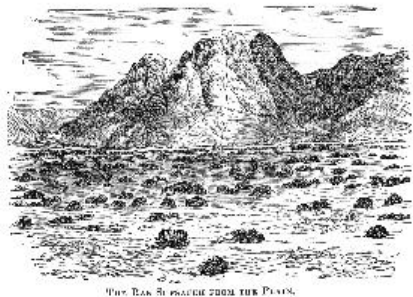
16. Caused waters to run down like rivers—An important circumstance for their ready supply at all times without inundating the camp. As in verse 15 the quantity of water is
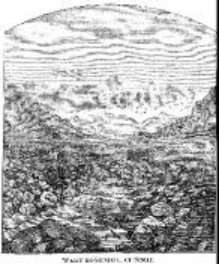
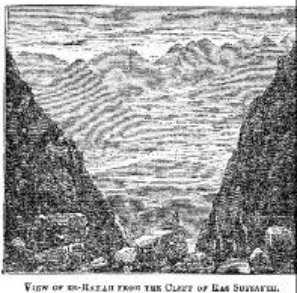
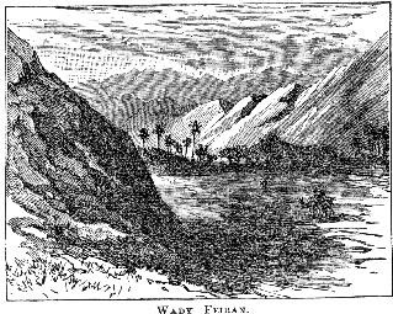
mentioned, so is here its distribution, a point next in importance for the convenience of tents and flocks extending several miles down the valley es-Sheikh. The general approach of the Israelites to Sinai was from the northwest, and must, from the well-ascertained conformation of the land, have been through the broad wadies Feiran and es-Sheikh, which latter heads at the northeast base of Sinai. If we accept Jebel Mousa as the place of receiving the law, and the cleft at the “nether end” of Ras Sufsafeh as the point of its proclamation to the people, and the vast plain er-Rahah as the audience-room for assembling the people, (all which seems fully established,) then the rock in Horeb from which the waters flowed must have been somewhere along the base of Sufsafeh, or farther west at the mouth of Wady el-Lejah. Tradition locates it at the latter place. From thence the water would flow eastward along the base of Ras Sufsa-feh, where the winter torrent still flows, through a deep-cut channel, into Wady es-Sheikh, and thence through Wady Feiran into the Gulf of Suez. This whole distance of connecting valleys is about seventy miles. At the time of smiting the rock, the camp of Israel was at Rephidim, which we must locate, according to some, in the beautiful Wady Feiran, not far from where it unites with and receives the waters of es-Sheikh, twenty-miles from Horeb; or, according to others, in Wady es-Sheikh, twelve miles from the latter place; for God had said to Moses, “Go on before the people… and I will stand before thee there upon the rock in Horeb.” Exodus 17:5, 6. In obedience to this order, Moses probably took the shorter route, impassable for caravans, up the Nagb Hawa, a wild gorge leading into er-Rahah from the north. After smiting the rock the people advanced up the circuitous caravan route of Wady es-Sheikh, and encamped in its broad plains at Sinai, near to where it unites with the great plain er-Rahah. We may suppose that they also
occupied the numerous neighbouring wadies, many of which were fertile. This section of the valley is called, in Scripture, “the desert of Sinai.” Exodus 19:1, 2. They were now chiefly in a broad, open valley, in the bed of which flowed the copious brook or river from the rock Horeb—the same that is alluded to Deuteronomy 9:21; Exodus 32:20. This stream continued to flow during all their stay at Sinai, about eleven months, Numbers 10:11-13. Comp. Exodus 19:1. During this time we must suppose that er-Rahah served as an audience room, where the people assembled to receive the law from Moses, who, for this purpose, is supposed to have stood in the notable cleft at the perpendicular front of Ras Sufsafeh. From this point, also, they beheld the awful scenes of Sinai, for it is said that for this purpose “they were brought forth out of the camp,” (Exodus 19:16, 17,) a phrase which does not at all comport with their tenting in er-Rahah, but exactly suits their encampment in es-Sheikh and neighbouring valleys. From the plain er-Rahah the bluff of Ras Sufsafeh, the northern terminus of Horeb, rises abruptly about 2,000 feet. The bluff itself is divided by a deep chasm into two peaks, and so perpendicularly does it rise from the plain, that one can easily approach and touch the mount with his hand. See Hebrews 12:18, and compare Exodus 19:21, and 20:18, 21; Deuteronomy 4:11. The plain er-Rahah is 4,000 feet above the sea, measuring over two miles in length by a third to two thirds of a mile in width, and is capable, by actual measurement, of furnishing standing room for 2,500,000 persons, allowing a square yard for each person, (Palmer,) and is hemmed in on all sides, except the broad gap of wady es-Sheikh on the southeast, by “lofty granite ridges, with shattered peaks a
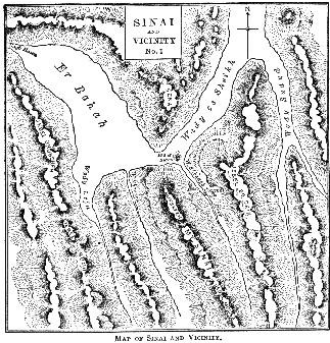
thousand feet high.” From these suggestions, assisted by the accompanying diagram and cuts, the reader may form some idea of the locality of the camp and miracles alluded to in the text. The rock of Horeb is mentioned by the apostle Paul as a type of Christ, (1 Corinthians 10:4,) from the miraculousness, copiousness, and the life-giving virtue, of its waters.
Cited across the library (1 reference)
- DictionaryWatson’s Dictionary: River
And they sinned yet more against him by provoking the most High in the wilderness.
John Wesley on Psalm 78:17
V. 17. Wilderness-Where they had such singular obligations to obedience. This was a great aggravation of their sins.
Joseph Benson on Psalm 78:17–20
Editorial note: Source collation note — paragraph 1: “sinned yet more — hebrew, ויוסיפו עוד לחשׂאלו, they added yet to”. source PDF page 878: “sinned yet more Hebrew, לחשׂאלו עוד ויוסיפו They added yet to”. Compared with BEN_VOL3.PDF PDF p. 878. The source-font or layout comparison does not securely establish every letter, mark or local sequence in these passages. The flagged language readings or layout are retained; the original source pages should be consulted for these specific readings. Additional-source investigation: the available separately digitized printed volumes were searched, but the corresponding passage was not securely located. The flagged readings or layout remain uncertain; this search provides no basis for reconstructing or silently normalizing them. BEN_VOL3.PDF, PDF page 878.
Verses 17-20. And they sinned yet more — Hebrew, ויוסיפו עוד לחשׂאלו, They added yet to sin against him. All these miraculous works did not alter their depraved nature; but it broke out into new and greater provocations; in the wilderness — In that very place where they were under such strong and singular obligations to obedience, both for the great things which God had then and there done for them, and from their dependance upon his favour and help for their safety and subsistence; where, indeed, without his singular providence, they had all perished. This was certainly a great aggravation of their sin and folly. And they tempted God — Desired a new trial and proof of his power, as the next verse shows. See Numbers 11:4. By asking meat for their lust — Not for their necessary subsistence, for which they had in manna, but out of an inordinate and luxurious appetite. Yea, they spake against God, &c. — At last they openly declared and manifested that distrust of his power which was in their hearts, saying, Can God furnish a table? — Is he able to provide, not only bare support and sustenance, but variety of nourishing and pleasant food, here in this barren wilderness? Behold, he smote the rock, &c. — It is true he hath brought water out of a rock for us in abundance; but can he give bread also? — Not such light food as this manna is, but more substantial bread, here where no corn grows? Can he provide flesh for his people? — Can he make an ample provision for all this multitude of such flesh as this place does not afford? They should have said, Lord, if thou wilt thou canst. For is any thing too hard for Omnipotence? When once the ordinary powers of nature are exceeded, and God has made bare his arm, and put forth his almighty power, we must conclude nothing is impossible with him.
And they tempted God in their heart by asking meat for their lust.
John Wesley on Psalm 78:18
V. 18. Tempted-Desired a proof of God’s power. Lust-Not for their necessary subsistence, but out of an inordinate and luxurious appetite.
Adam Clarke on Psalm 78:18
Verse 18. By asking meat for their lust.] לנפשם lenaphsham, “for their souls,” i.e., for their lives; for they said in their hearts that the light bread, the manna, was not sufficient to sustain their natural force, and preserve their lives. It seems, however, from the expression, that they were wholly carnal; that they had no spirituality of mind; they were earthly, animal, and devilish.
Daniel Whedon on Psalm 78:18
18. Tempted God— “They wished to put God to the proof, with a view to renounce him altogether, in case he should not give them what they wanted.”—Hengstenberg. And this was at their first permanent halting-place after leaving Sinai. So soon (after three days’ march, Numbers 10:33) were effaced the awful impressions at the giving of the law! Asking meat for their lust—The complaint began with the “mixed multitude” which had followed them out of Egypt. Numbers 11:4. The manna sufficed for temperate and healthful desert life, but meat was demanded as a luxury. The history says “they lusted a lust,” that is, they lusted inordinately. Blind appetite, in man or brute, is unreasoning, impatient, and rebellious.
Yea, they spake against God; they said, Can God furnish a table in the wilderness?
Daniel Whedon on Psalm 78:19
19. They spake against God—And, in reply, “the wrath of God arose against them.” Verse 21. Can God furnish a table— “For one single meat could not content them, unless they might delight themselves in manifold plenty and variety.”—Calvin.
Behold, he smote the rock, that the waters gushed out, and the streams overflowed; can he give bread also? can he provide flesh for his people?
Daniel Whedon on Psalm 78:20
20. Instead of gratitude and faith, as the fruit of former mercies, they doubtingly and complainingly challenge the power of God to further miracles.
Verses 23-25 are a description of the abundance, suitableness, and miraculous method of their former supplies, and the ingratitude and causelessness of their complaints.
Therefore the LORD heard this, and was wroth: so a fire was kindled against Jacob, and anger also came up against Israel;
Joseph Benson on Psalm 78:21–22
Verses 21, 22. The Lord heard, and was wroth — Such rude and insolent language highly incensed the Divine Majesty. So a fire was kindled against Jacob — He sent lightning from heaven to consume those whom he had before cherished, Numbers 11:1. Or, the expression may be taken figuratively for the fire of God’s anger, as it follows. Observe, reader, God is a witness to all our murmurings and distrusts: he hears them, and is much displeased with them. To unbelievers our God is himself a consuming fire, and those that will not confide in the power of his mercy shall feel the power of his indignation, and be made to confess that it is a fearful thing to fall into his hands. Because they believed not in God — Because, by this their distrust and murmuring, it appeared that they did not give credit to the revelation God had made of himself to them: for they durst not commit themselves to his care, nor venture themselves in his hands; and trusted not in his salvation — That he could and would save them from the famine and destruction which they feared; they trusted not in the salvation he had begun to work for them; for, if they had, they would not thus have questioned its progress. Mark well, reader, those cannot be said to trust in God’s salvation as their felicity at last, who cannot find in their hearts to trust in his providence for food convenient in the way to it.
Because they believed not in God, and trusted not in his salvation:
John Wesley on Psalm 78:22
V. 22. Trusted not-That he both could, and would save them from the famine which they feared.
Adam Clarke on Psalm 78:22
Verse 22. They believed not in God] After all the miracles they had seen, they were not convinced that there was a Supreme Being! and, consequently, they did not trust in his salvation-did not expect the glorious rest which he had promised them. Their descendants in the present day are precisely in this state. Multitudes of them disbelieve the Divine origin of their law, and have given up all hopes of a Messiah.
Though he had commanded the clouds from above, and opened the doors of heaven,
John Wesley on Psalm 78:23
V. 23. Heaven-Which he compares to a store-house, whereof God shuts or opens the doors, as he sees fit.
Joseph Benson on Psalm 78:23–24
Verses 23, 24. Though he commanded the clouds, &c. — It was a great aggravation of their unbelief and distrust, that they had had great experience of his power and goodness to them. For he had given them undeniable proofs of both, and those not only from earth beneath, but from the heaven above, having commanded the clouds, as one that had given being to, and created them, to serve him and his people, and supply their wants. Ordinarily by their showers they contribute to the earth’s producing corn; but now, when God so commanded them, they showered down corn themselves, which is therefore called here the corn of heaven. And opened the doors of heaven — In these words he compares heaven to a granary, or store-house, whereof God keeps the key, and either shuts or opens the doors of it, either gives or withholds provisions, as he sees fit.
And had rained down manna upon them to eat, and had given them of the corn of heaven.
Adam Clarke on Psalm 78:24
Editorial note: Source collation note — paragraph 1: “corn, or heavenly grain, דגן שמים degan shamayim. the word”. source PDF page 622: “corn or heavenly grain שמים דגנ degan shamayim The word”. Compared with CLA_PSA.PDF PDF p. 622. The source-font or layout comparison does not securely establish every letter, mark or local sequence in these passages. The flagged language readings or layout are retained; the original source pages should be consulted for these specific readings. Additional-source investigation: an automated comparison of surrounding English text located possible corresponding passages in OCR from separately digitized printed volumes. The linked scan pages are research locators; their images have not been collated for this note's flagged readings. OCR agreement does not verify Greek or Hebrew letters, diacritics, word order, or table layout. The flagged readings or layout remain uncertain. CLA_PSA.PDF, PDF page 622; Additional printed-scan page locator (OCR context only; flagged reading unverified).
Verse 24. The corn of heaven.] The manna. It fell about their camp in the form of seeds; and as it appeared to come down from the clouds, it was not improperly termed heavenly corn, or heavenly grain, דגן שמים degan shamayim. The word shamayim is frequently taken to express the atmosphere.
Daniel Whedon on Psalm 78:24
Editorial note: Source collation note — paragraph 1: “it, and they exclaimed מן הוא, what is this? ( exodus”; “24. manna—hebrew מן, (man,) according to gesenius”. source PDF page 372: “complaints. 24. Manna —Hebrew מנ man, according to Gesenius”; “it, and they exclaimed הוא מנ What is this? Exodus”. Compared with WHD_CO05.PDF PDF p. 372. The source-font or layout comparison does not securely establish every letter, mark or local sequence in these passages. The flagged language readings or layout are retained; the original source pages should be consulted for these specific readings. Additional-source investigation: an automated comparison of surrounding English text located possible corresponding passages in OCR from separately digitized printed volumes. The linked scan pages are research locators; their images have not been collated for this note's flagged readings. OCR agreement does not verify Greek or Hebrew letters, diacritics, word order, or table layout. The flagged readings or layout remain uncertain. WHD_CO05.PDF, PDF page 372; Additional printed-scan page locator (OCR context only; flagged reading unverified).
24. Manna—Hebrew מן, (man,) according to Gesenius from the Arabic, which signifies a portion, gift, because it was an allotment bestowed from Heaven. But more probably, in the popular phraseology, (Keil and Delitzsch,) used for מה, (mah,) an interrogative, who? what? The Israelites did not know what to call it, and they exclaimed מן הוא, What is this? (Exodus 16:15,) not “It is manna,” as in our English version. Josephus says, (Ant., book iii, chap. i, sec. 6,) “The Hebrews call it manna, for the particle man in our language is the asking a question, What is this?” and so the passage should read. In form and colour it is compared to coriander seed, globular, and of whitish colour. Numbers 11:7. It is not to be confounded with the manna now known in merchandise, nor with the Arabian manna, a resinous substance which exudes from the leaf of the tamarisk, or turfa, as described by Burckhardt (Travels in Syria, etc., p. 500) and other travellers, and called in Arabic mann. Ehrenberg discovered that this manna flows from the puncture of an insect. Its colour is a cloudy yellow, its taste like honey, and slightly aromatic. It falls in crystal drops from the trees, and is still gathered by the Arabs as a luxury. Though gathered in June, Lieutenant Welsted found the twigs in September retaining the sweetness of the gum. He says, in the best seasons the quantities gathered about Sinai may amount to $9,000 in value in the Cairo market. But the quantity necessary to sustain the Israelites for one week has been computed to be not less than 15,000,000 pounds. But neither in quantity nor quality does this compare with the Israelitish manna. Corn of heaven—Poetical for manna.
Cited across the library (1 reference)
- DictionaryWatson’s Dictionary: Manna
Man did eat angels’ food: he sent them meat to the full.
John Wesley on Psalm 78:25
V. 25. Angels food-Manna, so called, because it was made by the ministry of angels.
Adam Clarke on Psalm 78:25
Editorial note: Source collation note — paragraph 1: “did eat angels’ food] לחם אבירים אכל איש lechem abbirim achal ish”. source PDF page 622: “did eat angels’ food איש אכל אבירים לחם lechem abbirim achal ish”. Compared with CLA_PSA.PDF PDF p. 622. The source-font or layout comparison does not securely establish every letter, mark or local sequence in these passages. The flagged language readings or layout are retained; the original source pages should be consulted for these specific readings. Additional-source investigation: an automated comparison of surrounding English text located possible corresponding passages in OCR from separately digitized printed volumes. The linked scan pages are research locators; their images have not been collated for this note's flagged readings. OCR agreement does not verify Greek or Hebrew letters, diacritics, word order, or table layout. The flagged readings or layout remain uncertain. CLA_PSA.PDF, PDF page 622; Additional printed-scan page locator (OCR context only; flagged reading unverified).
Verse 25. Man did eat angels’ food] לחם אבירים אכל איש lechem abbirim achal ish, “Man did eat the bread of the mighty ones;” or, each person ate, &c. They ate such bread as could only be expected at the tables of the rich and great; the best, the most delicate food. How little did this gross people know of the sublime excellence of that which they called light bread, and which they said their soul loathed; Numbers 21:5! It was a type of Jesus Christ, for so says St. Paul: “They all ate the same spiritual meat, and drank the same spiritual drink,” &c., 1 Corinthians 10:3, 4. And our Lord calls himself “the bread that came down from heaven, that giveth life unto the world,” John 6:31-35: but a Jew sees nothing but with the eyes of flesh. It is true their doctors or rabbins are full of allegories, mysteries, and conceits; but they are, in general, such as would disgrace the Cabinet des Fees, and would not be tolerated in the nursery. O, how thick a veil hangs over their gross and hardened hearts.
Joseph Benson on Psalm 78:25
Editorial note: Source collation note — paragraph 1: “s appointment. the hebrew, לחם אבירים, lechem abirim, is literally”. source PDF page 879: “God’s appointment. The Hebrew, אבירים לחם lechem abirim, is literally,”. Compared with BEN_VOL3.PDF PDF p. 879. The source-font or layout comparison does not securely establish every letter, mark or local sequence in these passages. The flagged language readings or layout are retained; the original source pages should be consulted for these specific readings. Additional-source investigation: the available separately digitized printed volumes were searched, but the corresponding passage was not securely located. The flagged readings or layout remain uncertain; this search provides no basis for reconstructing or silently normalizing them. BEN_VOL3.PDF, PDF page 879.
Verse 25. Man did eat angels’ food — Such as was given by the ministry of angels, and, as the Chaldee reads it, descended from the dwelling of angels. Or, it may be so called because of its excellence, such food as might suit angels, if they needed or could eat food, and such as had some resemblance or relation to the nature of angels, in regard of its heavenly original, its pure and refined substance, its vigour and efficacy in preserving and nourishing those who used it according to God’s appointment. The Hebrew, לחם אבירים, lechem abirim, is literally, the bread of the mighty. So the margin reads it, Every one, even the least child in Israel, did eat the bread of the mighty. The common Israelites fed upon as palatable, wholesome, delicious, nourishing, strengthening, and invigorating food, as the greatest nobles and princes used to do. He sent them meat to the full — Which may refer either, 1st, To the flesh mentioned in the following verses, which God gave them even to satiety or glutting, as he threatened he would do, Numbers 11:18-20. Or rather, 2d, To the manna, of which he is here speaking, which he gave them in such plenty, that their desire of other food could not proceed from their necessity, but merely from wantonness and lust. We must not neglect to observe here, that this manna, which was given to Israel by a miracle from heaven, was typical of that spiritual or living bread, or bread of life, that doctrine and merits of Christ, which, in due time, was to “come down from heaven to give life unto the world:” see John 6:31-58. Hence it is termed by St. Paul spiritual meat, as the water out of the rock, emblematical of the Holy Spirit, is termed spiritual drink. Reader, see that thou apply for and partake of both, for both are necessary to thy salvation; and thus thou wilt be brought to feed on angels’ food, literally and indeed, and shalt be made a happy partaker of everlasting felicity.
Joseph Sutcliffe on Psalm 78:25
Ver. 25. Man did eat angels’ food. אבירים abirim, the mighty ones. St. Paul seems to cite this text when he says, “the Lord Jesus Christ shall be revealed from heaven with his mighty angels.” 2 Thessalonians 1:7.
Daniel Whedon on Psalm 78:25
25. Man did eat—Every “man,” without exception. There was no lack at any point to give cause to the complaint. See Exodus 16:16-18. Angels’ food—So called because of its origin and of its excellent quality. The Septuagint has αρτον αγγελων, food of angels, and so the Vulgate, angelorum. So our English version; but the Hebrew word אבירים, (abeereem,) here rendered “angels,” is not the word for celestial beings, but simply denotes one that is physically strong, mighty, whether man or beast, as in Jeremiah 8:16; Lamentations 1:15, or figuratively, one that is noble, of high rank. If the former is adopted in the text (Hammond) it is a rebuke of their complaint of its being “light food,” unsuited to robust men, (Numbers 21:5;) if the latter, (Gesenius,) it denotes the high quality of their diet, as belonging to nobles, princes; and in either case is a reproof of their murmurings.
He caused an east wind to blow in the heaven: and by his power he brought in the south wind.
John Wesley on Psalm 78:26
V. 26. South wind-First an eastern, and afterwards a southern wind.
Adam Clarke on Psalm 78:26
Verse 26. He caused an east wind to blow] See Clarke’s note on “Numbers 11:31”.
Joseph Benson on Psalm 78:26–29
Editorial note: Source collation note — paragraph 1: “as the sand — hebrew, עוף כנף, gnoph chanap, fowl of”. source PDF page 880: “as the sand Hebrew, כנף עוף gnoph chanap, fowl of”. Compared with BEN_VOL3.PDF PDF p. 880. The source-font or layout comparison does not securely establish every letter, mark or local sequence in these passages. The flagged language readings or layout are retained; the original source pages should be consulted for these specific readings. Additional-source investigation: the available separately digitized printed volumes were searched, but the corresponding passage was not securely located. The flagged readings or layout remain uncertain; this search provides no basis for reconstructing or silently normalizing them. BEN_VOL3.PDF, PDF page 880.
Verses 26-29. He caused an east wind to blow, &c. — First an eastern, and afterward a southern wind. He rained flesh, &c., and feathered fowls like as the sand — Hebrew, עוף כנף, gnoph chanap, fowl of wing, or winged fowl; but God took away from them the use of their wings, and made them fall into the hands of the Israelites. And let it fall in the midst of their camp — Hebrew, מחנהו, machanehu, his camp; that is, either Israel’s camp, or God’s camp; for, seeing Israel was God’s people, and he dwelt among them, their camp was his camp. He gave them their own desire — What they desired, both for quality and quantity.
Daniel Whedon on Psalm 78:26
26. East wind—This refers to the second supply of quails, Numbers 11:31. For the first supply, see Psalm 105:40. According to the Hebrew text, two “winds,” from the east and south, were called into action jointly, meeting at the Israelitish camp. The history simply says, “a wind from the Lord.” According to Hebrew usage, a south “wind” might come from any point between southeast and southwest. The Septuagint and Vulgate have “southwest wind.” This would bring the quails migrating northward from southern Arabia, and the interior of Africa, directly over the camp, and being weary of wing, and baffled by an easterly “wind,” they would fall at the point required. It is not uncommon for quails to fly thus in large numbers, and, when weary, they are easily killed with a stick by Arab boys. In this case the miracle was in giving strength and direction to the “winds” to assist their flight to the given time and place, and then there to arrest it. The quail is a round and plump bird, about the size of the turtle-dove, (see on Psalm 105:40,) of low and heavy flight, much dependent on favorable “winds” in its migratory passages. In Numbers 11:31, “Upon the face of the earth” refers to their low flight over, or above, “the face of the earth.”
He rained flesh also upon them as dust, and feathered fowls like as the sand of the sea:
John Wesley on Psalm 78:27
V. 27. Fowl-But God took away from them the use of their wings, and made them to fall into the hands of the Israelites.
Daniel Whedon on Psalm 78:27
27. He rained flesh… as dust—That is, in profusion. The allusion is to the “dust” of the sirocco. In this same desert, further north, Dr. Robinson says: “At eleven o’clock the wind changed to the south, and blew a perfect tempest. The atmosphere was filled with fine particles of sand, forming a bluish haze; the sun was scarcely visible, his disk exhibiting only a dim and sickly hue. Often we could not see ten rods around us, and our eyes, ears, mouth, and nose were filled with sand.” Feathered fowls—Hebrew, Birds of wing; which refutes the theory that locusts, not quails, are intended.
And he let it fall in the midst of their camp, round about their habitations.
So they did eat, and were well filled: for he gave them their own desire;
Daniel Whedon on Psalm 78:29
29. Were well filled—Hebrews, were satiated greatly. The language indicates excess, gluttony, and it lasted an entire mouth. The place was called Kibroth-hattaavah—the graves of greediness.
They were not estranged from their lust. But while their meat was yet in their mouths,
Joseph Benson on Psalm 78:30–31
Verses 30, 31. They were not estranged from their lust, &c. — Green translates the verse, But before they were averse to what they had desired, and while their meat was still in their mouths, the wrath of God, &c. The sense is, either, 1st, While their greedy appetite yet continued, and was not fully satisfied; before they began to loathe the meat, as they did afterward, Numbers 11:20. Or, 2d, Before they were deprived of their desired food; while they enjoyed it, and were still feeding upon it, as the next clause explains this, the wrath of God came upon them — His patience did not wait till that food was spent, but he instantly let loose his wrath to punish them; and slew the fattest of them — The Hebrew word is rendered by Green, the wealthiest of them. Or, it may mean, the most healthy and strong, who probably were most desirous of this food, fed most eagerly upon it, and least suspected their own danger. And smote down — By a very great pestilence, the chosen men of Israel — The strongest and goodliest persons that were in Israel.
Daniel Whedon on Psalm 78:30
30. They were not estranged from their lust—Indulgence never cures unlawful appetites, nor awakens gratitude to God.
The wrath of God came upon them, and slew the fattest of them, and smote down the chosen men of Israel.
John Wesley on Psalm 78:31
V. 31. Mightiest-The most healthy and strong, who probably were most desirous of this food, and fed most eagerly upon it.
Daniel Whedon on Psalm 78:31
31. The wrath of God—It does not appear that the plague and mortality which broke out were wholly a natural result of their intemperance, but a direct judgment of God, which made their feasting a loathsomeness and terror. Fattest of them—Not only the healthiest and most robust, but the chiefs, or, as in next line, the chosen… of Israel, which shows how strong and deep had been the disaffection.
Cited across the library (1 reference)
For all this they sinned still, and believed not for his wondrous works.
Adam Clarke on Psalm 78:32
Verse 32. For all this they sinned still] How astonishing is this! They were neither drawn by mercies, nor awed by judgments! But we shall cease to wonder at this, if we have a thorough acquaintance with our own hearts.
Daniel Whedon on Psalm 78:32
32. They sinned still—Namely, at Kadesh, (Numbers 14;) and at their second arrival at Kadesh, thirty-eight years after, (Numbers 20;) in their murmur at the destruction of Korah and his company, (Numbers 16:41;) and later, in the Arabah, south of Mount Hor, (Numbers 21:4-9;) and in the valley of Jordan, (Numbers 25:1,) besides other instances of lesser note. Believed not—Did not continue in faith. Their chastisements and their mercies were alike a “savour of death unto death.”
Therefore their days did he consume in vanity, and their years in trouble.
John Wesley on Psalm 78:33
V. 33. Vanity-In tedious and fruitless marches hither and thither. Trouble-In manifold diseases, dangers, and perplexities.
Adam Clarke on Psalm 78:33
Verse 33. Their days did he consume in vanity] By causing them to wander forty years in the wilderness, vainly expecting an end to their labour, and the enjoyment of the promised rest, which, by their rebellions, they had forfeited.
Joseph Benson on Psalm 78:33
Verse 33. Their days did he consume in vanity — In tedious and fruitless marches hither and thither, sometimes forward and sometimes backward, which they knew would never bring them, in their own persons, to their promised and much desired land; and their years in trouble — In manifold diseases, dangers, and perplexities. In such vanity and trouble were they condemned, by an irreversible doom, for their unbelief, distrust of God, their murmurings and rebellions against him, their idolatries and other sins, to wear out thirty-eight tedious years in that wilderness, which indeed were consumed in it: for in all those years there was not one step taken nearer Canaan, nor one stroke struck toward the conquest of it. Observe, reader, those that sin still must expect to be in trouble still; and the reason why we spend our days in so much vanity and trouble, why we live with so little comfort, and to so little purpose, is because we live in sin, or do not live by faith.
Joseph Sutcliffe on Psalm 78:33
Ver. 33. Their days did he consume in vanity: their sentence, couched in the name of Abel, to waste away in the desert, it would seem, quickly followed that of the ten unbelieving spies. It made them sick at heart; they gradually fainted and died. As unbelief is the damning sin of the world, so the Lord made those old rebels a fearful example to posterity.
Daniel Whedon on Psalm 78:33
33. Their days did he consume in vanity—During the thirty-eight years of their wandering, after the sentence of Numbers 14:28-35, nothing is recorded of them except the conspiracy of Korah and his company, and a few camp stations. Vanity and trouble fill up the monotonous record. Psalm 90:9.
When he slew them, then they sought him: and they returned and enquired early after God.
John Wesley on Psalm 78:34
V. 34. Returned-From their idols. Enquired-Speedily sought to God for ease and safety.
Adam Clarke on Psalm 78:34
Verse 34. When he slew them] While his judgments were upon them, then they began to humble themselves, and deprecate his wrath. When they saw some fall, the rest began to tremble.
Joseph Benson on Psalm 78:34–35
Verses 34, 35. When he slew them — Or condemned them to be slain; then they sought him — Confessed their sin, begged pardon, and prayed to him to deliver them from the threatened destruction. When some were slain, others, in a fright, cried for mercy, and promised to be obedient in future: And they returned — Namely, from their idols, unto the outward worship of God: or, being moved with fear, they ceased, for the present, from their grossly wicked courses, but stopped short of true repentance, and a thorough conversion to God. And inquired early after God — Speedily and earnestly sought to him for deliverance from their temporal calamities and troubles, and for safety and comfort, as even wicked men, in such cases, frequently do. And they remembered that God was their rock — Their support and defence, and therefore, as they now found they needed him, they would flee for help to him; and the high God their Redeemer — Who had brought them out of Egypt, and wrought out many deliverances for them, and to whom therefore they might still apply for aid in their distresses. They considered that he, and he alone, had preserved them in all their former exigences, and that he only could now help them, and not those idols, nor the creatures which they had preferred before him: and therefore, being driven by absolute necessity, they fled to him for relief.
Daniel Whedon on Psalm 78:34
Editorial note: Source collation note — paragraph 1: “to the contingent particle, אם, (eem,) when, if, we”. source PDF page 374: “to the contingent particle, אמ eem, when, if, we”. Compared with WHD_CO05.PDF PDF p. 374. The source-font or layout comparison does not securely establish every letter, mark or local sequence in these passages. The flagged language readings or layout are retained; the original source pages should be consulted for these specific readings. Additional-source investigation: an automated comparison of surrounding English text located possible corresponding passages in OCR from separately digitized printed volumes. The linked scan pages are research locators; their images have not been collated for this note's flagged readings. OCR agreement does not verify Greek or Hebrew letters, diacritics, word order, or table layout. The flagged readings or layout remain uncertain. WHD_CO05.PDF, PDF page 374; Additional printed-scan page locator (OCR context only; flagged reading unverified).
34. When he slew them, then—The “when” and “then” are emphatic words. If we give a more uniform rendering to w, (ve,) “then,” “and” “but,” in the English version, so as to preserve its relation to the contingent particle, אם, (eem,) when, if, we get a clearer contrast between the character of God and that of his people as given verses 34-39. Thus:— When he slew them, then they sought him;
Then they turned and early sought God;
Then they remembered that God is their rock;
Then [they remembered] God Most High, their redeemer; Then they enticed him with their mouth;
Then with their tongue they did lie unto him; Then their heart was not established with him; Then they were not steadfast in his covenant: But he, being merciful, purged their iniquity, And destroyed them not;
And many a time he turned his anger away,
And did not stir up all his wrath;
And he remembered that they were flesh,
A wind going that will not return.
Their repentance, being extorted by the pressure of their judgments, and not by conviction and godly sorrow for sin, was insincere, fickle, and false, and wrought out no reformation of life or true obedience. God, therefore, could govern them only with the rod and with terror.
Cited across the library (1 reference)
And they remembered that God was their rock, and the high God their redeemer.
John Wesley on Psalm 78:35
V. 35. Redeemer-That God alone had preserved them in all their former exigencies, and that he only could help them.
Adam Clarke on Psalm 78:35
Editorial note: Source collation note — paragraph 2: “the following masoretic note: חצי הספר chatsi hassepher, “the middle”; “high god their redeemer.] ואל עליון גאלם veel elyon goalam, “and”. source PDF page 623: “the following Masoretic note: הספר חצי chatsi hassepher “The middle”; “high God their Redeemer. גאלם עליון ואל veel elyon goalam “And”. Compared with CLA_PSA.PDF PDF p. 623. The source-font or layout comparison does not securely establish every letter, mark or local sequence in these passages. The flagged language readings or layout are retained; the original source pages should be consulted for these specific readings. Additional-source investigation: an automated comparison of surrounding English text located possible corresponding passages in OCR from separately digitized printed volumes. The linked scan pages are research locators; their images have not been collated for this note's flagged readings. OCR agreement does not verify Greek or Hebrew letters, diacritics, word order, or table layout. The flagged readings or layout remain uncertain. CLA_PSA.PDF, PDF page 623; Additional printed-scan page locator (OCR context only; flagged reading unverified).
Verse 35. That God was their rock] They recollected in their affliction that Jehovah was their Creator, and their Father; the Rock, the Source, not only of their being, but of all their blessings; or, that he was their sole Protector.
And the high God their Redeemer.] ואל עליון גאלם veel elyon goalam, “And the strong God the Most High, their kinsman.” That one who possessed the right of redemption; the nearest akin to him who had forfeited his inheritance; so the word originally means, and hence it is often used for a redeemer. The Hebrew word גאל goel answers to the Greek σωτηρ, a saviour; and is given to the Lord Jesus Christ, the strong God, the Most High, the Redeemer of a lost world. After this verse there is the following Masoretic note: חצי הספר chatsi hassepher, “The middle of the book.” And thus the reader has arrived at the middle of the Psalter, a book for excellence unparalleled.
Joseph Sutcliffe on Psalm 78:35
Ver. 35. Their Redeemer. Hebrews גאלם goalam, their goël, as in Job 19:25. The Messiah was ever employed in redeeming and saving his people.
Nevertheless they did flatter him with their mouth, and they lied unto him with their tongues.
John Wesley on Psalm 78:36
V. 36. Lied-They made but false protestations of their sincere resolutions of future obedience.
Adam Clarke on Psalm 78:36
Verse 36. Nevertheless they did flatter him with their mouth] What idea could such people have of God, whom they supposed they could thus deceive? They promised well, they called him their God, and their fathers’ God; and told him how good, and kind, and merciful he had been to them. Thus, their mouth flattered him. And they said that, whatever the Lord their God commanded them to do, they would perform.
And they lied unto him.] I think the Vulgate gives the true sense of the Hebrew: Dilexerunt eum in ore suo; et lingua sua mentiti sunt ei,—”They loved him with their mouth; and they lied unto him with their tongue.” “That is,” says the old Psalter, “thai sayde thai lufed God, bot thai lighed, als thair dedes schewes; for thai do noght als thai hight; for when God ceses to make men rad; than cese thai to do wele.”
Joseph Benson on Psalm 78:36–37
Verses 36, 37. Nevertheless, they did flatter him with their mouth — As if they thought, by mere fair speeches, to prevail on Him who searches the heart, and requires truth in the inward parts, to revoke the sentence gone out against them, or remove the judgment under which they suffered. And they lied unto him with their tongue — They made glorious but false professions and protestations of their sincere resolutions of future obedience. For their heart was not right with him — All their confessions and petitions were but hypocritical and forced, and did not proceed from hearts truly upright and grieved for their former offences, and firmly resolved to turn unto the Lord. Neither were they steadfast in his covenant — They discovered their hypocrisy, by their apostacy from God, as soon as their danger was past.
Cited across the library (1 reference)
For their heart was not right with him, neither were they stedfast in his covenant.
Adam Clarke on Psalm 78:37
Verse 37. Their heart was not right] When the heart is wrong, the life is wrong; and because their heart was not right with God, therefore they were not faithful in his covenant.
But he, being full of compassion, forgave their iniquity, and destroyed them not: yea, many a time turned he his anger away, and did not stir up all his wrath.
Adam Clarke on Psalm 78:38
Verse 38. But he, being full of compassion] Feeling for them as a father for his children.
Forgave their iniquity] יחפר yechapper, made an atonement for their iniquity.
And did not stir up all his wrath.] Though they often grieved his Spirit, and rebelled against him, yet he seldom punished them; and when he did chastise them, it was as a tender and merciful Father. He did not stir up all his wrath-the punishment was much less than the iniquity deserved.
Joseph Benson on Psalm 78:38
Editorial note: Source collation note — paragraph 1: “punishment of iniquity. hebrew, יכפר עון, jechapper gnavon, he expiated”. source PDF page 882: “punishment of iniquity. Hebrew, עון יכפר jechapper gnavon, he expiated”. Compared with BEN_VOL3.PDF PDF p. 882. The source-font or layout comparison does not securely establish every letter, mark or local sequence in these passages. The flagged language readings or layout are retained; the original source pages should be consulted for these specific readings. Additional-source investigation: the available separately digitized printed volumes were searched, but the corresponding passage was not securely located. The flagged readings or layout remain uncertain; this search provides no basis for reconstructing or silently normalizing them. BEN_VOL3.PDF, PDF page 882.
Verse 38. But he, being full of compassion — Of pity for them amidst their sins and miseries; forgave their iniquity — Not simply and absolutely, for in that sense it is undeniably certain from the Holy Scriptures, God pardons none but true penitents, such as these were not; but respectively, and so far as not to destroy them at that time, (which he had threatened to do,) as the next words limit and explain the expression. He remitted their punishment, for iniquity is often put for the punishment of iniquity. Hebrew, יכפר עון, jechapper gnavon, he expiated their iniquity. He accepted their atonement, or their professed repentance, so far as to compensate it with a removal of this outward and present affliction, as he did also to wicked Ahab upon his humiliation. And this God does for the encouragement of true penitents, who may hence learn how much greater and better recompenses they may expect and shall receive from God. And did not stir up all his wrath — But set bounds to it; and though he chastened them, yet he would not utterly destroy them, as they deserved.
Cited across the library (1 reference)
For he remembered that they were but flesh; a wind that passeth away, and cometh not again.
Adam Clarke on Psalm 78:39
Editorial note: Source collation note — paragraph 2: “sleep. the original is, רוח הולך ולא ישוב ruach holech velo yashub”. source PDF page 624: “sleep. The original is, ישוב ולא הולך רוח ruach holech velo yashub”. source PDF page 625: “that of the psalmist:— Ανδρος δε ψυχη παλιν ελθειν ουτε ληιστη, Ουθ᾽ ελετη, επει αρ κεν αμειψεται ερκος οδοντων. ix., ver., 408.”. Compared with CLA_PSA.PDF PDF p. 624, CLA_PSA.PDF PDF p. 625. The source-font or layout comparison does not securely establish every letter, mark or local sequence in these passages. The flagged language readings or layout are retained; the original source pages should be consulted for these specific readings. Additional-source investigation: an automated comparison of surrounding English text located possible corresponding passages in OCR from separately digitized printed volumes. The linked scan pages are research locators; their images have not been collated for this note's flagged readings. OCR agreement does not verify Greek or Hebrew letters, diacritics, word order, or table layout. The flagged readings or layout remain uncertain. CLA_PSA.PDF, PDF page 624; CLA_PSA.PDF, PDF page 625; Additional printed-scan page locator (OCR context only; flagged reading unverified).
Verse 39. He remembered that they were but flesh] Weak mortals. He took their feeble perishing state always into consideration, and knew how much they needed the whole of their state of probation; and therefore he bore with them to the uttermost. How merciful is God!
A wind that passeth away, and cometh not again.] I believe this to be a bad translation, and may be productive of error; as if when a man dies his being were ended, and death were an eternal sleep. The original is, רוח הולך ולא ישוב ruach holech velo yashub: and the translation should be, “The spirit goeth away, and it doth not return.” The present life is the state of probation; when therefore the flesh-the body, fails, the spirit goeth away into the eternal world, and returneth not hither again. Now God, being full of compassion, spared them, that their salvation might be accomplished before they went into that state where there is no change; where the pure are pure still, and the defiled are defiled still. All the Versions are right; but the polyglot translator of the Syriac, [Syriac] rocho, has falsely put ventus, wind, instead of spiritus, soul or spirit. The Arabic takes away all ambiguity: [—Arabic—] “He remembered that they were flesh; and a spirit which, when it departs, does not again return.” The human being is composed of flesh and spirit, or body and soul; these are easily separated, and, when separated, the body turns to dust, and the spirit returns no more to animate it in a state of probation. Homer has a saying very like that of the psalmist:—
Ανδρος δε ψυχη παλιν ελθειν ουτε ληιστη,
Ουθ᾽ ελετη, επει αρ κεν αμειψεται ερκος οδοντων.
IL. ix., ver., 408.
“But the soul of man returns no more; nor can it be acquired nor caught after it has passed over the barrier of the teeth.”
Pope has scarcely given the passage its genuine meaning:— “But from our lips the vital spirit fled
Returns no more to wake the silent dead.”
And the Ossian-like version of Macpherson is but little better: “But the life of man returns no more; nor acquired nor regained is the soul which once takes its flight on the wind.” What has the wind to do with the ερκος οδοντων of the Greek poet?
Several similar sayings may be found among the Greek poets; but they all suppose the materiality of the soul.
Joseph Benson on Psalm 78:39
Verse 39. For he remembered they were but flesh — He considered the corruption of their nature, which inclined them to evil, and was pleased to make that a reason for his sparing them. See the same argument used to a like purpose, Genesis 8:21. Or, rather, flesh here signifies the frailty and infirmity of their nature, as the next clause seems to interpret this. He considered how weak, and frail, and short-lived they were, and that they could not continue long, but would die of themselves, and moulder into dust; and that if he did not restrain his wrath, but proceeded to destroy any considerable number of them, the whole nation must soon become extinct, and the promises to Abraham and the other patriarchs fail of accomplishment. A wind that passeth away, and cometh not again — That are quickly cut off, and when once they are dead never return to this life.
Joseph Sutcliffe on Psalm 78:39
Ver. 39. A wind that passeth away. Hebrews רוח ruach, a spirit.
Cited across the library (1 reference)
How oft did they provoke him in the wilderness, and grieve him in the desert!
Yea, they turned back and tempted God, and limited the Holy One of Israel.
Adam Clarke on Psalm 78:41
Verse 41. Limited the Holy One of Israel.] The Chaldee translates, “And the Holy One of Israel they signed with a sign.” The Hebrew word התוו hithvu is supposed to come from the root תוה tavah, which signifies to mark; and hence the letter t tau, which in the ancient Hebrew character had the form of a cross X, had its name probably because it was used as a mark. Mr. Bate observes that in hithpael it signifies to challenge or accuse; as one who gives his mark or pledge upon a trial, and causes his adversary to do the same. Here it most obviously means an insult offered to God.
Joseph Benson on Psalm 78:41–42
Verses 41, 42. And limited the Holy One of Israel — Prescribing to him what proofs he should give of his power and presence with them, and what methods he should take in leading them and providing for them; directing him what to do, and when, and in what manner, to do it, and murmuring if he did not always grant their particular and various desires. They remembered not his hand — How strong it is, and how it had been stretched out for them; or the great and glorious works of his hand on their behalf. Nor the day — That remarkable and never to be forgotten day, that self-same day, as it is called, Exodus 12:41, which God had fixed four hundred years before, Genesis 15:13; when he delivered them from the enemy — Namely, from their greatest enemy, the tyrant Pharaoh, that zealously and unweariedly sought their ruin. There are some days, made remarkable by signal deliverances, which ought never to be forgotten; for the remembrance of them is calculated to encourage us in our greatest straits.
Joseph Sutcliffe on Psalm 78:41
Ver. 41. They—limited the Holy One of Israel. After the Lord had given water and manna, they said, Can God furnish a table in the wilderness? How soon they forgot what their eyes had seen. They were not allowed to see the new miracles which he wrought in the land of Canaan.
Daniel Whedon on Psalm 78:41
41. Limited—See on verses 18, 19. They either questioned God’s power, or prescribed to him what to do and what not to do.
Cited across the library (1 reference)
They remembered not his hand, nor the day when he delivered them from the enemy.
John Wesley on Psalm 78:42
V. 42. Hand-The glorious works of his hand. Enemy-That remarkable day, in which God delivered them from their greatest enemy, Pharaoh.
How he had wrought his signs in Egypt, and his wonders in the field of Zoan.
Joseph Benson on Psalm 78:43–48
Verses 43-48. How he had wrought his signs in Egypt — Here the Psalm goes back to the subject of Israelitish ingratitude, (mentioned verses 11, 12,) in order to introduce an account of the miracles wrought in Egypt previous to Israel’s deliverance from thence. “These miracles,” says Dr. Horne, “were intended to evince the superiority of Jehovah over the elements and powers of nature, which at that time were objects of worship among the Egyptians, but plainly appeared to act, at the command of Moses, in subordination to their great Creator, the God of the Hebrews. In the heavens, on the earth, and in the waters, supremacy and independence were demonstrated to belong to him only: fire and air, thunder and lightning, wind, rain, and hail obeyed his words; rivers became blood, and their inhabitants perished; insects and animals left their wonted habitations, to destroy vegetables, or torment man: so that wherever the gods of Egypt were supposed to reside, and to exert their influences in favour of their votaries, in all places, and all circumstances, victory declared for Jehovah. Hence modern as well as ancient idolaters may learn not to put their trust in the world, but in him who made, and who can and will destroy it; whose power can render the most insignificant of his creatures instruments of his vengeance, and in a moment arm all the elements against sinners; and whose mercy will employ that power in the final salvation of the church; when, as the author of the book of Wisdom expresseth it, ‘He shall make the creature his weapon for the revenge of his enemies, and the world shall fight for him against the unwise.’“ Had turned the rivers into blood — The several branches and streams of the river Nile, and those many rivulets which they drew from it. He sent divers sorts of flies, which devoured them — Or, destroyed them, which they were able to do by their numerous stings; for these flies were doubtless extraordinary in their nature, and their poisonous and hurtful qualities, as well as in their number: and the same is to be supposed concerning the frogs here mentioned, which also might destroy the people by corrupting their meats and drinks, and by infecting the air with putrefaction. He gave also their labour unto the locusts — That is, the fruit of their labour, the herbs and corn which had sprung up. He destroyed their vines with hail, and their sycamore-trees — Or, wild fig-trees, which were there in great abundance. Under these and the vines, all other trees are comprehended. And this hail and frost not only destroyed the fruits of the trees, but in many instances the trees themselves. He gave up also their cattle to the hail — Hebrew ויסגר, vajasgeer, he shut up, as in a prison, that they could not escape it; and their flocks to hot thunderbolts — Hebrew, לרשפים, lareshapim, prunis ignitis, to burning coals. He alludes to the fire mingled with hail, Exodus 9:23, 24.
Daniel Whedon on Psalm 78:43–53
43-53. Having surveyed the wilderness life of the people, (verses 14-42,) the author now returns to the wonders of Egypt and the exodus, which he had already anticipated. Verses 12, 13.
Daniel Whedon on Psalm 78:43–44
43, 44. Field of Zoan—See on verse 12. Rivers into blood—This was the first plague. Exodus 7:20, 21. The plural, rivers, includes the Nile with its arms and canals. Isaiah 19:6, 7, 8; Ezekiel 29:3, 4, 5, 9, 10. Whether the waters were literally changed to blood, or merely into the appearance of blood, (as 2 Kings 3:22, 23,) is not known, but that they were chemically changed, and had the appearance of blood, is certain, for the effect was to kill all fish and water animals, and to render the water unfit for drink or use. Exodus 7:19. It also symbolized the vengeance of God for the innocent blood of his people, (Exodus 1,) and rebuked the Egyptian idolatry, which paid divine honours to the Nile, and considered it identical with Osiris and the highest God.

And had turned their rivers into blood; and their floods, that they could not drink.
Adam Clarke on Psalm 78:44
Verse 44. Turned their rivers into blood] See on Exodus 7:20.
He sent divers sorts of flies among them, which devoured them; and frogs, which destroyed them.
John Wesley on Psalm 78:45
V. 45. Flies-These flies were doubtless extraordinary in their nature, and hurtful qualities. And the like is to be thought concerning the frogs.
Adam Clarke on Psalm 78:45
Verse 45. He sent-flies-and frogs] See on Exodus 8:6, 24.
Daniel Whedon on Psalm 78:45
45. Divers sorts of flies—This was the fourth plague. Exodus 8:21. The English translation of ערב, (‘arobh,) here and Psalm 105:31, supposes a mixture of species, but the commonly accepted derivation of the word by modern critics does not justify this ancient interpretation, but denotes a species that stings like a scorpion and sucks blood. See Isaiah 7:18. Clark (Israel in Egypt, p. 22) would favour the common fly of Egypt, which is bad enough. Van Lennep (Bible Lands, page 323,) supposes “the destructive fly called tsaltsalya by the Abyssinians and tsetse in South Africa, which kills cattle and horses, and attacks men.” The Septuagint reads κυνομυιαν, dog-fly. The precise species is not known. Flies are terrible in Egypt and Palestine. Baal-zebub, lord of flies, was the god of Ekron, and was supposed to protect from flies. Frogs—These were by the law “unclean” and “abominable,” (Leviticus 11:12, 13,) and emblematic of the “spirits of devils.” Revelation 16:13, 14. The vilest creatures were made the instruments of the humiliation and sufferings of the Egyptians.
Cited across the library (2 references)
- DictionaryWatson’s Dictionary: Flies
- DictionaryWatson’s Dictionary: Frog
He gave also their increase unto the caterpiller, and their labor unto the locust.
John Wesley on Psalm 78:46
V. 46. Labour-The herbs which were come up by their care and labour.
Adam Clarke on Psalm 78:46
Verse 46. The caterpillar and-the locust.] See on Exodus 10:13.
Daniel Whedon on Psalm 78:46
46. Caterpillar… locust—If, as some suppose, the former word (הסיל, hhaseel) denotes the larva, or caterpillar stage of the locust, then the latter word (ארבה, arbeh,) must signify the winged locust: but if the former be taken for locust, the latter must be understood of some particular species, like the Acridium peregrinum, more terrible for its destructive habits. The Septuagint has ερυσιβη, blight, canker, and in Psalm 105:34, βρουχος, a species of locust without wings, or otherwise answering to the unwinged locust when it emerges from the caterpillar stage, at which time they are as destructive as in the mature state, moving along on the ground in vast numbers. In this state, Van Lennep say, “They are correctly pictured on a Babylonian gem.” See more on Psalm 105:34.
He destroyed their vines with hail, and their sycomore trees with frost.
John Wesley on Psalm 78:47
V. 47. Sycamore-trees-Under these and the vines, all other trees are comprehended. This hail and frost destroyed the fruit of the trees, and sometimes the trees themselves.
Adam Clarke on Psalm 78:47
Verse 47. He destroyed their vines with hail] Though the vine was never plentiful in Egypt, yet they have some; and the wine made in that country is among the most delicious. The leaf of the vine is often used by the Egyptians of the present day for wrapping up their mince-meat, which they lay leaf upon leaf, season it after their fashion, and so cook it, making it a most exquisite sort of food, according to Mr. Maillet.
And their sycamore-trees] This tree was very useful to the ancient Egyptians, as all their coffins are made of this wood; and to the modern, as their barques are made of it. Besides, it produces a kind of fig, on which the common people in general live; and Mr. Norden observes that “they think themselves well regaled when they have a piece of bread, a couple of sycamore figs, and a pitcher of water from the Nile.” The loss therefore of their vines and sycamore-trees must have been very distressing to the Egyptians.
Daniel Whedon on Psalm 78:47
47. Hail—Not uncommon in Egypt, but this, for severity, exceeded any hail tempest ever known. The miracle consisted in the unwonted severity of the storm, (Exodus 9:22-25,) and in its being foretold. Verse 18. Sycamore—Or fig mulberry, or wild fig tree, abounding in Egypt. Its leaves are like the mulberry, and its fruit like the fig, affording large supplies to the poor, and hence cultivated. 1 Chronicles 27:28. Frost— The Hebrew word occurs nowhere else in Scripture, but as it is parallel to “hail” in the preceding member, the obvious climax of the verse would lead us to suppose icy hailstones of great weight, which destroyed animals, and even trees, where the common hailstone destroyed only the vine. See Joshua 10:11; Revelation 16:21. The marginal reading is “great hailstones.”
Cited across the library (3 references)
He gave up their cattle also to the hail, and their flocks to hot thunderbolts.
Adam Clarke on Psalm 78:48
Verse 48. He gave up their cattle] See on Exodus 9:23.
Daniel Whedon on Psalm 78:48
48. Hot thunderbolts—The word indicates balls, or streams, of fire, like red hot coals, as in Habakkuk 3:5; Song of Solomon 8:6. It was an unparalleled electrical phenomenon, even for an Egyptian climate. The narrative says, “The fire ran along upon the ground.” Exodus 9:23.
He cast upon them the fierceness of his anger, wrath, and indignation, and trouble, by sending evil angels among them.
John Wesley on Psalm 78:49
V. 49. Evil angels-Whom God employed in producing these plagues.
Adam Clarke on Psalm 78:49
Verse 49. By sending evil angels] This is the first mention we have of evil angels. There is no mention of them in the account we have of the plagues of Egypt in the Book of Exodus, and what they were we cannot tell: but by what the psalmist says here of their operations, they were the sorest plague that God had sent; they were marks of the fierceness of his anger, wrath, indignation, and trouble. Some think the destroying angel that slew all the first-born is what is here intended; but this is distinctly mentioned in Psalm 78:51. An angel or messenger may be either animate or inanimate; a disembodied spirit or human being; any thing or being that is an instrument sent of God for the punishment or support of mankind.
Joseph Benson on Psalm 78:49
Verse 49. He cast upon them the fierceness of his anger — Anger in the highest degree, wrath and indignation, the cause, and trouble, (tribulation and anguish, Romans 2:8, 9,) the effect. These he cast upon them from on high, and did not spare. By sending evil angels among them — Hebrew, משלחת, mishlachath, the sending of evil angels, or, of the angels, or messengers, of evil things; namely, as most commentators understand it, the angels whom God employed in producing these plagues. The reader must observe, that “some of the Egyptian plagues having been specified in the foregoing verses, others of them are here thrown together, and the whole scene is affirmed to have been a full display of wrath and vengeance, executed upon the oppressors of the church by evil angels, agents, or messengers; whether, by this expression, we understand the material instruments of divine displeasure, or angels employed as ministers of vengeance, or the actual appearance and ministration of evil spirits, suffered to torment the wicked in this world, as they certainly will do in the next. Tradition seems to have favoured this last opinion, since the author of the book of Wisdom, above referred to, describes the Egyptian darkness as a kind of temporary hell, in which there appeared to the wicked, whose conscience suggested to them every thing that was horrible, ‘a fire kindled of itself, very dreadful; they were seared with beasts that passed by, and hissing of serpents; and they were vexed with monstrous apparitions, so that they fainted, and died for fear; while over them was spread a heavy night, an image of that darkness which should afterward receive them,’” Wisdom 17.
Joseph Sutcliffe on Psalm 78:49
Ver. 49. By sending evil angels among them, to destroy the firstborn of the Egyptians; but they had no power to touch the families where the blood of the covenant was sprinkled.
Daniel Whedon on Psalm 78:49–50
49, 50. Evil angels—That is, good angels as the executioners of evil, as 2 Kings 19:34; 1 Chronicles 21:15. It is better to understand it thus than to personify the physical causes of the plague. The idea of wicked angels, Satanic agencies, is inadmissible here. He made a way to his anger—Literally, He weighed a path for his anger. His judgments were by due measure, accurately weighed out, according to their sin and the moral ends to be served. See Leviticus 26:21-28. But gave their life over— Their living ones. “Life” is to be taken in the concrete for things having life. It is parallel to soul in the previous member, which also should be taken concretely.
Cited across the library (2 references)
He made a way to his anger; he spared not their soul from death, but gave their life over to the pestilence;
Joseph Benson on Psalm 78:50–51
Editorial note: Source collation note — paragraph 1: “a fiery stream. hebrew, יפלס נתיב לאפו, he weighed a path”. source PDF page 884: “a fiery stream. Hebrew, לאפו נתיב יפלס He weighed a path”. Compared with BEN_VOL3.PDF PDF p. 884. The source-font or layout comparison does not securely establish every letter, mark or local sequence in these passages. The flagged language readings or layout are retained; the original source pages should be consulted for these specific readings. Additional-source investigation: the available separately digitized printed volumes were searched, but the corresponding passage was not securely located. The flagged readings or layout remain uncertain; this search provides no basis for reconstructing or silently normalizing them. BEN_VOL3.PDF, PDF page 884.
Verses 50, 51. He made a way to his anger — By removing every obstacle that mercy had thrown in the path of justice, he made a way for his indignation, which then rushed forth like a fiery stream. Hebrew, יפלס נתיב לאפו, He weighed a path to his anger, that is, he made a most smooth, even, and exact path, as if he had done it by weight and measure, that so his anger might pass swiftly and freely, without interruption. The phrase also may be intended to signify the wisdom and justice of God in weighing out their plagues proportionably to their sins; that is, he did not cast his anger upon them rashly, but by weight: it was weighed with the greatest exactness, in the balances of justice: and though he exercised great severity toward them, it was only such as was answerable to their great and barbarous cruelty toward his people. For in his greatest displeasure he never did, nor ever will do, any wrong to any of his creatures. The path of his anger is always weighed. He spared not their soul from death — But suffered death to ride in triumph among them; and gave their life over to the pestilence — Which cut off the thread of life immediately. And smote all the firstborn in Egypt — “An unlimited commission was given to the destroyer, who, at midnight, passed through the land, and gave the final stroke in every house.” “While all things,” says the author of the book of Wisdom, chap. 18:14, “were in quiet silence, and that night was in the midst of her swift course, thine almighty word leaped down from heaven out of thy royal throne, as a fierce man of war into the midst of a land of destruction, and brought thine unfeigned commandment as a sharp sword, and, standing up, filled all things with death: and it touched the heaven, but it stood upon the earth.” Pharaoh rose up in the night, he and all his servants, and all the Egyptians, and there was a great cry throughout all the land of Egypt; “and universal consternation reigned, inferior only to that which is to extend its empire over the world, when the trumpet shall sound, and the dead shall be raised.” — Horne.
And smote all the firstborn in Egypt; the chief of their strength in the tabernacles of Ham:
John Wesley on Psalm 78:51
V. 51. Ham-Of the Egyptians, the posterity of Ham, the cursed children of a cursed parent.
Daniel Whedon on Psalm 78:51
51. Smote all the firstborn—The last and effectual plague. The greatness of the judgment, and its singular feature in falling only upon the “firstborn,” marked it as a direct visitation of God. It struck down the chief of their strength, and another step might have extinguished the nation. The firstborn of beast included their sacred animals; the goat, ram, calf, sacred bull, crocodile, all were smitten, and their gods and worship brought into contempt. Tabernacles of Ham—A poetical designation of Egypt, called Ham, (or the dark skinned race,) after its ancestor, (Genesis 10:6,) but otherwise in Hebrew always Mizraim, after the son of Ham, who settled the country. The ancients often designated nations according to their colour, the Hebrews after their ancestry. See on Psalm 105:23.
But made his own people to go forth like sheep, and guided them in the wilderness like a flock.
Joseph Benson on Psalm 78:52–54
Verses 52-54. But made his own people go out like sheep — Distinguishing between them and the Egyptians, as a shepherd divideth between the sheep and the goats, having set his own mark upon these sheep, by the blood of the Lamb sprinkled on their door-posts. And they went forth as sheep, not knowing whither they went. And guided them in the wilderness — As a shepherd guides his flock, with all possible care and tenderness. And he led them on safely — Though in dangerous paths; so that they feared not — That is, they did not need to fear. They were indeed afraid at first, but after Moses had encouraged them they grew bold and secure, one evidence whereof was, that they confidently went into the middle of the sea, and passed between the vast heaps of water which were on both sides of them. And he brought them to the border of his sanctuary — Or, of his holiness, or holy place; that is, the land of Canaan, which is so called, (Ezra 9:8; Zechariah 2:8,) as being separated by God from all other lands, for his people and service, and sanctified by his presence, and his dwelling in it. Even to this mountain — Either the mountain upon which the tabernacle and temple stood; or rather the mountainous country of Canaan, which is called a land of hills and valleys, Deuteronomy 11:11.
Cited across the library (1 reference)
And he led them on safely, so that they feared not: but the sea overwhelmed their enemies.
Daniel Whedon on Psalm 78:53
53. Safely… they feared not—They had no cause of fear, for God was with them. Their exodus was not a flight in terror, but an orderly march. That their departure was a bold measure, humanly speaking, appears from all the facts in the case, and is thus recognised in the New Testament, Hebrews 11:27. But faith in God inspired them with superhuman courage.
And he brought them to the border of his sanctuary, even to this mountain, which his right hand had purchased.
John Wesley on Psalm 78:54
V. 54. Holy place-The land of Canaan, separated by God from all other lands. Mountain-The mountainous country of Canaan; the word mountain is often used in scripture for a mountainous country.
Adam Clarke on Psalm 78:54
Verse 54. The border of his sanctuary] קדשו kodsho, “of his holy place,” that is, the land of Canaan, called afterwards the mountain which his right hand had purchased; because it was a mountainous country, widely differing from Egypt, which was a long, continued, and almost perfect level.
Daniel Whedon on Psalm 78:54
54. Border of his sanctuary—The border of his holy place, that is, Canaan, so called because measured by line, limited and devoted for ever to the covenanted people for the moral ends of God’s great plan of redemption. This mountain—Either parallel to “holy place,” in the previous hemistich, or the author anticipates himself, and the phrase is to be understood of the mountains of Judah, in which were Zion and Moriah, as the religious centre of the nation. See verse 68.
He cast out the heathen also before them, and divided them an inheritance by line, and made the tribes of Israel to dwell in their tents.
Daniel Whedon on Psalm 78:55
55. Having reached the border of the sacred territory, the psalmist now passes rapidly over the settlement of the tribes, and hastens to his ultimate object, the moral causes of the removal of the ark and tabernacle from Shiloh to Zion. Divided them an inheritance by line—The idea is, that God had originally determined everything involving the national destiny by his own sovereign authority, casting out the heathen and giving their land to Israel; dividing their tribal and family inheritances by accurate measurement. See the history, (Joshua 12 to 21,) and compare Psalm 44:1-3, and 135:12. Should not, therefore, so grave a matter as the location of the ark and tabernacle be subject to his sovereign will?
Cited across the library (1 reference)
- DictionaryWatson’s Dictionary: Husbandry
Yet they tempted and provoked the most high God, and kept not his testimonies:
Daniel Whedon on Psalm 78:56
56. Yet they tempted… God—Profiting nothing by the nation’s experience in the wilderness, the people now repeat the follies and incur the punishments of their forefathers. The Israel of Canaan and the Israel of the wilderness are alike. The complaint here recorded, is for sins committed after the death of Joshua. Judges 2:7-13. On “tempted,” see on verse 18, and Psalm 95:9, 10. Provoked—Properly, rebelled against. The idea is that of active antagonism. See on verse 8, and Psalm 107:11, where the same word occurs.
But turned back, and dealt unfaithfully like their fathers: they were turned aside like a deceitful bow.
John Wesley on Psalm 78:57
V. 57. Deceitful bow-Which either breaks when it is drawn, or shoots awry, and frustrates the archer’s expectation.
Adam Clarke on Psalm 78:57
Editorial note: Source collation note — paragraph 1: “2 samuel 1:22, לא נשׂוג אחור lo nasog achor, “did”. source PDF page 627: “2 Samuel 1:22 אחור נשׂוג לא lo nasog achor “did”. Compared with CLA_PSA.PDF PDF p. 626, CLA_PSA.PDF PDF p. 627. The source-font or layout comparison does not securely establish every letter, mark or local sequence in these passages. The flagged language readings or layout are retained; the original source pages should be consulted for these specific readings. Additional-source investigation: an automated comparison of surrounding English text located possible corresponding passages in OCR from separately digitized printed volumes. The linked scan pages are research locators; their images have not been collated for this note's flagged readings. OCR agreement does not verify Greek or Hebrew letters, diacritics, word order, or table layout. The flagged readings or layout remain uncertain. CLA_PSA.PDF, PDF page 626; CLA_PSA.PDF, PDF page 627; Additional printed-scan page locator (OCR context only; flagged reading unverified).
Verse 57. They were turned aside like a deceitful bow.] The eastern bow, which when at rest is in the form of a [curved figure ‘C’], must be recurved, or turned the contrary way, in order to be what is called bent and strung. If a person who is unskilful or weak attempt to recurve and string one of these bows, if he take not great heed it will spring back and regain its quiescent position, and perhaps break his arm. And sometimes I have known it, when bent, to start aside, and regain its quiescent position, to no small danger, and in one or two cases to my injury. This image is frequently used in the sacred writings; but no person has understood it, not being acquainted with the eastern bow [curved figure ‘C’], which must be recurved, or bent the contrary way, [figure ‘}’] in order to be proper for use. If not well made, they will fly back in discharging the arrow. It is said of the bow of Jonathan, it turned not back, 2 Samuel 1:22, לא נשׂוג אחור lo nasog achor, “did not twist itself backward.” It was a good bow, one on which he could depend. Hosea, Hosea 7:16, compares the unfaithful Israelites to a deceitful bow; one that, when bent, would suddenly start aside and recover its former position. We may find the same passage in Jeremiah 9:3. And this is precisely the kind of bow mentioned by Homer, Odyss. xxi., which none of Penelope’s suitors could bend, called καμπυλα τοξα and αγκυλα τοξα, the crooked bow in the state of rest; but τοξον παλιντονον, the recurred bow when prepared for use. And of this trial of strength and skill in the bending of the bow of Ulysses, none of the critics and commentators have been able to make any thing, because they knew not the instrument in question. On the τοξου θησις of Homer, I have written a dissertation elsewhere. The image is very correct; these Israelites, when brought out of their natural bent, soon recoiled, and relapsed into their former state.
Joseph Benson on Psalm 78:57–59
Verses 57-59. And dealt unfaithfully like their fathers — They imitated their forefathers, both in their frequent apostacies from God, and in their falseness to their promises, when they pretended to repent of them. They were turned aside like a deceitful bow — Which seems likely to send the arrow to the mark, but, when it is drawn, breaks, and drops the arrow at the archer’s foot, or shoots awry, and thereby frustrates his design and expectation: so their depraved hearts made them turn aside into crooked paths, which were not directed according to the will of God. For, when they pretended, and both God and men expected obedience and gratitude to their great benefactor, they behaved themselves undutifully and unfaithfully toward him. When God heard this — That is, perceived and understood it, speaking after the manner of men, or heard the cry of their iniquity which came before him; he was wroth — He took it very heinously, as well he might, and he greatly abhorred Israel, whom he had greatly loved and delighted in. They who had been the people of his choice, became the generation of his wrath. Presumptuous sins, idolatries especially, render even Israelites odious to God’s holiness, and obnoxious to his justice.
Daniel Whedon on Psalm 78:57
Editorial note: Source collation note — paragraph 1: “old and new testaments, (חטא, αμαρτια,) are derived from verbs”. source PDF page 378: “Old and New Testaments, חשׂא αμαρτια are derived from verbs”. Compared with WHD_CO05.PDF PDF p. 378. The source-font or layout comparison does not securely establish every letter, mark or local sequence in these passages. The flagged language readings or layout are retained; the original source pages should be consulted for these specific readings. Additional-source investigation: an automated comparison of surrounding English text located possible corresponding passages in OCR from separately digitized printed volumes. The linked scan pages are research locators; their images have not been collated for this note's flagged readings. OCR agreement does not verify Greek or Hebrew letters, diacritics, word order, or table layout. The flagged readings or layout remain uncertain. WHD_CO05.PDF, PDF page 378; Additional printed-scan page locator (OCR context only; flagged reading unverified).
57. Turned aside like a deceitful bow—Hebrew, a bow of guile, not sending the arrow direct to the mark, owing to the unequal strength and elasticity of its parts. Hosea 7:16. Or, if we put the bow by metonomy for the archer, as in Isaiah 21:17 and elsewhere, it is one who purposely turns the arrow aside from the mark—unreliable, treacherous. The most common words for sin, both in the Old and New Testaments, (חטא, αμαρτια,) are derived from verbs which literally signify to miss, to miss the mark. Faithlessness and deceit supply the fundamental idea. Irregularities in worship, immoralities in life, the adoption of idolatry and heathenish customs, deface the history of the Israelites through the period of the Judges, to which verses 56-58 exclusively refer.
Cited across the library (3 references)
For they provoked him to anger with their high places, and moved him to jealousy with their graven images.
When God heard this, he was wroth, and greatly abhorred Israel:
John Wesley on Psalm 78:59
V. 59. Heard-Perceived or understood, it is spoken of God after the manner of men.
Daniel Whedon on Psalm 78:59
59. When God heard—A judicial hearing is intended. The cry of their sins had come before him, and judgment could no longer be delayed. See 1 Samuel 2:12-36.
So that he forsook the tabernacle of Shiloh, the tent which he placed among men;
John Wesley on Psalm 78:60
V. 60. Shiloh-Which was placed in Shiloh. Among men-Whereby he insinuates both God’s wonderful condescension, and their stupendous folly in despising so glorious a privilege.
Adam Clarke on Psalm 78:60
Verse 60. He forsook the tabernacle of Shiloh] The Lord, offended with the people, and principally with the priests, who had profaned his holy worship, gave up his ark into the hands of the Philistines. And so true it is that he forsook the tabernacle of Shiloh, that he never returned to it again. See 1 Samuel 6:1; 2 Samuel 6:2-17; 1 Kings 8:1; where the several removals of the ark are spoken of, and which explain the remaining part of this Psalm. Because God suffered the Philistines to take the ark, it is said, Psalm 78:61: “He delivered his strength into captivity, and his glory into the enemy’s hand;” and Psalm 78:67, that “he refused the tabernacle of Joseph, and chose not the tribe of Ephraim;” for Shiloh was in the tribe of Ephraim the son of Joseph; and God did not suffer his ark to return thither, but to go to Kirjath-jearim, which was in the tribe of Benjamin; from thence to the house of Obed-edom: and so to Zion in the tribe of Judah, as it follows, Psalm 78:68.
The tabernacle which Moses had constructed in the wilderness remained at Shiloh even after the ark was taken by the Philistines and afterwards sent to Kirjath-jearim. From Shiloh it was transported to Nob; afterwards to Gibeon, apparently under the reign of Saul; and it was there at the commencement of Solomon’s reign, for this prince went thither to offer sacrifices, 1 Kings 3:4. From the time in which the temple was built, we know not what became of the tabernacle of Moses: it was probably laid up in some of the chambers of the temple. See Calmet.
Joseph Benson on Psalm 78:60–61
Verses 60, 61. So he forsook the tabernacle of Shiloh — The tabernacle which then was placed in Shiloh, from whence, as the Israelites fetched the ark, so God withdrew himself. This relates to that part of the Jewish history which is recorded 1 Samuel 4. For upon the Israelites sending for the ark of God, from the tabernacle in which it was deposited in Shiloh, God suffered the Philistines to smite them, and to take the ark. And so true it is, that he forsook the tabernacle of Shiloh, that he never returned to it again. The tent which he placed among men — Whereby he insinuates both God’s wonderful condescension and favour to such worthless and wretched creatures; and their stupendous folly and wickedness, in despising and sinning away so glorious a privilege. And delivered his strength — Namely, the ark, called God’s strength, (1 Chronicles 16:11,) and the ark of his strength, (Psalm 132:8,) because it was the sign and pledge of his strength and power exerted in behalf of his people; and his glory — So the ark is called, as being the monument and seat of God’s glorious presence, and an instrument of his glorious works; into the enemy’s — Namely, the Philistines’ hand, or power.
Daniel Whedon on Psalm 78:60
60. He forsook the tabernacle of Shiloh—Read the history, 1 Samuel 4. The tabernacle had been in Shiloh for three hundred years, from the time of Joshua. Joshua 18:1. It was, after the removal of the ark, taken to Nob, (1 Samuel 21:1-6;) thence, after the death of Samuel, to Gibeon, (1 Chronicles 1:3, 4;) whence it was transferred by Solomon to the temple. 1 Kings 8:4; 2 Chronicles 5:5. The ark was returned by the Philistines to Bethshemesh, thence to Kirjath, in Judah, and thence to Zion by David. 2 Samuel 6. Neither ark nor tabernacle ever returned to Shiloh— a blow from which the tribe of Ephraim never recovered.
And delivered his strength into captivity, and his glory into the enemy’s hand.
John Wesley on Psalm 78:61
V. 61. His strength-The ark, called God’s strength, 1 Chronicles 16:11, because it was the sign and pledge of his strength put forth on his people’s behalf. Glory-So the ark is called, as being the monument and seat of God’s glorious presence. Enemies-The Philistines.
Daniel Whedon on Psalm 78:61
61. His strength—The ark of the covenant, the most holy emblem of God’s power, holiness, and presence with his people. An obvious reference to the capture of the ark by the Philistines. 1 Samuel 4.
He gave his people over also unto the sword; and was wroth with his inheritance.
Joseph Benson on Psalm 78:62–64
Editorial note: Source collation note — paragraph 1: “that beareth not. hebrew, בתולתיו לא הוללו, their maidens were not”. source PDF page 887: “that beareth not. Hebrew, הוללו לא בתולתיו their maidens were not”. Compared with BEN_VOL3.PDF PDF p. 887. The source-font or layout comparison does not securely establish every letter, mark or local sequence in these passages. The flagged language readings or layout are retained; the original source pages should be consulted for these specific readings. Additional-source investigation: the available separately digitized printed volumes were searched, but the corresponding passage was not securely located. The flagged readings or layout remain uncertain; this search provides no basis for reconstructing or silently normalizing them. BEN_VOL3.PDF, PDF page 887.
Verses 62-64. He gave his people over unto the sword — To the sword of his own justice, and of the enemies’ rage, for he was wroth with his inheritance; and that wrath of his was the fire which consumed their young men in the prime of their time, by the sword or sickness, and made such devastation of them, that their maidens were not given in marriage — Because the young men, who should have married them, were slain, and there were few or none left to whom they could be given, and because the distresses and calamities of Israel were so great, that the joys of marriage solemnities were judged unseasonable; and it was said, Blessed is the womb that beareth not. Hebrew, בתולתיו לא הוללו, their maidens were not praised; namely, with marriage songs, which was usual at marriage solemnities among the Jews: see Jeremiah 7:34, and 16:9, and 25:10. Their priests fell by the sword — Hophni and Phinehas, and others. And their widows made no lamentation — No funeral solemnities; either because they were prevented by their own death, as the wife of Phinehas was, who, instead of lamenting her husband’s death, died herself, when she had called her son Ichabod; or because they were so overwhelmed with a sense of public calamities, that the resentment of their private losses was swallowed up by it, and all the ceremonies of mourning were lost and buried in substantial grief.
Daniel Whedon on Psalm 78:62
62. He gave his people… unto the sword—Thirty thousand fell in the battle. 1 Samuel 4:10.
The fire consumed their young men; and their maidens were not given to marriage.
Adam Clarke on Psalm 78:63
Verse 63. Their maidens were not given to marriage.] הוללו hullalu, were not celebrated with marriage songs. It is considered a calamity in the east if a maiden arrives at the age of twelve years without being sought or given in marriage.
Joseph Sutcliffe on Psalm 78:63
Ver. 63. Their maidens were not given to marriage. The Hebrew is praise or marriage song, and dances, as the Epithalamia of the heathen. The young men being cut off in war, there were no husbands for them; or, as the Syriac, they were ravished by the victorious Philistines.
Daniel Whedon on Psalm 78:63
63. The fire consumed their young men—Literally, The fire ate their young men. Such was the severity of the battle. So the same word, Psalm 27:2. No enemies of Israel were more cruel than the Philistines. Their maidens were not given to marriage—Literally, Their maidens were not praised, or eulogized, as was the custom at their marriage. Bishop Mant versifies it:—
“No nuptial song their maidens praised.”
In oriental custom it is a great reproach for a maiden to remain unmarried after twelve or thirteen years of age. The slaughter of thirty thousand youth plunged the tribes in deep mourning.
Their priests fell by the sword; and their widows made no lamentation.
John Wesley on Psalm 78:64
V. 64. Priests-Hophni and Phinehas. No lamentation-No funeral solemnities; either because they were prevented by their own death, as the wife of Phinehas was, or disturbed by the invasion of the enemy.
Adam Clarke on Psalm 78:64
Verse 64. Their priests fell by the sword] Hophni and Phinehas, who were slain in that unfortunate battle against the Philistines in which the ark of the Lord was taken, 1 Samuel 4:11.
A Chaldee Targum on this passage says, “In the time in which the ark of the Lord was taken by the Philistines, Hophni and Phinehas, the two priests, fell by the sword at Shiloh; and when the news was brought, their wives made no lamentation, for they both died the same day.”
Joseph Sutcliffe on Psalm 78:64
Ver. 64. Their priests fell by the sword. Eli’s two sons and other priests, for whom their widows made no lamentation, their death being a disgrace.
Daniel Whedon on Psalm 78:64
64. Their priests fell—Probably those who had, in great numbers, accompanied the ark into the camp with Hophni and Phinehas. 1 Samuel 4:11, 17. Their widows made no lamentation—As the bodies received no formal burial, the usual forms of funeral mourning were not observed. See Jeremiah 22:18.
Then the LORD awaked as one out of sleep, and like a mighty man that shouteth by reason of wine.
Adam Clarke on Psalm 78:65
Verse 65. Then the Lord awaked] He seemed as if he had totally disregarded what was done to his people, and the reproach that seemed to fall on himself and his worship by the capture of the ark. Like a mighty man] כגבור kegibbor, like a hero that shouteth by reason of wine. One who, going forth to meet his enemy, having taken a sufficiency of wine to refresh himself, and become a proper stimulus to his animal spirits, shouts—gives the war-signal for the onset; impatient to meet the foe, and sure of victory. The idea is not taken from the case of a drunken man. A person in such a state would be very unfit to meet his enemy, and could have little prospect of conquest.
Joseph Benson on Psalm 78:65–66
Verses 65, 66. Then the Lord awaked as one out of sleep, &c. — “While, by his permission, the Philistines were chastising his people for their sins, he held his peace, and seemed unconcerned as one asleep: but when due chastisement had brought the delinquents to themselves, the cries of penitent Israel awakened, as it were, and called forth the zeal of the Lord of hosts, to vindicate his honour, and deliver his servants; and then the vigour of his operations was such, as might be compared to the alacrity and courage of a mighty champion, when, refreshed and inspirited by wine, he attacks his adversaries, and bears all down before him. And he smote his enemies in the hinder parts — With the disease of the emerods, which was both painful and shameful. He put them to a perpetual reproach — He caused them to perpetuate their own reproach, by sending back the ark of God with their golden emerods, the lasting monuments of their shame.
Daniel Whedon on Psalm 78:65
65. Then the Lord awaked—He had suffered their irreverent conduct to proceed without check to this extremity, that he might punish both Israel and Philistia by the consequences of their irreligion.
And he smote his enemies in the hinder parts: he put them to a perpetual reproach.
John Wesley on Psalm 78:66
V. 66. Smote-Them with the piles. Reproach-He caused them to perpetuate their own reproach by sending back the ark of God with their golden emrods, the lasting monuments of their shame.
Adam Clarke on Psalm 78:66
Verse 66. He smote his enemies in the hinder part] This refers to the hemorrhoids with which he afflicted the Philistines. See the note on 1 Samuel 5:6-10.
Daniel Whedon on Psalm 78:66
66. He smote his enemies in the hinder parts—The language admits of a twofold sense. First, that of wounding a retreating enemy in the back—an ineffaceable disgrace. Secondly, of smiting them with the painful and loathsome disease called the hemorrhoids—as God did the Philistines. 1 Samuel 5:6, 7, 12, and 6:4, where see notes. The disease was reproachful both in its nature and severity, for the purpose was, as stated, to “put them to endless shame.”
Moreover he refused the tabernacle of Joseph, and chose not the tribe of Ephraim:
John Wesley on Psalm 78:67
V. 67. Refused-He would not have his ark to abide any longer in the tabernacle of Shiloh, which was in the tribe of Joseph or Ephraim.
Adam Clarke on Psalm 78:67
Verse 67. He refused the tabernacle of Joseph] See Clarke’s note on “Psalm 78:60”.
Joseph Benson on Psalm 78:67–68
Verses 67, 68. Moreover — And as he smote his enemies for their sins, so he punished his own people for the same cause. He refused the tabernacle of Joseph — He did not suffer his ark to return to Shiloh, which was in the tribe of Ephraim, the son of Joseph, but to go to Kirjath-jearim, which was in the tribe of Benjamin; from thence to the house of Obed-edom, and so to Zion, in the tribe of Judah, as it follows; but chose the tribe of Judah — For the seat of the ark, and of God’s worship. For he did not wholly take away the glory from Israel. Shiloh lost the ark, but Israel retained it. God will have a church in the world, and a kingdom among men; though this or that place may have its candlestick removed. Nay, the rejection of Shiloh is the election of Zion; as, long after, the fall of the Jews was the riches of the Gentiles, Romans 11:12. The divine presence, with the ark, its emblem, removed at this time from the tribe of Ephraim, although Joshua, the temporal saviour of Israel, was of that tribe, to the tribe of Judah, because out of this tribe, after the rejection of Saul, was to arise the great representative, as well as progenitor, of King Messiah, the spiritual and eternal Saviour of God’s people of every kindred, and tongue, and nation.
Daniel Whedon on Psalm 78:67
67. Joseph—A patronymic for Ephraim. Genesis 48. The tabernacle of Joseph is the tabernacle as consigned to the care of the tribe of Ephraim, to which God now refuses for ever this honour.
Cited across the library (1 reference)
But chose the tribe of Judah, the mount Zion which he loved.
John Wesley on Psalm 78:68
V. 68. Chose-For the seat of the ark and of God’s worship.
Daniel Whedon on Psalm 78:68
68. But chose the tribe of Judah—This is the point to which the whole psalm has reference, and the ultimate object of the author. God, who had sovereignly led Israel out of Egypt, through the desert, into the Land of Promise, had himself transferred the ark and tabernacle to Zion, and placed the national worship under the protectorate of the tribe of Judah and the house of David.
And he built his sanctuary like high palaces, like the earth which he hath established for ever.
John Wesley on Psalm 78:69
V. 69. Sanctuary-The temple of Solomon. Palaces-Magnificent and gloriously. Established-Not now to be moved from place to place, as the tabernacle was, but as a fixed place for the ark’s perpetual residence.
Adam Clarke on Psalm 78:69
Editorial note: Source collation note — paragraph 1: “sanctuary like high palaces] כמו רמים kemo ramim, which several”. source PDF page 628: “sanctuary like high palaces רמים כמו kemo ramim which several”. Compared with CLA_PSA.PDF PDF p. 628. The source-font or layout comparison does not securely establish every letter, mark or local sequence in these passages. The flagged language readings or layout are retained; the original source pages should be consulted for these specific readings. Additional-source investigation: an automated comparison of surrounding English text located possible corresponding passages in OCR from separately digitized printed volumes. The linked scan pages are research locators; their images have not been collated for this note's flagged readings. OCR agreement does not verify Greek or Hebrew letters, diacritics, word order, or table layout. The flagged readings or layout remain uncertain. CLA_PSA.PDF, PDF page 628; Additional printed-scan page locator (OCR context only; flagged reading unverified).
Verse 69. He built his sanctuary like high palaces] כמו רמים kemo ramim, which several of the Versions understand of the monoceros or rhinoceros. The temple of God at Jerusalem was the only one in the land, and stood as prominent on Mount Zion as the horn of the unicorn or rhinoceros does upon his snout. And there he established his ark, to go no more out as long as the temple should last. Before this time it was frequently in a migratory state, not only in the wilderness, but afterwards in the promised land. See Clarke’s notes on “Psalm 78:60”.
Joseph Benson on Psalm 78:69
Verse 69. And he built his sanctuary — The temple of Solomon. David, indeed, erected only a tent for the ark, but a temple was then designed, and preparations were made for building it. Like high palaces — A very stately place, magnificent and glorious. It was built like the palaces of princes, and of the great men of the earth. Nay, it excelled them all in splendour and glory. Like the earth which he hath established for ever — A very stable structure, not to be removed from place to place, as the tabernacle was, but as a fixed mansion for the ark’s perpetual residence, unless the people, by their apostacy, should cause its removal.
Daniel Whedon on Psalm 78:69
69. He built his sanctuary… like the earth—This divine order in respect of his sanctuary is established as the order of the celestial spheres. The three closing verses are inimitably sweet and touching, both as a eulogy of David and a tribute of praise to God. The psalm is a monumental testimony to the reverence which the true Israel paid to the decrees and appointments of God, as the fundamental laws both of Church and State.
He chose David also his servant, and took him from the sheepfolds:
Adam Clarke on Psalm 78:70
Verse 70. He chose David] See the account, Clarke, “1 Samuel 16:11”, &c.
Joseph Benson on Psalm 78:70–71
Verses 70, 71. He chose David also his servant — Out of all the thousands of Israel, and put the sceptre into his hand, out of whose loins Christ was to come, and who was to be a type of him. And took him from the sheepfold — As Moses also was taken. For he delights to put honour on the humble and diligent, and to raise the poor out of the dust, and to set them among princes. And he often finds those most fit for public action that have spent the beginning of their time in solitude and contemplation. From following the ewes great with young — By which employment he was inured to that care, and diligence, and self-denial which are necessary qualifications in a king or governor; and instructed to rule his people with all gentleness and tenderness; to feed Jacob his people, &c. — To be king over God’s peculiar people, who were near and dear to him, which was both a great honour put upon David, and a great trust reposed in him, as he was thus charged with the care and conduct of those that were God’s own inheritance. God, we must observe, advanced him to the throne, that he might feed them, not that he might feed himself; that he might do good, not that he might make his family great. It is the charge given to all under-shepherds, both magistrates and ministers, that they feed the flock of God.
Cited across the library (1 reference)
From following the ewes great with young he brought him to feed Jacob his people, and Israel his inheritance.
Adam Clarke on Psalm 78:71
Verse 71. From following the ewes] Instances of this kind are not unfrequent in the ancient Greek and Roman history. Crœsus said that Gyges, who was the first of his race, was a slave, and rose to sovereignty, succeeding his predecessor, of whose sheep he had been the pastor.
So he fed them according to the integrity of his heart; and guided them by the skilfulness of his hands.
Adam Clarke on Psalm 78:72
Verse 72. So he fed them] Here David is mentioned as having terminated his reign. He had fed the people, according to the integrity of his heart, for that was ever disposed to do the will of God in the administration of the kingdom: and his hand being skilful in war, he always led them out to victory against their enemies.
Joseph Benson on Psalm 78:72
Verse 72. So he fed them — Having so great a trust put into his hands, he obtained mercy of the Lord to be found both skilful and faithful in the discharge of it; he fed them — That is, he ruled and taught them, guided and protected them, 1st, Very honestly; according to the integrity of his heart — Aiming at nothing else but the glory of God, and the good of the people committed to his charge. The principles of religion were the maxims of his government, which he administered, not with carnal policy, but with godly sincerity, by the grace of God. 2d, Very discreetly; he did it by the skilfulness of his hands — He was not only very sincere in what he designed, but very prudent in what he performed, and chose out the most proper means in pursuit of his end; for his God did instruct him to discretion. Happy the people that are under such a government! And with good reason doth the psalmist make this the finishing, crowning instance of God’s favour to Israel; for David was a type of Christ, the great and good Shepherd, who was humbled first and then exalted; and of whom it was foretold, that he should be filled with the spirit of wisdom and understanding, and should judge and reprove with equity, Isaiah 11:3,
4. On the integrity of his heart, and the skilfulness of his hands, all his subjects may entirely rely; and of the increase of his government and peace there shall be no end.
Closing reflections and analysis
Adam Clarke
ANALYSIS OF THE SEVENTY-EIGHTH PSALM
The psalmist, considering that it is God’s command that his works be not forgotten, but that the father should deliver his former doings to posterity, that they might be to them both comfort and instruction, deter them from sin, and persuade them to fear God, gives in this Psalm a long catalogue of God’s dealings with his people, even from their coming out of Egypt to the conclusion of the reign of David.
There are three principal parts in this Psalm:—
I. A preface, in which the psalmist exhorts men to learn and declare the way of God, Psalm 78:1-9.
II. A continued narrative of God’s administration among the people, and their stubbornness, disobedience, and contumacy; together with the punishments which God inflicted upon them, Psalm 78:9-67. III. His mercy, manifested in the midst of judgment; that he did not cut them off, but, after the rejection of Ephraim, (Israel,) made choice of Judah, Zion, and David.
I. In the PREFACE or exordium he labours to gain attention: “Give ear, O my people,” Psalm 78:1.
1. Shows that he is about to deliver doctrines and precepts from heaven. It is God’s law, and it should be heard: 1. For its excellence, Psalm 78:2.
2. For its certainty, Psalm 78:3.
2. He shows the end, which is another argument for attention. 1. It must not be hidden from their children, that God might be praised, Psalm 78:4. 2. And his power magnified; and 3. His people edified, Psalm 78:5.
Then follow the duties of their children, which are three: 1. That they might know God, his law, his works, Psalm 78:6. 2. That they might trust in him, Psalm 78:7. 3. That they might be obedient, Psalm 78:8.
II. The NARRATION. Their fathers were stubborn and rebellious, of which he gives several examples:—
1. In Ephraim: “They turned back in the day of battle,” Psalm 78:9.
2. They kept not the covenant of God, Psalm 78:10.
3. They forgat his works in Egypt, Psalm 78:11. The psalmist extends this narrative, and shows, 1. God’s goodness; 2. Israel’s obstinacy; 3. Their punishment.
I. His goodness in bringing them out of Egypt in such a marvellous way, Psalm 78:12. 1. He divided the Red Sea, Psalm 78:13. 2. He made the waters to stand on a heap, Psalm 78:13.
1. His care in guiding them: 1. In the daytime by a cloud, Psalm 78:14.
2. In the night by fire, Psalm 78:14.
2. His love in providing for them. 1. He clave the rock that they might have water, Psalm 78:15. 2. He caused these waters to follow them as rivers, Psalm 78:16. 3. And thus they had an abundant supply, Psalm 78:16.
II. Israel’s obstinacy. 1. They sinned. 2. More and more. 3. Provoked the Holy One of Israel, Psalm 78:17, 18.
They were incredulous.
1. They tempted God by desiring other supplies than his providence had designed. He gave them manna; they would have flesh.
2. They questioned his power, Psalm 78:19.
3. They were foolishly impatient, and must have immediately whatever they thought proper, else they murmured. They said, 1. He smote the rock, and the water gushed out. 2. But can he give bread also? Psalm 78:20. III. Their punishment. 1. The Lord was wroth, Psalm 78:21. 2. A fire was kindled. 3. Because they believed him not, nor trusted in his salvation, Psalm 78:22.
He provided manna for them; an especial blessing, on various considerations.
1. It came from heaven, Psalm 78:23.
2. It came abundantly. He “rained it down,” Psalm 78:24.
3. It was most excellent: “Man did eat angels’ food,” Psalm 78:25. Weary of this, they desired flesh. In this also God heard them. 1. He brought quails. 2, In abundance. 3. Brought them to and about the camp, so that they had no labour to find them, Psalm 78:25, 26, 28. 4. They were all gratified with them, Psalm 78:29.
See God’s justice in their punishment, and the cause of it. 1. They were “not estranged from their lust,” Psalm 78:30. 2. His wrath came upon them. 3. It came suddenly. 4. It slew them. 5. Even the chief of them, Psalm 78:31.
See their sin notwithstanding. 1. For all this, they sinned yet more. 2. They were incredulous, Psalm 78:32. 3. He caused them to consume their days in vanity. 4. And their years (forty long years) in trouble, Psalm 78:33.
They began apparently to relent. 1. They sought him. 2. They returned. 3. They sought after God. 4. They remembered that he was their Rock. 5. And the Most High their Redeemer, Psalm 78:34, 35. But in this, their apparent amendment, they were guilty-1. Of hypocrisy, Psalm 78:36. 2. Of insincerity, Psalm 78:37. 3. Of instability: “They were not steadfast in his covenant,” Psalm 78:37. On a review of this, the prophet extols the goodness of God that bore with such a people.
1. He opened to them the fountain of mercy: “He being full of compassion.”
2. He displayed an act of this mercy: “He forgave their iniquity.”
3. Though he punished in a measure, yet he restrained his vindictive justice, and destroyed them not, Psalm 78:38.
His motives for this tenderness: 1. He remembered that they were but flesh. 2. That, their probation once ended, their state was fixed for ever, Psalm 78:39. See the note. See Clarke “Psalm 78:39”. He proceeds with the story of their rebellions. 1. They provoked him often in the wilderness. 2. They grieved him in the desert, Psalm 78:40. 3. They returned to sin, tempted him. 4. Insulted him. 5. And forgat all his past mercies, Psalm 78:41-43. More particularly, 1. They remembered not his hand, Psalm 78:42. 2. Nor his signs in Egypt, Psalm 78:44. The wonders which he wrought in Egypt. Five of the plagues mentioned:—
First plague. He turned their rivers into blood, Psalm 78:44. Fourth plague. He sent divers flies, Psalm 78:45. Second plague. The frogs destroyed them, Psalm 78:45. Eighth plague. The locusts, Psalm 78:46.
Seventh plague. Their vines, &c. were destroyed, Psalm 78:47.
1. He cast upon them the fierceness of his wrath. 2. Sent evil angels among them. 3. And made a path for his anger, Psalm 78:49. The first plague. He gave their life to the pestilence, Psalm 78:50. The last plague. He slew their first-born, Psalm 78:51. He now gives a recital of God’s mercy in the following particulars:
1. He brought his people through the Red Sea, Psalm 78:52.
2. He guided them as a flock.
3. He kept them in safety, Psalm 78:53.
4. He did not suffer them still to wander, but brought them,—1. To the border of his sanctuary. 2. Even to Mount Zion. 3. Cast out the heathen before them. 4. And divided them an inheritance by lot, Psalm 78:54, 55.
Yet still, 1. “They tempted and provoked him.” 2. “Kept not his testimonies.” 3. “Turned aside” from his worship. 4. Were unfaithful. 5. And idolatrous, Psalm 78:55-58.
For this,—1. God’s wrath grows more hot against the people. 2. He greatly abhorred Israel. 3. Forsook the tabernacle. 4. Delivered up the ark.
5. Gave the people to the sword. 6. Gave up the priests to death. 7. And brought upon them general desolation, Psalm 78:59-64. Once more, God—1. Remembers them in mercy. 2. Fixes his tabernacle among them. 3. Chooses David to be their king. 4. During the whole of whose days they had prosperity in all things, Psalm 78:65-72. Behold here the goodness and severity of God. Reader, learn wisdom by what those have suffered.
Joseph Sutcliffe
REFLECTIONS.
In this review of Hebrew history, we see the deep stain of original sin breaking out on all occasions into new forms of crime. The old man cannot amend; he must be put off; he must be crucified. This is the grand point of instruction to posterity. For death will make all men coward, as well as Ephraim: true courage reposes in virtuous minds.
We admire the just portrait which Asaph draws of the rebellious Hebrews in the desert: they wantonly lusted for flesh, when they ate bread that God had given them from heaven. They provoked the Holy One to anger; but their punishment was less than their sin. Take warning, oh my soul, and tempt not Christ, as they tempted him.
See the compassion and tender mercy of God. All the deliverances of Israel are traced up to thee; and this is recorded for our encouragement, that we may turn to the Lord, and hope in his mercy. But if we continue in sin because grace abounds, our sin will be exceeding sinful. With God there is forgiveness, that he may be feared. His goodness is designed to lead us to repentance, and keep us from sinning against him; and if it answers this end, we, through patience and comfort of the scripture, shall have hope.
John Wesley
PSALM 78.
This psalm is a narrative of the great mercies God had bestowed upon Israel, the great sins wherewith they had provoked him, and the many tokens of his displeasure at them. Here is, The preface, ver. 1-8. The general scope of this psalm, ver. 9-11. As to the particulars, we are told, what God had done for them; how ungrateful they were for his favours; how God had justly punished them; and how graciously he had spared them, notwithstanding all their provocations, ver. 12-72.
Maschil of Asaph.
Adam Clarke
PSALM 78
An enumeration of the principal effects of the goodness of God to his people, 1-16; of their rebellions and punishment, 17-33; their feigned repentance, 34-37; God’s compassion towards them, 38, 39; their backsliding, and forgetfulness of his mercy, 40-42; the plagues which he brought upon the Egyptians, 43-51; the deliverance of his own people, and their repeated ingratitude and disobedience, 52-58; their punishment, 59-64; God’s wrath against their adversaries, 65, 66; his rejection of the tribes of Israel and his choice of the tribe of Judah, and of David to be king over his people, 67-72. NOTES ON PSALM 78
The title, Maschil of Asaph; or, according to the margin, A Psalm for Asaph to give instruction; contains nothing particular. The Arabic has, “A sermon from Asaph to the people.” The Psalm was probably not written by David, but after the separation of the ten tribes of Israel, and after the days of Rehoboam, and before the Babylonish captivity, for the temple was still standing, Psalm 78:69. Calmet supposes that it was written in the days of Asa, who had gained, by the aid of the Syrians, a great victory over the Israelites; and brought back to the pure worship of God many out of the tribes of Ephraim, Manasseh, and Simeon. See 2 Chronicles 15:16-16:14.
Joseph Benson
PSALM 78.
A.M. 2989. — B.C. 1015.
This Psalm is a narrative of the wonderful things which God had done for his people Israel, from the time of their coming out of Egypt to that of David, and of their behaviour to him. And as it concludes there, Bishop Patrick is of opinion that it was probably composed by that Asaph who is called the singer, and who lived in the time of David. But why might it not have been composed by David himself? From the beginning and the close, there seem to be better reasons to conclude it to be the composition of David than of any other writer. The best comment upon it will be a reference to the various passages quoted in the margin. Here is,
(1,) The preface, 1-8.
(2,) The general scope of the Psalm, 9-11.
(3,) As to the particulars, we are told what great things God had done for them; how ungrateful they had been for his favours ; how God had justly punished them; and how graciously he had spared them, notwithstanding all their provocations, 12-72.
NOTES ON PSALM 78.
Joseph Sutcliffe
PSALM 78.
Title. Maschil of Asaph. Rabbi Kimchi says, that this title, which signifies to give instruction, designates also the species of music or melody to which the words were set, as is now the practice of composers. Handel named his celebrated piece, The Messiah. This psalm is a species of carmen seculare to the Hebrews.
Daniel Whedon
PSALM 78.
Maschil of Asaph.
The monitory and didactic character of the psalm mark it, as the title denotes, as a production of the Asaph family. Its object is to unify and nationalize the tribes, to which the alienating tendencies of the trans-Jordanic portions, added to their nomadic proclivities, but, above all, the envious and ambitious rivalry of the Ephraimites, offered an ominous resistance. To conciliate the tribes and establish firmly the government, two points must be publicly settled by divine authority—the sovereignty of the house of David, and the establishment of the ark of God and the national worship in Zion. This accomplished, by the principles of the theocracy the national acquiescence would be held secured. The argument is put with great care, ingenuous boldness, and historical detail. We therefore date the psalm at, or soon after, the removal of the ark to Zion. 2 Samuel 6. TITLE: Maschil—To give instruction. No psalm has better claim to this title. The goodness and severity of God, the fickleness and inconstancy of man, the infinite motives to fidelity, the severe rebuke of unfaithfulness, are among the chief lessons of the stern moralist.
Verses 1-8 introduce the writer, with an announcement of his theme: the lessons of piety and moral government derived from the history of God’s people. Law—(Hebrew, תורה, torah,) The word primarily means instruction, which is its sense here, though generally law, often generically for the whole code of Moses, as 2 Kings 14:6. A parable—Any mode of teaching by similitude. See on Psalm 49:4. Matthew (Matthew 13:35) applies this verse to Christ, and to his mode of teaching. Dark sayings—Synonymous with parables, here referring to those principles of moral government and redemption couched in types, figurative words, or acts, or in unexplained providences. Compare “mystery of God,” Revelation 10:7. Of old—Matthew, as above, quotes it “from the beginning of the world,” the common expression for very ancient time. Testimony… law—On these terms see note on Psalm 19:7. They are here used as equivalents, and signify not the code of Moses, but that special precept (Deuteronomy 6:6, 7) enjoining the oral instruction of children in the written law, by which alone the latter would be made a lively oracle to the people. The objects of this special law are set forth verses 7, 8. Their hope in God—Their confidence in God, as a God of truth and holiness, who will eternally stand by the right and punish sin. Works… commandments—His acts and his published laws. God’s acts are his comment on his words. Both are to be studied and regarded. And might not be as their fathers—Instruction in the right way is never so impressive as when enforced by warning of the wrong. Stubborn and rebellious—Two strong words, of equal import, describing the very worst of characters. The first is a turning from or refusing, as an unruly animal may the yoke—refractory; the second, incurable insubordination. A generation—A kind or species of character. Set not their heart—Their heart was not established; they were wavering, double-minded. Spirit was not steadfast—Not faithful, true; literally, not amen with God.