1800
1 January 1800
WednesdaySouth Carolina
We began our conference in Charleston, twenty-three members present. I had select meetings with the preachers each evening, who gave an account of the dealings of God with their own souls, and of the circuits they supplied the past year.
ASB_VOL2.PDF, p. 207
4 January 1800
SaturdaySouth CarolinaAfter determining by a large majority that our next meeting together (by divine permission) should be in Camden, the conference rose. Slow moved the Northern post on the eve of New Year’s day, and brought the heart-distressing information of the death of Washington, who departed this life December 14, 1799.
Washington, the calm, intrepid chief, the disinterested friend, first father, and temporal saviour of his country under Divine protection and direction. A universal cloud sat upon the faces of the citizens of Charleston; the pulpits clothed in black—the bells muffled—the paraded soldiery—a public oration decreed to be delivered on Friday, 14th of this month—a marble statue to be placed in some proper situation. These were the expressions of sorrow, and these the marks of respect paid by his feeling fellow-citizens to the memory of this great man. I am disposed to lose sight of all but Washington: matchless man! At all times he acknowledged the providence of God, and never was he ashamed of his Redeemer: we believe he died, not fearing death. In his will he ordered the manumission of his slaves—a true son of liberty in all points.
ASB_VOL2.PDF, p. 207
5 January 1800
SundaySouth CarolinaAfter the burden of care was thrown off, I again resumed the pulpit; and in order the better to suit my subject to meet the conference, the new year, ordination of elders and deacons, and the General’s death, I made choice of Isaiah 61:2: “To proclaim the acceptable year of the Lord, and the day of vengeance of our God; to comfort all that mourn.” I. The acceptable year of the Lord.
II. The day of vengeance of our God.
III. To comfort all that mourn.
The congregation was large, decent, and solemn; the ordination was attended with unction from above, and the sacrament with tenderness of heart. At the new church, before the ordination of deacons, Jesse Lee discoursed upon, “The harvest truly is great,” &c. After encountering many difficulties, I was able to settle the plan of stations and to take in two new circuits.
ASB_VOL2.PDF, p. 208
6 January 1800
MondaySouth CarolinaThe main body of the preachers left the city. I desired Jesse Lee, as my assistant, to take my horse and his own and visit between this and the 7th of February, Croosawatchie, Savannah, and Saint Mary’s (a ride of about four hundred miles), and to take John Garvin to his station:1 the time has been when this journey would have been my delight; but now I must lounge in Charleston.
ASB_VOL2.PDF, p. 208
Notes (1)
- John Garvin had been appointed to Savannah and St. Mary’s. At this conference Tobias Gibson was appointed to Natchez in Mississippi. ↩
12 January 1800
SundaySouth CarolinaWe have had a week of snow, which made the ways extremely miry. I attended the church in Cumberland street; my subject was 1 Peter 1:17-19. I did not enter, as I wished, into the marrow of the subject.
ASB_VOL2.PDF, p. 208
13 January 1800
MondaySouth CarolinaBenjamin Blanton left me to attend his charge of preachers’ circuits, and to promote the sale of our books, within the limits of the Charleston conference. I have kept no journal from Sabbath to Sabbath. I have been employed in reading and answering letters to different and distant parts of the continent.
ASB_VOL2.PDF, p. 208
19 January 1800
SundaySouth CarolinaMy subject was 1 Peter 1:6, 7. I have been very unwell since Friday, but as I only attempted to labour upon Sabbath days, I could not stand back from duty; I was greatly assisted in the morning, but much outdone in the afternoon in body and mind.
At intervals Nicholas Snethen1 read to me those excellent sermons of Mr. James Saurin, a French Protestant minister at the Hague; they are long, elaborate, learned, doctrinal, practical, historical, and explanatory. No journal until Friday, 24. I have been unwell in my bowels; C. Patten sent me a decoction of bark, rhubarb, and nutmeg, which helps me much. This week I employed in answering my correspondents in the District of Maine, States of Massachusetts, New York, Jersey, Pennsylvania, and Virginia. On Thursday night departed this life Edward Rutledge, governor of South Carolina. He was one of the tried patriots of 1775 and 1776. The Africans gave him a good character for his humanity. On Saturday, 25, his dust is to be committed to dust. “I have said ye are gods; but ye shall die like men, and fall like one of the princes.”
ASB_VOL2.PDF, p. 208
Notes (1)
- Nicholas Snethen (1769-1845) was stationed at Charleston the previous year and at the 1800 conference was appointed to travel with Asbury. One of the leading preachers of his day, he was called Asbury’s “silver trumpet.” He was born on Long Island and admitted into the conference in 1794, traveling in Connecticut, Vermont, and Maine before going to South Carolina. He was secretary of the General Conference in 1800 and a member in 1804 and 1812; in the last year he favored the election of presiding elders and declared that he would never attend another General Conference unless by vote of the laity as well as the ministry. He located in 1806 but was readmitted in 1809 and served in Baltimore, Georgetown, and Alexandria. During this period he became chaplain of the House of Representatives and was later defeated as a candidate for Representative and for the Maryland House of Delegates. He was one of the active opponents of the schismatic movement of James O’Kelly. His strongly democratic principles, however, led him to support the reform movement which resulted in the formation of the Methodist Protestant Church, which he joined. He lived on his farm from 1824 to 1829, then he freed his slaves and settled on the Wabash in Indiana. He again became an itinerant there and continued to preach but was in the supernumerary relation during his last years. (See Freeman: Francis Asbury’s Silver Trumpet; Simpson: Cyclopedia of Methodism.) ↩
26 January 1800
SundaySouth CarolinaI was under some weakness of body and mind. I attended at the old church, and preached on Romans 12:9-11. January 30th we had another snow. February 3d: I have kept no journal for some days. Sabbath was a cloudy day, with rain. My sacramental subject was Revelation 1:5, 6. I have had a distressing cold in my head; notwithstanding which I have read much in books, letters, and lives.
ASB_VOL2.PDF, p. 209
5 February 1800
WednesdaySouth CarolinaI began to relax my mind from writing long letters. I dined with Jesse Vaughan, and afterward visited Mr. Warnack’s family, at the Orphan House. There is no institution in America equal to this. Two or three hundred orphans are taught, fed, and clothed, and then put apprentices to good trades.
ASB_VOL2.PDF, p. 209
7 February 1800
FridaySouth CarolinaJesse Lee and George Dougherty1 came to town. The former hath been a route of about six hundred miles; and my poor gray hath suffered for it.
ASB_VOL2.PDF, p. 209
Notes (1)
- George Dougherty was on the Oconee Circuit the previous year and had been appointed to Charleston. A native South Carolinian, he was a notable preacher in the state, and it has been said that his influence on Benjamin Wofford was responsible for the benefaction which founded Wofford College at Spartanburg. Dougherty died in 1807 at the age of thirty-five. (See letter to Dougharty, January 8, 1800.) ↩
9 February 1800
SundaySouth CarolinaI gave my last charge at Cumberland street church, from Romans 12:14-18.
ASB_VOL2.PDF, p. 209
10 February 1800
MondaySouth CarolinaI left the city of Charleston; the day was cold and the roads bad. We came through Broughton swamp. In the evening my carriage got set fast; the second draught, the hook upon the swingle-tree gave way, and I had to take to the mud to fix the traces. At half-past eight o’clock we came to Monk’s Corner.
ASB_VOL2.PDF, p. 209
11 February 1800
TuesdaySouth CarolinaIt snowed. I was distressed for a wagoner whose horses ran away at the sight of my carriage, and whirled the wagon among the stumps and trees: happily no considerable injury was suffered. We lodged at the widow Turk’s, near Nelson’s Ferry—an extremely cold night.
ASB_VOL2.PDF, p. 209
12 February 1800
WednesdayNorth CarolinaWe wrought our passage over and through the river and swamp, and as long as we kept the public road it was all swamp. We at length came to Gibson’s chapel, where I preached upon James 1:25. We dined at Bowman’s,1 and in the evening held meeting at Mr. Gale’s.
ASB_VOL2.PDF, p. 210
Notes (1)
- Asbury was following a familiar route northward. Bowman lived near Summerton and Gibson’s Chapel was nearby. Gale is unidentified. ↩
13 February 1800
ThursdayNorth CarolinaThursday, 13, was a very cold day; it terminated in rain. No meeting at Bradford’s.
ASB_VOL2.PDF, p. 210
14 February 1800
FridayNorth CarolinaWe came to Rembert’s, where at three o’clock I spoke upon Hebrews 3:3, to a few people. Brother Snethen also gave them a discourse.
ASB_VOL2.PDF, p. 210
15 February 1800
SaturdayNorth CarolinaWe came to Camden. The weather is still cold. We stopped to feed at Navy’s. We have ridden, since Monday last, one hundred and thirty miles, and my horse would not have been so outdone in two hundred or three hundred miles upon good roads. My soul hath been kept in patience, and much prayer, my body is in great weakness, undergoing disagreeable changes with the weather and my constitutional maladies.
ASB_VOL2.PDF, p. 210
16 February 1800
SundayNorth CarolinaAt Camden I preached upon 1 Corinthians 6:19, 20. We administered the Lord’s Supper. The day was cold for this climate, and but few people attended.
ASB_VOL2.PDF, p. 210
17 February 1800
MondayNorth CarolinaWe rode twenty miles to Horton’s; and on Tuesday, 18, held meeting there.
ASB_VOL2.PDF, p. 210
19 February 1800
WednesdayNorth CarolinaWe rode forty miles through the sands, and roads made bad by snow and frost. We were travelling as late as eight o’clock in the evening, groping in the dark until a boy guided us along by the blaze of pine wood, to brother Shaw’s peaceable dwelling.1 He was gone to his circuit, but his gracious wife and children were at home. NORTH CAROLINA
ASB_VOL2.PDF, p. 210
Notes (1)
- The Rev. Thomas Shaw had served the Santee and Catawba circuits in 1799 and at the recent conference had been assigned to the Great Pee Dee and Georgetown circuits. ↩
20 February 1800
ThursdayNorth CarolinaAt Jackson’s meeting house1 we had some gracious feelings. After an absence of ten years, I called once more at friend Stephen Pace’s.
ASB_VOL2.PDF, p. 210
Notes (1)
- Jackson’s meetinghouse was in Anson County, North Carolina. ↩
21 February 1800
FridayNorth CarolinaWe attended a meeting at Anson court house. We had no small congregation at Mr. Cashe’s new house. I was kindly entertained at his father’s when in Virginia and Tennessee, and now by him. They offered us money, food, lodging, or whatever we wanted. At Threadgill’s meeting house Nicholas Snethen preached. We then hasted to Mr. Atkin’s. We were compelled to wade Rocky River—the water came into my carriage box.
ASB_VOL2.PDF, p. 210
23 February 1800
SundayNorth CarolinaAt Randell’s church, in Montgomery county, I gave a discourse after brother Snethen, upon 1 Samuel 12:23.
ASB_VOL2.PDF, p. 211
24 February 1800
MondayNorth CarolinaWe came to Ledbetter’s.
ASB_VOL2.PDF, p. 211
25 February 1800
TuesdayNorth CarolinaCrossed Pee Dee at Tindelsville, and landed at Andersonborough, without any difficulties; but when we came to Williams Ford, across the river, it was impassable; we then changed our course, and took the ridge road, which was open to the Montgomery line; thence we had to guess our way, until we came to Edward Harris’s, where we fed, dined, and prayed with the women and children, and then came on we knew not where. As the sun began to decline, we thought it time to look out; to our surprise we saw a Friend’s meeting house, as we judged by its form. I then concluded we could not reach Deep River, and we stopped at John Henley’s. We had all we wanted but prayer.
ASB_VOL2.PDF, p. 211
26 February 1800
WednesdayNorth CarolinaI had to pass over heavy hills, rocks, and small runs, and through thick clay: we were concluding when in Charleston, and after we set out, by the excessive cold, that there was snow not far distant. When we came into North Carolina, we found that upon Pee Dee, and Yadkin, and Deep rivers, the snow had fallen fifteen and eighteen inches deep, and continued nearly a month upon the ground, and had swelled the rivers, and spoiled the public roads. We lodged at Mr. Bell’s;1 having ridden only fifteen miles in two days. We left two appointments on the west side of Uwharrie: so much for that siege. My horse had hard work; my carriage was very loose in the joints by constant and long play; and myself much tired; but I revived when I saw the lawyers going to the Western courts. I thought, if they toiled and suffered for justice and silver, how ought I to labour for truth, and gold that perisheth not, and thousands of people, and hundreds of preachers.
ASB_VOL2.PDF, p. 211
Notes (1)
- See Journal entry and note for January 22, 1790. ↩
27 February 1800
ThursdayNorth CarolinaI gained a day by the overflowing of Uwharrie, and came to Daniel Sherwood’s, in Guilford county, within twenty miles of the track I went down last fall.
ASB_VOL2.PDF, p. 211
28 February 1800
FridayNorth CarolinaIt rained and snowed. I gave an exhortation, and ordained two deacons. We got our horses shod, and then rode to aged William Field’s.
ASB_VOL2.PDF, p. 211
2 March 1800
SundayNorth CarolinaWe set out early and hasted through deep roads to the Hickory Mountain chapel, not less than twenty-eight or thirty miles. N. Snethen went along, and preached to the people, and brought a few to meet me at friend Reeve’s, where we dined about six o’clock.
ASB_VOL2.PDF, p. 212
3 March 1800
MondayNorth CarolinaWe had no small race through Chatham county to Snipe’s. We were lost three times before we came to Clarke’s ferry, on Haw River, and had to send a boy a mile for the ferryman, and wait nearly a half-hour.
ASB_VOL2.PDF, p. 212
4 March 1800
TuesdayNorth CarolinaA clear, but very cold day. We were treated with great respect at the University, by the president, Caldwell, and the students, citizens, and many of the country people. Brother Snethen preached on, “God forbid that I should glory, save in the cross of our Lord Jesus Christ.” When the university is finished, I shall take notice of it. I stopped to baptize some children, and then rode on to Massey’s.
ASB_VOL2.PDF, p. 212
5 March 1800
WednesdayNorth CarolinaWe rode to Sihon Smith’s; and I gave a lecture in the evening.
ASB_VOL2.PDF, p. 212
6 March 1800
ThursdayNorth CarolinaWe came to Raleigh, the seat of government. I preached in the State House. Notwithstanding this day was very cold and snowy, we had many people to hear. I baptized a child, and came that evening to Thomas Proctor’s.1
ASB_VOL2.PDF, p. 212
Notes (1)
- Thomas Proctor lived in Wake County. (Heads of Families, 104.) ↩
7 March 1800
FridayNorth CarolinaWe came to the Union church. Many attended, but the excessive cold penetrated my whole system. We lodged at John Whitefield’s.
ASB_VOL2.PDF, p. 212
8 March 1800
SaturdayNorth CarolinaI rode twelve miles through snow to Edmund Taylor’s, senior. This week, from Monday to Saturday at noon, I have ridden one hundred and ten miles. My mind is kept in great serenity. I have spoken every day but this.
ASB_VOL2.PDF, p. 212
9 March 1800
SundayNorth CarolinaWe have a great sleet. The healthy and the young went to Bank’s church. At four o’clock we had a sermon at father Taylor’s, on Ephesians 4:3: “Endeavouring to keep the unity of the Spirit in the bond of peace.”
I. The end; the unity of the Spirit.
II. The means; there might be a union in interest, in opposition, in sentiment, in ordinances, but not in the Spirit; that this union is a union in experiences by the Spirit; and in the spirits or minds of Christians. The means are set forth in the first and second verses of the same chapter; to walk worthy of their Christian character and calling—disorderly walking breaketh union. “With all lowliness,” or every mark of humility. Pride is sure to break union: it hath done it in heaven and paradise. “Meekness”: unlawful passion will break union. “Long-suffering”: if men will not suffer long from saints and sinners, they will break union with the Church of God.
ASB_VOL2.PDF, p. 212
10 March 1800
MondayVirginiaI rubbed along, somehow, to Smith’s church. The distress I suffered in my bowels was great, and had been so for three days. My misery was so exceedingly great that I set off to leave the place; but my way from the dwelling house lay by the church; the people were collected; I felt better, stepped in, and gave an exhortation. I took Stoughton’s bitters, and got relief; and then rode on to friend Harris’s.
ASB_VOL2.PDF, p. 213
11 March 1800
TuesdayVirginiaI preached a short discourse on Joshua’s resolution, and rode twelve miles to Edmund Taylor’s, junior. I felt unwell.
ASB_VOL2.PDF, p. 213
12 March 1800
WednesdayVirginiaI attended the funeral of sister Broadie; she professed religion three years, lived happy, and died in the Lord. Nicholas Snethen preached the funeral sermon, from, “A good name is better than precious ointment; and the day of death better than the day of one’s birth.” I gave some sentiments on, “God forbid that I should glory, save in the cross of our Lord Jesus Christ.”
VIRGINIA
ASB_VOL2.PDF, p. 213
13 March 1800
ThursdayVirginiaWe crossed Roanoke at Taylor’s Ferry;1 the river was very full. Hail, ancient Virginia, once more! In little more than four weeks we have ridden nearly two hundred miles in South, and three hundred in North Carolina. We came to Howell Taylor’s. N. Snethen preached father Young’s funeral, on Isaiah 57:1; I could only exhort. We rode home with Samuel Holmes, fifteen miles, and it was well we did.
ASB_VOL2.PDF, p. 213
Notes (1)
- Taylor’s Ferry was in Mecklenburg County, Virginia. (See map of 1809.) ↩
15 March 1800
SaturdayVirginiaSaturday, 15, was a stormy day. One of my friends wanted to borrow or beg f50 of me: he might as well have asked me for Peru. I showed him all the money I had in the world—about twelve dollars, and gave him five: strange that neither my friends nor my enemies will believe that I neither have, nor seek bags of money: well, they shall believe by demonstration, what I have ever been striving to prove—that I will live and die a poor man. At Salem we had a good Sabbath; my subject was Romans 12:19-21. Our meeting held nearly three hours.
ASB_VOL2.PDF, p. 213
18 March 1800
TuesdayVirginiaI preached at William Owens’s, on Psalm 37:39, 40: we had an open, living time.
ASB_VOL2.PDF, p. 214
19 March 1800
WednesdayVirginiaWednesday, 19, at Myrick chapel. Thursday, 20, at Dromgoole’s chapel: Jesse Lee and N. Snethen did the preaching, and I rode home with Peter Pelham:1 this day’s work was riding twenty-five miles. We crossed a bridge like a castle at the Westford Ford.
ASB_VOL2.PDF, p. 214
Notes (1)
- The Dromgooles and Pelhams intermarried, and some of the family moved to Ohio. ↩
21 March 1800
FridayVirginiaWe escaped another dreadful rainy day: a prodigious quantity of water fell; we were housed: not a single person came to meeting; but we had a sermon at noon, and one in the family at night.
ASB_VOL2.PDF, p. 214
22 March 1800
SaturdayVirginiaWe set out for Sussex, but missed our way; we soon came to an impassable stream; I asked a poor, unintelligible Negro, who lived near? he said, Lewis Gig; I recollected Grigg, and we went straight to his house and dined. We then pushed on, and finding the Three Run Creek too deep to cross, took up our lodging at J. Fisher’s.
ASB_VOL2.PDF, p. 214
23 March 1800
SundayVirginiaWe rode fifteen miles to Jones’s chapel: I was very unwell, but gave a sermon on Hebrews 12:28, 29: we had three sermons, N. Snethen and Jesse Lee having followed me.
ASB_VOL2.PDF, p. 214
24 March 1800
MondayVirginiaMonday, 24, at Pennington’s I spoke on Hebrews 13:20, 21. As we had reason to believe the river Nottoway was impassable at Allen’s bridge, we rode back seven miles to Smith’s. Tuesday morning we had to ride nearly one mile through the water, which was sometimes knee deep, and sometimes up to our horses’ sides: after riding seventeen miles, we came to Mr. Briggs’s about twelve o’clock; the day was extremely cold, and indicative of snow: we gave two sermons; my subject was 1 Corinthians 7:29, 30.
ASB_VOL2.PDF, p. 214
26 March 1800
WednesdayVirginiaWe gave an exhortation at Lane’s chapel; lodged at Philip Davies’s; and on Thursday, 27, we rode to J. Moody’s, twenty-four miles: we crossed Blackwater at Broadwater bridge—it was very deep wading. Brother Snethen preached in the evening.
ASB_VOL2.PDF, p. 214
28 March 1800
FridayVirginiaAt Blunt’s chapel: here I was unable to add many words. The probability is, we shall hold conference in this neighbourhood, as the smallpox prevails in Norfolk and Portsmouth, and the people in this settlement have made most generous offers to the preachers, provided they choose to sit in conference here.
ASB_VOL2.PDF, p. 214
29 March 1800
SaturdayVirginiaSaturday, 29, was a day of settled rain, and we were kept in the house, myself being very unwell.
ASB_VOL2.PDF, p. 215
30 March 1800
SundayVirginiaWe rode sixteen miles through damp, cold, and cloudy weather, to a meeting house near Everett’s bridge,1 not fit for a horse to stay in: I could not refrain from speaking on Psalm 12:1: “Help, Lord, for the godly man ceaseth, for the faithful fail from among the children of men.” See Isaiah 57:1; Micah 7:2. It was observed, First, What the remaining remnant had to do when the truly pious were taken from the earth:—to be godly; truly gracious souls; faithful—faithfulness the test, and continued proof of such souls: the loss the world and the Church sustained: moral men were valuable; temperate men a loss; friends to liberty and religion a loss;—much more men of sterling piety.
ASB_VOL2.PDF, p. 215
Notes (1)
- Everett’s Bridge was on the Western Branch in Isle of Wight County. (See map of 1809.) ↩
31 March 1800
MondayVirginiaWe passed through Suffolk, and called upon Mr. Cowling, whose pious father is gone to rest since I was here last. After twenty years, I called at Mr. Yerbury’s and then came on Isaac Lunsford’s. I was very unwell: for some days I have had chills, headache, and bilious symptoms; to this succeeded violent vomiting, and a desperate night.
ASB_VOL2.PDF, p. 215
1 April 1800
TuesdayVirginiaWe came to William Wright’s, on Pig Point,1 where I preached a little on Hebrews 10:29.
ASB_VOL2.PDF, p. 215
Notes (1)
- Pig Point is in Nansemond County, at the northeast point where Nansemond River flows into Hampton Roads. ↩
2 April 1800
WednesdayVirginiaAt Craney Island1 chapel: here dreadful havoc hath been made by James O’Kelly; a peaceable society of nearly fifty souls are divided, and I fear in the end some may be destroyed: how he hath done this work we may know by reading his Apology. N. Snethen gave a great discourse on 2 Corinthians 13:5-7. It is astonishing to hear the falsehoods published against me. I lodged at James Craney’s.
ASB_VOL2.PDF, p. 215
Notes (1)
- When President James Madison declared war against Great Britain in 1812, Augusta County raised a troop and marched to Craney Island. (Twelve Virginia Counties, 387. See note under June 29, 1775.) ↩
3 April 1800
ThursdayVirginiaAt Jolliff’s I read a most gracious account of the work of God on the eastern shore—in Cecil county, Duck Creek, and Dover, in the State of Delaware. I published it in the congregation, reading the letter: my subjects on which I preached were Hebrews 12:15, and Luke 17:5.
ASB_VOL2.PDF, p. 215
4 April 1800
FridayVirginiaWe rode to James Taylor’s: I was deeply afflicted, probably occasioned by my eating of fish: I exhorted a little, administered the Lord’s supper, and then rode twenty miles to Portsmouth, and gave a brief exhortation in the neat, new house. Saturday I visited the brethren in Norfolk: they presented me with a plan of a new house, fifty by seventy; and, wonder of wonders! it is to be built on the lot adjoining that on which the old Episcopal church stands!
ASB_VOL2.PDF, p. 215
6 April 1800
SundayVirginiaMy subject was 1 Corinthians 11:1-5. We administered the sacrament. In the afternoon I exhorted in Portsmouth, but it was an offence to some that I did not preach, weak as I was; and we had to administer the sacrament here also.
ASB_VOL2.PDF, p. 216
7 April 1800
MondayVirginiaWe rode forty miles to William Powell’s, in Isle of Wight county: it caused tears and some disappointment, because I did not stop at Suffolk.
ASB_VOL2.PDF, p. 216
8 April 1800
TuesdayVirginiaWe went on to William Blunt’s. Wednesday, Thursday, and Friday, we passed in close, comfortable conference. We had great accounts of the work of God in the State of Delaware, and also Franklin circuit in Virginia. We had grace, but no gold, and we wanted one hundred and forty-three dollars of silver to pay the just demands of the preachers to their sixty-four dollars per year. Friday afternoon we rode fifteen miles to Mooring’s.
ASB_VOL2.PDF, p. 216
12 April 1800
SaturdayVirginiaWe rode twelve miles to old Jamestown ferry; we crossed, and had a very good passage, notwithstanding it was a very stormy day at times, with heavy showers: we then rode twelve miles to James City, and lodged at Edmund Taylor’s: my company felt the effects of being exposed to the rain: I was safe under a cover, but had as much as I could well bear.
ASB_VOL2.PDF, p. 216
13 April 1800
SundayVirginiaI preached at James City chapel, on Colossians 3:1, 2: we concluded our meeting at two o’clock, dined, and rode sixteen miles to the widow Kerby’s. A great hail storm came on a few minutes after we got in.
ASB_VOL2.PDF, p. 216
14 April 1800
MondayVirginiaAfter the rain was over, we stood our course to Hampton: we came in about two o’clock. Brother M’Kendree preached the funeral sermon of a little child at three o’clock, myself spoke at five, brother Snethen at seven o’clock. My subject was Philippians 3:8-10.
ASB_VOL2.PDF, p. 216
15 April 1800
TuesdayVirginiaWe rode back to York. I saw the grave where was buried the effigy of General Washington, at the probable place where Lord Cornwallis delivered up his sword to him. We lodged at brother John Stubbs’, in Gloucester.
ASB_VOL2.PDF, p. 216
16 April 1800
WednesdayVirginiaAt Mount Zion, Jesse Lee came in before us, and had begun to preach: I had a headache and fever, so said but little; I had the pleasure of beholding with my eyes the excellent plantation of Mr. Tabb, and of receiving every favour the heart of love and the hand of liberality could bestow. I am a stranger that tarried.
ASB_VOL2.PDF, p. 216
17 April 1800
ThursdayMarylandAt Cheese Cake I said a little upon James 2:5: here is a new house and society. Since I was here ten years ago, my old friend Douglass is gone to his long home.
ASB_VOL2.PDF, p. 217
18 April 1800
FridayMarylandWe came in haste to Urbanna, fifteen miles. There had been some notice given that there would be preaching here: the court house doors were opened, but not one soul appeared; we paraded upon the green awhile, and then went to the ferry—wind and tide both ahead, a leaky boat, weak hands and oars, heavily loaded in the bow with four horses, and one of them ready to leap out: they cried out to me to put back; after some hesitation, I thought we must go back or to the bottom: after cruising two miles, brother M’Kendree and brother Snethen waited; brother Andrews and myself covered our retreat by riding twenty miles into Essex, and about sunset stopped at the widow Huntley’s.
ASB_VOL2.PDF, p. 217
19 April 1800
SaturdayMarylandWe rode fourteen miles to S. Coles’s. I judge I have travelled little short of five hundred miles this route, over Virginia; having been in nineteen counties.
ASB_VOL2.PDF, p. 217
21 April 1800
MondayMarylandWe rode twenty-five miles through a storm of rain to the widow Rowzie’s.
ASB_VOL2.PDF, p. 217
22 April 1800
TuesdayMarylandWe crossed at Port Royal, and came to the widow Bombry’s: here we joined brothers M’Kendree and Snethen.
ASB_VOL2.PDF, p. 217
23 April 1800
WednesdayMarylandWednesday, 23, we rode forty miles to Ward’s, near Dumfries, and
ASB_VOL2.PDF, p. 217
24 April 1800
ThursdayMarylandThursday, 24, to Alexandria, and gave a short discourse on James 1:12. I knew not which was best—to attend the quarterly meeting in Fairfax, or to go to Baltimore; I at length concluded upon the latter. MARYLAND
We came through the federal city,1 and were afterward lost an hour in the woods, and were benighted. We called on the widow of senior John Worthington,2 and saw the old mansion; we were kindly entertained, and had a comfortable night’s rest.
ASB_VOL2.PDF, p. 217
Notes (2)
- Although as early as 1794 the rising Capital was referred to by the commissioners of the District of Columbia as Washington, the name “federal city” long continued in general use. In May, 1800, it consisted of a total of 372 habitable dwellings. While it is highly probable that itinerants on the Frederick and Montgomery circuits preached to the settlers on the original site of Washington, no such evidence has been found. The pioneer society which formed Dumbarton Church was in Georgetown, and Georgetown did not become a part of Washington legally until 1878. (Clark: Greenleaf and Law in the Federal City, 124.) ↩
- This was Ann Dorsey Worthington, daughter of Nicholas Dorsey. ↩
26 April 1800
SaturdayMarylandWe came to the city of Baltimore, where I found cause of joy and sorrow.
ASB_VOL2.PDF, p. 217
27 April 1800
SundayMarylandI attempted a discourse on James 5:8, 9. Bishop Coke is on his way to this city.
ASB_VOL2.PDF, p. 218
28 April 1800
MondayMarylandI visited, and prepared for the arrangement of the preachers at the annual conference for another year. The great accounts of the work of God in various parts are as cordials to my soul. I am persuaded that upon an exact measurement, I have travelled eleven hundred miles from the 10th of February, to the 27th of April: my horse is poor, and my carriage is greatly racked.
ASB_VOL2.PDF, p. 218
1 May 1800
ThursdayMarylandWe opened our conference,1 and in three days we concluded our work in peace.
ASB_VOL2.PDF, p. 218
Notes (1)
- This session of the Baltimore Annual Conference was held in the Stone Chapel, located about ten miles from Baltimore near Pikesville. In 1862 the original chapel which stood on the same site was replaced by the edifice still in use. In it is the desk used by Francis Asbury. Here Henry Smith was ordained elder. (Smith, op. cit., 348, 349.) ↩
5 May 1800
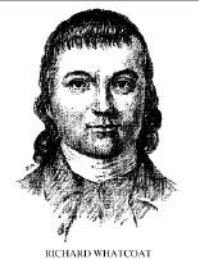
MondayMarylandWe came to Baltimore, and Tuesday, 6, we opened our General Conference,1 which held until Tuesday, 20. We had much talk, but little work: two days were spent in considering about Doctor Coke’s return to Europe, part of two days on Richard Whatcoat for a bishop, and one day in raising the salary of the itinerant preachers from sixty-four to eighty dollars per year.2 We had one hundred and sixteen members present. It was still desired that I should continue in my station. On the
ASB_VOL2.PDF, p. 218
Notes (2)
- For months before this General Conference convened in Light Street Church, Baltimore, Bishop Asbury in his Journal, in private correspondence and conversation, had signified his intention to resign. He explained that his impaired health made him unequal to rapidly increasing episcopal demands. The crisis was met by continuing Asbury, electing Richard Whatcoat (1736-1806) a bishop with equal status, and notifying the English Conference that Dr. Thomas Coke, who was only on loan to them, should be available for American service on demand. (Lee, op. cit., 264-71; Boehm, op. cit., 35-43; Smith, op. cit., 349, 350; Tigert, op. cit., 285, 291; see letter to British Conference, May 9, 1800.) ↩
- Because of the number and the quality of itinerants who had been obliged to desist from traveling for want of adequate support, Bishop Asbury was eager to remedy what had become an acute problem. For the first time a General Conference directed increased allowances for preachers and their families, recommended that parsonages be provided and that the support of the bishops should be prorated among the seven annual conferences. ↩
18 May 1800
Maryland18th of May, 1800, elder Whatcoat was ordained to the office of a bishop, after being elected by a majority of four votes more than Jesse Lee. The unction that attended the word was great—more than one hundred souls, at different times and places, professed conversion during the sitting of conference. I was weary, but sat very close in conference. My health is better than when we began.
ASB_VOL2.PDF, p. 218
20 May 1800
TuesdayMarylandI came to Greenwood (Philip Rogers’s), and Wednesday, 21, I preached at Patapsco Neck chapel, on Psalm 80:17-19. We called at Tobias Stansbury’s,1 and dined, talked, and prayed with his afflicted wife, who felt her confidence in God. We then came on to Perry Hall, and were received with great openness of heart. Mrs. Gough is, I hope, dying to the world, and living to Jesus. Mr. Gough is most affectionately kind.
ASB_VOL2.PDF, p. 218
Notes (1)
- Tobias Stansbury, grandson of Nathan Perigau, lived in a house erected in 1777. It was situated on the old Trapp road, three miles from Baltimore, and was a frequent preaching place of Asbury. (Lee, Luccock, Dixon, op. cit., 223.) ↩
22 May 1800
ThursdayMarylandWe came to Gunpowder Neck: bishop Whatcoat preached and I exhorted: I trust the Lord will return to this house. I believe some felt the word this day. We went home with Stephen Watters,1 once more, after an absence of sixteen years.
ASB_VOL2.PDF, p. 218
Notes (1)
- Stephen Watters, son of Godfrey, was a brother to the traveling preachers, Nicholas and William Watters. (See Journal entry for February 21, 1774.) ↩
23 May 1800
FridayMarylandWe came to Abingdon: the bricks are fallen down;1 the probability is we shall not rebuild with hewn stones. My text was Isaiah 40:10: “Behold the Lord God will come with strong hand, and his arm shall rule for him; behold his reward is with him, and his work before him.” This text was given me by opening my Bible at the sitting of the General Conference, when I trembled a little for the ark. The people have improved the chapel here; it was not burnt with the college, although it was within twenty yards. We lodged at William Smith’s; it is above twenty years since I lodged at his father’s house.
ASB_VOL2.PDF, p. 218
Notes (1)
- Reference is to the ruins of Cokesbury College, which was destroyed by fire on December 4, 1795. Markers now indicate the foundation of the three-story brick building which was forty by a hundred feet in dimension. The chapel to which Asbury referred is succeeded by the present Cokesbury Church, on or near the same site in Abingdon, Harford County, Maryland. ↩
24 May 1800
SaturdayMarylandWe were at Bush Forest chapel—the most ancient in this circuit: my subject was Isaiah 35:3-6.
Sabbath day. We were crowded, as it was quarterly meeting. I went home with J.W. Dallam: I walked to the grave of my once dear Sally, his former wife.
ASB_VOL2.PDF, p. 219
26 May 1800
MondayMarylandI crossed Susquehanna, and came to Northeast: we stopped a night at Howell’s;1 brother Whatcoat preached.
ASB_VOL2.PDF, p. 219
Notes (1)
- In the home of Captain William Howell, in or near Northeast, Cecil County, Maryland, Asbury was a frequent guest. In the deed dated October 4, 1794, the name of William Howell appears as a trustee of the new church at Northeast. (Johnston, op. cit., 449.) ↩
27 May 1800
TuesdayMarylandWe rode up to Back Creek (a Bethel indeed); at four o’clock, I gave a brief discourse on 1 Corinthians 7:29-31. The people sang and leaped for joy of heart; they have beaten down strong drink, and the power of God is come. We lodged at John Canaan’s.1
ASB_VOL2.PDF, p. 219
Notes (1)
- John Canaan, usually spelled Carnan by Asbury, is associated with Methodism in Cecil County before 1800. His home was on Bohemia Manor, but his church affiliation is attributed to both Bethel and Bethesda churches. In 1805 he was a trustee of Bethel Church and parsonage. (Johnston, op. cit., 451; Bangs: Life of Freeborn Garrettson. 246.) ↩
28 May 1800
WednesdayMarylandAt the Manor chapel we had a great time; my soul was divinely refreshed. We lodged at Gov. Bassett’s.
ASB_VOL2.PDF, p. 219
29 May 1800
ThursdayMarylandWe came down to Bridgetown,1 at the head of Chester River. In the evening I lectured upon Luke 19:44: “Because thou knewest not the time of thy visitation.” I gave the people one caution:—I observed, First, What always marked a time of visitation to a people collectively and individually. Secondly, What our Lord must mean by knowing or not knowing this time of visitation; that it was the improving the time for all the valuable purposes designed. Thirdly, The dreadful consequences which will undoubtedly follow the not knowing, not improving a time of visitation; that we might fear that every calamity which might come on us in time was judicial,—and eternal torment. I have been led to meditate upon what are the happy consequences of a revival of religion; pure doctrine, strict discipline, great harmony, love, and life. DELAWARE
ASB_VOL2.PDF, p. 219
Notes (1)
- Bridgetown, the present Millington, was formerly Head of Chester, Kent County, Maryland. Early preaching places were established in the homes of the Ferrells and the William Burtons. (Hallman, op. cit., 317.) ↩
30 May 1800
FridayDelawareWe were at Blakiston’s chapel: brother Whatcoat preached; I gave a short exhortation; and several of the preachers joined in prayer. I rode in the afternoon into Dover forest, and lodged at Cox’s, formerly Lockwood’s; but he is gone hence: the people could remember that I had not been in this neighbourhood for fifteen years.
ASB_VOL2.PDF, p. 220
31 May 1800
SaturdayDelawareI preached at the forest chapel, on Habakkuk 3:2, and rode to Dover that evening.
ASB_VOL2.PDF, p. 220
1 June 1800
SundayDelawareThis was a day to be remembered: we began our love feast at half-past eight; meeting was continued (except one hour’s intermission) until four o’clock, and some people never left the house until nearly midnight: many souls professed to find the Lord. In the evening I rode up to Duck Creek, to meet the conference.1
ASB_VOL2.PDF, p. 220
Notes (1)
- When Bishop Asbury arrived, preliminary services of the Philadelphia Conference in the present Smyrna had been in progress for days. He and Bishop Whatcoat, with others, were guests of George Kennard, a “great business man and a thorough Methodist.’’ At this conference Whatcoat presided for the first time. Jesse Lee was chosen secretary. Accounts agree that for sustained spiritual manifestation few annual conferences have approached this session. (Boehm, op. cit., 44-49; Lee: The Life and Times of Jesse Lee, 383.) ↩
2 June 1800
MondayDelawareWe had sixty-six preachers, all connected with the business of conference: we sat closely six hours each day, until Friday 6, when about nine o’clock the conference rose. One hour was spent in public each day; but the people would not leave the house day nor night: in short, such a time hath been seldom known: the probability is, that above one hundred souls were converted to God. The stationing of the preachers was a subject that took my attention; it was with the greatest difficulty I could unbend my mind from this one hour, yea, many minutes, by day or night, until I read the plan. I felt myself bound in spirit, and perhaps conscience also, to push on to hold the next Sabbath in Philadelphia. Bishop Whatcoat and myself hasted to Wilmington on Friday.
PENNSYLVANIA
On Saturday we dined with Mary Withy;1 now raised above her doubts, and rejoicing in God; through her instrumentality a small society is raised in Chester,2 and she hath fed the Lord’s prophets twenty-eight of twenty-nine years. We came onto Schuylkill;3 and thence to Philadelphia.
ASB_VOL2.PDF, p. 220
8 June 1800
SundayNew JerseyI preached morning and evening, at Fourth street;1 now making what it ought to be, and seated properly. I preached at the African church,2 on 2 Peter 3:17, 18, and at St. George’s, on 1 Peter 1:5-7. I spoke only once at the conference; my subject was Psalm 29:9: “And in his temple doth every one speak of his glory”; truly fulfilled at that time and place. Surely we may say our Pentecost is fully come this year, when we recollect what God hath wrought in Edisto in South, and Guilford in North Carolina; in Franklin, Amelia, and Gloucester, in Virginia; in Baltimore, and Cecil, in Maryland; in Dover, Duck Creek, and Milford, in Delaware! My health is restored, to the astonishment of myself and friends. Monday and Tuesday in Philadelphia.
NEW JERSEY
We rode to Burlington, through excessive heat and dust, in company with Richard Whatcoat and Jesse Lee: the latter wished to preach in the evening and go on in the morning. The Baptist minister had appointed a lecture, and invited brother Lee to take his place: he accepted, and preached an appropriate sermon, on Acts 10:25.
ASB_VOL2.PDF, p. 221
12 June 1800
ThursdayNew JerseyI gave a lecture in Burlington on 1 Corinthians 7:29-31: this is an awful place.
ASB_VOL2.PDF, p. 221
13 June 1800
FridayNew JerseyWe came through heat and dust to New Mills:1 we were comforted in God; brother Whatcoat preached; I made a short discourse on Hebrews 10:32. I wished some to look back to former feelings, duties, experiences, and days. We have ridden above one hundred miles since our departure from Duck Creek.
ASB_VOL2.PDF, p. 221
Notes (1)
- New Mills is the present Pemberton, New Jersey. ↩
14 June 1800
SaturdayNew JerseyWe had to stretch along through Julia, Job’s, and Reckla’s towns, to Cross Creek.1 We stopped and fed at Mr. Joseph Lovell’s; where we refreshed ourselves for an hour: we then came on to M. Moore’s,2 where I preached on Romans 12:1, 2. We then took the road through Allentown, to Joseph Hutchinson’s; and came in, weak and wearied, about five o’clock.
ASB_VOL2.PDF, p. 221
Notes (2)
- Julia must have been Juliustown in the present Springfield Township. Jobstown was in the same township. Recklesstown was on the “Recklesstown pike” on the road to Shrewsbury in Burlington County. (Woodward and Hageman: History of Burlington County, 54; Gordon’s Gazetteer of New Jersey, 164.) Cross Creek was evidently one of the small tributaries of Black Creek in Fairfield Township, Burlington County. (Gordon’s Gazetteer, 124.) ↩
- Moore lived at Lumberton, near Moorestown. The latter place had been laid out by Thomas Moore in 1772. ↩
15 June 1800
SundayNew YorkAt Milford, I gave a brief discourse, on Romans 13:11: we attended at Mr. Ely’s1 in the evening; a few souls there appeared to be deeply impressed with religious truth.
ASB_VOL2.PDF, p. 222
Notes (1)
- John, Richard, Joshua, and William Ely all had farms at Windsor in Middlesex County. (New Jersey Archives, Abstracts of Wills, VII, 75; VIII, 125.) ↩
16 June 1800
MondayNew YorkMy horse drove heavily; and I did not get in to Brunswick until one o’clock. We had a meeting; and under exhortation many felt the word. We then hasted on to Mr. Drake’s,1 near Amboy, where many were waiting: at five o’clock I gave an exhortation, and I believe it was felt.
NEW YORK
ASB_VOL2.PDF, p. 222
Notes (1)
- This was doubtless Benjamin Drake who lived at Piscataway. (See Journal entry for June 12, 1799.) ↩
17 June 1800
TuesdayNew YorkWe were at Staten Island, where there is a neat meeting house,1 and as genteel, well-dressed a people as in New York. My subject was Habakkuk 3:2. Appearances were rather unfavourable: I was very unwell, and came back to Mr. Drake’s the same evening.
ASB_VOL2.PDF, p. 222
Notes (1)
- This meetinghouse was the Wood Row (present Woodrow) Methodist Church, built in 1787. (See Journal entries for November 7, 1771; September 2, 1791.) ↩
18 June 1800
WednesdayNew YorkWe rode in haste to New York; and on Thursday, 19, we opened our conference; about forty preachers present. We had some knotty subjects to talk over, which we did in great peace, plainness and love. Friday and Saturday we were closely confined to business. Sabbath. My subject at the old church was Romans 12:19-21. In my introduction I observed that the text was quoted from Leviticus 19:18, and Proverbs 25:21, 22, that it might discover to us what veneration the New Testament writers had for the Old; and what was required in a believer, under that dispensation. Vengeance is not in our province; we cannot, in civil, much less in sacred causes, be our own judges or jurors: if we must feed an enemy, and not only forgive him an injury, but do him a favour, surely then we ought to love a friend, a Christian, and more abundantly a minister of Christ. This day we made a general collection for the support of the travelling ministry.
ASB_VOL2.PDF, p. 222
23 June 1800
MondayNew YorkOur conference concluded its sitting. The deficiencies amount to six hundred and ninety dollars: the moneys collected and the draft on the chartered fund, amounted to four hundred and five dollars. A motion was made to move the next yearly conference more into the centre of the work, but it was lost.
ASB_VOL2.PDF, p. 222
24 June 1800
TuesdayNew YorkI have now a little rest. We have had a mighty stir in the Bowery church, for two nights past, until after midnight; perhaps twenty souls have found the Lord. Bishop Whatcoat preached the ordination sermon in the afternoon at the Bowery church. I have now a little time to unbend my mind from the stations; but still my work is not done. Tuesday, Wednesday, Thursday, and Friday, I employed myself in reading, writing and visiting.
ASB_VOL2.PDF, p. 222
28 June 1800
SaturdayConnecticutWe left the city; and rode twenty-six miles through heat, and plagued by the flies, to my old home at the widow Sherwood’s: but my dear Betsy Sherwood my nurse, is gone, I trust, to glory.
ASB_VOL2.PDF, p. 223
29 June 1800
SundayConnecticutWe had a remarkably cool day, after a great storm of rain and hail. I attempted to preach at Sherwood chapel, on 1 Corinthians 15:34: “Awake to righteousness and sin not; for some have not the knowledge of God. I speak this to your shame.” I observed that the apostle, in Romans 13:11; Ephesians 5:14; 1 Thess, 5:6, and in the text, had indicated a sleep which professional and real Christians might fall into—an awful insensibility and inactivity to spiritual things, so as to bring an amazing stupor on all the powers of the soul; so that it would be insensible to righteousness, which is religion—the justifying and sanctifying, and practical righteousness of a gracious, wakeful soul: “Some have not the knowledge of God”; living in sin, neglecting duty, and without the knowledge of God; ignorant of the fear, favour, nature and love of God. Brother Whatcoat and John Wilson both spoke; souls were quickened. In the afternoon, at New Rochelle, brother Whatcoat preached, and I gave an exhortation; many attended. I feel as if there would be a revival of religion in this circuit this year.
ASB_VOL2.PDF, p. 223
30 June 1800
MondayConnecticutWe came to Byram Bridge, and at Banks’s1 we had a crowded house, and a feeling time; the aged people were very attentive. CONNECTICUT
ASB_VOL2.PDF, p. 223
Notes (1)
- Byram Bridge was just east of Port Chester, New York, on the boundary between that state and Connecticut. Bryan B. Banks lived on the east side of the river where the old Boston Post Road crossed. (See Journal entry for May 22, 1809.) ↩
1 July 1800
TuesdayConnecticutIn consequence of our circumlocutory motions we have ridden about fifty-five miles since we left the city of New York. We came to Stamford, where brother Whatcoat gave a sermon, on, “The faith and choice of Moses.” I had only time to speak a few words, on Luke 19:44.
ASB_VOL2.PDF, p. 223
2 July 1800
WednesdayConnecticutWe rode on to Norwalk; stopped an hour at brother Day’s,1 and thence rode on to Fairfield. It was a cool day. We had an elegant view: the fields in full dress, laden with plenty; a distant view of Long Island and the Sound; the spires of steeples seen from distant hills— this country is one continuity of landscape. My mind is comforted and drawn out in prayer. We had not time to feed nor rest. It was with some exertions we came in time to Joseph Hall’s, at Poquonak. After we got a little refreshment and rest, I gave them a short discourse, on Luke 10:2. Strength and time failed me, and I could not finish and apply as I wished.
ASB_VOL2.PDF, p. 223
Notes (1)
- Absalom Day was a potter who lived at the “Old Well.” He was one of the early local preachers and a local deacon. He died in 1843. (Boehm, op. cit., 240; Hill: History of Methodism in Norwalk, Conn.) ↩
3 July 1800
ThursdayConnecticutWe came to Stratford, and stopped at brother Elnathan Wheeler’s.
ASB_VOL2.PDF, p. 224
4 July 1800
FridayConnecticutThe weather is damp and very warm. We came on to New Haven, where they were celebrating the Fourth of July. I fear some of them have broken good order, and become independent of strict sobriety. Bishop Whatcoat preached in the Sandemanian meeting house purchased by the Methodists.
ASB_VOL2.PDF, p. 224
5 July 1800
SaturdayConnecticutWe rode through excessive heat, over rocks and hills, to North Bristol, twenty miles. I discoursed with some liberty on Acts 26:18.
ASB_VOL2.PDF, p. 224
6 July 1800
SundayConnecticutWe rode six miles to Ponsett’s1 new meeting house. A revival of religion has begun here; a dozen souls have professed to find the Lord, and several young people are under gracious visitations, and the aged are exceedingly cheered at the prospect. Bishop Whatcoat preached in the morning, and in the evening I made some improvement from 1 Peter 2:11, 12; after which we administered the sacrament. We were engaged five hours in public exercises: the day was very warm. We have travelled since last Saturday week one hundred and forty miles.
ASB_VOL2.PDF, p. 224
Notes (1)
- Ponsett was a part of the present town of Killingsworth, Connecticut. An Episcopal church there still bears the name of Ponsett. ↩
7 July 1800
MondayConnecticutWe rode sixteen miles to Hadley. The day was awfully warm until one o’clock, when a gust came up of wind and rain; we ran from house to house, and escaped being much wet; we stopped at Mr. Woods’s. Tuesday we rode on to New London; twenty miles of the way the roads were exceedingly rocky. My soul was kept in peace, but under great temptations of various kinds. We crossed Connecticut River at Chapman’s Ferry, near Old Haddam.1 Where the roads here are improved they are made for ages, and are much superior to those in the South or West.
ASB_VOL2.PDF, p. 224
Notes (1)
- There is some confusion at this point. The Journal indicates that Asbury rode to New London and then crossed the river at the ferry near Old Haddam. But on this route he would have passed Old Haddam long before he reached New London, crossing the river on the way. ↩
8 July 1800
TuesdayConnecticutBishop Whatcoat held forth in the new house in New London; his subject was, “With him is plenteous redemption.” I gave a discourse upon, “Christ, the author of eternal salvation to all them that obey him.”
ASB_VOL2.PDF, p. 224
10 July 1800
ThursdayRhode IslandWe came on to Norwich Landing.1 I preached in the neat, elegant Episcopal church, on Acts 3:26. I felt uncommonly set at liberty: we had a very decent, attentive, well-behaved congregation. From here we hasted on to Norwichtown. Bishop Whatcoat preached. We had a most agreeable ride on the turnpike road, upon each side beautifully smiling with variety and plenty; the stage passed us like a whirlwind.
ASB_VOL2.PDF, p. 225
Notes (1)
- Norwich Landing was originally below the falls at the head of the Yantic basin where Elderkin’s Mill was located. Later the name was transferred to the junction of the Yantic and Shetucket rivers. Here a community called Rocky Point or The Landing grew up, which in time became New Chelsea or Chelsea Society. (History of Norwich, ch. 21.) ↩
11 July 1800
FridayRhode IslandWe came to Preston, and were kindly entertained at Isaac Herrick’s. It was the very height of rye harvest, yet many came together. I was greatly led out on the great salvation. I was refreshed in soul and body, and rode on in the evening to Nathan Herrick’s. The simplicity and frugality of New England is desirable—you see the woman a mother, mistress, maid, and wife, and in all these characters a conversable woman; she seeth to her own house, parlour, kitchen, and dairy; here are no noisy Negroes running and lounging. If you wish breakfast at six or seven o’clock there is no setting the table an hour before the provision can be produced.
ASB_VOL2.PDF, p. 225
12 July 1800
SaturdayRhode IslandWe took our departure for Rhode Island through Plainfield. The weather is still excessively warm; the roads sandy, stony, and rocky, notwithstanding the turnpike. We passed Sterling, the last town in Connecticut.
RHODE ISLAND
We wandered a mile or two out of our way, and had to pay for it, by going a cross path: we made it twenty-six miles to General Lippit’s.1 The general hath built a neat chapel for the use of the Methodist Episcopal Church near his house. I was taken with one of my bilious eruptions through the night.
ASB_VOL2.PDF, p. 225
Notes (1)
- General Christopher Lippit, a Revolutionary officer, lived in Cranston, Rhode Island, about three miles from the village which bears his name. His home was a center for the Methodist preachers, and on quarterly occasions it was said that thirty guests were lodged in his fifteen beds. He sometimes conducted services, removing his boots when he entered the pulpit to be unshod in the presence of God. He was a venerable figure with long white hair in braids and his beard carefully arranged. The chapel built by him was abandoned about twenty-five years later because a debt of seventy-two dollars could not be paid. (Miller: History of the New England Southern Conference, III, ix, 10:136, 137.) ↩
13 July 1800
SundayRhode IslandRichard Whatcoat preached in the morning. In the afternoon my subject was Exodus 20:24: “In all places where I record my name I will come unto thee, and I will bless thee.” It was a feeling time: although I was very unwell all the day, I could not stand back from duty.
ASB_VOL2.PDF, p. 225
14 July 1800
MondayRhode IslandWe came on our way to Boston, through Providence; here we did not stop—the time is not yet come. We stopped to feed at a house that was not very agreeable to me, and I was glad to come off without dining. MASSACHUSETTS
We came to Deacon Stanley’s, at Attleborough, where we took some refreshment, and reached Mr. Guild’s, and took lodging.
ASB_VOL2.PDF, p. 225
15 July 1800
TuesdayMassachusettsWe came through Wrentham, Walpole, Dedham, and Roxbury to Boston: it was a damp day, with an easterly wind, unfriendly to my breast. As they were about finishing our church we could not preach in it. The new State house here is, perhaps, one of the most simply elegant in the United States. We made our home at Edward Haynes’s, late from England, where we had most agreeable accommodations after our toil.
ASB_VOL2.PDF, p. 226
17 July 1800
ThursdayMassachusettsWe have dry weather. We came through much dust to Lynn.
ASB_VOL2.PDF, p. 226
18 July 1800
FridayMassachusettsWe sat in conference; there were twenty-one members present; we had great peace and union.
ASB_VOL2.PDF, p. 226
19 July 1800
SaturdayMassachusettsThe conference rose, after voting the session of the next yearly conference to be held at Lynn. And now the toil of six conferences in seven months, and the riding of thirteen hundred miles, is over. I found some difficulty in stationing the married preachers.
ASB_VOL2.PDF, p. 226
20 July 1800
SundayMassachusettsWe had an elaborate ordination sermon from Matthew 9:36-38: “But when he saw the multitudes, he was moved with compassion on them, because they fainted, and were scattered abroad, as sheep having no shepherd,” &c. There had been a long drought here, and nature seemed as if she were about to droop and die. We addressed the throne of grace most fervently and solemnly, and had showers of blessings. Whilst I was preaching the wind came up and appeared to whirl round to every point, and most gracious rain came on: this I considered as a most signal instance of Divine goodness.
ASB_VOL2.PDF, p. 226
21 July 1800
MondayMassachusettsWe came to Boston, and preached in the Tabernacle, now nearly finished, on Hebrews 3:12-14. We were generously entertained at Edward Haynes’s.
ASB_VOL2.PDF, p. 226
22 July 1800
TuesdayMassachusettsBishop Whatcoat preached in Boston, from Psalm 116:7. Wednesday we came thirteen miles to Waltham, where we had a meeting; the subject was Revelation 21:6, 7.
ASB_VOL2.PDF, p. 226
25 July 1800
FridayConnecticutWe rode through Weston, where is a grand steeple, porches, and even stalls for the horses; and it is well if they do not make the Methodists pay to support their pomp. O! religion in New England! We came through Needham, Sherburne, and Holliston, and made it thirty miles over Crook’s Hills, through excessive heat. We had not time to stop to feed, as we had appointed meeting at Milford, where we arrived a little after one o’clock. I was obliged to let brother Whatcoat ride in the carriage, or I fear he would have fainted; this made me low-spirited, and unfit to answer questions.
CONNECTICUT
ASB_VOL2.PDF, p. 227
26 July 1800
SaturdayConnecticutWe had to ride through excessive warmth thirty miles to Thompson’s, but we took the day for it: we got to Capt. Jonathan Nicholls’s1 about six o’clock, where we have a house built, and some ground to set our feet upon. I have been of late powerfully tempted, and distressed in mind and body. We had a finely-dressed congregation—a good name is a great matter with these people. O Baxter! are these thy apostate children? Will Methodism ever live in such whited walls and painted sepulchres as these people, who delight to dwell insensible to the life of religion, and closed up in their own formality and imaginary security? We have now returned to the first town in Connecticut.
ASB_VOL2.PDF, p. 227
Notes (1)
- See Journal entry for August 6, 1795. ↩
27 July 1800
SundayConnecticutI preached at the new house in Thompson: my subject was Mark 8:34.
I. I observed the harmony of the evangelists, Matthew and Luke with Mark.
II. That our Lord had given the clusters of the grapes of the promised land in blessings and promises.
III. He had given such demonstrations of his power upon the bodies of men; the dead were raised, the hungry fed, the lepers cleansed, the lame and the blind were restored, the wind and the sea were at his command. IV. He opened the distinguishing conditions of discipleship; the denial of self in every temper and affection that is evil. They that seek to save their lives by denying Christ, shall lose soul and body; if it is through pride and shame, Christ will not dishonour himself by owning such in the day of judgment.
Bishop Whatcoat preached in the afternoon on, “Acquaint now thyself with him, and be at peace,” &c.
ASB_VOL2.PDF, p. 227
28 July 1800
MondayConnecticutWe rode sixteen miles to the north end of Eastford. We have travelled nearly one hundred miles since our departure from Lynn. My subject at Joseph Work’s was Matthew 5:11: “Blessed are ye when men shall revile you and persecute you, and shall say all manner of evil of you falsely for my sake.” We lodged at Nathan Palmer’s. I stopped a few minutes at Mr. Woodward’s, in Ashford. We came on to Coventry, twenty miles. We stopped at John Searles’s, and were exceedingly well accommodated, both man and horse.
ASB_VOL2.PDF, p. 228
30 July 1800
WednesdayConnecticutWe rode to Mr. Spencer’s,1 in Hartford. My mind is in peace; but I have uncomfortable feelings in my body. Here I met brothers Bostwick and Borrough.2 We have a house built in Spencertown3 for the Lord, and now they are building one for the Lord’s servants—for the married preachers to live in who are sent to the circuit.
ASB_VOL2.PDF, p. 228
Notes (3)
- Thomas Spencer lived on Spencer Street in Spencertown, now part of Manchester, Connecticut. ↩
- Shadrach Bostwick was the presiding elder. Brother Burrough may have been Banks M. Burrough, who was admitted on trial the following year and assigned to Sussex Circuit in Virginia. ↩
- See note under August 31, 1794. ↩
31 July 1800
ThursdayConnecticutWas excessively warm; we made it a little less than thirty miles to Bristol; we stopped to feed our horses, but neglected ourselves. When we came to Samuel Smith’s we were nearly outdone by excessive heat and hunger. This day we crossed Connecticut River, and passed the cities of Hartford and Farmington.
ASB_VOL2.PDF, p. 228
1 August 1800
FridayConnecticutFreeborn Garrettson came up with us: he attended the funeral of the venerable mother Livingston,1 who was suddenly and safely called home, aged seventy-eight, removed by a paralytic, and probably it was apoplectic also: perhaps it was about thirty-four years ago that this godly woman was awakened under the first sermon the Rev. Dr. Sadly preached in the Reformed Low Dutch church in New York, as she told me; nor she alone, but six or eight other respectable women. Madam Livingston was one that gave invitation to the Methodist preachers to come to Rhinebeck, and received them into her house; and would have given them more countenance had she been under no other influence than that of the Spirit of God and her own feelings. I visited her one year before her death, and spent a night at her mansion; she was sensible, conversable, and hospitable.
ASB_VOL2.PDF, p. 228
Notes (1)
- Freeborn Garrettson was the presiding elder in New York. His mother-in-law, Margaret Beekman Livingston, wife of Judge Robert T. Livingston of the New York Supreme Court, had died in June at Kingston, New York. Garrettson’s wife was Catherine Livingston, of whom it was said she could have married George Washington but preferred a Methodist preacher. Their home was at Rhinebeck, New York. ↩
2 August 1800
SaturdayNew YorkWe attended the quarterly meeting for Litchfield circuit: my subject was 2 Peter 3:17, 18. I had liberty in preaching, and felt some tenderness of heart, and evinced it with weeping eyes.
ASB_VOL2.PDF, p. 229
3 August 1800
SundayNew YorkWe had a living love feast; some from Waterbury were fervent in spirit, serving the Lord. We had a crowded congregation, a close day, and the house was shut up. In consequence of my breast being weak, I declined speaking in public. Bishop Whatcoat preached, and Freeborn Garrettson exhorted. Our meeting began at eight o’clock in the morning, and continued with a few minutes’ intermission, until two in the afternoon; after which we came off, over dreadful roads, twelve miles to Torringford. I was pleased to see a house bought and fixed for brothers Augustus Jocelyn, and Elijah Batchelor,1 the stationed preachers of the circuit, and their wives. These brethren we left behind to improve in the after part of the Sabbath, and quarterly meeting.
ASB_VOL2.PDF, p. 229
Notes (1)
- Augustus Jocelyn was stationed at Redding and Elijah Batchelor at Litchfield. (See Minutes, 1800.) ↩
4 August 1800
MondayNew YorkWe came on and stopped at Goshen, at Captain Wright’s. The people flocked together at a short warning and I gave a discourse on Isaiah 35:3-6; after which we dined, and came on across the hills and over dreadful rocky roads to Cornwall, where brother Whatcoat preached in the meeting house, on, “We know that we are of God, and the whole world lieth in wickedness.”
ASB_VOL2.PDF, p. 229
5 August 1800
TuesdayNew YorkWe had another tolerable siege over the Housatonic River and hills to Sharon. Here brother Whatcoat preached on, “The Lord knoweth how to deliver the godly out of temptation, and to reserve the unjust to the day of judgment to be punished.” I gave an exhortation, and then we came rapidly, fifteen miles, to C. Levie’s, in the Nine Partners. NEW YORK
ASB_VOL2.PDF, p. 229
6 August 1800
WednesdayNew YorkWe came to Row’s: Bishop Whatcoat preached on 1 John 4:17. I gave an exhortation: we then came on to Robert Sands’s,1 and lodged all night. We came on to Freeborn Garrettson’s new design, upon the Rhinebeck Flats. He hath a beautiful land and water prospect, and a good, simply elegant, useful house for God, his people, and the family. We have ridden between eighty and ninety miles since last Sabbath; not less than five hundred and fifty since we departed from New York; and one-third of the roads were rocky and very uneven. I read a book of about five hundred pages, the author of which is a curious writer. Friday and Saturday, 8, 9. We regaled ourselves and horses upon the pleasant banks of the Hudson; where the passing and repassing of boats and small craft, perhaps fifty in a day, is a pleasant sight.
ASB_VOL2.PDF, p. 229
Notes (1)
- Robert Sands was a brother-in-law of Chancellor Robert Livingston. ↩
10 August 1800
SundayNew YorkWe had a sermon, and administered the sacrament at brother Garrettson’s; and notwithstanding public worship was held at the Dutch Church at the same hour, we had a large congregation. Bishop Whatcoat and myself filled up the service of the day.
ASB_VOL2.PDF, p. 230
11 August 1800
MondayNew YorkI rested and visited Dr. Tillotson,1 at his very elegant country seat, beautifully situated. The house is finely set round with trees, and there is a charming view of the North River. I was unwell internally. I must always take great heed to what I eat.
ASB_VOL2.PDF, p. 230
Notes (1)
- Mrs. Tillotson was one of the Livingston sisters, and it was at this home that Garrettson made his first contact in the vicinity in 1789. ↩
12 August 1800
TuesdayNew YorkWe came through Poughkeepsie—no place for Methodism. We stopped at Elijah Morgan’s; brother Thacher1 was preaching when we came in. We have ridden twenty-five miles this day, and dined in the road upon a watermelon that Mrs. Tillotson was kind enough to give us as we came by her house. I was so unwell, that I had but little appetite for anything else.
ASB_VOL2.PDF, p. 230
Notes (1)
- William Thacher (1769-1856) was born in Connecticut and converted in Baltimore. He became a local preacher in 1795 at New Haven, Connecticut, where his family was among the founders of Methodism. He held numerous appointments in New York, New England, and Philadelphia, superannuating in 1846 and dying ten years later. ↩
13 August 1800
WednesdayNew YorkWe came on twenty-five miles to Cortlandt town,1 where we saw the aged, venerable pair, the lieutenant governor and his lady: he is in his eightieth, and she in her seventy-eighth year. I had a very rocky ride over the mountains of Peekskill. I have great and sore temptations at times, but God is with me; I trust through grace to overcome them all. We stopped at Warren’s;2 fed, talked, prayed, and refreshed ourselves a little.
ASB_VOL2.PDF, p. 230
14 August 1800
ThursdayNew YorkThis day is very warm. I preached at Peekskill town, upon the great salvation. Brother Whatcoat preached at Croton. We lodged at General Philip Van Cortlandt’s.
ASB_VOL2.PDF, p. 230
15 August 1800
FridayNew YorkAt the Plains, Richard Whatcoat preached: I gave an exhortation. We then rode on in haste to the widow Sherwood’s.
ASB_VOL2.PDF, p. 230
16 August 1800
SaturdayNew YorkWe pushed on with great courage, towards New York; but when within six miles of the city my horse blundered twice, and then came down with great force and broke the shaft. I got out, and my horse recovered from his fall. A smith’s shop being at hand, the shaft was mended in an hour; and we came into New York and found our service was wanting in the city, there being here only two preachers, and one of them disabled.1
ASB_VOL2.PDF, p. 230
Notes (1)
- The appointments had been John McClaskey, Jesse Lee, and Sylvester Hutchinson. Lee’s appointment was only nominal as to New York, actually covering a wide general assignment he was to pursue. (Lee’s Memoirs, 273; Seaman, op. cit., 151 n.) ↩
17 August 1800
SundayPennsylvaniaWe had much rain; the streets flowing with water like streams. I gave them a sermon at the Bowery church, on, “Who gave himself for us that he might redeem us from all iniquity, and purify unto himself a peculiar people, zealous of good works”: and at the old church, John street, I spoke on, “But we are not of them who draw back unto perdition, but of them that believe to the saving of the soul.” It appeared most advisable to stay awhile on Monday, to have a new shaft put to the carriage. NEW JERSEY
We landed at Paulus Hook about half-past five o’clock, and pushed on to Newark.
ASB_VOL2.PDF, p. 231
19 August 1800
TuesdayPennsylvaniaWe came off at five o’clock, and reached Brunswick by twelve o’clock, where we dined and rested, and then continued on to Joseph Hutchinson’s, at Milford, forty-six miles. We had a pleasant and cool ride for the season.
ASB_VOL2.PDF, p. 231
20 August 1800
WednesdayPennsylvaniaWednesday, 20, we came on to Hulet Hancock’s.
PENNSYLVANIA
ASB_VOL2.PDF, p. 231
21 August 1800
ThursdayPennsylvaniaOn Thursday, 21, reached Philadelphia. I preached at St. George’s; and Bishop Whatcoat at the African church.
ASB_VOL2.PDF, p. 231
22 August 1800
FridayPennsylvaniaWe rode to the Valley;1 it was warm enough. Bishop Whatcoat preached at Daniel Meridith’s.2
ASB_VOL2.PDF, p. 231
23 August 1800
SaturdayPennsylvaniaWe had a proper siege up to Sawderstown,1 and got in by four o’clock. I gave a discourse on Hebrews 10:38, 39.
ASB_VOL2.PDF, p. 231
Notes (1)
- This was Soudersburg, located about seven miles southeast of Lancaster. It was named after Benjamin and Jacob Souders, who were both Methodists. Benjamin was a local preacher, and the conference of 1804 was held in a private room of his home so that the meetinghouse, built in 1801, could be used for preaching. ↩
24 August 1800
SundayPennsylvaniaBishop Whatcoat preached at Martin Boehm’s church,1 on Psalm 72:16-20. We have now ridden, from Monday, one hundred and seventy miles. We lodged at Abraham Keaggay’s.2 Our Dutch Methodists3 are as kind and more lively than many of the American ones.
ASB_VOL2.PDF, p. 231
25 August 1800
MondayPennsylvaniaWe crossed Susquehannah River at M’Call’s ferry;1 it is narrow, but very deep and rocky. After feeding man and horse, we came on to Sittler’s mill, on Muddy Creek. As we were ten miles from the place we intended to reach, well wearied, and having bad roads before us, we brought to an anchor here for a night. What time I have had to read, write, or journalize, those who know the distance and difficulties that must have attended me through the last week may judge; it would be impossible for me to relate all the workings of my heart, but I trust my soul has been kept in patience and devotion.
MARYLAND
ASB_VOL2.PDF, p. 231
Notes (1)
- McCall’s Ferry in Lower Chanceford Township was one of the most important crossing places over the lower Susquehanna for a century and a half. ↩
26 August 1800
TuesdayMarylandWe came into Maryland:1 sometimes we had no roads, and at other times old ones that the wagons had left. Thus we bolted and blundered along the rocky rivulets until we came within sight of James Fisher’s. The meeting had been appointed at the widow Jolley’s:2 the house was large, and we had no small congregation; they came, some to see and some to hear. I had walked where I feared to ride and it was exceedingly warm; but I took courage when I saw the people: the portion which I gave them was 1 John 2:24, 25. We had hardly time to eat and breathe, before we had to beat a march over the rocks, eight miles to Henry Watter’s, upon Deer Creek. Brother Whatcoat went ahead and preached, and I came on time enough to exhort a little.
ASB_VOL2.PDF, p. 232
Notes (2)
- Apparently Asbury had entered Harford County, Maryland, over little used roads through the hills of York County, Pennsylvania, then known as the “York Barrens.” (Brumbaugh, op. cit., II, 163; Preston, op. cit., 266.) ↩
- Mrs. John Jolley’s husband had been captain of one of the militia companies organized north of Deer Creek in Harford County. ↩
27 August 1800
WednesdayMarylandI preached at the Forks meeting house (fifteen miles on a carriage road), warm as it was. Brother Whatcoat gave us a good sermon, upon Psalm 116:7: “Return unto thy rest, O my soul”; I exhorted very little. The heat continued. That evening we came with equal difficulties to Perry Hall; but the greatest trouble of all was that the elders of the house were not at home1: the walls, the rooms no longer vocal, all to me appeared hung in sackcloth. I see not the pleasant countenances, nor hear the cheerful voices of Mr. and Mrs. Gough! She is in ill health, and writes: “I have left home, perhaps never to return.” This intelligence made me melancholy. Mrs. Gough hath been my faithful daughter; she never offended me at any time.
ASB_VOL2.PDF, p. 232
Notes (1)
- The “elders” were Harry Dorsey and Prudence Gough. ↩
28 August 1800
ThursdayMarylandAt Perry Hall I preached on Matthew 11:28-30. I was visited by elders Bruce and Snethen. I heard the Reply to Mr. O’Kelly’s Apology,1 soft and defensive, and as little offensive as the nature of the case would admit. I was invited to town, with the assurance that there was no danger of the fever; but it was very bad at the Point. Friday evening, 29. I held forth in Light street, on Psalm 115:1: “Not unto us, O Lord, not unto us, but unto thy name give glory, for thy mercy and for thy truth’s sake.” My improvement was the application to Christians. First, To contemplate mercy and truth in the dealings of God to them in the Gospel. Secondly, That they should disclaim all glory to themselves. Thirdly, How the Jehovah God giveth glory to himself and how we should glorify him. Brother George Roberts2 wrote that they were a thousand strong in Baltimore. That there hath been a work in Annapolis is certain: indeed it begins to be more and more general in the towns, and in the country.
ASB_VOL2.PDF, p. 232
Notes (2)
- Nicholas Snethen wrote “A Reply to an Apology,” which was an answer to James O’Kelly’s “The Author’s Apology for Protesting Against the Methodist Episcopal Government.” The latter was supposedly first published in Pittsburgh and reissued in 1799. (MacClenny: Life of James O’Kelly, 178, 179.) ↩
- George Roberts, M.D. (1766-1827), was then stationed at Baltimore and Fell’s Point with Thomas Morrell, Philip Bruce, and Nicholas Snethen. (Roberts, op. cit., 89-106.) ↩
30 August 1800
SaturdayMarylandWe had a most severe ride, nearly twenty miles, to Daniel Elliott’s.1 At St. James’s chapel2 God hath begun to pour out his Spirit; and almost generally through Montgomery and Frederick circuits. Wilson Lee is all upon the wing in the work; glory! glory! glory! I will not speak of numbers or particular cases without more accurate information, which in my haste I cannot now obtain; but without doubt, some hundreds in three months have been under awakenings and conversions, upon the western shore, District of Maryland.
ASB_VOL2.PDF, p. 233
Notes (2)
- Daniel Elliott, whose name appears in the journals of early Maryland circuit riders, was an official member of the Montgomery Circuit. He lived at a place called Delaware Bottom about one mile east of the present St. James Church. In his home were held the services of the society which erected the first St. James Chapel. (Colbert’s Journal, December 24, 1793; Armstrong: Old Baltimore Conference, 509.) ↩
- The first St. James Chapel was completed about 1792. It stood about a hundred yards from the present St. James Methodist Church, which is about twenty miles west of Baltimore in West Friendship, Howard County. In the spring of 1957 a new educational building was added to the present edifice which was erected prior to 1892. (Centennial paper read by Judge H.O. Devries, 1892, St. James Church Archives.) ↩
31 August 1800
SundayMarylandAt St. James’s chapel I preached on Psalm 37:39, 40; we had an attentive, solemn sitting, and powerful prayer closed the whole. We dined, and rode on five miles to Henry Hobbs’s.1 The people heard of us, and ran together in the evening. Brother Whatcoat gave a lively discourse upon these words: “Thy children shall be all taught of God.” We had a very quickening season. Perhaps six hundred souls, in this district and in Baltimore, have been converted since the General Conference. Harford, Baltimore, Calvert, Federal, Montgomery, and Frederick feel the flame. Monday, we hobbled along to Clarkesburg. On the way dined at Joshua Pigman’s. Here I once more saw his brother Ignatius. Art thou he? Ah! But O! how fallen! How changed from what I knew thee once! Lord, what is man, if left to himself! Brother Whatcoat attended the meeting, and the people continued in meeting at Clarkesburg until the morning.
ASB_VOL2.PDF, p. 233
Notes (1)
- The Hobbs’ home was a preaching place as early as 1775. On August 4, 1777, Thomas Rankin rode twenty miles east from Seneca Creek en route to Baltimore to hold a quarterly meeting there. Hobbs’ home was then a preaching place on the Frederick Circuit. Griffith locates the residence several miles east of New Market, Frederick County. (Rankin Journal, May 3 and November 8, 1775, and August 4, 1777; Griffith: Map of Maryland, 1780 and 1794.) ↩
2 September 1800
TuesdayMarylandAt the Sugar Loaf, my subject was Luke 10:2- 4, compared with Matthew 13:16, 17, and 1 Peter 1:10-12; we were crowded: in the exhortations, prayers, and singing, the power came down, and the work went on until evening. I then rode to Mr. Morton’s.1 VIRGINIA
ASB_VOL2.PDF, p. 233
Notes (1)
- Thomas Morton conveyed land upon which Sugar Loaf Chapel was erected. He resided in the vicinity of Sugar Loaf Mountain in Frederick County. Between 1801 and 1809 his name appears among the official members living in Montgomery County. (Martz: The Clarksburg Methodist Church, 7; Armstrong, op. cit., 509.) ↩
3 September 1800
WednesdayMarylandWe came to Leesburg; some said, go this, and another that way: we made it nearly twenty miles, and were riding six hours, and crossed the Potomac at Conrad’s Ferry. Brother George1 was preaching: Bishop Whatcoat spoke upon, “He that believeth shall not make haste”; but we had to make haste, after I had ordained S. Welsh and Eskridge Hall to the deacon’s office. After we had dined, we rode twelve, if not fifteen miles, to the widow Rozzell’s: we came in about seven o’clock; and I gave a discourse on 1 Timothy 4:16. We have travelled about one hundred and fifty miles through Maryland; and we have had bad roads, but have met with good people. My soul hath been agonizing for a revival upon the western shore of Maryland for many years, and now the Lord hath sent it.
ASB_VOL2.PDF, p. 233
Notes (1)
- Enoch George was one of the presiding elders over Virginia circuits. (See Minutes.) ↩
4 September 1800
ThursdayVirginiaWe came to Rectortown: most distressing roads for eighteen miles. The gentry had made a dinner at a small distance from the town—a kind of green corn feast, with a roasted animal, cooked and eaten out of doors, under a booth. I was greatly wearied with the ride; but was animated while explaining 2 Corinthians 6:1. I then came to Benjamin Hitt’s. We have penetrated through Loudon and Fauquier counties in two days.
ASB_VOL2.PDF, p. 234
5 September 1800
FridayVirginiaWe stopped at the court house,1 and were richly entertained with a breakfast, at Mr. Johnson’s: then we rode on to Norman’s Bridge, and passed another old field-feast, with a race tacked to it. We came to Roger Abbott’s, upon Mountain Creek, in the forks of the Rappahannock river; and on
ASB_VOL2.PDF, p. 234
Notes (1)
- This was Fauquier Court House. ↩
6 September 1800
SaturdayVirginiaSaturday, 6, to Kobler’s; where many attended from different and distant parts: my text was 2 Timothy 2:15. We pursued our way six miles to the river, and lodged at a widow’s house, whose husband died in the Lord a few years ago. We had an awful Sabbath day’s journey, through part of Culpepper and Louisa; we came to Ferguson’s about half after one o’clock: the people were waiting in the warm sun; the house could not hold them: after a little rest, I cried, Now is the day of salvation. We had a hungry ride for thirty miles.
ASB_VOL2.PDF, p. 234
8 September 1800
MondayVirginiaWe rode to Lastley’s meeting house, eighteen miles: many people were gone to court—consequently, few at meeting; but the Lord was eminently present whilst I enforced Habakkuk 3:2.
ASB_VOL2.PDF, p. 234
9 September 1800
TuesdayVirginiaWe rode to Rivanna in Fluvanna county: I have seen the hot, warm, sweet, yellow, red, and now have passed the green springs. When we came within six miles of Magruder’s, brother Whatcoat being in the carriage, the hindmost brace gave way: I took hold of a sapling by the road-side, and put it under the body of the carriage, and brother Magruder mounted the horse, and we soon came to his house: that evening the breach was repaired. I took William M’Kendree’s horse, and went on fourteen miles, to Richard Davenport’s, in Amherst; where we were kindly and comfortably entertained.
ASB_VOL2.PDF, p. 234
10 September 1800
WednesdayVirginiaWe rode twenty miles through heat and over hills, to North Garden, Tandy Keys, Albemarle county. I was divinely assisted while I opened 2 Timothy 4:2. 1. Preach the word. 2. The application of it; that is, reprove, rebuke, exhort; to time his work; be instant, in season, out of season;—in the morning, noon, and evening of life;—when it is the winter, spring, summer, and autumn of the Church;—in her pleasing and unpleasing prospects.
ASB_VOL2.PDF, p. 235
11 September 1800
ThursdayVirginiaWe rode to New Glasgow, thirty miles; and were entertained most hospitably at Colonel Meredith’s.
ASB_VOL2.PDF, p. 235
12 September 1800
FridayVirginiaWe rode to Lynchburg, twenty miles. Samuel Mitchell1 had dinner provided in town, at Mr. Miller’s for the preachers. I preached in the Mason’s Hall—a warm day and place, on Titus 2:12. We then beat along to Samuel Mitchell’s, three miles of rude roads.
ASB_VOL2.PDF, p. 235
Notes (1)
- Samuel Mitchell, brother of Edward Mitchell, had become a local preacher in and around Lynchburg. The Mitchells lived in Bottetourt County. (Bennett, op. cit., 454.) ↩
13 September 1800
SaturdayVirginiaWe rode to New London Academy, sixteen miles, now under the direction of Samuel K. Jennings, a local preacher of ours: the institution belongeth to the Presbyterians and Episcopalians. R. Whatcoat preached: I was deprived of my rest the last evening, and very unwell; yet I gave a short discourse in exhortation. We have been going at such an unreasonable rate, that I have not had time to put pen to paper for a week together. Good news from the South District of Virginia: brother Jackson writes, “Two hundred souls have been converted this last quarter; there is a revival in all the circuits but two; and great union among the preachers and people.”1 I am kept in patience, faith, and love.
ASB_VOL2.PDF, p. 235
Notes (1)
- Jonathan Jackson was presiding elder of the district. His letter was written from the Cumberland Circuit on August 20, 1800, and is printed in Moore: Pioneers of Methodism in North Carolina and Virginia, 304. Asbury seems to have misinterpreted the word “but” to mean that the Bertie and Cumberland circuits had not shared in the revival, whereas Jackson meant to convey the idea of “especially.” ↩
14 September 1800
SundayVirginiaWe rode sixteen miles to Liberty, and preached in Bedford court house: I was sick in earnest. When I came up into the crowd, the people gathered around my carriage, as if I had had a cake and cider cart; this sight occasioned a kind of shock, that made me forget my sickness. After alighting, I went immediately to the throng in the court house, and founded a discourse upon Matthew 22:5. What great things the Gospel revealeth to mankind. First, The love of God. Secondly, The sufferings, and death, and merits of Christ. Thirdly, The gifts, extraordinary and ordinary, of the Holy Ghost: men make light of all the blessings of God, and of all the miseries and consequences of sin: they not only think lightly of, but are opposed exceedingly to them; “for the carnal mind is enmity against God,” and the things of God. I admired the attention and solemnity of the people; many of the men standing in and out of the house the whole time. We rode two miles to brother Patterson’s, and dined; and then came on to Blackwell’s to lodge.
ASB_VOL2.PDF, p. 235
15 September 1800
MondayVirginiaWe had a heavy march to Fincastle: I rode nine miles to Mr. Ripley’s; and then gave up the carriage to William M’Kendree, and took his horse, and came in about ten o’clock. My subject here was Isaiah 52:7. First, the Gospel;—good tidings of God, of Christ, of the Spirit of grace, of glory:—by comparing temporal with spiritual things, to restore the dead, the blind, the lame, the dumb, the sick, the poor; publisheth peace with God, with conscience, with all men; good tidings of good; the spreading of the work of God: salvation;—from all our sin, misery, and death. Zion, thy God reigneth;—the glory of Christ’s kingdom. The feet of the messengers, beautiful:—because of their message; their holy walk; their treading the mountains, enduring hardship; their innocence. We made it forty miles from Liberty to Edward Mitchell’s; where we lodged on Monday.
ASB_VOL2.PDF, p. 236
16 September 1800
TuesdayVirginiaWe began our route for Holston, by English’s Ferry,1 through Montgomery county. The first day we came to Mrs. Dialley’s, upon Roanoke, twenty-eight or thirty miles: the river ridges were very rough: Mrs. Dialley received us with great maternal attention and affection: here I was told of my appointment at Raboue’s,2 ten miles west, over the mountains. It gave me some grief, but it was too late. I was advised not to go Pepper’s ferry road.
ASB_VOL2.PDF, p. 236
Notes (2)
- The correct name of the ferry was Ingles, named for William Ingle, although the map of 1809 shows it as English. (Summers: Annals of Southwest Virginia, Index; see State Historical Marker, Montgomery County, 1.4 miles east of Radford.) ↩
- This was probably Ralburn’s. There is no Raboue’s listed in Summers’ Annals. ↩
17 September 1800
WednesdayVirginiaWe passed Montgomery town and court house among the mountain barrens; we pushed on to Christian’s—they are British people; we had an acceptable rest for a very warm day. We came to the ferry, and lodged at Draper’s1 (a very quiet house) that night.
ASB_VOL2.PDF, p. 236
Notes (1)
- John Draper was granted a license on November 6, 1798, to keep an ordinary at Draper’s Ferry. (Summers, op. cit., 873.) ↩
18 September 1800
ThursdayVirginiaWe came to Wythe court house, a pleasant town of about twenty houses, some neat, and most of them new and painted. We had good accommodations at Mr. Johnson’s—both man and horse needed it.
ASB_VOL2.PDF, p. 236
19 September 1800
FridayTennesseeWe began at six o’clock to bend for Holston: it was computed to be forty miles distant. We came in about the going down of the sun at father Carlock’s, a German. For two days past we found we could not stop to dine; we rested only to feed our horses. After we cleared the mountains we came upon the perpetual hills. I judge we may charge for one hundred and thirty miles from Edward Mitchell’s, in Bottetourt, to Russell’s old place upon Holston. We took Saturday to refit and write; brother Whatcoat attended the meeting. My mind hath been kept in peace; I had enough to do to drive; I could think but little—only now and then sending up a message to heaven.
ASB_VOL2.PDF, p. 237
21 September 1800
SundayTennesseeWe attended at Carlock’s; a very sultry day, and many people were present. My subject was 1 Timothy 6:2-12. It was judged best we should ride ten miles to Scott’s, in order to make Edward Cox’s the next day, to attend at Acuff’s.
ASB_VOL2.PDF, p. 237
23 September 1800
TuesdayTennesseeAs we came off it began to rain, and that rapidly, with little intermission for two hours; the horsemen were dripping; the roads were so bad that it was with some exertion that I could so shelter myself as not to get wet to the skin in the drowning rain. Monday, we passed Abingdon, which is greatly improved.
TENNESSEE
Breakfasted at Craig’s, and then had a pleasant ride to Cox’s, but it is excessively warm for the country and season. At Acuff’s I talked a little upon coming to the throne of grace. We hasted home with Charles Baker upon Holston. If we have a dry moon and month we may get through the wilderness.
ASB_VOL2.PDF, p. 237
24 September 1800
WednesdayTennesseeWe rested—man and beast. We have ridden sixty miles since Sabbath evening. I am not as patient, dependent, and prayerful as I wish to be. Blountville looks very respectable, and they have built a needful and good bridge at the end of the town. We crossed at Charles Baker’s by putting the chaise to two canoes and swimming the horses over Main Holston. The Stubblefield’s were upon the north side, so that we were compelled to work through the woods into the road to Snipe’s Ferry. We came along eight or ten miles where they had made new cuttings; at last we struck into a new road, and strayed three miles out of our way, we then returned back two. Now it was that I felt properly content to leave my felicity, so called, before it came to the wilderness. We made it nearly thirty miles to Ball’s mill; we had no time from six in the morning till seven at night to feed man or beast.
ASB_VOL2.PDF, p. 237
26 September 1800
FridayKentuckyWe rode twenty-one miles to Benjamin Van Pelt’s,1 upon Lick Creek; we fed our horses twice, the riders not once! Here I left the horse and carriage, and borrowed a horse to ride to Kentucky. Saturday, rode twenty miles across to Holston quarterly meeting at the Stubble-fields.2 I now rode upon horseback, and the rain came on powerfully until we were dripping. I had no cloak but the carriage covering, the rain took shoulders, elbows, and feet; for eight miles it was violent; I had not been so steeped for four years. I washed the wet parts with whisky, and did not take the damage I feared. O thou of little faith, wherefore didst thou doubt? Bishop Whatcoat preached. Our local brethren were loving and lively—brothers Van Pelt, Wells, and Winton.
ASB_VOL2.PDF, p. 238
28 September 1800
SundayKentuckyWe had a good sacramental and speaking time. I preached on Titus 2:14, and brother M’Kendree from Psalm 11:2-6. I was led to recollect the loss of time and difficulty met with from Bottetourt to Holston, one hundred miles; few friends, rough roads, one week lost in riding.
ASB_VOL2.PDF, p. 238
29 September 1800
MondayKentuckyWe began our grand route to Kentucky at eight o’clock. We had to climb the steeps of Clinch about the heat of the day; walk up I could not: I rode, and rested my horse by dismounting at times. We came to Hunt’s1 for the first night. Such roads and entertainment I did not ever again expect to see; at least in so short a time.
KENTUCKY
ASB_VOL2.PDF, p. 238
Notes (1)
- Hunt’s Tavern was at Tazewell, Tennessee. (Williams: Early Travels, 308.) ↩
30 September 1800
TuesdayKentuckyWe came to Davis’s1 to breakfast, and at night we slept at Ballinger’s,2 upon Cumberland River.
ASB_VOL2.PDF, p. 238
1 October 1800
WednesdayKentuckyWe came to Logan’s1 and fed: this low and new land is scented; I was almost sickened with the smell. We came to the elder of the Panies’s, and lodged.
ASB_VOL2.PDF, p. 238
Notes (1)
- Logan’s Station was about forty miles north of Barbourville, Kentucky. (Ibid., 120.) ↩
2 October 1800
ThursdayKentuckyWe came rapidly to Job Johnson’s, and reached it by riding in the night: now I began to fail.
ASB_VOL2.PDF, p. 238
3 October 1800
FridayKentuckyWe came on to our brother Howard’s. We crossed Kentucky River at the mouth of Hickman;1 it was so low that we forded it with ease. We have travelled in five days one hundred and forty-five miles. I have slept uncomfortably this week.
ASB_VOL2.PDF, p. 238
Notes (1)
- Asbury crossed the river at the present site of Camp Nelson in Jessamine County, Kentucky. ↩
4 October 1800
SaturdayKentuckyI came to Bethel. Bishop Whatcoat and William M’Kendree preached: I was so dejected I could say little; but weep. Sabbath day it rained, and I kept at home. Here is Bethel; Cokesbury in miniature, eighty by thirty feet, three stories, with a high roof, and finished below. Now we want a fund and an income of three hundred per year to carry it on; without which it will be useless. But it is too distant from public places; its being surrounded by the river Kentucky in part, we now find to be no benefit: thus all our excellencies are turned into defects. Perhaps brother Poythress and myself were as much overseen with this place as Dr. Coke was with the seat of Cokesbury. But all is right that works right, and all is wrong that works wrong, and we must be blamed by men of slender sense for consequences impossible to foresee—for other people’s misconduct. Sabbath day, Monday, and Tuesday, we were shut up in Bethel with the travelling and local ministry and the trustees that could be called together. We ordained fourteen or fifteen local and travelling deacons. It was thought expedient to carry the first design of education into execution, and that we should employ a man of sterling qualifications, to be chosen by and under the direction of a select number of trustees and others, who should obligate themselves to see him paid, and take the profits, if any, arising from the establishment. Dr. Jennings was thought of, talked of, and written to. I visited John Lewis,1 who lately had his leg broken; I left him with good resolutions to take care of his soul.
ASB_VOL2.PDF, p. 239
Notes (1)
- John Lewis donated the land on which Bethel School was built. Also see note under May 17, 1790. (Redford, op. cit., I, 85.) ↩
8 October 1800
WednesdayKentuckyWe rode fifteen miles to Shawnee Run, and crossed Kentucky River at Curd’s ferry1; the river was as low as a stream, and the streams are nearly dried up.
ASB_VOL2.PDF, p. 239
Notes (1)
- Curd’s Ferry was at the mouth of Dix River about three miles from Bethel. ↩
9 October 1800
ThursdayKentuckyI preached on Hebrews 3:12-14, at the new house at Shawnee Run. We had rich entertainment for man and beast at Robert Johnson’s.
ASB_VOL2.PDF, p. 239
10 October 1800
FridayKentuckyWe rode to Pleasant Run to John Springer’s: it was a very warm day for the season. I had a running blister at my side, yet I rode and walked thirty-two miles. We refreshed ourselves at Crawford’s tavern upon the way. We have visited Knox, Madison, Mercer, and Washington counties in this state. It was strongly insisted upon by preachers and people that I should say something before I left Bethel; able or unable, willing or unwilling: accordingly, on Tuesday, in the academical hall, I gave a long, temperate talk upon Hebrews 10:38, 39.
ASB_VOL2.PDF, p. 239
13 October 1800
MondayKentuckyWe left John Springer’s, and came to Lewis Thomas’s, fifteen miles; a deep, damp, narrow path; the underwood very wet. Crossed Cartwright and Hardin’s Creeks. I gave a short sermon, on, Romans 8:9: “If any man have not the Spirit of Christ he is none of his.” I. How we are to know when we have the Spirit of Christ; by the operations, gifts, consolations, and fruits of the Spirit. II. We are none of his if we are not interested in the offices, if not partakers of the redemption and privileges of Christ. III. That none can be interested in Christ, who are not partakers of the spirit of Jesus.
My system is greatly affected with the weather; but my soul hath abundant consolation in God. It is plain there are not many mighty among the Methodists in Kentucky. In travelling between two and three hundred miles, I have visited six dwellings besides the academy. At Pleasant Run, we ordained Joseph Ferguson, and Moses Crame, to the office of deacons.
ASB_VOL2.PDF, p. 240
12 October 1800
SundayKentuckySabbath day, 12. It rained excessively; we were shut up; William M’Kendree met the people. We have had but two Sabbaths to spend in Kentucky, and in both I was prevented by rain.
ASB_VOL2.PDF, p. 240
14 October 1800
TuesdayKentuckyWe began our march for Cumberland. We were told by two persons, that we could not cross the Rolling Fork of Salt River; I judged we could, and as I thought, so it was—we forded it with ease. We came up a solitary path east of the level woods, and struck into the road to Lee’s ferry. For ten miles of the latter part of this day’s journey, we rode through barrens of hickory, shrub oak, and hazelnut; thirty miles, if not thirty-five is the amount of this day’s work; in the morning there was a very great damp, and in the afternoon it was, I thought, as warm as the west of Georgia.
ASB_VOL2.PDF, p. 240
15 October 1800
WednesdayKentuckyWe crossed Green River, the main branch of which riseth near the Crab Orchard. We crossed at the mouth of Little Barren River.1 We then made a bold push for the Great Barren; dining at Mr. Morrison’s,2 I could not eat wallet provision, but happily for me I was provided with a little fresh mutton at the house, made warm in a small space. Now we have unfavourable appearances of rain; we had bleak, barren hills to ride; which, although beautiful to sight, were painful to sense. The rain came in large and rapid drops for fourteen miles; we were well soaked on all sides. A little after dark we came to Mr. Hagin’s, upon Big Barren River; a good house, an excellent fire to dry our clothing, good meat and milk for supper, and the cleanest beds; all this we had. I have paid for this route.
TENNESSEE
ASB_VOL2.PDF, p. 240
16 October 1800
ThursdayTennesseeWe came on to Lucas’s: this poor woman was excessively displeased because I asked her if she prayed with her children. Next day we made thirty-five miles to Sharp’s old place, where we had good entertainment; they charged twenty shillings for men and horses. We thence hasted to Mr. Dickinson’s, on White’s creek.1 I waked at four o’clock; ate but little breakfast, and rode twenty-eight miles; the poor men and horses were tired down; we fed the horses upon the path, but had no food for ourselves until we came in. I have thought, as I rode along, that in travelling nearly six hundred measured miles, we have had only six appointments; and at these but small congregations: have we wearied ourselves in vain? Our judgment is with the Lord; I can only say for myself, I have had the Lord’s presence, and great support in soul and body.
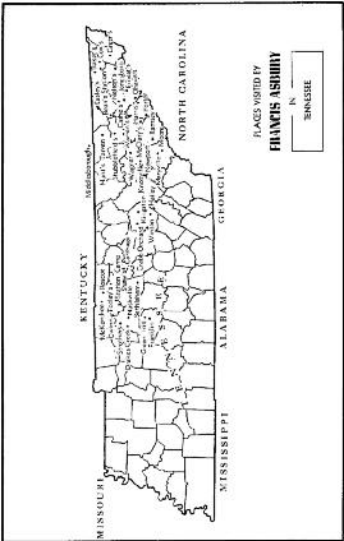
ASB_VOL2.PDF, p. 241
Notes (1)
- White’s Creek is in Davidson and Robertson Counties, Tennessee, a little north of Nashville. The White Creek Pike, leading to Springfield, is present Highway 41, and the Dickinson, or Dickerson, Pike, leading to Franklin, Kentucky, and northward, is present Highway 31W. Joab Dickinson built a Baptist church and school on the latter road at an early date. His wife was a relative of Mrs. Andrew Jackson. She lived on the present Gallatin Road or Highway 31E about three miles from the Dickinson, or Dickerson, Road and the Joab Dickinson home on White’s Creek. ↩
18 October 1800
SaturdayTennesseeAt Parker’s my subject was Colossians 2:6. Brothers M’Gee, Lugg, Jones, and Spier, local preachers, came to meet me: we had a small shout in the camp of Israel.
ASB_VOL2.PDF, p. 242
19 October 1800
SundayTennesseeI rode to Nashville,1 long heard of, but never seen by me until now; some thought the congregation would be small, but I believed it would be large; not less than one thousand people were in and out of the stone church2; which, if floored, ceiled, and glazed, would be a grand house. We had three hours public exercises. Mr. M’Kendree upon, “The wages of sin is death.” Myself on Romans 10:14, 15. Brother Whatcoat on, “When Christ, who is our life, shall appear, then shall ye also appear with him in glory.” We returned the same evening, after dining with Mr. M’Kain. I had a feeling sight of my dear old friend Green Hill3 and his wife. Who would have thought we should ever meet in this distant land? I had not time, as formerly, to go to their house to eat and sleep. We had a night meeting at Mr. Dickinson’s.
ASB_VOL2.PDF, p. 242
Notes (3)
- The town of Nashville, originally called Cumberland and then Nashborough until its incorporation in 1784, was founded by James Robertson in November, 1779. M. Charleville, a French trader and explorer, built a trading post at a deer lick on the spot as early as 1714 and called it French Lick. ↩
- The stone church was the present McKendree Methodist Church, organized in 1787. The church is now occupying its seventh building. (See Carter: History of the Tennessee Conference, 320.) ↩
- Green Hill, the local preacher and prominent political figure in whose house near Louisburg, North Carolina, the first conference of the Methodist Episcopal Church was held in 1785, had moved to Tennessee in 1799 and built a house called Liberty Hill three miles from Brentwood in Williamson County. In this house Bishop William McKendree held his first conference in 1808. Here as in North Carolina the Green Hill home became a notable Methodist center. The original log house stood for nearly 150 years, and its owner is buried in the family cemetery nearby. Liberty Methodist Church in the vicinity is the successor of the society which met at Liberty Hill. (Carter, op. cit., 39- 41.) See note under April 19, 1785. ↩
20 October 1800
MondayTennesseeWe came by Mansker’s to Drake’s creek1 meeting house, at the close of a sacramental solemnity, that had been held four days by Craighead,2 Hodge, Rankin, M’Gee, and Mr. Adair, Presbyterian officiating ministers; we came in, and brother M’Kendree preached upon Jeremiah 4:14; after him brother Whatcoat, upon “We know that we are of God”: I also spoke; my subject was the work of God. Last Sabbath was my birth-day. This will make the thirtieth year of my labours in America.3 It is supposed there are one thousand souls present, and double that number heard the word of life on Sunday.
ASB_VOL2.PDF, p. 242
Notes (3)
- Mansker was a noted frontiersman. (Williams, op. cit., 335.) Drakes Creek meetinghouse was in Sumner County about two miles from present Saundersville. The Saundersville Church is probably its successor. (Carter, op. cit., 29.) ↩
- Craighead had a school at Spring Hill, which later became the University of Nashville and George Peabody College for Teachers. The present First Presbyterian Church at Nashville grew out of his church at Madison, Tennessee. He founded the Spring Hill Cemetery between Nashville and Gallatin and is buried there. ↩
- Asbury’s chronology was not strictly accurate. He was born August 20/21, 1745, and reached America on October 27, 1771. (See Journal entries for October 27, 1771, and July 16, 1792.) ↩
21 October 1800
TuesdayTennesseeYesterday, and especially during the night, were witnessed scenes of deep interest. In the intervals between preaching, the people refreshed themselves and horses and returned upon the ground. The stand was in the open air, embosomed in a wood of lofty beech trees. The ministers of God, Methodists and Presbyterians, united their labours and mingled with the childlike simplicity of primitive times. Fires blazing here and there dispelled the darkness and the shouts of the redeemed captives, and the cries of precious souls struggling into life, broke the silence of midnight. The weather was delightful; as if heaven smiled, whilst mercy flowed in abundant streams of salvation to perishing sinners. We suppose there were at least thirty souls converted at this meeting.1 I rejoice that God is visiting the sons of the Puritans, who are candid enough to acknowledge their obligations to the Methodists.
We have passed only two counties in the District of Mero:2 quiet Cumberland keeps “the noiseless tenor of his way” through the midst of the settlement; Nashville crowns its lofty bank.
ASB_VOL2.PDF, p. 242
Notes (2)
- The meeting at Drake’s meetinghouse was one of the earliest of the camp meetings which swept through Kentucky, Tennessee, and other states early in the nineteenth century. They arose under the leadership of the McGee brothers, William, a Presbyterian, and John, a Methodist, James McGready, a Presbyterian of North Carolina, Peter Cartwright, and other evangelists. The Cane Ridge Church in Kentucky, now a church of the Disciples of Christ, was famous as the scene of one of the first and greatest of these meetings. Though started by the Presbyterians, the camp-meeting movement was taken over by the Methodists and became known as a Methodist institution. (The best discussions of the camp meeting are found in Tracy: The Great Awakening; Davenport: Primitive Traits in Religious Revivals; and the Autobiography of Peter Cartwright. See also Clark: The Small Sects in America, 90-93.) ↩
- The Cumberland region was sometimes known as the Mero District. (McFerrin: Methodism in Tennessee, I, 334.) ↩
22 October 1800
WednesdayTennesseeWe had a meeting at Richard Strother’s,1 upon a branch of Station Creek, and there were great emotions of tenderness among the people.
ASB_VOL2.PDF, p. 243
Notes (1)
- Strother lived about seven miles west of Gallatin in Sumner County, Tennessee. Bethel church on Station Camp Creek is still in operation about a mile from the original site. The first Strother’s meetinghouse has been moved to the campus of Scarritt College for Christian Workers in Nashville. ↩
23 October 1800
ThursdayTennesseeWe came to Edward’s. Brother Whatcoat began—I continued upon Matthew 11:28-30. William M’Gee concluded. We lodged with James Douglas.1
ASB_VOL2.PDF, p. 243
Notes (1)
- William McGee was pastor of Shiloh Presbyterian Church on the Scottsville Road five miles north of Gallatin, Tennessee. His brother, John, was a Methodist. James Douglas lived on Station Camp Creek. Douglas Chapel is still in existence. ↩
24 October 1800
FridayTennesseeWe came to Thomas Blackmore’s.1 Brother Whatcoat, and brother M’Kendree sermonized; the people were not greatly moved; I concluded with prayer.
ASB_VOL2.PDF, p. 243
Notes (1)
- Thomas Blackmore lived on the north side of the Cumberland River near Hartsville, Tennessee. ↩
25 October 1800
SaturdayTennesseeWe crossed Cumberland River at Bishop’s ferry.1 What a long solitary river is this! It is probably seven hundred miles upon a line; and near one thousand in its meanderings, before it empties its waters into the Ohio, twelve miles above the mouth of the Tennessee. We began our quarterly meeting at Elmour Douglas’s. Brother Whatcoat preached; brothers M’Kendree and M’Gee exhorted. At the evening meeting there were more shouters than converts; nevertheless the Lord was in the midst.
We have ridden but about sixty-six or seventy miles this week. The country is greatly in want of rain: the large streams are much absorbed; and the people grind their grain with horse mills.
I could not be content to leave the settlement without circumstantial account of the work of God; and I therefore desired John M’Gee to give it me; and I purpose to select such accounts annually, and to read them in the large congregations, and then to have them published.
ASB_VOL2.PDF, p. 243
Notes (1)
- Bishop’s ferry was doubtless the ferry at Rome five miles south of Carthage. ↩
26 October 1800
SundayTennesseeI attempted but little this day in public, except a class on a portion of the word from 2 Peter 1:16. We forded Cumberland River, and came to John M’Gee’s.1 We now began to think seriously upon our march through the wilderness, and providing food and provisions for man and horse—we took our departure.
ASB_VOL2.PDF, p. 243
Notes (1)
- John McGee lived between present Gainsborough and Carthage. The river was crossed at the mouth of the Caney Fork near Carthage. ↩
27 October 1800
MondayTennesseeWe travelled through rich forests of beech, with rank undergrowth of cane or reed, and arrived at Fort Blount:1 thence pursuing our way up Flinn Creek, we took the ridge and reached Mrs. Blackburn’s, where we lodged, and were well accommodated. This day we have ridden thirty-five miles.
We urged on our way, expecting rain, which overtook us about two o’clock at Flat Rock. We pressed on over Drowning Creek, and the sleepy, discoloured waters of Obey River.2 About twilight in the barrens we met the Presbyterian ministers, Hall, Montgomery, and Bowman, with whom we rejoiced at the work of God in Cumberland, and then parted. We came on to a place where we found the woods were burning, and finding we had made about forty-five miles we encamped whilst the rain was falling upon us.
ASB_VOL2.PDF, p. 244
29 October 1800
WednesdayTennesseeWe came to the new station at the Crab Orchard,1 where, although the station was not yet put in order, Mr. Sidnor received us politely, and treated us to tea. Here we found a cabin under the direction of the Cherokee nation, on land they claimed as theirs. We journeyed on to Spencer’s Hill, so called because here a man of that name was killed by Indians.2 Thence we travelled forward to Prospect Hill and the descent to Cumberland Mountain.3 On our route we experienced a heavy rain. Through damps and mud we pushed forward to Clarke’s ferry, upon Clinch, in sight of the fort at South West Point,4 at the Junction of Tennessee and Clinch rivers, one hundred miles below the mouth of Powels River. We have travelled nearly seventy miles upon land belonging to the Cherokee nation: the soil is generally barren and broken, except where we enter on Cumberland Mountain and the neighbourhood of the new station. This Indian land cuts the state of Tennessee into two parts, passing nearly through the middle, making an indent upon the state of Kentucky on Yellow Creek. We arrived at Mr. Clark’s,5 where we received great entertainment: there was a good fire in the hall, and we were provided with a good dinner, and treated to tea: a fire was also kindled up stairs, at which we dried our clothes; to which may be added excellent lodging in two inner rooms: thus were we within, whilst our horses were feeding to fulness in a grassy valley without. Our kind host rents the land from the Indians at six hundred per annum; himself making the improvements.
ASB_VOL2.PDF, p. 244
Notes (5)
- Crab Orchard is in Cumberland County near Crossville. The station was the Crab Orchard Tavern which became famous. (Williams, op. cit., 503.) Asbury was proceeding along the route of present Highway 70 to Knoxville. ↩
- Thomas Spencer was a hunter and trapper who lived during the winter in a sycamore tree near Gallatin, where a Spencer community still exists. He was a large man, a dead shot, and was killed by Indians near Crab Orchard. ↩
- Prospect Hill was probably near the present Ozone in Cumberland County. It is at the top of the Cumberland range, and a few miles eastward is the “descent” into the present town of Rockwood in Roan County. On this first trip through Middle Tennessee Asbury followed the general route of Highway 70 by way of Carthage, Monterey, Crab Orchard, and Kingston to Knoxville and the Holston country. Much of the territory was the domain of the Cherokee Indians. ↩
- South West Point was the present Kingston. ↩
- Thomas Norris Clark was a wealthy merchant and planter. (Williams, op. cit., 312.) ↩
30 October 1800
ThursdayTennesseeWe rode slowly on to Starr’s, twenty-two miles, and had a heavy shower of rain on our way. From Monday morning to Thursday afternoon we have made one hundred and thirty miles; we have experienced no stoppage by water-courses, and have found the roads of the wilderness, their unevenness excepted, pretty good. And here let me record the gracious dealings of God to my soul in this journey: I have had uncommon peace of mind, and spiritual consolations every day, not withstanding the long rides I have endured, and the frequent privations of good water and proper food to which I have been subjected; to me the wilderness and the solitary places were made as the garden of God, and as the presence chambers of the King of kings and Lord of lords.
ASB_VOL2.PDF, p. 245
31 October 1800
FridayTennesseeI gave a long discourse upon the epistle in the office of ordination for deacons, and ordained John Winton1 in the congregation.
ASB_VOL2.PDF, p. 245
Notes (1)
- John Winton was a local preacher who lived at Muddy Creek, seventeen miles below Knoxville. (Price, op. cit., II, 404.) ↩
1 November 1800
SaturdayTennesseeCame twenty miles to Knoxville,1 of which I had often heard, and which mine eyes now saw. We visited my old friend Greer.2
ASB_VOL2.PDF, p. 245
Notes (2)
- The village of Knoxville was the capitol of Tennessee at this time. It was established as the seat of the territorial government in 1792 and named in honor of General Henry Knox, Secretary of War under George Washington. The first legislature of the state met there on March 28, 1796. (Price: Holston Methodism, I, 295.) ↩
- Joseph Greer was a trader with the Cherokees. (Williams: Dawn of History in Tennessee, 348.) ↩
2 November 1800
SundayTennesseeI preached in the state house on Isaiah 55:6, 7. I was very unwell, but was enabled to bear the heavy cross of public speaking; we had about seven hundred people in and about the house. We came off in haste, intending to make twenty miles that evening; but Francis Alexander Ramsay pursued us to the ferry, franked us over, and took us to his excellent mansion—a stone house: it may not be amiss to mention, that our host has built his house, and takes in his harvest without the aid of whisky.1 We were kindly and comfortably entertained.
ASB_VOL2.PDF, p. 245
Notes (1)
- In the pioneer period neighbors frequently assisted each other at log rolling, house raising, and harvesting. These were followed by festive occasions with dinners and alcoholic beverages. Hence the fact that Ramsay was able to harvest his crops on a temperance basis was cause for comment. (Price, op. cit., I, 295, 296.) He was the father of the historian. (Williams: Lost State of Franklin, 304.) ↩
3 November 1800
MondayTennesseeWe rode up to M’Cleary’s, fourteen miles, where we dined, and pursued our journey to William Blackburn’s.
ASB_VOL2.PDF, p. 245
4 November 1800
TuesdayTennesseeRode twenty miles up Nolachucky to Benjamin Van Pelt’s,1 where I had left my horse and chaise. In this neighbourhood the land, except a few spots, is little better than barren; nevertheless, good cultivation will make it productive. From the twenty-seventh of last month, the day on which we left the pleasant mansion of our friend Van Pelt, to the day of our return, we rode, I presume, quite six hundred and sixty if not seven hundred miles. Hitherto the Lord hath helped us. We have had twelve proper appointments; two of which (Sabbath days) were near failing because of rain.
ASB_VOL2.PDF, p. 245
Notes (1)
- See Journal entries and notes for November 7, 1771; June 28-30, 1790; April 6, 1793; May 12, 1793; March 4, 1800. ↩
5 November 1800
WednesdayNorth CarolinaAt Van Town I preached in the new chapel on Luke 4:18.1
NORTH CAROLINA
ASB_VOL2.PDF, p. 246
Notes (1)
- Van Pelt’s chapel was one of the earliest meetinghouses in the Holston country. It was located on the north side of Lick Creek near the village of Mosheim in Greene County. (Price, op. cit., I, 195-96.) ↩
6 November 1800
ThursdayNorth CarolinaCrossed Nolachucky at Cureton’s ferry, and came to Major Craig’s, eighteen miles. I next day pursued my journey and arrived at the Warm Springs,1 not however without an ugly accident. After we had crossed the Small and Great Paint mountain, and had passed about thirty yards beyond the Paint Rock,2 my roan horse, led by Mr. O’Haver3 reeled and fell over, taking the chaise with him; I was called back, when I beheld the poor beast and the carriage, bottom up, lodged and wedged against a sapling, which alone prevented them both being precipitated into the river. After a pretty heavy lift all was righted again, and we were pleased to find there was little damage done. Our feelings were excited more for others than ourselves. Not far off we saw clothing spread out, part of the loading of household furniture of a wagon which had overset and was thrown into the stream, and bed-clothes, bedding, &c., were so wet that the poor people found it necessary to dry them on the spot. We passed the side fords of French Broad, and came to Mr. William Nelson’s; our mountain march of twelve miles calmed us down for this day. My company was not agreeable here—there were too many subjects of the two great potentates of this Western World—whisky, brandy. My mind was greatly distressed.
ASB_VOL2.PDF, p. 246
Notes (3)
- Warm Springs, the present Hot Springs in Madison County, North Carolina, was discovered in 1778 by Henry Reynolds and Thomas Morgan. The site became a noted resort. Asbury went from Tennessee to North Carolina along the general route of Highway 70 via Hot Springs and Marshall to Asheville. He probably followed what was called the Old Love Road which ran from near Greenville, Tennessee, and along Paint Creek to the French Broad River six miles below Hot Springs. (Arthur: History of Western North Carolina, 492.) ↩
- The “painted rock” was in present Madison County near the Paint Rock community. It figured in the boundary disputes between North Carolina and Tennessee. Surveyors in 1799 described it as being 107 feet high and stated that in 1790, before it had been defaced by smoke, it had red painted animals, fish, fowls, and men on its face. This was discounted by Arthur, who said the red “paint” seemed to be oxidation of iron ore. (Arthur, op. cit., 47.) ↩
- John O’Haver lived in the present Cocke County, Tennessee, near Newport. (Price: Holston Methodism, II, 116. See Journal entry for October 22, 1808.) ↩
8 November 1800
SaturdayNorth CarolinaWe started away. The cold was severe upon the fingers. We crossed the ferry, curiously contrived with a rope and poles, for half a mile along the banks of the river, to guide the boat by. And O the rocks! the rocks! Coming to Laurel River, we followed a wagon ahead of us—the wagon stuck fast. Brother O’Haver mounted old gray—the horse fell about midway, but recovered, rose, and went safely through with his burden. We pursued our way rapidly to Ivy Creek,1 suffering much from heat and the roughness of the roads, and stopped at William Hunter’s.
ASB_VOL2.PDF, p. 246
Notes (1)
- Laurel River, or Big Laurel Creek, and Ivy Creek flow through the present Madison County. ↩
9 November 1800
SundayNorth CarolinaWe came to Thomas Foster’s,1 and held a small meeting at his house. We must bid farewell to the chaise; this mode of conveyance by no means suits the roads of this wilderness; we are obliged to keep one behind the carriage with a strap to hold by and prevent accidents almost continually. I have health and hard labour, and a constant sense of the favour of God.
Tobias Gibson2 had given notice to some of my being at Buncombe court house, and the society at Killian’s in consequence of this, made an appointment for me on Tuesday, 11. We were strongly importuned to stay, which brother Whatcoat felt inclined to do. In the meantime we had our horses shod by Philip Smith: this man, as is not unfrequently the case in this country, makes wagons and works at carpentry, makes shoes for men and for horses; to which he adds, occasionally, the manufacture of saddles and hats.
ASB_VOL2.PDF, p. 246
Notes (2)
- Thomas Foster lived on the Swannanoa River at or near the mouth of Sweeten Creek, afterward called Foster’s Mill Creek, about two and one-half miles south of Asheville on the present Asheville- Hendersonville Road. He built the first bridge across the Swannanoa. He was later a member of the House of Commons and the State Senate from Buncombe County. He is buried in the Newton Academy graveyard at Asheville. He made no religious profession, but his daughter, Mrs. James M. Alexander, became an active Methodist. (Grissom, Methodism in North Carolina, I, 300; Arthur, op. cit., 153, 154.) ↩
- Tobias Gibson was appointed to the Little Pee Dee and Anson Circuit in South Carolina early in 1799. In January, 1800, he was appointed to Natchez, and sometime during the year he made a famous and perilous canoe voyage down the Mississippi and became the founder of Methodism in Mississippi. Jones (Methodism in Mississippi, I, 24 ff.) argues that Gibson reached Natchez late in March of 1799, which was nine months before he was officially appointed. If he gave notice of Asbury’s presence in Buncombe County, North Carolina, and it was effective as late as November, 1800, it would seem that he must have lingered in the Blue Ridge area for a period before departing for his appointment in Natchez. ↩
10 November 1800
MondayNorth CarolinaVisited Squire Swain’s1 agreeable family. On Tuesday we attended our appointment. My foundation for a sermon was Hebrews 2:1. We had about eighty hearers; among them was Mr. Newton,2 a Presbyterian minister, who made the concluding prayer. We took up our journey, and came to Foster’s3 upon Swannanoa—company enough, and horses in a drove of thirty-three. Here we met Francis Poythress4—sick of Carolina, and in the clouds. I, too, was sick. Next morning we rode to Fletcher’s5 on Mud Creek. The people being unexpectedly gathered together, we gave them a sermon and an exhortation. We lodged at Fletcher’s.
ASB_VOL2.PDF, p. 247
Notes (5)
- George Swain was born in Massachusetts in 1763. He settled at the head of Beaverdam Creek near Asheville in 1795, after living in South Carolina and Georgia. He was a ruling elder in the Presbyterian Church, member of the legislature and constitutional convention in Georgia, and postmaster at Asheville. He married a Methodist, Mrs. Caroline Lowrie, who was a sister of Joel Lane, founder of Raleigh, and an aunt of General Joseph Lane, Democratic candidate for Vice President of the United States in 1860. George Swain’s son, David L. Swain, was three times governor of North Carolina and president of the University of North Carolina. (Arthur, op. cit., 150, 151, 382, 383; Price: Holston Methodism, I, 302.) ↩
- The Rev. George Newton, whom Asbury called “almost a Methodist,” conducted Newton Academy, once known as Union Hill Academy in Asheville. He lived on Swannanoa River until 1814, when he removed to Bedford County, Tennessee, and became principal of Dickson Academy and pastor of the Presbyterian church at Shelbyville. (Arthur, op. cit., 423, 424.) ↩
- Foster’s was Thomas Foster. ↩
- Francis Poythress, a noted Methodist itinerant, was presiding elder over all the circuits in North Carolina. He later became insane and died in Kentucky. ↩
- William Fletcher lived on a tract of land near the mouth of Cane Creek in present Henderson County. He moved to Alabama, but his son, John, born in Virginia in 1783, returned and developed the tract. A community called Shufordville developed there, the name being changed to Fletcher about 1880. (Patton: The Story of Henderson County, 35, 36.) ↩
13 November 1800
ThursdayNorth CarolinaWe crossed French Broad at Kim’s Ferry,1 forded Mill’s River,2 and made upwards through the barrens of Broad to Davidson’s,3 whose name names the stream. The aged mother and daughters insisted upon giving notice for a meeting: in consequence thereof Mr. Davis, the Presbyterian minister, and several others, came together. Brother Whatcoat was taken with a bleeding at the nose, so that necessity was laid upon me to lecture: my subject was Luke 11:13.
ASB_VOL2.PDF, p. 247
Notes (3)
- “Kim’s Ferry” was probably at the home of Benjamin Kimzey, a Welsh immigrant who lived near the mouth of Mud Creek in the present Henderson County. (Patton, op. cit., 38.) ↩
- Mills River is in Henderson County. There is a Mills River community between Hendersonville and Asheville. ↩
- Ben Davidson had 640 acres in present Rutherford County. There was a Ben Davidson’s Creek and a Ben Davidson community, later Pisgah Forest. (Patton, op. cit., 39; Arthur, op. cit., 204, 214, 217.) ↩
14 November 1800
FridayNorth CarolinaWe took our leave of French Broad—the lands flat and good, but rather cold. I have had an opportunity of making a tolerably correct survey of this river. It rises in the south-west, and winds along in many meanders, fifty miles north-east, receiving a number of tributary streams in its course; it then inclines westward, passing through Buncombe in North Carolina, and Green and Dandridge counties in Tennessee, in which last it is augmented by the waters of Nolachucky; four miles above Knoxville it forms a junction with the Holston, and their united waters flow along under the name of Tennessee, giving a name to the State.
SOUTH CAROLINA
We had no small labour in getting down Saluda mountain.1 Arriving at father Douthet’s2 on the south branch of Saluda, where, finding myself quite at home, I had leisure to reflect upon our western visitation. On the 16th of September we set out from Bottetourt in Virginia, and on the 14th of November we were in North Carolina, at the foot of the grand mountain division of South Carolina. In this time I presume we have travelled one thousand miles, have had about twenty appointments, not many of which were large; have lodged about twenty nights under strange roofs, or at houses of entertainment; and have expended about fifty dollars.
ASB_VOL2.PDF, p. 247
Notes (2)
- Although Asbury had visited South Carolina fifteen times since 1785, this was his first entrance by way of the Holston country and western North Carolina. He went down Saluda Mountain and crossed the South Saluda River at Table Rock in present Pickens (then Pendleton) County about where the Table Rock State Park is now located. ↩
- John Douthet came from Maryland and settled on Table Rock Mountain at Douthet’s Ford in the present Pickens County. His two sons, James and Samuel, became Methodist preachers. (Betts: History of South Carolina Methodism, 86, 132. See Journal entry for October 29, 1813.) ↩
17 November 1800
MondaySouth CarolinaYesterday we rested at father John Douthet’s; he is settled in a cove in the midst of the mountains, upon the south branch of the Saluda. Brother Whatcoat made a discourse on Matthew 3:10. The computation is, that from Charleston to the western line of this State it is two hundred and seventy-five miles; but from the centre-house it is nearer four hundred miles.
My mind is led out for the interest of the Southern and Western conferences: these are quite enough contiguous to enable the preachers to change with each other, but such is the sickly state of the South, in both senses, that we shall probably be under the necessity of locating five or six of our spiritual labourers.
To-day I gave a sermon founded upon Psalm 146:8, 9, and felt engaged, if the people were not.
ASB_VOL2.PDF, p. 248
18 November 1800
TuesdaySouth CarolinaWe came fifteen miles to Samuel Burdine’s,1 Pendleton county. Here were many wandering people. Brother Whatcoat preached. We administered the Lord’s supper. I was very much indisposed, and felt dejection of spirits. Our sister Burdine professeth to have known the Lord twenty years; in her you see meekness, gentleness, patience, and pure love—and cleanliness.
ASB_VOL2.PDF, p. 248
Notes (1)
- Samuel Burdine lived near Pickens in the present Anderson (then Pendleton) County, South Carolina. ↩
19 November 1800
WednesdaySouth CarolinaWe came to John Wilson’s;1 I gave a discourse on Acts 2:17, 18; my mind was divinely elevated, but the people did not appear to feel. Yesterday and to-day I am disciplined by keen pain in my breast. To-day Benjamin Blanton2 met me: he is now a married man; like others of his Southern brethren, after he has faithfully served the connexion about ten years, he talks of locating.
ASB_VOL2.PDF, p. 248
20 November 1800
ThursdaySouth CarolinaAt the Grove.1 We were lost an hour in the woods at setting out, and terribly bewildered in our way to the meeting house; the day was cold, and a beautiful snow lay on the ground. During the public exercises the people felt as at the reading and preaching of Ezra. Brother Whatcoat improved with light and life upon Colossians 1:21-23. Through twelve miles of cold and snow we journeyed to Thomas Terry’s.2 Our host was from Gisborough, in Yorkshire; he made us welcome, and gave us dinner about six o’clock. Here I hauled up the chaise—the pleasure of riding in it does not compensate for the trouble and difficulty of getting it along.
As there were few appointments in this State, and as brother Benjamin Blanton agreed to fill them, I thought fit to accompany brother Whatcoat who was under the necessity of going to fill appointments made for him in Georgia.
We have travelled about forty miles since we left father Douthet’s near the Table mountain, which on a clear day is a grand sight; the stool appears like a great house of freestone; to-day we only saw it through a mist dimly. At the Cove there are but few religious people, and among these few there are disorderly walkers. The Northern rivers, I presume, begin to close for the winter, which, I judge, will be a severe one. On Friday I rested and wrote.
ASB_VOL2.PDF, p. 248
Notes (2)
- Cox’s meetinghouse was at the Golden Grove about two miles above Piedmont toward Greenville. There is still a station on the Southern Railway called Grove Station. Cox’s meetinghouse later became Rehobeth and continued until 1897, when it disappeared from the Minutes. ↩
- Thomas Terry lived at Fork Shoals on Reedy River. ↩
22 November 1800
SaturdaySouth CarolinaRode twenty miles to James Powell’s,1 upon Walnut Creek, Lauren’s county.
ASB_VOL2.PDF, p. 249
Notes (1)
- James Powell lived across the river from Ware Shoals in Laurens County. ↩
23 November 1800
SundaySouth CarolinaSabbath day, 23, was an extraordinary cold day at King’s chapel.1 I began reading at eleven o’clock, and occupied the pulpit one hour and twenty minutes; brother Whatcoat followed for fifty minutes, and brother Blanton succeeded him; to this followed the sacrament—making the public exercises four hours (or thereabouts) of continuance, in a very open building. It may not be amiss to mention that this house for the worship of God was named after James King, who died a martyr to the yellow fever in Charleston. We lodged for the night at W. Powell’s. Next day we crossed Main Saluda at Pension’s ford,2 and rode twelve miles to George Connor’s, upon Silvador’s Purchase.3
I had thought our address would move their majesties and the peers of Charleston. Report says they have pumped poor George Dougherty until they had almost deprived him of breath; and John Harper committed the address to the flames before the intendant of the city: I have seen his apology for receiving them.4
At George Connor’s we had an evening meeting, and considering the coldness of the night, and the shortness of the notice, it was well attended. Brother Whatcoat preached.
ASB_VOL2.PDF, p. 249
Notes (4)
- King’s Chapel was near the Powell home. It was named for the Rev. James King who served the Saluda Circuit in 1796 and died of yellow fever in Charleston the following year at the age of twenty-five. (Betts, op. cit., 101.) ↩
- Pension’s or Pinson’s Ford was below Ware Shoals. Here Asbury and Whatcoat entered the present Greenwood (then Abbeville) County. ↩
- George Connor lived near Greenwood in the old Tabernacle Church community, where was later established the Tabernacle Academy of which the famous Dr. Stephen Olin became principal in 1821 and near where Cokesbury School was later founded. The Silvador Purchase or “Jew’s Land” was a tract of around 100,000 acres purchased by Joseph Silvador, a wealthy Portuguese Jew of London. Here he proposed to establish a colony of European Jews and just before the Revolution the owner’s nephew and son-in-law, Francis Silvador, was sent over to manage the project, but he was killed in an expedition against the Cherokees in 1776, and the management fell to Richard Andrew Rapley. The enterprise failed, and the land was disposed of by Rapley as attorney for Silvador. (Betts, op. cit., 484.) ↩
- Northern abolitionists had sent some printed antislavery addresses to the Rev. John Harper, pastor at Charleston. He stored them away, but a copy got into circulation and enraged the people. Harper was brought before the authorities, and he explained the situation and burned the remaining papers. No charge was laid against him, but he was later seized by a mob, from which he escaped. The Rev. George Dougherty, the other preacher, was seized at the prayer meeting the following night and held under the spout of a pump until he was nearly drowned. (Betts, op. cit., 91, 92.) It was later said that Dougherty was assaulted because he had been teaching Negro children. (Methodist Magazine, 1828, 349-53.) ↩
25 November 1800
TuesdayGeorgiaWe rode to Nathaniel Burdine’s1—ancient Methodists, who have a son in the ministry.
ASB_VOL2.PDF, p. 250
Notes (1)
- Nathaniel Burdine lived near Ninety Six. ↩
26 November 1800
WednesdayGeorgiaWe came to Hugh Porter’s, at the New Design.1 Here we called a meeting in the evening; brother Whatcoat spoke—I spoke after him.
ASB_VOL2.PDF, p. 250
Notes (1)
- Hugh Porter probably lived near the present Callison. He was a prosperous farmer. In 1802 he joined the conference on trial and located in 1807. (See Minutes; Betts, op. cit., 483, 484.) The reference to the New Design is obscure. It may have been a large tract of land south of Silvador’s Purchase in lower Abbeville and McCormick counties. This was a Huguenot settlement known as New Bordeaux, which survives as the Bordeaux community near the Savannah River where the John de la Howe School is operated by the state of South Carolina. (See Willson’s historial address, 7, and S.C. Legislative Manual, 1950.) ↩
27 November 1800
ThursdayGeorgiaSick and weary, we arrived at Daniel Baugh’s, whither we were conducted by Mr. Hennington, having lost our way in the woods.
ASB_VOL2.PDF, p. 250
28 November 1800
FridayGeorgiaAt Butler’s meeting house,1 fifteen miles—no notice; we therefore pushed on to Captain Carter’s2; here the girls hasted to call the people to meeting. Brother Whatcoat preached on Ezekiel 33:2. In this neighbourhood the sad apostasy of two professed preachers, and of one or two private members, hath brought reproach on the cause of God and Methodism.
GEORGIA
ASB_VOL2.PDF, p. 250
29 November 1800
SaturdayGeorgiaCame twelve miles through deep sands to Augusta. We have travelled nearly one hundred miles since last Sabbath day: my soul hath been kept in great peace; but I feel the effects of riding a stiff, aged, falling horse, with a sore back, and my saddle is old and worn.
We have a foundation and a frame prepared for erecting, in a day or two, a house for public worship, two stories high, sixty by forty feet; for this we are indebted to the favour of Heaven and the agency of Stith Mead;1 and what is better, here is a small society.
Augusta is decidedly one of the most level and beautiful spots for a town I have yet seen:2 it is of ample extent in its plan, well begun, and when their intention shall be fulfilled of building a court house, a college, episcopal churches for Methodists and others, it will do credit to its founders and inhabitants.
ASB_VOL2.PDF, p. 250
Notes (2)
- Stith Mead was on the Burke and Augusta Circuit with William Avant. At the conference held at Camden, South Carolina, in January he was made presiding elder of the Georgia District. He was the founder of Methodism in Augusta and elsewhere in Georgia and one of the leading preachers in the state. He was born in Virginia but was brought to Augusta while a lad by his wealthy father, Colonel William Mead, and attended Augusta Academy. He went back to Virginia, where he was converted at a Bedford County camp meeting and joined the conference, traveling seven years there before returning to Augusta, where there was no organized church. His relatives opposed him, and he preached in the home of Ebeneezer Doughty, where he formed a class of six members in 1798. The church being built when Asbury came was on Green Street where St. John Methodist Church now stands. It was the only church in Augusta except St. Paul’s Episcopal Church, and Mead’s society was the first organized band of Christians there after the Revolution; there seems to have been no regular rector at St. Paul’s. (Smith: Georgia Methodism, 338-40.) ↩
- Augusta was the capitol of the state and had a population of about four thousand. It was founded in 1732 as a fort and trading post for the Cherokee, Uchee, and Chickasaw Indians, and named for the daughter of George II. St. Paul’s parish was laid out about 1757, and some missionaries of the Society for the Propagation of the Gospel in Foreign Parts were sent, but in 1782 the Grand Jury pointed out that there was no church in Augusta or Richmond County. It was the first large center in which Methodism was established in Georgia. The first Methodist preachers to visit the town were probably Thomas Humphries and John Major, who perhaps arrived sometime before 1789. (Ibid., 337, 338.) ↩
30 November 1800
SundayGeorgiaBrother Whatcoat preached a most excellent sermon at Mr. Fary’s dwelling house upon Ephraim’s lamentation. In the afternoon I preached in the church.1 We thought to have joined the congregations together, but others thought differently. We had the honour of the priest’s company, and few of his people attended.2
ASB_VOL2.PDF, p. 251
1 December 1800
MondayGeorgiaWe came to Thomas Hayne’s, upon Uchee Creek, Columbia county. Brother Whatcoat preached upon Galatians 2:20. I came off with a close exhortation.
On the following Tuesday and Wednesday we held a quarterly meeting at White Oak. Brother Whatcoat first officiated. I followed him. We had very cold weather, an open house, and few hearers. We then rode to Joseph Scott’s eight miles, through damp, rainy weather. Our host, his children, and grandchildren will, we hope, if they continue faithful, receive the crown of life.
ASB_VOL2.PDF, p. 251
4 December 1800
ThursdayGeorgiaI rode, my mind cloudy, and my body cold, to Thomas Grant’s, twenty-four miles.
ASB_VOL2.PDF, p. 251
5 December 1800
FridayGeorgiaI humbled my soul before God. To-day I have been occupied in correcting a transcript of my journal, that one had copied for me, who did not well understand my shorthand. The original was written in my great illness, very imperfectly; but when I reflect on my situation at that time, I wonder that it is as well as it is.
ASB_VOL2.PDF, p. 251
7 December 1800
SundayGeorgiaYesterday and to-day we have quarterly meeting at Coke’s chapel, near Washington. Brother Whatcoat preached the first day from Hebrews 6:4-6. I, in my place, gave some account of the work of God, as it had been reported to me during this year. On Sabbath morning we had a quickening season at the sacrament. My subject was Hebrews 12:25: “See that ye refuse not him that speaketh.” By introduction—The likeness between Christ and Moses in their persons, offices, ministry, and punishment of the disobedient. In doctrine: I. How Christ, speaking by his Gospel, his ministers, Spirit, and miracles of grace. II. That sinners, seekers, saints, and backsliders ought to see to it, that they “refuse not him that speaketh.” Lastly: the awful consequences of refusing. Brothers Whatcoat and Hope Hull exhorted; the latter began to feel like his former self. Upon the whole, it was a good meeting, and we humbly hope that good was done. After meeting we were obliged to ride six miles, through the rain, to Thomas Grant’s.
ASB_VOL2.PDF, p. 251
8 December 1800
MondayGeorgiaWe crossed Little River, and went forward twelve miles, to Thomas Fountain’s, in Warren county. We have ridden about ninety miles since Monday week.
ASB_VOL2.PDF, p. 251
9 December 1800
TuesdayGeorgiaWe came to Abraham Heath’s meeting house upon Long Creek, Warren county. We arrived during the sitting of the court, and had but a small congregation. Brother Whatcoat being unwell, I filled his place. My subject was Hebrews 10:31: “It is a fearful thing to fall into the hands of the living God.” First, The character of those people who expose themselves to the danger of falling “into the hands of the living God”— such as are described in verses 26 and 29 of the same chapter. Secondly, The character of those, the contrast of the former, who will escape his avenging hand. These do not as the others do. They also attend to the precepts contained in verses 25, 32, 35, 36, and 39. Thirdly, “It is a fearful thing to fall into the hands of the living God,”—that is, to fear and feel the wrath of God forever, having no interest in Christ, and no advocate with the Father, but exposed to infinite justice, and all the threatened wrath of the Almighty.
We crossed Ogeechee at Thweat’s bridge, and came to Powelton,1 a new establishment, in which there is a Baptist meeting house, formerly occupied by Silas Mercer. He is now gone to eternity, but his son filleth his place.
ASB_VOL2.PDF, p. 252
Notes (1)
- The Ogeechee is on the border of Warren and Hancock counties, and Powelton is in the northeastern corner of the latter. ↩
10 December 1800
WednesdayGeorgiaWe came to Edmund Butler’s in Hancock county. The people had thrown down the old, but had not yet finished their new meeting house.1 I was therefore under the necessity of standing bareheaded in the open woods, on a very cold day. As I travelled so much, this was thought a light thing for a man like me. Moses Black,2 after this, brought the people to the dwelling house. We rode home with Alexander King,3 a brother to the preacher who ended a short but honourable life in the ministry of the Gospel.
ASB_VOL2.PDF, p. 252
Notes (3)
- Since the meetinghouse in Hancock County was old enough to be replaced, it must have been on the old Richmond Circuit and was founded before the county was set up in 1793. The first missionary came to the county in 1792. (Ibid.) ↩
- Moses Black was the preacher on the Richmond Circuit. (See Minutes.) ↩
- The brother was the Rev. James King. (See Journal entry and note for November 23, 1800.) ↩
11 December 1800
ThursdayGeorgiaWe were at Burke’s meeting house; after which we came dripping to A. Gilmore’s. Here brother Whatcoat preached. After which I gave a few words of exhortation, and we then pushed on to William Greaves’s. We have lately crossed the chief branches of the Ogeechee and Little rivers.
ASB_VOL2.PDF, p. 252
12 December 1800
FridayGeorgiaCold as it was we made as far as Thomas Dunn’s; and here I gave a short discourse on 2 Timothy 4:6, 7. We left Dunn’s in haste, and continued on twelve miles farther to the widow Hill’s, on Long Creek. These last appointments were in Oglethorpe county. They will be the best judges of the severity of the cold, who have ridden seventeen miles before dinner. I met brother Milligan,1 at brother Dunn’s, and should have been pleased to stay there with him, but the situation of his wife subjected us to the risk of being disturbed and driven from our warm lodging at midnight. We have ridden about sixty miles in four days.
ASB_VOL2.PDF, p. 252
Notes (1)
- Thomas Milligan was one of the three preachers on the Washington and Oconee Circuit. (See Minutes.) ↩
13 December 1800
SaturdayGeorgiaWe came to Mark’s meeting house;1 brother Whatcoat filled the pulpit.
ASB_VOL2.PDF, p. 253
Notes (1)
- James Marks came from Virginia and lived northwest of Washington River. He was one of the early Methodists of Georgia, and his meetinghouse was one of the first churches; Smith says that the first conference in the state was held at his home. (See note under April 9, 1788.) On the Broad farther north lived John Marks, brother of James, a Revolutionary soldier, whose step-son was Meriwether Lewis, private secretary to Thomas Jefferson and one of the leaders of the famous Lewis and Clark expedition to the Northwest. (Bowen: Story of Wilkes County, 58.) ↩
14 December 1800
SundayGeorgiaWe had sacrament and sermon: my subject was Matthew 17:5: “This is my beloved Son, in whom I am well pleased; hear ye him.” Introduction. These words were in part spoken at his baptism; see Matthew 3:17; Mark 1:2; Luke 3:22: that there were three witnesses present to hear, and four had recorded it; to wit, Matthew, Mark, Luke, and Peter. First, the Divine Father acknowledged the sacred and mysterious union—”This is my beloved Son”: a relation infinitely above that of angels, of Adam in his primeval standing, and the souls of any regenerated sanctified, or glorified soul, on earth or in heaven—co-equal, co-eternal, and co-essential with the Father. “Well-pleased!”—that is, in the whole of man’s redemption by this “beloved Son”: “well-pleased”—in his preaching, living, dying—in every part of his official character. “Hear ye him”—Mark and Luke have omitted ye. Secondly, The particular characters who should hear him in his word, Spirit, and operations. His ministers should hear him—this was designed in the text, by ye: hear him all his sanctified souls; hear him all who are justified; hear him all ye seekers; hear him all ye sinners—hear his awful warnings: all ye backsliders, hear him as Peter heard him, and repent, and turn to him; hear him ye apostates, as Judas, and despair.
We must needs go to the house after preaching, and dine; then we had to cross Broad River, and pierce through the woods, scratch and go in the by-paths—wind round the plantations—creep across the newly cleared ground by clambering over trees, boughs, and fence rails. Thus we made our way fifteen miles to Charles Tait’s,1 in Elbert county.
ASB_VOL2.PDF, p. 253
Notes (1)
- Colonel Charles Tait lived five miles south of Elberton on Highway 17. According to Georgia tradition Asbury held the first conference there in 1788, and a marker stands on the spot. (See note under April 9, 1788.) ↩
15 December 1800
MondayGeorgiaWe got over Savannah river at Robert Martin’s ferry, a few miles above Petersburg.1 Here I called upon a family I had often visited in Virginia. I found the parents had grown old, and that they had lost some of their children.
SOUTH CAROLINA
We came onward into Abbeville county, and hastened to John Brunner’s2 near the court house; making a ride of thirty miles for the day.
ASB_VOL2.PDF, p. 253
Notes (2)
- Martin’s Ferry was between Calhoun Falls and Lowndesville, South Carolina. The old town of Petersburg lay directly in the forks of the Broad and Savannah rivers. It was once an important place but became practically abandoned and is now covered by the waters of the Clark- Hill Reservoir. (See Journal entry and note for April 9, 1788.) ↩
- John Brunner lived near Abbeville. ↩
16 December 1800
TuesdaySouth CarolinaWe proceeded to Silvador’s Purchase, twelve miles, to hold quarterly meeting for Bush River circuit, at a meeting house near George Connor’s.1
ASB_VOL2.PDF, p. 254
Notes (1)
- This meetinghouse was between Hodges and Coronaca. It was soon known as the Tabernacle. Just east of the chapel was a little school of which Olin later became principal. (See note under November 23, 1800.) ↩
17 December 1800
WednesdaySouth CarolinaI attended quarterly meeting. My subject was Philip. 1:27. We spent four hours in the private and public meeting; a number of white and black children were to be baptized, and probably there were persons who thought it would be better done by a bishop. After meeting we had a fifteen miles’ ride, part of it in the night, crossing Saluda at Child’s ferry, wishing to get to John Weeks’s,1 in Lauren’s county. Abbeville is a large county, stretching from river to river, and holds better lands than any other in the State. Although Bush River circuit extends through it, there are few Methodists; the most populous settlements being composed of Presbyterians.
ASB_VOL2.PDF, p. 254
Notes (1)
- John Weeks lived near Cross Hill. ↩
18 December 1800
ThursdaySouth CarolinaAt John Weeks’s, brother Whatcoat sermonized upon Galatians 6:15.
ASB_VOL2.PDF, p. 254
19 December 1800
FridaySouth CarolinaIt rained. After it had holden up, we rode thirty miles to Benjamin Herndon’s,1 upon the waters of Enoree.
Saturday and Sunday, 20, 21. Held quarterly meeting. Brother Whatcoat spoke from 1 Thessalonians 3:8; a very profitable improvement. On Sabbath day my choice was Acts 3:22, 23. We continued about six hours at Mount Bethel. I saw one of the members of the General Assembly of South Carolina, who informed me that our address from the General Conference had been read and reprobated; and furthermore, that it had been the occasion of producing a law which prohibited a minister’s attempting to instruct any number of blacks with the doors shut; and authorizing a peace officer to break open the door in such cases, and disperse or whip the offenders. But more of this law when I see it.
ASB_VOL2.PDF, p. 254
Notes (1)
- Colonel Benjamin Herndon lived near the present Whitmire. ↩
22 December 1800
MondaySouth CarolinaWe rode to Thomas Hardy’s, in the forks of Enoree and Tyger rivers1—nine miles.
ASB_VOL2.PDF, p. 254
Notes (1)
- Hardy did not live exactly in the forks since the Tyger flows into the Broad River several miles above the junction of the Enoree. ↩
23 December 1800
TuesdaySouth CarolinaAt Beauford’s meeting house, brother Whatcoat performed upon Philip. 3:14. We went forward twelve miles to Mr. Glenn’s1 at Broad River.
I have had heartfelt sorrow for the Church of God in Philadelphia. No city upon our continent has been more oppressed by divisions in Christian societies: witness the Episcopalians, Presbyterians, German and English, Quakers, Baptists, Scotch Presbyterians, Roman Catholics—and now the Methodists: I have written on this subject to three official characters.
ASB_VOL2.PDF, p. 254
Notes (1)
- Glenn’s Ferry was above Carlisle. ↩
24 December 1800
WednesdaySouth CarolinaI gave a sermon upon 2 Peter 1:4, at Glenn’s chapel,1 near Broad River: we had an open season and many hearers. At Glenn’s Flat, Chester county, Sealley’s meeting house,2 we kept our Christmas. Brother Whatcoat preached on, “The Son of God was manifested to destroy the works of the devil.”
My subject was, “Glory to God in the highest; and on earth peace, good will towards men.”
We lodged at Robert Walker’s, eighty years of age, awakened under Mr. Whitefield in Fogg’s Manor—re-awakened at Pipe Creek, and a member of the first Methodist Society in Maryland: he is now living upon Sandy River, South Carolina.3
ASB_VOL2.PDF, p. 255
Notes (3)
- Glenn’s Chapel was probably on the Chester side of Broad River. James E. and John B. Glenn, both prominent preachers, came from the family which built the chapel; the former was responsible for the conversion of Stephen Olin when Olin was teaching in the Mount Ariel Academy and boarded in the Glenn home. (Betts, op. cit., 174, 175.) ↩
- Seally’s meetinghouse was several miles east of Chester. Glenn’s Flat and Glenn’s Ferry may not have been identical. ↩
- Robert Walker’s Mill was located on Sandy River, several miles southwest of Chester. (See Mill’s Atlas.) ↩
26 December 1800
FridaySouth CarolinaWe travelled a barren path, and came to Alexander Carter’s upon Fishing Creek1—a journey of about thirty miles, without food for man or beast, and the weather warm to great excess: after our arrival we had a night meeting.
ASB_VOL2.PDF, p. 255
Notes (1)
- Carter lived near where Fishing Creek enters the Catawba. ↩
27 December 1800
SaturdaySouth CarolinaAfter waiting the leisure of the boatmen, we crossed Catabaw at Wade’s ferry, and came three miles to a meeting house at Camp Creek,1 to attend quarterly meeting for Santee and Catabaw circuits. We lodged at John Grymast’s, a Methodist, and originally from Ireland.
ASB_VOL2.PDF, p. 255
Notes (1)
- Camp Creek meetinghouse was seven miles southwest of Lancaster. It is still in existence. ↩
28 December 1800
SundaySouth CarolinaDamp morning. I gave a discourse on Ephesians 6:10. Our lodging was at Johnson’s.1
ASB_VOL2.PDF, p. 255
Notes (1)
- Johnson lived on Camp Creek, as did Mr. Grymast (or Bermast), with whom Asbury lodged on the night of December 27. ↩
29 December 1800
MondaySouth CarolinaWe stopped at Georgetown, at Marlow’s.1 Brother Whatcoat preached upon, “Thou wilt keep him in perfect peace whose mind is stayed on thee; because he trusteth in thee.” We made eighteen miles’ progress this day, and put up with John Horton upon Hanging Rock River.
ASB_VOL2.PDF, p. 255
Notes (1)
- Georgetown was an unidentified community in Lancaster County, not to be confused with the city of Georgetown above Charleston. ↩
30 December 1800
TuesdaySouth CarolinaCame to Camden. I have received several letters from the North: they bring small consolation—”While he was yet speaking there came also another”—murmurs—complaints of partiality—and with this I may console myself in the midst of unremitted and hard travelling and labour. I was presented with a petition from about eighty male members of the society in the city of brotherly love, entreating me to do what I had no intention of doing—that was, to remove brother Everett1 from the city: how, indeed, was this to be done? He and they had acquitted M. Manly of all the charges brought against him, and restored him to membership; the presiding elder had also restored to office three or four elders who had been put out for murmurings and mischiefs, and had ejected the elder stationed in the city, and had filled his place by another—and they had great congregations, great shoutings; and God was with them, and nearly one hundred had joined society. To all this what can we do but say, “Well done, good and faithful servant” and servants! Poor bishop! no money for my expenses. I am afflicted—my life threatened on the one hand, my brethren discontented on the other: true, I received from them a petition dipped in oil and honey; and if I approve, all will be well; but if not, drawn swords may be feared.
ASB_VOL2.PDF, p. 256
Notes (1)
- The Rev. Joseph Everett was the presiding elder at Philadelphia. ↩